Customs Valuation for Bags: What Belongs in the Declared Price?
Customs Valuation for Bags: What Belongs in the Declared Price?
The declared value on a bag shipment is not the price the buyer paid. It is a constructed number with a legal definition, and the gap between the two is where penalties come from.
Customs broker desk with declaration forms and a valuation reference binder
Most disputes in this area are not about smuggling. They are about a factory and a buyer both acting in good faith, using different definitions of the same word, and discovering the difference after the container has been released.
The manufacturer’s view: the invoice is a commercial document; the declaration is a legal one. They should agree, and when they do not, the declaration wins and the difference becomes a liability.
Why Valuation Matters More Than Duty Rate
The practical consequence is that a valuation error is a systems error, not a pricing error. It repeats on every shipment until somebody changes the template, which is why the exposure grows quietly in the background rather than appearing once.
Exporters spend their attention on the duty rate and almost none on the value it applies to, though the value is usually the larger variable of the two.
A one point difference in a tariff rate moves the duty bill by one per cent. A ten per cent understatement of value moves it by ten per cent, and adds a penalty calculated on the shortfall.
The Weight Table
Lever
Effect
Rate
Fixed by code
Value
Judged
Origin
Fixed by rules
Freight
Declared
Currency
Converted
Relief
Applied
The Consequence Table
Error
Outcome
Understatement
Duty plus penalty
Overstatement
Higher duty
Omission
Post audit
Wrong basis
Reassessment
Inconsistent
Flagged
Documented
Defensible
The Why Expose Table
Scale
Note
Per shipment
Small
Per year
Material
Per audit period
Severe
Retroactive
Years
Interest
Added
Reputation
Trader status
The Transaction Value Method
Read the adjustment list as two columns rather than one rule. The additions are there to capture value the invoice leaves out; the deductions are there to remove value that belongs to a different stage of the chain.
Most customs regimes start with the price actually paid or payable, then adjust it with a defined list of additions and deductions.
That starting point is the invoice, but the finish line is not, because the law adds things the invoice may exclude and allows deductions the invoice may include.
The Add Table
Addition
Reason
Commissions
Selling cost
Brokerage
Buying cost
Assists
Free materials
Royalties
Condition of sale
Proceeds
Later resale
Packing
Part of goods
The Deduct Table
Deduction
Condition
Freight
If separable
Insurance
If separable
Duty
Post import
Local taxes
Destination
Installation
After import
Interest
Financing
The The Probe Table
Question
Purpose
Is price real
Genuine sale
Is it arms length
Related party
Is it complete
All payments
Are adds included
Adjustments
Are deducts allowed
Separability
Is it documented
Evidence
Assists: Materials the Buyer Supplies
Factory costing review with fabric swatches, hardware samples and an invoice
An assist is anything the buyer provides free or at reduced cost for use in producing the imported goods, and in bag manufacturing assists are common and routinely forgotten.
If a buyer supplies branded zippers, lining fabric, logo hardware or even a cutting die, the value of that material is part of the customs value of the finished bag.
The Assist Table
Item
Included
Buyer supplied fabric
Yes
Branded zips
Yes
Logo hardware
Yes
Cutting dies
Yes
Moulds
Yes
Design work
Sometimes
The Valuation Table
Element
Basis
Purchase cost
Invoice
Freight to factory
Added
Apportionment
Per unit
Rework
Excluded
Scrap
Excluded
Currency
Converted
The Assists: Log Table
Record
Purpose
Supply invoice
Value
Shipping note
Cost
Consumption rate
Apportion
Unit count
Divide
Balance
Remaining
Declaration
Support
Royalties and Licence Fees
Because both tests have to be satisfied, the useful habit is to read the licence agreement before the first shipment rather than after the first query, and to write down which part of the fee buys the goods and which part buys the right to market them.
A royalty is added to the customs value when it relates to the imported goods and when payment is a condition of sale, and both tests have to be met.
A brand licence fee paid to a third party for the right to sell bags under a name is usually dutiable when the supplier cannot sell the goods without it. A fee for the right to use a trademark in local marketing, unrelated to the production of the goods, usually is not.
The Royalties Probe Table
Question
Effect
Related to goods
Dutiable
Condition of sale
Dutiable
Both met
Added
Marketing only
Not added
Paid to seller
Part of price
Paid to third party
Judged
The Type Table
Fee
Typical
Brand licence
Dutiable
Design fee
Judged
Patent fee
Dutiable
Software
Rare
Distribution fee
Not dutiable
Marketing fee
Not dutiable
The Royalties Paper Table
Item
Value
Licence agreement
Decisive
Invoices
Support
Payment records
Proof
Allocation basis
Defence
Local advice
Prudent
Ruling request
Best
Commissions and Buying Agents
The distinction between a buying commission and a selling commission is worth real money, and it turns entirely on who the agent works for.
A buying commission paid by the importer to its own agent is not added to the customs value. A selling commission paid to an agent who acts for the supplier is added. The paperwork, not the label, decides which one it is.
The Commission Table
Type
Added
Buying commission
No
Selling commission
Yes
Brokerage
Yes
Inspection fee
No
Agency retainer
Judged
Success fee
Judged
The Commissions Proof Table
Evidence
Shows
Agency agreement
Who acts for whom
Invoice wording
Character
Payment route
Beneficiary
Services listed
Nature
Correspondence
Reality
Consistency
Credibility
The Trap Table
Pattern
Risk
Agent also supplies
Selling
Fee inside unit price
Hidden
No agreement
Reclassified
Cash payment
Unprovable
Fee to factory
Added
Renamed commission
Audited
Freight and Insurance at the Border
Whether freight and insurance sit inside or outside the customs value depends on the valuation basis the importing country uses, and on whether the amounts are separable from the price.
The practical answer is to keep them separable. A single delivered price with no breakdown gives the importer no ability to claim a deduction that may be allowed, and it gives the customs officer no way to test the figure.
The Basis Table
Basis
Freight
CIF based
Included
FOB based
Excluded
Delivered price
Included
Separately invoiced
Depends
Related party
Scrutinised
Estimate
Rarely
The Freight Split Table
Method
Use
Per shipment
Simple
By weight
Common
By value
Defensible
By volume
Bulky goods
Actual invoice
Best
Estimate
Weak
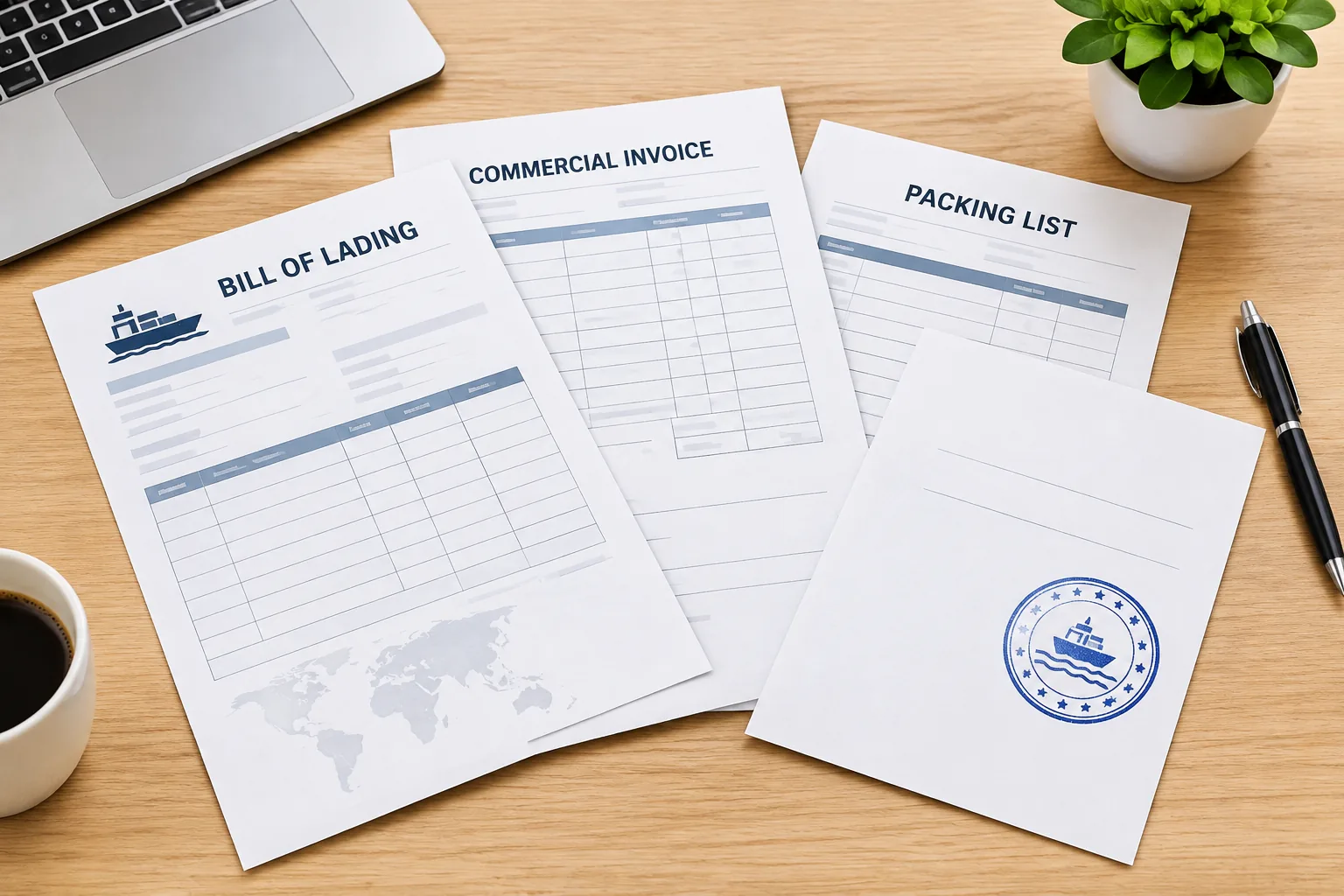
Shipping documents including bill of lading, invoice and packing list
The Deduction Table
Condition
Effect
Separately stated
Deductible
Genuine cost
Required
Post import element
Deductible
Inland after arrival
Sometimes
Included silently
Lost
No evidence
Lost
Incoterms Change the Number
The term on the invoice tells customs where the seller’s obligation ends, and that point is where the value of the goods is being measured.
An FOB price excludes main carriage and is convenient for a FOB based regime. A DDP price includes everything, including the importing country’s duty, and needs careful unpicking so the duty itself is not valued.
The Term Table
Term
Price includes
EXW
Goods only
FCA
Goods, origin handling
FOB
Goods, origin charges
CFR
Plus main freight
CIF
Plus insurance
DAP
Plus delivery
DDP
Plus duty
The Adjustment Table
Term
Action
EXW
Add transport
FOB
Per regime
CFR
Add insurance
CIF
Use as is
DAP
Deduct post arrival
DDP
Deduct duty
The Mistake Table
Error
Consequence
Term mismatch
Reassessment
No breakdown
Overpayment
Duty in value
Overpayment
Inland included
Overpayment
Term not stated
Delay
Two terms used
Query
Currency and Conversion
Customs converts a foreign currency price into local currency at a rate it publishes, and the rate used is usually not the rate on the contract.
The Rule Table
Element
Basis
Rate
Published
Date
Declared
Fixed period
Common
Contract rate
Ignored
Multiple currencies
Separately
Rounding
Local rule
The Impact Table
Factor
Effect
Volatile currency
Variance
Long payment terms
Variance
Forward cover
No effect
Rate change
Duty change
Documentation
Evidence
Consistency
Credibility
The Currency Log Table
Record
Purpose
Contract
Price
Invoice
Amount
Rate applied
Calculation
Payment proof
Reality
Adjustment note
Audit
Ruling
Certainty
Related Party Transactions
A trading arm that buys at a low price and resells at a high one is not doing anything wrong, but the low price will be examined. The defence is a study that shows the margin the trading arm earns is consistent with what an unrelated intermediary would earn.
A sale between related parties is accepted at its invoice price only if the relationship has not influenced the price, and the burden of showing that falls on the importer.
For a factory selling to its own trading arm, or to a distributor it owns, this is the central valuation question rather than a technical detail.
The Relation Table
Relationship
Scrutiny
Common ownership
High
Family
High
Exclusive agent
Moderate
Joint venture
Moderate
Unrelated
Low
Once only
Low
The Related Probe Table
Test
Method
Arms length
Comparison
Transfer pricing study
Support
Test values
Alternative
Deduction
Alternative
Computed
Alternative
Fallback
Last resort
The Related Proof Table
Evidence
Weight
TP study
High
Comparable sales
High
Other buyers
High
Margin analysis
Moderate
Price list
Moderate
Assertion
None
When the Price Looks Too Low
Customs officers see thousands of bag invoices, and they know what a nylon backpack and a leather tote should cost. A price far below the pattern will be questioned, and the question is easier to answer before it is asked.
The Flag Table
Signal
Reading
Below database
Query
Same price all models
Suspect
No freight breakdown
Query
Round numbers
Query
Unusual term
Query
Related parties
Review
The Response Table
Situation
Answer
Genuine efficiency
Cost evidence
Clearance stock
Commercial proof
Sample pricing
Explain
Promotional
Contract
Currency move
Rate data
Error
Correct
The When Hazard Table
Outcome
Effect
Accepted
Cleared
Adjusted
Duty due
Penalty
Cost
Seizure
Severe
Audit opened
Ongoing
Trader rating
Damaged
Supporting the Declared Value
The file that supports a declaration is built before the shipment, not after the query, and it is assembled by the exporter as much as by the importer.
The File Table
Document
Purpose
Purchase order
Commercial basis
Invoice
Price
Cost sheet
Support
Payment proof
Reality
Freight invoice
Separability
Insurance note
Separability
The Cost Sheet Table
Line
Includes
Material
Yes
Labour
Yes
Overhead
Yes
Profit
Yes
Freight
Separate
Commission
Stated
The Retention Table
Record
Period
Invoices
Years
Declarations
Years
Cost sheets
Years
Payment records
Years
Rulings
Indefinite
Correspondence
Years
Invoice Structure That Survives Audit
The same discipline applies to the packing list. Carton counts and weights that do not match the bill of lading are the most common reason a straightforward shipment is held, and the correction costs days rather than dollars.
An invoice built for customs is a slightly different document from an invoice built for payment, and the difference costs nothing to produce.
The version that works separates goods value, freight, insurance, tooling and any licence element into named lines, states the Incoterm, and does not use the word free anywhere the goods have a value.
The Line Table
Line
Treatment
Unit price
Goods
Freight
Named
Insurance
Named
Tooling
Named
Licence
Named
Discount
Explained
The Wording Table
Wording
Effect
FOB Shanghai
Clear
Delivered
Vague
No commercial value
Only if true
Sample
Value still due
Gift
Rarely accepted
Warranty replacement
Explained
The Consistency Table
Document
Must match
Invoice
Declaration
Packing list
Carton count
Bill of lading
Weights
Order
Quantities
Cost sheet
Price
Contract
Terms
Samples, Gifts and Free Goods
Goods that carry no invoice still carry a value for customs purposes, and a bag sent free of charge is valued by reference to identical or similar goods.
This is one of the most common small errors in the sector, and it is also one of the least expensive to fix, because the valuation of a sales sample is a matter of a documented comparable price rather than of argument.
The Sample Table
Type
Value basis
Salesman sample
Comparable
Pre production sample
Comparable
Buyer’s own material
Assist
Counter sample
Comparable
Marketing giveaway
Comparable
Destroyed sample
Declared
The Samples, Log Table
Record
Purpose
Sample list
Count
Comparable price
Value
Purpose statement
Relief
Courier document
Trace
Approval note
Justification
Follow up order
Evidence
The Error Table
Error
Result
Zero value
Adjusted
Undervalued
Adjusted
No description
Held
Wrong code
Query
Missing documents
Delay
Repeat pattern
Audit
Repairs, Returns and Replacement Goods
Goods that come back for repair, or that go out as a warranty replacement, are valued differently from a fresh sale, and treating them as new goods overpays.
The Repair Table
Scenario
Basis
Outward repair
Full value
Returned after repair
Repair cost
Warranty replacement
No charge
Defective return
Full value
Re import
Relief
Scrap
No value
The Replacement Table
Element
Treatment
Goods
No value
Freight
Cost
Duty
Per rule
Documentation
Required
Warranty proof
Essential
Repeat supply
Reviewed
The Pitfall Table
Pitfall
Cost
Replacement valued as sale
Duty twice
Repair not declared
Penalty
No warranty evidence
Duty
Mixed consignment
Delay
Wrong code
Query
No records
Assessment
Challenges and Rulings
The party who answers a query well is usually the one who kept the cost sheet. Without it the answer becomes an assertion, and an assertion against a database of comparable prices is a weak position.
A valuation challenge is a conversation with a deadline, and the outcome depends on what can be produced within it rather than on what is true.
Customs officer inspecting cartons of bags at a warehouse bay
The Step Table
Step
Timing
Query received
Immediate
Response drafted
Days
Documents filed
Days
Assessment issued
Weeks
Appeal
Deadline
Ruling
Months
The Defence Table
Argument
Strength
Cost sheet
High
Comparable sales
High
Consistent history
High
Third party evidence
Moderate
Assertion
None
Silence
Fatal
The Ruling Table
Type
Use
Advance ruling
Certainty
Valuation advice
Guidance
Binding decision
Defence
Appeal decision
Precedent
Internal note
Weak
Verbal opinion
None
Post Clearance Audits
An audit arrives months or years after the shipment, which means the evidence has to have been kept rather than reconstructed.
The Scope Table
Area
Checked
Declared value
Yes
Assists
Often
Royalties
Often
Related parties
Yes
Codes
Yes
Origin
Sometimes
The Request Table
Request
Prepare
Invoice copies
Filed
Cost sheets
Filed
Payment proof
Filed
Contracts
Filed
Licence agreements
Filed
Freight invoices
Filed
The Finding Table
Finding
Response
No issue
Close
Underpayment
Pay
Penalty
Negotiate
Systematic
Settlement
Criminal
Legal
Appeal
Deadline
Penalties and Voluntary Disclosure
Voluntary disclosure is usually cheaper than discovery, and the gap between them is large enough to justify a policy.
The Penalty Table
Behaviour
Treatment
Honest error
Corrected
Reckless
Penalty
Deliberate
Severe
Repeat
Severe
Self disclosed
Reduced
Co operative
Reduced
The Disclosure Table
Element
Value
Promptness
High
Completeness
High
Cooperation
High
Remediation
High
Legal advice
Prudent
Documentation
Essential
The Penalties Spend Table
Route
Cost
Correct early
Duty only
Disclose
Duty plus reduced
Found in audit
Duty plus penalty
Litigation
Fees
Seizure
Goods
Reputation
Trader status
Who Owns the Number
The importer of record is legally responsible for the declared value, but the information almost always originates at the factory, which is why the process has to be shared even though the liability is not.
The Role Table
Party
Provides
Factory
Cost sheet
Factory
Assist list
Buyer
Licence terms
Buyer
Freight contract
Broker
Declaration
Customs
Assessment
The Handoff Table
Moment
Data
Order
Price basis
Production
Assist usage
Packing
Weights
Booking
Freight
Invoicing
Breakdown
Declaration
Final
The Gap Table
Gap
Consequence
Factory silent on assists
Underpaid
Buyer hides royalty
Penalty
Broker guesses freight
Adjustment
No cost sheet
Weak defence
No review
Repeat
Working With a Broker
A broker files what it is given, and a broker that is given a single delivered price has no choice but to declare that price.
The Instruction Table
Give
Why
Incoterm
Basis
Freight amount
Deduction
Insurance
Deduction
Assist value
Addition
Licence value
Addition
Cost sheet
Support
The Working Audit Table
Check
Frequency
Entry accuracy
Per shipment
Value consistency
Monthly
Code consistency
Monthly
Assist tracking
Quarterly
Licence treatment
Annually
Reconciliation
Annually
The Metric Table
Metric
Meaning
Value per unit
Reasonableness
Value per kilo
Cross check
Duty rate
Code
Query rate
Quality
Correction rate
Accuracy
Broker errors
Control
Valuation and Classification Together
Value and classification are separate legal questions, and yet they interact in practice because a wrong code attracts the wrong scrutiny to the wrong number.
The Valuation Overlap Table
Code issue
Value impact
Wrong material
Different rate
Wrong function
Different rate
Wrong origin
Different rate
Composite goods
Allocation
Sets
Allocation
Accessories
Included
The Valuation Split Table
Case
Method
Bag with rain cover
Single good
Gift set
Principal good
Sample pack
Per item
Mixed container
Per line
Freight for all
Allocated
Insurance
Allocated
The Valuation Audit Table
Trigger
Action
New material
Recheck
New construction
Recheck
New market
Ruling
Rate change
Recheck
Query received
Review both
Audit
Full review
First Sale and Successive Sales
Where goods are bought and sold more than once before they are imported, some regimes allow the value to be based on an earlier sale in the chain rather than on the last one.
The advantage is real and the conditions are strict: the earlier sale has to be a genuine sale for export, the goods must be clearly destined for the importing country, and the parties must be unrelated or the price must pass the arms length test.
The Chain Table
Sale
Possible basis
Factory to trader
Sometimes
Trader to importer
Usually
Importer to retailer
Never
Related parties
Tested
Exclusive agent
Judged
Sample sale
No
The First Require Table
Condition
Requirement
Genuine sale
Evidence
For export
Documents
Clearly destined
Shipment
Arms length
Test
No material change
Between sales
Records
Full
The First Hazard Table
Risk
Note
Rejected basis
Duty due
Weak evidence
Reassessment
Trader margins
Scrutiny
Multi country
Complex
Advice needed
Yes
Benefit
Material
Reliefs That Interact With Value
Duty relief schemes and preferential rates are calculated on the customs value, so an error in value contaminates a benefit that was otherwise correctly claimed.
The Relief Table
Scheme
Basis
Preference
Value
Quota
Value or quantity
Processing
Value added
Temporary import
Value
Returned goods
Value
De minimis
Value
The Reliefs Overlap Table
Scheme
Value issue
Preference
Understatement
Processing
Costing
Temporary
Full value
Repairs
Repair cost
Samples
Comparable
Low value
Threshold
The Reliefs Paper Table
Document
Purpose
Origin certificate
Preference
Cost statement
Processing
ATA carnet
Temporary
Repair invoice
Repairs
Value declaration
Threshold
Commercial invoice
All
The Real Cost of Understating
Understating value is presented as a way to save duty, and it is worth doing the arithmetic on what it actually saves and what it risks.
On a container of bags with a duty rate in the single digits, the saving is a small percentage of the goods value. The exposure is the duty, interest, a penalty that can be a multiple of the duty, and an audit that covers every prior shipment.
The Saving Table
Element
Effect
Duty saved
Small
Cash flow
Small
Price position
Marginal
Competitiveness
Illusory
Duration
Until audit
Recovery
None
The The Expose Table
Element
Scale
Duty
Full
Interest
Added
Penalty
Multiple
Audit scope
Years
Legal cost
Material
Goods
At risk
The Comparison Table
Approach
Outcome
Accurate
Predictable
Documented
Defensible
Ruling obtained
Certain
Understated
Exposed
Estimated
Fragile
Silent
Worst
Low Value Consignments and E Commerce
Low value thresholds have tightened in most markets, and a programme that ships single bags to consumers now faces valuation questions on parcels that once passed without any.
The Parcel Table
Element
Issue
Unit value
Threshold
Freight
Included
Platform fee
Judged
Marketing
Excluded
Insurance
Included
Consolidation
Splitting
The Low Hazard Table
Practice
Consequence
Splitting orders
Investigation
Declaring below cost
Penalty
No value on gift
Adjusted
Wrong description
Held
Inconsistent data
Flagged
Bulk resale
Scrutiny
The Control Table
Control
Purpose
Value per SKU
Consistency
Freight allocation
Accuracy
Platform data
Reconciliation
Country rules
Compliance
Records
Defence
Review
Currency
Temporary Imports and Carnets
Goods that travel for a trade fair or a buyer meeting are not imported in the ordinary sense, and a carnet is the instrument that keeps them out of the duty account.
The Instrument Table
Instrument
Use
ATA carnet
Exhibitions
Temporary admission
Samples
Bonded warehouse
Storage
Inward processing
Repair
Transit
Movement
Free zone
Rework
The Temporary Require Table
Condition
Requirement
Re export
Within period
Unchanged
No alteration
Identifiable
Marks
Security
Deposit or bond
Documentation
Carnet
Closure
Evidence
The Temporary Breakdown Table
Failure
Consequence
No re export
Duty due
Lost goods
Duty due
No closure
Liability
Sold at fair
Duty, tax
Damaged
Declared
Late
Penalty
Multi Country Consolidation
A container built for several buyers in several countries creates an allocation problem, because the freight and the value have to be split in a way that each declaration can defend.
The Multi Split Table
Element
Method
Freight
By weight or value
Insurance
By value
Handling
Per shipment
Documentation
Per consignment
Assist
Per buyer
Discount
Per line
The Multi Log Table
Record
Purpose
Allocation sheet
Support
Weight data
Basis
Value data
Basis
Invoice per buyer
Declaration
Master invoice
Control
Reconciliation
Audit
The Dispute Table
Issue
Risk
Uneven allocation
Query
One invoice for all
Rejection
Freight not separated
Overpayment
Mixed incoterms
Confusion
Wrong consignee
Delay
No allocation
Assessment
Building a Valuation Procedure
A valuation procedure is short and unglamorous: a costing template, an assist register, an invoice checklist and a review before the declaration is filed.
The Procedure Table
Step
Output
Cost
Template
Assists
Register
Licence
Assessed
Invoice
Structured
Review
Signed
File
Retained
The Template Table
Field
Purpose
Unit price
Value
Assist per unit
Addition
Licence per unit
Addition
Freight
Separable
Insurance
Separable
Incoterm
Basis
The Building Audit Table
Check
Owner
Price reasonable
Sales
Assist complete
Production
Licence assessed
Legal
Freight correct
Logistics
Documents match
Broker
File complete
Admin
Training the People Who Create the Data
The value is created by people who have never read a customs code: the merchandiser who prices the order, the planner who consumes the buyer’s zips, the accountant who books the royalty.
The Audience Table
Role
Needs
Merchandiser
Price basis
Planner
Assist use
Accountant
Royalty
Logistics
Freight split
Broker
Instruction
Management
Risk
The Message Table
Message
Why
Invoice is legal
Consequence
Assists count
Common gap
Royalties count
Costly
Freight separability
Saving
Records matter
Defence
Ask early
Cheap
The Training Breakdown Table
Failure
Root
Assist forgotten
No register
Royalty ignored
No review
Freight bundled
No template
Price unsupported
No cost sheet
Inconsistent entries
No owner
Panic at audit
No file
Common Misconceptions
Most valuation errors trace back to a handful of beliefs that sound reasonable and are wrong.
The Belief Table
Belief
Reality
Invoice is final
Adjustments apply
Samples are free
Valued
Freight never counts
Depends
Assist is buyer’s cost
Added
Licence is marketing
Sometimes added
Related price is fine
Tested
The Correction Table
Belief
Fix
Invoice is final
Cost sheet
Samples are free
Comparable
Freight never counts
Separate line
Assist is buyer’s cost
Register
Licence is marketing
Written analysis
Related price is fine
TP study
The Common Spend Table
Misconception
Typical cost
Assist omitted
Duty plus penalty
Freight bundled
Overpaid duty
Royalty missed
Duty plus penalty
Sample at zero
Adjustment
Related price untested
Reassessment
No records
Assessment
A Worked Example
Consider an order of five thousand backpacks at twelve dollars each, FOB, where the buyer supplies branded zippers worth one dollar per bag and pays a brand licence of fifty cents per bag.
The Build Table
Element
Per unit
FOB price
Twelve
Buyer zips
One
Licence
Half
Freight
Allocated
Insurance
Allocated
Declared
Sum
The Split Table
Line
Treatment
Goods
Dutiable
Zips
Dutiable
Licence
Dutiable if related
Freight
Per regime
Insurance
Per regime
Marketing fee
Excluded
The Lesson Table
Observation
Meaning
Invoice alone
Understated
Assists material
Material
Licence tested
Necessary
Freight separated
Savings
Cost sheet
Defence
Records
Retention
The pattern is consistent: the invoice understates the legal value by the buyer supplied materials and any related licence, and both are invisible unless somebody is tasked with finding them.
FAQ
Is the customs value the same as the invoice price?
Usually it starts there, but it is not the same number. The law adds items the invoice may not show, such as buyer supplied materials, certain royalties and selling commissions, and it allows deductions for items the invoice may include, such as separable freight and post import costs.
Do buyer supplied zippers really increase the declared value?
Yes. Materials, components, tooling and design work provided free or at reduced cost by the buyer are assists, and their value is added to the price paid. This is one of the most frequently missed adjustments in bag manufacturing, because the material never appears on the finished goods invoice.
Are brand licence fees always dutiable?
No, and the test has two parts. The fee must relate to the imported goods and payment must be a condition of sale. A fee for using a trademark in local marketing after import usually fails the first test; a fee the supplier cannot sell the goods without usually passes both.
How should freight be treated?
It depends on the valuation basis of the importing country. CIF based regimes include it, FOB based regimes exclude it. In either case, state freight and insurance separately on the invoice, because a bundled delivered price removes the importer’s ability to claim a deduction that may be available.
What happens if a related party sells below market price?
The price may be rejected and replaced with a test value. The importer normally has to show that the relationship did not influence the price, which in practice means a transfer pricing study, comparable sales to unrelated buyers, or a documented margin analysis.
How are free samples valued?
By reference to identical or similar goods, not at zero. A sales sample of a bag that sells for thirty dollars is valued at a comparable price even when no money changes hands, and the shipment documents should state that basis rather than the words no commercial value.
Should we request an advance ruling?
It is worth it when a product or a licensing arrangement is material to the business and the treatment is genuinely unclear. A ruling costs time and gives certainty for the period it covers, which is usually cheaper than discovering the answer in an audit two years later.
What records should a factory keep for valuation purposes?
The purchase order, the commercial invoice, a cost sheet showing material, labour, overhead and profit, proof of payment, the freight invoice, the insurance note, any licence agreement and an assist register. Retention periods are set locally but are usually measured in years, not months.
Conclusion
Customs valuation is a definition, not an opinion, and the definition is narrow enough to be applied by anyone willing to read it twice.
The invoice is the starting point. Buyer supplied materials, certain royalties, selling commissions and packing are added; separable freight, insurance where the regime allows, and post import costs are deducted; and the result has to be supportable with documents that exist before the question is asked.
For a bag factory the practical work is small and repetitive: build a costing template, keep an assist register, write down what the licence actually buys, state freight separately, and review the file before the declaration leaves. None of that reduces the duty legally owed, and all of it reduces the duty that gets paid twice.