Chemical vs Mechanical Recycling: Which Suits Bag Materials?
Chemical vs Mechanical Recycling: Which Suits Bag Materials?
The choice between chemical and mechanical recycling is usually presented as a sustainability preference. In a bag factory it is a material engineering decision, because the two routes produce feedstock with different property profiles, different contamination tolerance, and different implications for coating, dyeing and seam performance.
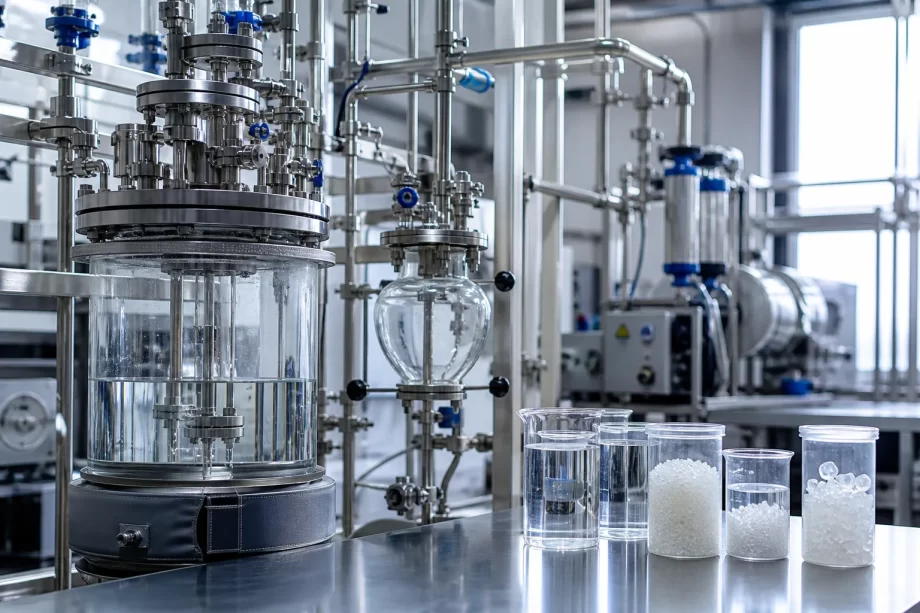
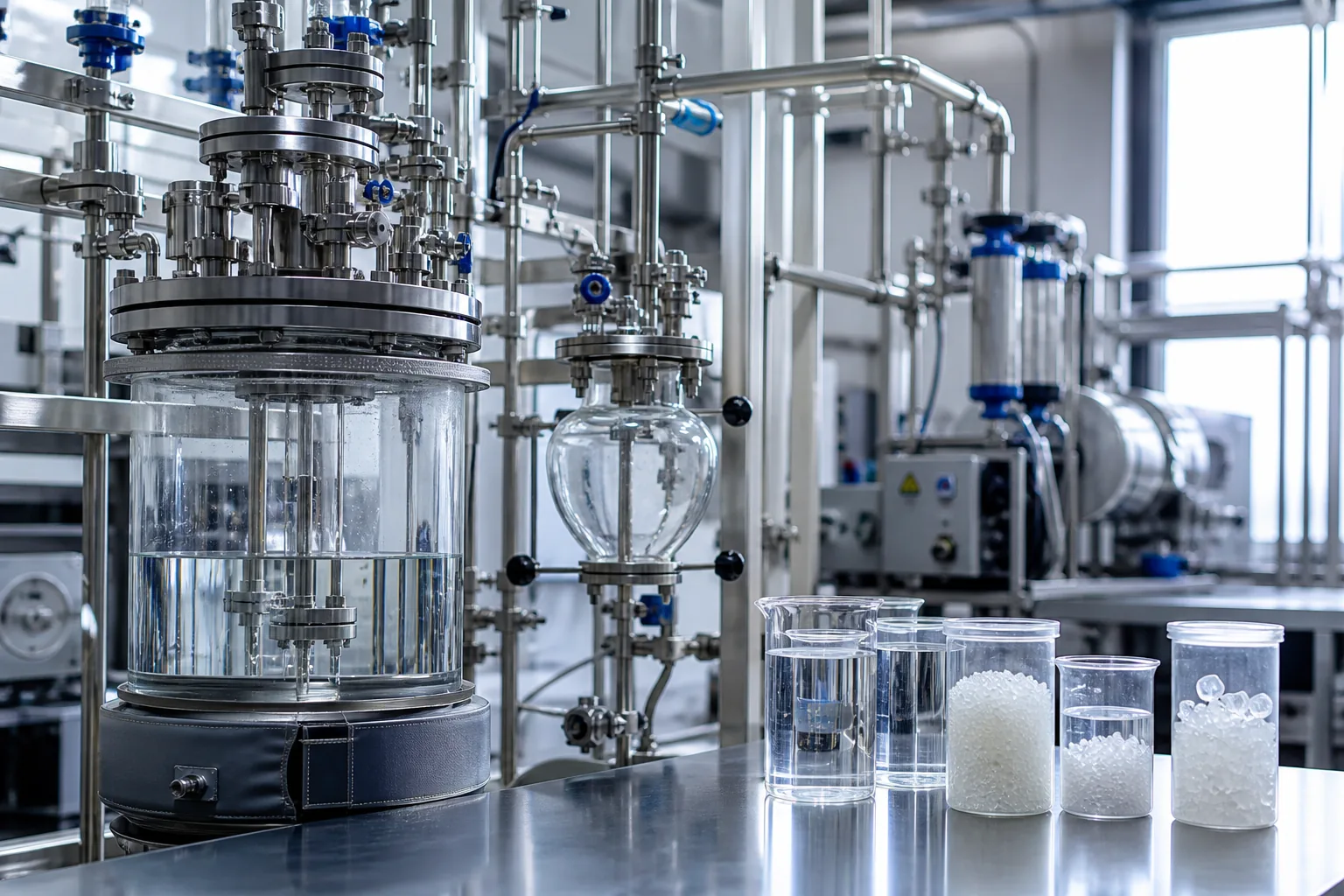
Chemical recycling laboratory with glass reactors and polymer samples
This guide compares the two routes from the position of a manufacturer specifying fabric for a backpack programme. It covers what each route accepts, how properties survive, where coatings and blends cause trouble, and how capacity and cost shape what is actually available on an order schedule.
It then sets out how to allocate the right route to each component of a bag, how to write the requirement into a specification, and how to verify what arrives.
Both routes return nylon to usable polymer. The difference is how far the material is broken down, and that single difference explains almost every practical consequence that follows.
The Route Comparison Table
Aspect
Mechanical
Chemical
Principle
Melt and re-form
Break to monomer
Purity requirement
High
Lower
Property retention
Good to moderate
Near virgin
Contamination tolerance
Low
Higher
Energy intensity
Lower
Higher
Plant scale
Smaller
Larger
The Process Step Table
Mechanical step
Chemical step
Collection
Collection
Sorting
Sorting
Washing
Depolymerisation
Drying
Purification
Melting
Repolymerisation
Re-spinning
Spinning
The Feedstock Table
Stream
Mechanical fit
Production offcuts
Excellent
Clean mill waste
Excellent
Sorted post-consumer
Moderate
Mixed colour waste
Poor
Coated fabric
Difficult
Blended fabric
Poor
The Output Table
Output
Character
Recycled chip
Consistent grade
Recycled yarn
Spinning dependent
Regenerated monomer
Virgin-equivalent
Blended pellet
Cost-driven
Off-grade
Second application
Reject
Downcycle
The Chain Table
Link
Mechanical
Chemical
Collector
Required
Required
Sorter
Critical
Important
Processor
Extruder
Reactor
Spinner
Local
Integrated
Certifier
Per site
Per site
Lead time
Short
Long
Mechanical recycling preserves the polymer chain and therefore preserves its history; chemical recycling discards the history and with it the accumulated impurities.
Mechanical Recycling in Practice
Mechanical recycling is the route most bag factories already touch, usually without calling it that, because production offcuts have been regranulated and resold for decades.
The Strength Table
Strength
Practical benefit
Low capital intensity
Regional availability
Short process chain
Fast lead time
Energy efficient
Lower footprint per kilogram
Familiar technology
Wide supplier base
Local capacity
Short freight
Cost competitive
Accessible pricing
The Weakness Table
Weakness
Production consequence
Chain scission
Lower tenacity
Thermal history
Narrower process window
Colour limitation
Restricted palette
Contamination sensitivity
Batch rejection
Coating residue
Spinning faults
Blend intolerance
Property scatter
The Degradation Table
Cycle
Typical effect
First regrind
Minor loss
Second regrind
Measurable loss
Third regrind
Property drift
Fourth cycle
Limited application
Repeated heat
Embrittlement
Mixed history
Unpredictable
The Quality Control Table
Control
Purpose
Incoming sort
Remove foreign polymer
Metal detection
Protect equipment
Moisture control
Prevent hydrolysis
Filtration
Remove particles
Melt flow check
Verify processability
Batch retention
Reference sample
The Application Table
Component
Mechanical fit
Lining fabric
Good
Internal pockets
Good
Webbing
Moderate
Shell fabric
Case by case
Binding tape
Good
Reinforcement panels
Good
The Plant Table
Requirement
Detail
Sorting area
Segregated bays
Washing line
Water treatment
Extruder
Filtration stage
Laboratory
Melt flow and tenacity
Storage
Covered, dry
Traceability
Batch coding
Mechanical recycling is strongest where the waste stream is clean, single-polymer and geographically close, which describes a factory’s own cutting room better than it describes a municipal collection scheme.
Chemical Recycling in Practice
Chemical recycling breaks polyamide back to its building blocks and rebuilds it. For a bag factory the attraction is not environmental romance but the ability to accept material that mechanical recycling cannot process.
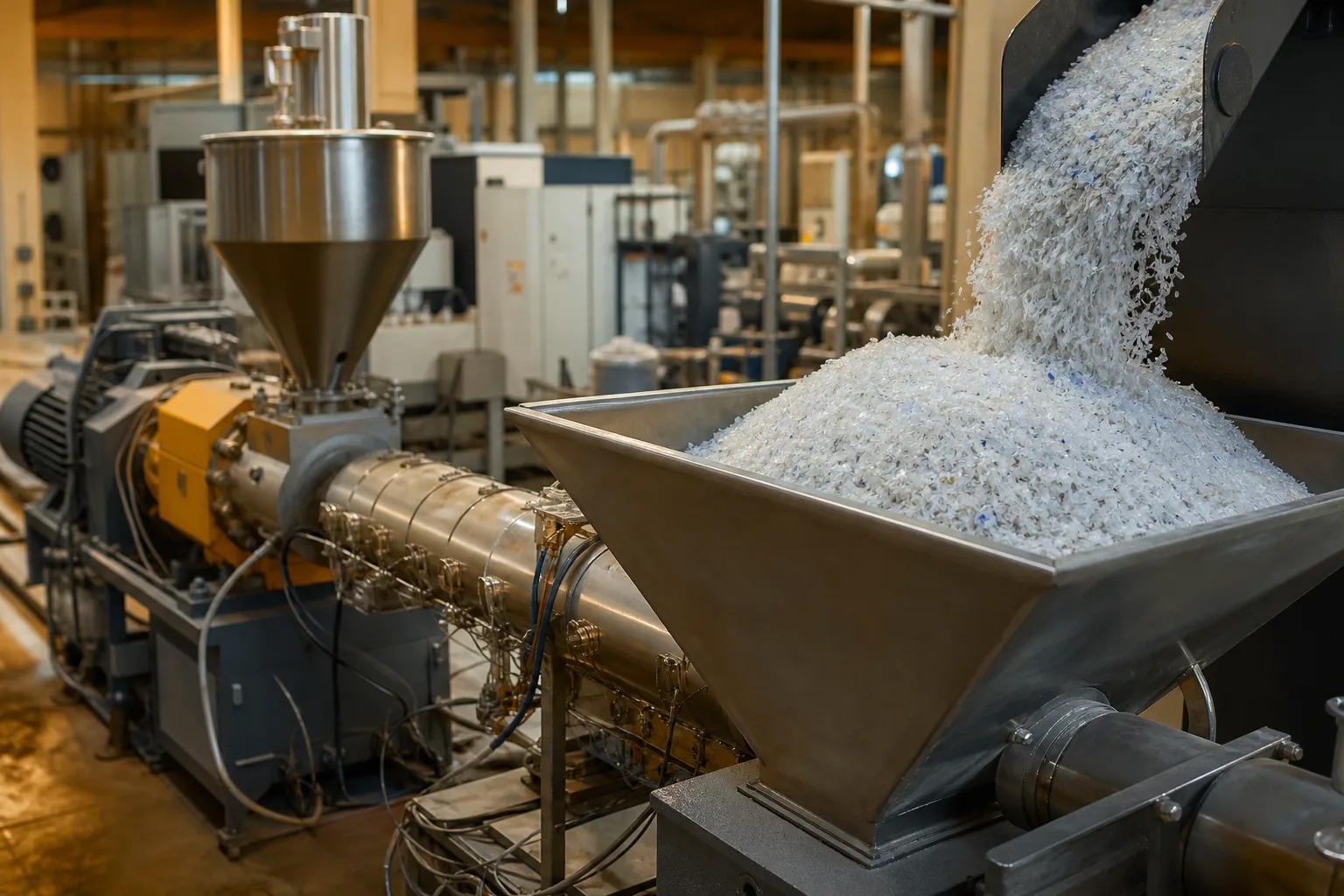
Mechanical recycling line with extruder and shredded nylon flakes
The Method Table
Method
What happens
Depolymerisation
Polymer to monomer
Purification
Monomer to specification
Repolymerisation
Monomer to polymer
Solvolysis
Dissolution and recovery
Pyrolysis
Thermal breakdown
Enzymatic
Biological breakdown
The Advantage Table
Advantage
Factory relevance
Impurity tolerance
Accepts coated waste
Virgin-equivalent output
Full property recovery
Mixed stream handling
Broader feedstock
Colour removal
Wider palette
Blend separation
Multi-material waste
Closed-loop potential
Same application
The Chemical Constraint Table
Constraint
Effect
Capital intensity
Few plants, long distances
Energy demand
Footprint sensitive
Scale threshold
Minimum volume
Feedstock quality
Still needs sorting
Output allocation
Contract-based
Lead time
Weeks to months
The Availability Table
Region type
Chemical capacity
Mature textile hub
Growing
Emerging hub
Limited
Island economy
Import dependent
Landlocked market
Freight burden
Low-wage region
Scarce
Integrated complex
Preferred
The Process Claim Table
Claim
Requirement
Recycled content
Mass balance records
Closed loop
Verified return flow
Virgin-equivalent
Test evidence
Lower carbon
Footprint study
Certified process
Scheme audit
Traceable origin
Chain documents
The Reality Table
Expectation
Actual position
Widely available
Concentrated capacity
Immediately cheaper
Premium persists
Unlimited volume
Allocation limits
Any colour
Still practical limits
No sorting needed
Sorting remains essential
Fully closed loop
Rarely closed
Chemical recycling solves the contamination problem and creates a logistics problem, and for most bag programmes the distance between the two determines whether it is usable.
What Each Route Can Accept
The practical limit on any recycled programme is not the technology but the waste stream. Understanding which stream a factory can actually secure is the first honest step in route selection.
The Acceptance Table
Stream
Mechanical
Chemical
Cutting offcuts
Yes
Yes
Greige mill waste
Yes
Yes
Dyed fabric waste
Limited
Yes
Coated fabric
Difficult
Yes
Blended fabric
No
Partly
Post-consumer bags
Limited
Yes
The Contamination Table
Contaminant
Effect
Polyester blend
Property scatter
Coating residue
Filtration load
Metal fittings
Equipment damage
Dirt and organics
Odour and quality
Moisture
Hydrolysis
Mixed colour
Palette limit
The Sorting Table
Level
Method
Manual
Visual and hand sort
Near-infrared
Polymer identification
Density
Separation by medium
Magnetic
Metal removal
Colour
Optical sorting
Manual final
Quality gate
The Stream Security Table
Source
Reliability
Own cutting room
High
Neighbouring factory
High, contract
Local garment cluster
Moderate
Municipal collection
Low consistency
Take-back scheme
Growing
Trader network
Variable
The Volume Table
Requirement
Implication
Consistent monthly tonnage
Contract needed
Single polymer
Segregation needed
Stable colour
Sort by shade
Predictable quality
Supplier audit
Seasonal supply
Buffer stock
Growth plan
Multi-source
A factory that controls its own offcuts has a reliable mechanical stream on site, and a factory that does not is buying a commodity whose quality it cannot inspect before it arrives.
Property Retention and What It Means on the Floor
Bag performance depends on a small number of properties, and the two routes affect them differently. The differences are measurable, and they change process settings rather than design concepts.
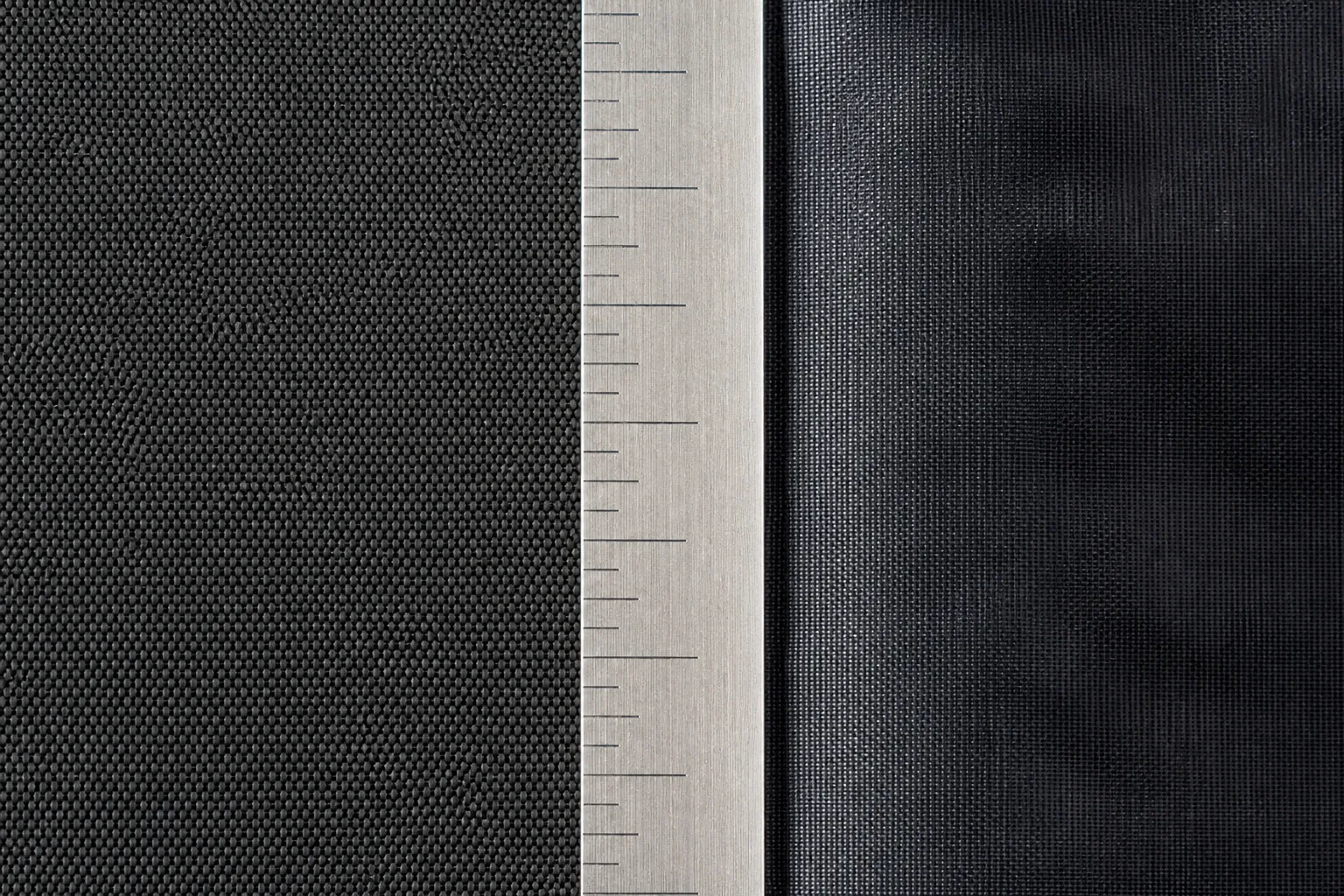
Two nylon fabric samples side by side on a comparison bench with a steel rule
The Property Table
Property
Mechanical
Chemical
Tenacity
Reduced
Near virgin
Elongation
Variable
Stable
Tear strength
Reduced
Retained
Abrasion
Moderate loss
Retained
Shrinkage
Less stable
Stable
Hand feel
Slight change
Minimal
The Mechanism Table
Cause
Effect
Chain scission
Lower strength
Thermal history
Narrower window
Residual moisture
Hydrolysis
Particle inclusion
Surface faults
Molecular weight spread
Inconsistent behaviour
Contaminant traces
Colour shift
The Process Adjustment Table
Stage
Change
Pattern grading
Tolerance review
Cutting
Slower lay, more matching
Sewing
Needle and tension reset
Heat sealing
Lower temperature
Coating
Adhesion trial
Inspection
Tighter sampling
The Fabric Specification Table
Requirement
Mechanical route
Minimum tenacity
Set with margin
Tear threshold
Test per batch
Seam strength
Verified on pilot
Colour tolerance
Wider band
Weight tolerance
Monitored
Batch approval
First-off gate
The Reference Table
Comparison
Requirement
Reference fabric
Named and retained
Test method
Identical
Laboratory
Same or accredited
Construction
Matched
Weight
Matched
Reporting
Side by side
A recycled fabric is not better or worse in the abstract; it is different from a named reference, and the specification should say which reference and which method.
Coatings and Blends: Where Routes Diverge Most
Backpack fabric is rarely pure nylon. Coating, film lamination and blended weft change what a recycler can accept, and the difference between the routes is largest at exactly this point.
The Coating Table
Coating type
Mechanical fit
Polyurethane
Difficult
Acrylic
Difficult
Silicone
Very difficult
Film laminate
Not recyclable together
Calendered finish
Tolerable
Uncoated greige
Ideal
The Blend Table
Blend
Mechanical outcome
Nylon with elastane
Property scatter
Nylon with polyester
Separated poorly
Nylon with cotton
Not recyclable
Nylon with reflective yarn
Small share acceptable
Nylon with carbon
Special handling
Pure nylon
Ideal
The Recycling Design Table
Design choice
Recycling effect
Mono-material body
High recovery
Remove film laminate
Higher value
Single polymer trim
Cleaner stream
Sewn-in labels
Minor contaminant
Metal hardware
Removed before shred
Foam backing
Separate stream
The Separation Table
Method
Application
Manual dismantling
Hardware removal
Density separation
Polymer split
Solvent
Coating removal
Thermal
Component melting
Mechanical
Shredding
Chemical
Full depolymerisation
The Downcycle Table
Route
Typical result
Coated waste mechanically
Low-grade application
Coated waste chemically
Polymer recovery
Blended waste mechanically
Filler or low-grade
Blended waste chemically
Partial recovery
Mixed waste
Energy recovery
Contaminated waste
Disposal
The single most effective recycling decision a designer makes is to remove the film laminate, because a mono-material shell can enter a mechanical stream while a laminated one usually cannot.
Capacity, Availability and Lead Time
A route that cannot deliver on schedule is not an option, whatever its technical merit. Availability is the constraint that most often decides what a bag programme actually uses.
The Capacity Table
Route
Typical scale
Mechanical
Regional, many sites
Chemical
Few large plants
Integrated spinning
Mill-linked
Merchant recycler
Trading model
Captive line
Factory-owned
Pilot plant
Development only
The Lead Time Table
Stage
Mechanical
Chemical
Sample availability
Days
Weeks
Bulk yarn
Weeks
Months
Fabric weaving
Weeks
Weeks
Certification
Weeks
Weeks
Shipping
Regional
Intercontinental
Reorder
Short
Allocated
The Allocation Table
Situation
Practical effect
Tight feedstock
Volume capped
Brand contracts first
Spot scarce
New supplier
No allocation
Peak season
Longer queues
Small order
Higher minimum
Long-term agreement
Priority access
The Risk Table
Risk
Mitigation
Single plant dependency
Second source approved
Freight disruption
Buffer inventory
Feedstock shortage
Blended fallback
Certification lapse
Backup certificate
Quality drift
Batch testing
Price volatility
Indexed contract
The Planning Table
Horizon
Action
Annual
Volume forecast to mill
Seasonal
Allocation booking
Per order
Certificate check
Per batch
Retention sample
Contingency
Approved alternative
Review
Quarterly
Book recycled allocation before the sales season rather than after the order arrives, because capacity in both routes is sold forward and spot availability carries a premium.
Cost and Commercial Comparison
The two routes differ in where the cost sits. Mechanical recycling concentrates cost in sorting and quality control; chemical recycling concentrates it in capital, energy and logistics.
The Route Cost Table
Element
Mechanical
Chemical
Feedstock
Moderate
Moderate
Processing
Low
High
Energy
Low
High
Logistics
Short
Long
Capital recovery
Low per kg
High per kg
Certification
Shared
Shared
The Premium Table
Factor
Effect
Virgin-equivalent output
Higher price
Colour capability
Higher price
Small volume
Higher unit cost
Long contract
Lower price
Local supply
Lower freight
Certification scope
Administrative cost
The Hidden Cost Table
Cost
Where it appears
Yield loss
Cutting room
Testing
Quality budget
Sorting labour
Warehouse
Rejected batches
Scrap account
Longer planning
Working capital
Lab approval
Development time
The Comparison Table
Quote basis
Comparability
Per kilogram yarn
Not comparable
Per metre fabric
Closer
Per finished bag
Best
Including testing
Required
Including certification
Required
Including yield
Required
The Value Table
Buyer priority
Route preference
Lowest cost
Mechanical
Highest performance
Chemical
Colour range
Chemical
Local supply
Mechanical
Closed-loop story
Chemical
Simple certification
Mechanical
Comparing routes on yarn price is misleading, because the cheaper yarn frequently carries higher yield loss and testing cost, and the difference shows up in the finished bag.
Allocating Routes by Component
A backpack is not one material, and treating the route decision as a single choice for the whole product wastes both cost and performance. Component-level allocation is where the engineering value sits.
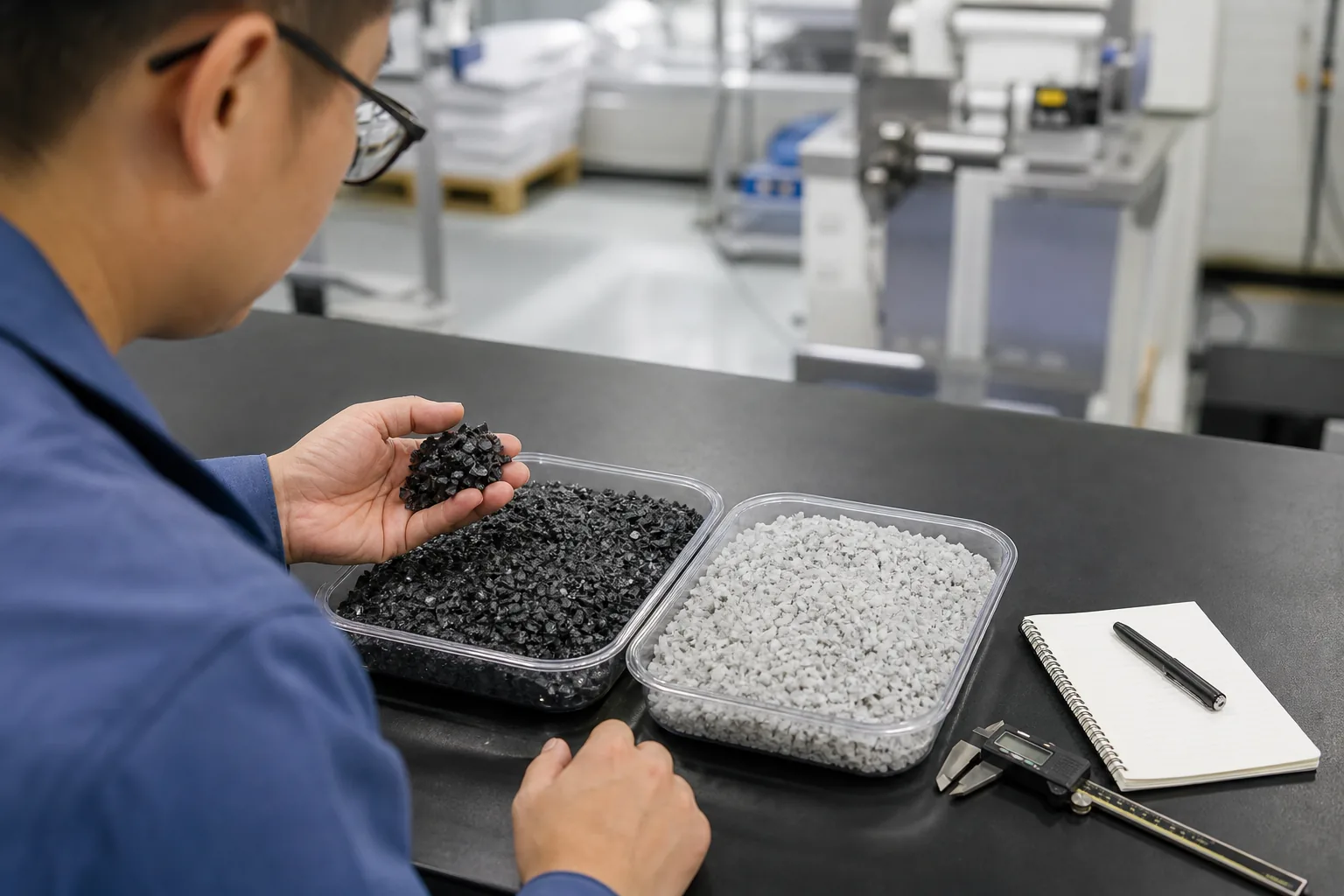
Engineer comparing recycled nylon chip samples in two trays
The Component Table
Component
Suggested route
Shell fabric
Either, tested
Lining
Mechanical
Pocketing
Mechanical
Webbing
Mechanical
Binding
Mechanical
Hardware
Not applicable
The Performance Table
Component
Demand
Shell
Abrasion and tear
Base panel
Abrasion
Lining
Light duty
Straps
Tensile
Zips
Functional
Foam
Shape retention
The Component Cost Table
Component
Cost sensitivity
Shell
Moderate
Lining
High
Pocketing
High
Webbing
High
Trim
Moderate
Hardware
Low
The Component Claim Table
Scope
Practical wording
Shell only
Recycled shell fabric
Shell and lining
Recycled main materials
Majority by mass
Recycled content percentage
All textile
Recycled textile components
Including trim
Full textile claim
Whole bag
Requires hardware clarity
The Decision Table
Situation
Route choice
Premium style
Chemical for shell
Volume programme
Mechanical throughout
Tight colour brief
Chemical for shell
Fast reorder
Mechanical
Closed-loop target
Chemical with return
Cost pressure
Mechanical, shell tested
Put the performance-critical route where the bag is loaded and abraded, and the cost-efficient route everywhere the material is not visible or structural.
Specifying the Route in the Tech Pack
A route decision that lives in a meeting disappears at the first supplier change. It has to be written into the specification with enough precision that a new fabric source can be assessed against it.
The Tech Pack Field Table
Field
Content
Recycled content
Percentage by mass
Route
Mechanical or chemical
Feedstock
Stream described
Certification
Scheme named
Reference fabric
Named comparator
Test panel
Properties listed
The Wording Table
Vague
Precise
Recycled nylon
50 percent mechanically recycled
Eco fabric
Certified recycled, scheme named
Sustainable shell
Recycled content with test report
Green lining
Recycled, mass balance declared
Recycled where possible
Component list with status
Environmentally friendly
Avoid entirely
The Substitution Table
Change
Approval needed
Route change
Buyer and technical
Stream change
Compliance review
Percentage change
Claim update
Mill change
Qualification
Coating change
Adhesion trial
Colour change
Shade approval
The Document Table
Document
Owner
Specification sheet
Product team
Test panel record
Quality
Certificate pack
Compliance
Claim approval
Management
Supplier declaration
Sourcing
Change log
Product team
The Handover Table
Stage
What is transferred
Development to sourcing
Specification
Sourcing to mill
Technical requirement
Mill to factory
Certificate and lot
Factory to production
Cut parameters
Production to quality
Sample
Quality to buyer
Evidence pack
A specification that names the route, the stream and the reference fabric can be quoted accurately by three different mills, and one that names only a percentage will produce three different materials.
Testing That Distinguishes the Routes
Testing serves two purposes here: confirming that the fabric meets the bag’s requirement, and confirming that the route claimed is the route delivered. The second is often neglected.
The Test Table
Test
What it detects
Tensile strength
Chain scission
Tear strength
Structural integrity
Abrasion cycles
Surface durability
Seam strength
Assembly performance
Colour fastness
Dye stability
Coating adhesion
Finish quality
The Verification Table
Claim
Verification method
Recycled content
Certificate and mass balance
Route
Supplier declaration and audit
Percentage
Transaction certificate
Virgin-equivalent
Comparative test report
Closed loop
Return flow records
Local sourcing
Freight documents
The Comparative Table
Element
Requirement
Reference sample
Same construction
Test laboratory
Same or accredited
Test method
Identical standard
Conditioning
Controlled
Reporting
Side by side
Retention
Both samples kept
The Batch Table
Level
Frequency
Development
Full panel
Pilot
Full panel
First bulk
Full panel
Routine
Reduced panel
Disputed
Full re-test
Annual
Full panel
The Failure Table
Result
Interpretation
Tensile below reference
Chain scission likely
Tear below threshold
Structural weakness
Colour off-band
Feedstock variability
Adhesion failure
Coating incompatibility
Inconsistent batches
Sorting problem
Meets all tests
Route plausible
Testing cannot prove which route produced a yarn, but it can prove whether the yarn behaves like the route claimed, and that is usually enough to settle the question.
Closing the Loop Inside the Factory
The most reliable recycled stream a bag factory can access is the one it generates. Cutting offcuts are clean, single-polymer and already on site, which makes them ideal for mechanical recovery.
The Waste Table
Waste type
Recovery fit
Cutting offcuts
Excellent
Panel rejects
Excellent
Sample scrap
Good
Trim waste
Moderate
Coated offcuts
Difficult
Finished goods rejects
Case by case
The Yield Table
Factor
Effect on volume
Marker efficiency
Higher offcut volume
Style complexity
More small pieces
Fabric width
Utilisation change
Order size
Batching effect
Colour count
Segregation burden
Quality standard
Reject share
The Loop Table
Step
Requirement
Collection
Labelled bins by polymer
Segregation
Colour separation
Storage
Dry, covered
Baling
Density for transport
Processing
Local recycler
Return
Recycled content back
The Economics Table
Item
Effect
Disposal cost avoided
Saving
Baling labour
Cost
Transport to recycler
Cost
Recycled yarn purchase
Cost
Certification
Admin cost
Story value
Commercial
The Loop Constraint Table
Constraint
Practical limit
Volume match
Waste rarely equals need
Colour match
Palette restriction
Quality
Offcuts are clean
Certification
Recycler must be certified
Logistics
Local partner needed
Accounting
Mass balance required
A factory that shreds nothing and sells its offcuts as waste is giving away the cleanest feedstock it will ever handle, and buying recycled yarn back at a premium.
Design Choices That Decide the Route
Route selection is often presented as a purchasing decision made after the design is fixed. In practice the design has already chosen the route, because material construction determines which recycling stream the bag can ever enter.
The Route Design Table
Design decision
Route consequence
Mono-material shell
Mechanical viable
Film laminate
Chemical or disposal
Coating weight
Sorting difficulty
Blend with elastane
Mechanical blocked
Single colour
Easier segregation
Detachable components
Higher recovery
The Bonding Table
Bond type
Separation
Sewn seam
Easy
Glued seam
Difficult
Welded seam
Very difficult
Laminated film
Requires chemistry
Foam backing
Manual removal
Taped seam
Moderate
The Trim Table
Trim
Recycling effect
Nylon webbing
Recoverable
Polyester webbing
Contaminant
Metal hardware
Removed first
Plastic hardware
Polymer mismatch
Woven labels
Minor
Printed labels
Minor
The Longevity Table
Factor
Effect on recovery
Repairability
Extends first life
Modular parts
Easier dismantling
Standard fasteners
Reusable
Service network
Return channel
Take-back scheme
Feedstock
Repair manual
Field life
A bag designed with glued laminates and welded seams has already ruled out mechanical recovery, whatever the specification later claims about recycled content.
What Changes on the Sewing Floor
Recycled feedstock changes machine behaviour in ways that are small individually and cumulative in production. The adjustments are routine once the pattern is set, and costly if discovered during bulk.
The Machine Table
Setting
Adjustment
Needle size
Slightly smaller
Needle type
Ball point where suitable
Stitch density
Tested per seam
Thread tension
Reduced
Presser foot
Light pressure
Machine speed
Lowered
The Defect Table
Defect
Cause
Seam puckering
Tension and feed
Needle damage
Heat and friction
Skipped stitches
Fibre irregularity
Seam slippage
Weave stability
Surface marks
Foot pressure
Thread breakage
Abrasion
The Handling Table
Stage
Practice
Spreading
Relax before lay
Cutting
Sharp blades, slower
Bundling
Shade-matched
Feeding
Consistent direction
Pressing
Lower temperature
Packing
Fold without crease
The Training Table
Audience
Focus
Cutters
Roll matching
Sewers
Tension and needle
Pressers
Heat limits
Inspectors
New defect set
Supervisors
First-off gate
Maintenance
Needle stock
The most common production surprise with recycled nylon is a seam that puckers at speed, and the fix is a needle and tension change made at pilot rather than at bulk.
Common Mistakes in Route Selection
Most programme failures are decision failures made early, and they surface later as quality complaints or claim problems that no amount of inspection can fix.
The Mistake Table
Mistake
Consequence
Choosing by price alone
Yield and testing cost
Assuming equivalence
Unmet performance
Ignoring coating
Adhesion failure
Single-source approval
Supply interruption
Vague specification
Inconsistent material
Claim without certificate
Withdrawal
The Assumption Table
Assumption
Reality
Recycled is recycled
Route matters
Chemical is always better
Cost and logistics
Mechanical is always cheaper
Testing adds cost
Certification covers the bag
Site scope matters
Offcuts are easy to reuse
Segregation needed
Buyers accept any scheme
Scheme named in brief
The Timing Table
Decision
Cost of delay
Route choice
Late redesign
Supplier approval
Queue for allocation
Coating trial
Bulk rejection
Certificate request
Shipment hold
Specification wording
Claim rewrite
Colour palette
Rework
The Recovery Table
Situation
Response
Performance shortfall
Re-specify or blend
Certificate missing
Hold shipment
Adhesion failure
Re-coat or change finish
Allocation unavailable
Switch route, disclose
Claim too broad
Narrow wording
Buyer rejection
Root cause report
The Prevention Table
Control
Owner
Route decision in tech pack
Product
Two approved sources
Sourcing
Trial gate
Production
Certificate at order
Compliance
Claim review
Management
Annual reassessment
Sustainability
The route decision belongs in the specification, not in the quotation, because a price can be renegotiated and a specification that has already been cut cannot.
Questions Buyers Ask About Routes
Buyer questions about recycled content have become more specific, and the ones about route are the hardest to answer without documentation.
The Buyer Question Table
Question
What it tests
Which route is used
Technical knowledge
Why that route
Reasoning
Is it virgin-equivalent
Performance claim
Which components
Claim scope
Certified by whom
Traceability
What is the lead time
Supply realism
The Answer Table
Question
Evidence to attach
Route used
Supplier declaration
Performance
Comparative test report
Content
Transaction certificate
Scope
Component list
Certification
Scope certificate
Availability
Allocation letter
The Objection Table
Objection
Response
Mechanical is lower grade
Show test data
Chemical is not local
Explain allocation
Premium too high
Break down cost
Claim too narrow
Explain evidence limits
Lead time too long
Offer phased plan
Mixing routes unclear
Component mapping
A buyer who understands why a lining uses mechanical material and a shell uses chemical material will accept the mix; one who is told only that the bag is recycled will ask again at audit.
The Route Selection Checklist
Material
Item
Done
Waste stream identified
☐
Polymer purity confirmed
☐
Coating status known
☐
Blend share assessed
☐
Colour range agreed
☐
Volume forecast made
☐
Supply
Item
Done
Two sources approved
☐
Capacity confirmed
☐
Lead time agreed
☐
Allocation booked
☐
Certification valid
☐
Freight route planned
☐
Production
Item
Done
Reference fabric named
☐
Test panel completed
☐
Coating trial passed
☐
Sewing parameters set
☐
First-off approved
☐
Retention sample kept
☐
Commercial
Item
Done
Full cost compared
☐
Yield loss costed
☐
Claim scope agreed
☐
Documentation assigned
☐
Change control set
☐
Review date booked
☐
FAQ
Which recycling route is better for a backpack shell fabric?
Neither route is better in general, and the answer depends on the waste stream available and the performance the shell has to deliver. Mechanical recycling suits clean, single-polymer, uncoated waste and gives the shortest chain and lowest processing energy, but it reduces tenacity and narrows the usable colour range. Chemical recycling accepts coated, dyed and mixed waste and returns near-virgin polymer, at the cost of higher energy, longer lead times and a concentrated plant base. For most programmes the practical test is whether a coated shell is required: if it is, mechanical recovery of that shell is unlikely, and the choice becomes chemical material or a coated fabric with recycled content certified elsewhere in the chain.
Can mechanically recycled nylon be used for a load-bearing strap?
With verification, and with margin. Mechanical recycling shortens polymer chains, which typically reduces tenacity and can affect tear strength, so a strap rated purely on virgin data should be re-tested on the actual recycled fabric before release. The workable approach is to define the reference fabric, test the recycled candidate against it on the same method in the same laboratory, and set the strap specification with the measured result rather than the nominal figure. Where the measured result falls short of the requirement, either increase the strap width or construction, blend with virgin polymer, or allocate chemical material to that component.
Why is chemical recycling not available everywhere?
Because it requires capital-intensive plants, continuous feedstock volumes and significant energy infrastructure, and those conditions exist in relatively few places. A chemical plant needs enough sorted waste within economic transport distance to run continuously, which concentrates capacity near dense textile clusters and integrated industrial complexes. For a bag factory elsewhere, chemical material usually arrives as imported yarn or fabric with a longer lead time and an allocation attached to a contract. That is a logistics constraint rather than a technical one, and it is the reason many programmes use chemical material only on the shell and mechanical material everywhere else.
Does a coating prevent a fabric from being recycled?
It usually prevents mechanical recycling and complicates chemical recycling, so the coating decision is effectively the route decision. Polyurethane, acrylic and silicone coatings cannot be melted and re-spun with the nylon, and in mechanical processing they appear as filtration load, surface faults and property scatter. Chemical routes can handle coated waste because the polymer is broken down to monomer and the coating is separated or removed, but the plant has to be equipped for it and the economics depend on scale. Film lamination is the hardest case, because a laminated shell is effectively a multi-material composite and is rarely recoverable in either route.
How much of a bag’s textile can realistically be recycled content?
More than most specifications assume, if the components are allocated deliberately. Lining, pocketing, webbing and binding are typically uncoated, single-polymer and not structurally critical, which makes them good candidates for mechanically recycled material with modest testing. The shell is the constrained component, because it carries abrasion and tear requirements and is often coated. Hardware is not a textile question and should be described separately. A realistic programme therefore reports a percentage by mass across the textile components, names which components are certified, and is explicit about hardware rather than implying whole-bag coverage.
What evidence proves that the claimed route was actually used?
A combination, because no single document covers it. Certification schemes verify recycled content and chain of custody, and the transaction certificate ties a quantity of certified material to a specific shipment, but the scheme records content rather than the production route. Route evidence comes from the supplier declaration, supported by audit access and by comparative test data showing whether the fabric behaves like mechanical or near-virgin material. In practice a buyer should ask for the scope certificate, the transaction certificate, the supplier’s route declaration, and a test report against a named reference, and should treat the route claim as supported only when all four are consistent.
Is it worth recycling our own cutting offcuts?
Often yes, and it is usually the cheapest recycled content a factory can obtain. Cutting offcuts are clean, single-polymer, uncoated in most cases and already on site, which makes them the ideal mechanical feedstock, and disposal costs are avoided at the same time. The constraints are volume matching, colour segregation, dry storage and a certified recycling partner. A factory that sells offcuts as waste and buys recycled yarn separately is paying twice for the same material flow. The realistic approach is to bale and segregate by polymer and colour, contract a local certified recycler, and account for the return under a documented mass balance.
How should the route be written into a specification?
Precisely enough that three mills would quote the same material. That means naming the route, the feedstock stream, the recycled percentage by mass, the certification scheme, the reference fabric, and the test panel the material must pass. Wording such as recycled nylon or eco fabric is unactionable, because it leaves route, stream and percentage open, and different mills will fill the gap differently. The specification should also state the change control rule: any change of route, stream or percentage requires buyer approval and a claim review, so that a substitution made quietly at the mill does not invalidate a claim the factory has already printed.
Conclusion
The choice between chemical and mechanical recycling is not a values question that a factory can settle in a brochure. It is a materials decision with predictable consequences, and those consequences appear in the cutting room, in the shade band, and in the certificate file rather than in the sustainability report.
Mechanical recycling is the practical default for most of a backpack. It is local, energy-efficient, familiar, and well suited to the clean single-polymer streams a bag factory generates itself in the form of cutting offcuts. Its limits are equally clear: chain scission reduces strength, thermal history narrows the process window, and coatings and blends remove a fabric from the stream entirely.
Chemical recycling answers exactly those limits by returning the polymer to near-virgin condition and accepting the dyed, coated and mixed waste that mechanical processing cannot use. What it does not solve is logistics. Capacity is concentrated, allocations are contractual, and lead times run in months rather than weeks, which makes it a component-level choice rather than a whole-product one.
The route that a factory actually uses is therefore decided three times: at design, when the material construction determines which stream the bag can enter; at specification, when the route, stream and percentage are written precisely enough to be quoted; and at order, when the certificate is requested before the goods are made rather than after they are shipped.
Programmes that fail usually fail at one of those three points, and the failure shows up much later as a claim that cannot be substantiated.
For buyers, the useful questions are which route, which stream, which percentage by mass, which components, certified by whom, and what test data supports the performance. A supplier that can answer all six has a recycled programme with an engineering basis. A supplier that answers with a percentage alone has a claim waiting for its first audit.