Recycled Nylon for Backpacks: What Do Factories Need to Prove?
Recycled Nylon for Backpacks: What Do Factories Need to Prove?
Recycled nylon is one of the few materials where the marketing claim usually arrives before the evidence. A buyer is told the fabric is recycled, the price carries a premium, and the question of what exactly is being claimed is left until the specification meeting.
Recycled nylon yarn cones on a lab bench with a fabric swatch and magnifier
This guide covers what a bag factory has to prove when it offers recycled nylon, from the chain of custody that sits behind the yarn, through the performance differences that show up on the sewing floor, to the coating and dyeing adjustments that determine whether the material behaves in production.
It also covers the cost structure, the testing that backs a claim, and the documentation that a buyer will ask for when the claim reaches their compliance team.
The term covers several different material streams with different origins, different quality profiles, and different evidentiary burdens. A factory that treats them as interchangeable will eventually be asked a question it cannot answer.
The Source Table
Stream
Origin
Post-industrial waste
Factory scrap
Pre-consumer waste
Unused production offcuts
Post-consumer waste
Fishing nets and carpet
Chemical recycling
Depolymerised feedstock
Mechanical recycling
Melt and re-extrude
Blended feedstock
Mixed sources
The Recycling Route Table
Route
Character
Mechanical
Melt and re-spin
Chemical
Depolymerise to monomer
Regenerated
Dissolve and reform
Blended
Mixed with virgin
Mass balance
Allocated feedstock
Open loop
Different end product
The Fibre Table
Property
Effect of recycling
Tenacity
Often slightly lower
Elongation
Varies by route
Shrinkage
Higher variability
Dye uptake
Can shift shade
Abrasion
Route dependent
Hand feel
Close to virgin
The Grade Table
Grade
Typical use
First grade
Main body fabric
Second grade
Lining and trim
Blended
Cost-sensitive styles
Regrind-heavy
Non-visible parts
Off-spec
Sampling only
Experimental
Development
The Content Table
Declaration
Meaning
100 percent recycled
Entire polymer recycled
50 percent recycled
Half the polymer
Recycled content by mass
Weight basis
Recycled content by allocation
Mass balance
Pre-consumer only
Factory waste only
Post-consumer
End-of-life feedstock
The Limit Table
Limitation
Practical effect
Colour consistency
Narrower shade range
Supply continuity
Allocation by contract
Minimum order
Higher than virgin
Lead time
Longer, feedstock dependent
Price volatility
Tied to waste market
Certification scope
Site-specific
The Buyer Confusion Table
Assumption
Reality
All recycled is equal
Route and source differ
Recycled means lower carbon
Depends on process energy
Recycled means weaker
Not universally true
Certificate equals material
Certificate covers a batch
Same price as virgin
Usually premium
Any supplier can switch
Qualification needed
The first question a factory should answer is not whether the nylon is recycled, but which stream, which route, and which percentage, because those three determine every subsequent claim.
The Claim Landscape
Claims about recycled content sit in a crowded field of overlapping schemes, and each one carries a different level of evidentiary weight. Buyers increasingly know the difference.
The Scheme Table
Scheme
Focus
GRS
Recycled content and chain of custody
RCS
Recycled content, lower threshold
ISO chain of custody
Material tracking
Internal programme
Buyer-specific
National scheme
Market-specific
Brand protocol
Customer requirement
The Claim Type Table
Claim
Evidence required
Contains recycled nylon
Transaction certificate
Percentage recycled
Mass balance records
Certified recycled
Valid certificate scope
Ocean-bound feedstock
Origin documentation
Lower carbon
Footprint calculation
Recyclable
Design and process data
The Audience Table
Audience
What they check
Buyer sourcing
Certificate validity
Buyer compliance
Claim wording
Retailer
Scheme recognition
Regulator
Substantiation
Consumer
Verification mark
Investor
Programme maturity
The Risk Table
Risk
Consequence
Expired certificate
Claim withdrawn
Scope mismatch
Material excluded
Percentage overstated
Corrective action
Unsupported wording
Greenwashing finding
Untraceable batch
Loss of credit
Supplier substitution
Contract breach
The Claim Wording Table
Wording
Strength
Made with recycled nylon
Weak, no percentage
50 percent recycled content
Specific, verifiable
GRS certified recycled nylon
Scheme-backed
Recycled from ocean waste
Requires origin proof
Fully recycled shell
Absolute, high burden
Recycled where possible
Vague, avoid
A certificate proves that a quantity of certified material existed in a supply chain. It does not by itself prove that the bag in front of the buyer contains it, and that gap is where chain-of-custody documents earn their place.
The GRS Chain of Custody
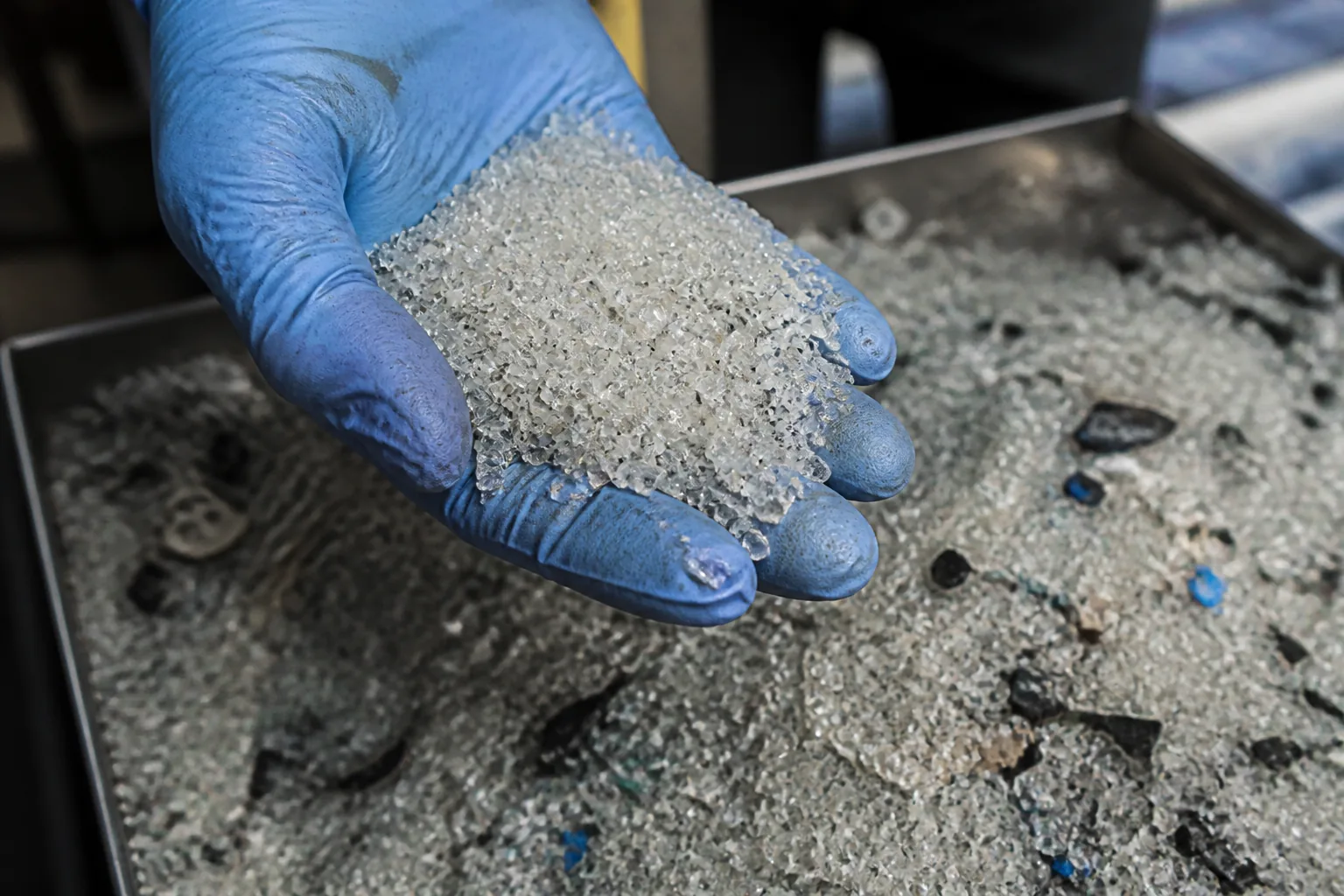
The Global Recycled Standard is the scheme most bag buyers reference, and its value lies less in the label than in the traceability it forces through every handler between the waste and the finished bag.
Clear recycled nylon pellets held in a gloved hand over a sorting tray
The Chain Table
Link
Responsibility
Waste collector
Origin and quantity
Recycler
Conversion to chip
Spinner
Yarn production
Weaver
Fabric production
Coater
Finishing
Factory
Cutting and assembly
The Certificate Scope Table
Certificate scope
Covers
Recycler
Chip and flake
Spinner
Yarn
Weaver
Greige and finished fabric
Coater
Coated fabric
Factory
Finished bag
Trader
Trading activity
The Module Table
Element
Requirement
Material verification
Input records
Chain of custody
Documented transfers
Social criteria
Labour standards
Chemical criteria
Restricted substances
Environmental
Wastewater and waste
Label approval
Claim review
The Transaction Table
Document
Issued by
Transaction certificate
Certifying body
Scope certificate
Each site
Material balance record
Each handler
Invoice reference
Seller
Shipment record
Logistics
Label approval
Brand or body
The Verification Table
Activity
Frequency
Scope audit
Annual
Transaction review
Per shipment
Material balance check
Audit cycle
Chemical testing
Per scheme
Social audit
Annual
Surveillance
Random
The Gap Table
Gap
Consequence
Factory not certified
Cannot label bag
Certificate expired
Claim invalid
Quantity mismatch
Credit denied
No transaction certificate
Trace broken
Subcontractor uncertified
Scope breach
Wrong material code
Audit finding
The Factory Duty Table
Duty
Detail
Buy certified input
Verified supplier
Maintain records
Purchase and issue
Segregate material
Prevent mixing
Report volumes
Input and output
Approve labels
Before printing
Keep evidence
Audit retention
The link that most often breaks is the last one: a certified fabric arriving at an uncertified factory, which means the finished bag cannot carry the claim even though every earlier link was sound.
Transaction Certificates and Documentation
The transaction certificate is the document that converts a certified supply chain into a defensible claim on a specific order. Factories that treat it as paperwork rather than as evidence end up unable to substantiate shipments they have already invoiced.
The Document Table
Document
Purpose
Scope certificate
Site authorised to handle
Transaction certificate
Quantity transferred
Material balance sheet
Inputs against outputs
Purchase invoice
Commercial link
Packing list
Physical shipment
Label approval
Claim wording cleared
The Check Table
Element
Check
Certificate number
Valid and current
Product category
Matches material
Quantity
Matches order
Date
Covers shipment
Issuing body
Recognised scheme
Seller name
Matches invoice
The Recording Table
Record
Retention
Purchase certificate
Multi-year
Issue to production
Per cut
Finished goods output
Per order
Waste and rejects
Per batch
Label approval
Per style
Audit reports
Scheme period
The Document Timing Table
Stage
Document needed
Sampling
Material declaration
Order confirmation
Scope certificate
Production
Material balance
Shipment
Transaction certificate
Delivery
Packing and invoice
Post-delivery
Audit trail
The Documentation Failure Table
Failure
Root cause
Certificate after shipment
Process order
Quantity shortfall
Yield loss unrecorded
Category mismatch
Wrong material specified
Buyer rejects label
Wording not approved
Audit non-conformity
Records incomplete
Credit refused
Trace incomplete
Ask for the transaction certificate at the point of order confirmation, not at shipment, because a certificate obtained after the goods have left cannot be used to change what was made.
Performance Differences on the Production Floor
Recycled nylon is not a single specification, so its performance cannot be stated as one number. What a factory can state is how a specific certified fabric behaved against a specific virgin reference, tested on the same equipment.
The Property Table
Property
Recycled behaviour
Tensile strength
Usually comparable
Tear strength
Sometimes lower
Abrasion resistance
Route dependent
Stretch and recovery
Slightly reduced
Dimensional stability
More variable
Surface uniformity
Occasional slubs
The Variability Table
Source
Effect
Feedstock mix
Batch-to-batch shift
Recycling route
Property profile
Blend ratio
Consistency buffer
Spinning conditions
Yarn evenness
Supplier experience
Defect rate
Storage
Moisture uptake
The Cutting Table
Issue
Control
Shade variation between rolls
Roll matching before cut
Width inconsistency
Measure each roll
Bow and skew
Relax before lay
Slubs and knots
Inspection on spread
Moisture regain
Condition the goods
Offcuts
Yield planning
The Sewing Table
Issue
Control
Needle heat
Smaller needle, lower speed
Seam slippage
Adjust stitch density
Puckering
Tension and feed setting
Thread match
Test on sample
Friction
Machine lubrication
Ply shift
Clamp and guide
The Durability Table
Test
Purpose
Abrasion
Surface wear
Tear
Resistance to snagging
Tensile
Seam load capacity
Seam strength
Join integrity
Pilling
Appearance retention
Colour fastness
Service life
The Reference Table
Comparison
Requirement
Same construction
Identical weave
Same weight
Grams per square metre
Same finish
Coating and calender
Same test method
Standard reference
Same lab
Comparable results
Both retained
Audit evidence
A recycled fabric is only weaker or stronger than a specific alternative, so the specification should name the reference fabric and the test method, not the category.
Dyeing, Colour and Coating Compatibility
Recycled feedstock changes how a fabric takes colour and how a coating bonds. Those two effects cause more production problems than any mechanical property difference.
The Dye Table
Issue
Cause
Shade shift
Feedstock variation
Poor levelness
Fibre inconsistency
Metamerism
Pigment response
Batch variation
Mixed feedstock
Colour depth
Dye uptake
Reproducibility
Source changes
The Colour Control Table
Control
Method
Lab dip per batch
Physical approval
Spectrophotometer
Numeric check
Light source check
Metamerism screen
Bulk vs lab
First-off approval
Shade band agreement
Written tolerance
Roll segregation
By dye lot
The Coating Table
Issue
Effect
Adhesion
Coating may lift
Pinholing
Water resistance loss
Surface energy
Wetting behaviour
Calender response
Hand and thickness
Solvent interaction
Finish stability
Cure behaviour
Process window shift
The Finish Table
Finish
Compatibility note
Polyurethane coat
Test adhesion first
Acrylic coat
Usually tolerant
Silicone
Surface prep critical
Calender
Heat sensitivity
Water repellent
Re-test spray rating
Anti-mould
Verify carrier
The Trial Table
Stage
Purpose
Lab dip
Colour feasibility
Coating trial
Adhesion check
Pilot run
Process window
First-off
Buyer approval
Bulk
Confirmation
Post-bulk test
Claim evidence
Coat a trial panel before committing a bulk order, because a recycled substrate that dyes acceptably can still fail adhesion, and the failure appears after the goods are already cut.
Cost Structure and Commercial Reality
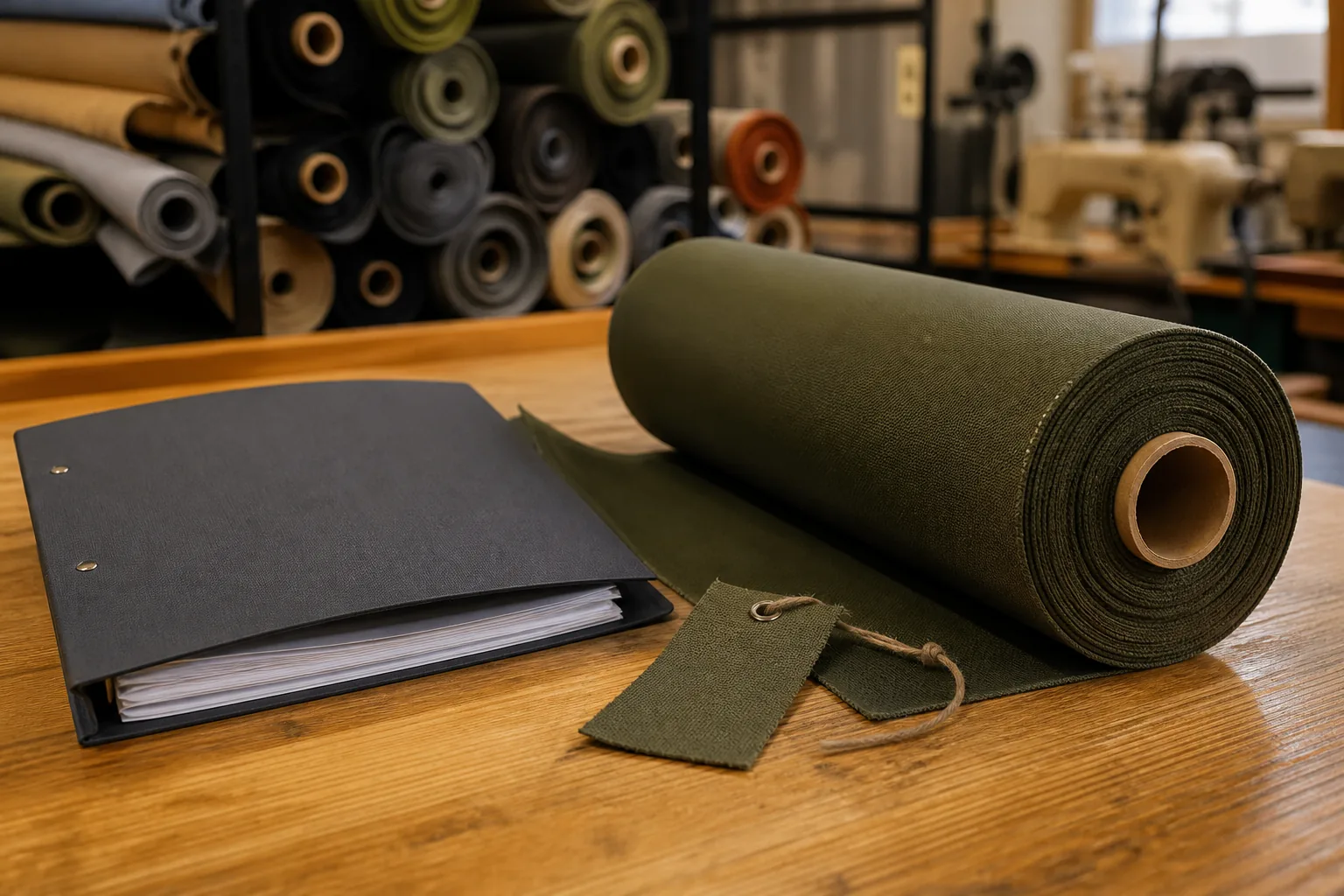
The premium on recycled nylon is real, and it is rarely a single line item. Understanding where the cost sits explains why quotes for the same declared percentage can differ by a wide margin.
Recycled nylon fabric roll on a quality desk with a chain-of-custody folder
The Cost Table
Element
Driver
Yarn
Feedstock scarcity
Fabric
Weaving and finishing
Certification
Audit and administration
Testing
Additional lab work
Waste
Higher yield loss
Lead time
Inventory carried
The Premium Table
Factor
Effect on price
Certified versus uncertified
Significant
Post-consumer feedstock
Higher
Colour matching
Adds cost
Low minimum quantity
Higher unit price
Tight lead time
Air or spot buying
Long-term contract
Lower and stable
The Hidden Cost Table
Cost
Where it appears
Yield loss
Cutting room
Testing
Quality budget
Certification admin
Overhead
Roll matching
Labour hours
Rework
Production
Documentation
Office time
The Business Case Table
Buyer motivation
Sensitivity
Brand commitment
Low
Retail requirement
Low
Marketing story
Medium
Cost reduction
High
Regulatory preparation
Low
Competitive pressure
Medium
The Quote Comparison Table
Question
Reason
Which stream
Post-consumer or industrial
Which route
Mechanical or chemical
Which percentage
Mass basis
Certified by whom
Scheme recognition
Certificate included
Claim validity
Testing included
Cost transfer
The Negotiation Table
Lever
Effect
Annual volume commitment
Price stability
Wider shade tolerance
Lower cost
Longer lead time
Fewer premiums
Standard construction
Mill efficiency
Blended percentage
Cost compromise
Shared certification
Lower admin
Quotations that differ by more than a modest margin for the same declared percentage are usually quoting different streams, different certification status, or different testing scope.
Qualifying a Recycled Nylon Supplier
Supplier qualification for recycled material asks a different set of questions than for virgin fabric, because the risk sits in documentation and traceability rather than in the loom.
The Qualification Table
Area
Evidence
Certification
Valid scope certificate
Traceability
Transaction certificates
Consistency
Batch test history
Capacity
Monthly volume
Lead time
Committed schedule
Testing
Accredited laboratory
The Audit Table
Check
Question
Input records
Where does feedstock come from
Segregation
How is certified material kept apart
Balance
Do inputs match outputs
Waste handling
How is scrap credited
Subcontracting
Who else processes it
Label control
Who approves claims
The Sample Table
Stage
Test
Swatch
Hand, weight, colour
Lab dip
Shade feasibility
Coating trial
Adhesion
Pilot bag
Sewability
Field trial
Durability
Bulk retention
Reference
The Red Flag Table
Signal
Concern
Certificate not shared
Trace unproven
Percentage unstated
Claim vague
Price near virgin
Stream unclear
No batch testing
Consistency risk
Vague lead time
Supply fragility
Reluctance on audit
Documentation gap
The Agreement Table
Clause
Purpose
Certified input only
Claim integrity
Certificate per shipment
Traceability
Testing rights
Verification
Substitution consent
Prevents swaps
Records access
Audit support
Claim indemnity
Risk allocation
A supplier that cannot show a scope certificate before the first order is not a certified supplier, whatever the yarn sample suggests.
Testing That Backs the Claim
Certification proves origin; testing proves performance. A recycled nylon submission that carries only a certificate answers the sustainability question and leaves the engineering question open.
A technician measuring tensile strength on recycled nylon in a textile lab
The Test Table
Test
Standard area
Abrasion
Surface durability
Tear strength
Snag resistance
Tensile strength
Load capacity
Seam strength
Join performance
Colour fastness
Service appearance
Water resistance
Coating integrity
The Sample Plan Table
Level
Quantity
Development
One metre
Pilot
Full width panel
First bulk
Per dye lot
Routine
Per shipment
Dispute
Retained sample
Annual
Full panel
The Laboratory Table
Requirement
Reason
Accredited
Result acceptance
Same lab across years
Comparability
Buyer-approved
Contract compliance
Documented method
Dispute defence
Retained specimens
Re-testing
Report retention
Audit
The Result Table
Outcome
Action
Meets specification
Release
Marginal
Engineering review
Fails one property
Rework or reject
Fails multiple
Supplier review
Inconsistent batches
Tighten controls
Better than reference
Update specification
The Evidence Pack Table
Item
Purpose
Scope certificate
Site authorisation
Transaction certificate
Material trace
Test reports
Performance proof
Colour approvals
Shade control
Coating trial record
Process validation
Retained samples
Reference
The Reporting Table
Audience
Content
Buyer technical
Full test reports
Buyer compliance
Certificates
Retailer
Summary declaration
Consumer
Verified claim only
Internal
Trend by batch
Auditor
Complete file
Keep a retained sample from every certified batch, because the fastest way to answer a durability complaint two years later is to test the same fabric the complaint is about.
Disclosing the Claim to Buyers
The disclosure is where a technical file becomes a commercial statement. Buyers compare suppliers on how clearly the claim is bounded, and ambiguity is read as risk.
The Disclosure Table
Element
Content
Material
Recycled nylon, stream named
Percentage
Mass basis, stated
Certification
Scheme and certificate reference
Scope
Which components carry the claim
Testing
Properties verified
Limitations
Known differences
The Component Table
Component
Typical claim
Shell fabric
Certified recycled
Lining
Often recycled
Webbing
Varies
Zips
Usually virgin
Hardware
Not applicable
Foam
Separate claim
The Answer Wording Table
Buyer request
Defensible answer
Is it recycled
Yes, certified, with reference
How much
Stated percentage by mass
Which parts
Named components
Is it verified
Scheme plus transaction certificate
Is it as strong
Test results against reference
Is it lower carbon
Footprint study, if held
The Questionnaire Table
Question
Evidence to attach
Certificate scope
Scope certificate
Batch traceability
Transaction certificate
Restricted substances
Chemical test report
Performance
Test reports
Claim approval
Label approval
Supplier details
Mill declaration
The Update Table
Trigger
Action
Certificate renewal
Refresh file
Supplier change
New qualification
Percentage change
Update claim
Test failure
Investigate and disclose
Buyer requirement change
Re-map evidence
Annual review
Reconfirm wording
The safest claim is the narrowest one the evidence supports, because a modest verified statement survives scrutiny and an expansive one invites a request for proof the factory may not hold.
Working With Subcontractors and Outside Processes
Most backpack programmes route some operations outside the main plant, and every one of those movements is a point where a certification scope either holds or breaks.
The Outside Process Table
Operation
Typical location
Coating
Specialist plant
Printing
Outside printer
Embroidery
Satellite unit
Heat sealing
Dedicated line
Assembly
Subcontractor
Packing
Warehouse
The Claim Scope Table
Situation
Claim status
Subcontractor certified
Claim holds
Subcontractor uncertified
Claim breaks
Process before certified input
Holds
Process after certified input
Breaks
Trader holds certificate
Material only
Site uncertified
No bag claim
The Control Table
Control
Method
Approved list
Certified partners only
Written notice
Before any transfer
Transfer records
Quantity and date
Return reconciliation
Inputs against outputs
Segregation
Marked containers
Audit access
Contractual right
The Alternative Table
Option
Trade-off
Keep in-house
Capacity limit
Certify partner
Cost and time
Drop the claim
Commercial loss
Narrow the scope
Partial claim
Change process
Design impact
Accept risk
Unacceptable
Map every outside process against the certification boundary before quoting a recycled option, because one uncertified printing step can remove the claim from an otherwise certified bag.
Blending, Mass Balance and Physical Segregation
The accounting model behind a recycled claim determines what is physically in the bag. Two factories can declare the same percentage honestly and produce very different material realities.
The Accounting Table
Model
Physical reality
Segregation
Certified material kept apart
Mass balance
Mixed, allocated by volume
Book and claim
Credits traded separately
Controlled blending
Fixed ratio in process
Batch traceability
Per-lot identification
Site-level allocation
Averaged across output
The Segregation Table
Requirement
Practice
Storage
Separate racking
Labelling
Certified marking
Cutting
Dedicated lay
Records
Per-batch issue
Cleaning
Between batches
Subcontract
Not permitted
The Mass Balance Table
Element
Requirement
Certified input volume
Documented
Total throughput
Documented
Allocation ratio
Calculated
Output claim
Capped by ratio
Period
Defined
Audit
Verified
The Implication Table
Model
Buyer consequence
Segregation
Guaranteed in the piece
Mass balance
Guaranteed in the order
Book and claim
Not in the product
Controlled blending
Consistent ratio
Batch traceable
Style specific
Site allocation
Cannot be verified
A buyer who wants certainty about the physical bag, rather than the order, should ask for segregation or batch traceability, and expect a higher price and a narrower colour range in return.
Building a Recycled Nylon Programme
A programme is more than a material substitution. It requires a qualified supply base, an internal process that respects the certification boundary, and a commercial model that survives the premium.
The Phasing Table
Phase
Content
Assessment
Stream and supplier review
Trial
One style, one colour
Limited launch
Lead styles only
Expansion
Broader range
Standardisation
Default specification
Review
Annual reassessment
The Style Selection Table
Criterion
Preferred
Construction
Stable, proven
Colour
Dark or heather
Volume
Predictable
Complexity
Moderate
Customer
Committed buyer
Margin
Absorbs premium
The Internal Process Table
Function
Change needed
Purchasing
Certified sources only
Warehouse
Segregated storage
Cutting
Roll matching routine
Sewing
Parameter adjustment
Quality
Added test panel
Compliance
Document control
The Scaling Table
Constraint
Mitigation
Feedstock availability
Multi-source approval
Colour range
Palette restriction
Lead time
Forward ordering
Cost
Volume commitment
Certification
Single scheme focus
Capability
Training
Start with one style in one dark colour and one certified supplier, because a narrow programme produces a clean evidence file, and the clean file is what makes the second and third style easy.
Common Failures and How They Surface
The failures that damage a recycled nylon programme are rarely dramatic. They appear as a claim that cannot be substantiated, a batch that will not match, or a cost that was never in the quotation.
The Programme Failure Table
Failure
When it surfaces
Uncertified factory
At label approval
Missing transaction certificate
At buyer audit
Percentage overstated
At compliance review
Shade mismatch
At bulk inspection
Coating adhesion
After cutting
Yield overrun
At cost reconciliation
The Discovery Timing Table
Stage
Cost of discovery
Specification
Negligible
Sampling
Low
Pre-production
Moderate
Bulk production
High
Shipment
Very high
After delivery
Reputational
The Root Cause Table
Cause
Prevention
Assumed certification
Verify scope first
Unclear stream
Specify stream in order
Verbal percentage
Written specification
No pilot run
Mandatory trial
Optimistic yield
Cut test on actual roll
Late documentation
Certificate at order
The Recovery Table
Situation
Response
Certificate missing
Obtain before shipment
Shade off-band
Sort and negotiate
Adhesion failure
Re-coat or re-specify
Claim too broad
Rewrite wording
Yield overrun
Absorb or renegotiate
Buyer rejection
Root cause report
The Prevention Table
Control
Owner
Certification pre-check
Sourcing
Specification with stream
Product
Pilot run gate
Production
Retained samples
Quality
Document checklist
Compliance
Claim review
Management
Most failures are known at sampling and only discovered at shipment, which is why the qualification gate matters more than the inspection gate.
Talking to Buyers About Trade-offs
Every recycled nylon conversation reaches a point where the buyer asks for something the material cannot deliver, and the answer given at that moment usually determines whether the programme continues.
The Trade-off Table
Buyer request
Material reality
Exact colour match
Narrower shade band
Virgin-equivalent hand
Route dependent
Lowest price
Premium persists
Short lead time
Allocation constraint
Any percentage
Certified volume limited
Full-bag claim
Components vary
The Response Table
Situation
Defensible answer
Shade unavailable
Offer a range, not a match
Price challenged
Break down the premium
Timeline tight
Book allocation early
Claim scope
Name the components
Verification asked
Provide the file
Target missed
Show the constraint
The Expectation Table
Expectation
Setting it early
Certificates
Named at quotation
Colour
Agreed shade band
Testing
Scope and cost
Timing
Allocated slot
Wording
Approved before print
Volume
Committed forecast
An honest constraint stated at quotation costs a negotiation, and the same constraint discovered at shipment costs the order.
The Factory Checklist
Material
Item
Done
Stream identified
☐
Recycling route known
☐
Percentage stated by mass
☐
Reference fabric named
☐
Certification scope verified
☐
Supplier qualified
☐
Production
Item
Done
Roll matching before cut
☐
Cut test on actual roll
☐
Needle and speed adjusted
☐
Coating trial approved
☐
First-off inspected
☐
Retained sample kept
☐
Evidence
Item
Done
Scope certificate on file
☐
Transaction certificate per shipment
☐
Test reports current
☐
Colour approvals recorded
☐
Label approval obtained
☐
Wording matched to evidence
☐
Commercial
Item
Done
Premium understood
☐
Yield loss costed
☐
Lead time planned
☐
Testing cost allocated
☐
Substitution clause agreed
☐
Annual review scheduled
☐
FAQ
What does a bag factory need in order to label a backpack as recycled nylon?
It needs a valid scope certificate covering the factory itself, certified material purchased from a supplier whose scope covers that material, a transaction certificate for the specific shipment, and label approval from the certification body or brand before printing. The factory’s own certification is the link most often missing: a certified fabric arriving at an uncertified plant produces a bag that cannot carry the claim, even though every upstream link was sound. The practical sequence is to confirm the factory’s scope certificate first, then the supplier’s, then the transaction certificate for the order.
Does recycled nylon perform worse than virgin nylon in a backpack?
Not categorically, and that is why the question needs a reference fabric. Mechanical recycling can reduce tenacity and elongation slightly, while chemical recycling tends to come closer to virgin properties. What changes more reliably is consistency: feedstock mix varies, so batch-to-batch behaviour in dyeing, shrinkage and coating adhesion can differ even when average properties are comparable. A factory should compare a specific certified fabric against a specific virgin reference at the same construction and weight, using the same test method and laboratory, and keep both results on file.
What is the difference between GRS and RCS?
Both are recycled content schemes that rely on chain of custody, and the difference is mainly in scope and stringency. GRS covers recycled content alongside social, chemical and environmental criteria, and it applies a higher recycled-content threshold together with restrictions on the chemicals used in processing. RCS addresses recycled content and its traceability with a lower threshold and a narrower scope, without the additional social and environmental requirements. Buyers differ in which they accept, so the factory should confirm the scheme the buyer recognises before offering a claim rather than after the order is placed.
Why does recycled nylon cost more if it comes from waste?
Because the feedstock is not free and the processing chain is longer. Waste has to be collected, sorted, cleaned and converted, and each of those steps carries cost and energy. Certified material adds audit, administration and testing costs across every handler in the chain. Volumes are constrained relative to virgin polymer, so allocation is often contractual and spot availability is expensive. On top of that, recycled fabric frequently carries a higher yield loss in cutting and a tighter shade range, both of which appear as cost in the finished bag rather than in the fabric price.
Can a factory switch an existing style to recycled nylon without re-testing?
It can switch the purchase order, but it should not skip validation. The substrate affects dye uptake, coating adhesion, seam behaviour and dimensional stability, and those effects appear as shade mismatch, coating lift or puckering rather than as an obvious failure. A workable sequence is a lab dip for colour feasibility, a coating trial panel for adhesion, a pilot bag for sewability, and a first-off approval from the buyer before bulk. The mechanical test panel then confirms whether the recycled fabric meets the same specification as the reference.
How is the recycled percentage actually calculated?
On a mass basis, and the method matters as much as the number. In a physically segregated chain, the certified material is weighed through each process and the percentage reflects the actual recycled polymer in the finished fabric. Under mass balance, certified and uncertified material are mixed in processing and the certified quantity is allocated across output, so a specific roll may not contain the stated percentage even though the accounting is legitimate. Buyers should ask which method applies, because the two produce the same declaration from very different physical realities.
What documentation should accompany a shipment?
A transaction certificate for the quantity shipped, referencing the seller and the buyer; the supplier’s scope certificate; test reports covering the properties specified for the style; colour approvals for the dye lots used; the label approval; and the invoice and packing list that tie the documents to the physical goods. The transaction certificate is the critical item, because it is the document that links a certified supply chain to a specific order. A shipment that arrives with test reports and no transaction certificate has performance evidence and no traceability.
How should the claim be worded on the product and in marketing?
As narrowly as the evidence allows. A statement naming the material, the percentage on a mass basis, and the certification scheme is defensible because each element is documented. Broader constructions, such as fully recycled, ocean-positive or carbon-neutral, carry evidentiary burdens that extend well beyond the fabric certificate and are the ones most likely to attract a compliance challenge. Where only the shell is certified, the claim should name the shell rather than the bag, and components such as zips, webbing and hardware should be described according to their actual status rather than left to inference.
Conclusion
Recycled nylon is a documentation product as much as a textile one. The fibre itself is well understood, the performance differences are measurable, and the production adjustments are known. What separates a factory that can sell it confidently from one that cannot is the paper trail behind each shipment.
Four practices carry most of the weight. Confirm the factory’s own certification scope before quoting a recycled option, because the last link is the one that invalidates a claim. Require the transaction certificate at order confirmation rather than at shipment, so the trace is established before the goods exist.
Run a coating and dyeing trial on the actual substrate, because those are the two processes where recycled feedstock announces itself. And word the claim to the narrowest extent the evidence supports, naming components and percentage rather than asserting a category.
The commercial side deserves the same discipline. The premium is not a single number: it is yarn cost, certification administration, additional testing, higher yield loss and longer lead time, and a quotation that appears unusually cheap is usually quoting a different stream or a different certification status. Costing the whole chain, rather than comparing fabric prices, is what prevents a programme from becoming unprofitable after the first bulk order.
For buyers, the useful questions are which stream, which route, which percentage by mass, certified by whom, which components carry the claim, and what testing backs the performance. A supplier that answers all six has a recycled nylon programme. A supplier that answers with a certificate and a price has a sample.