
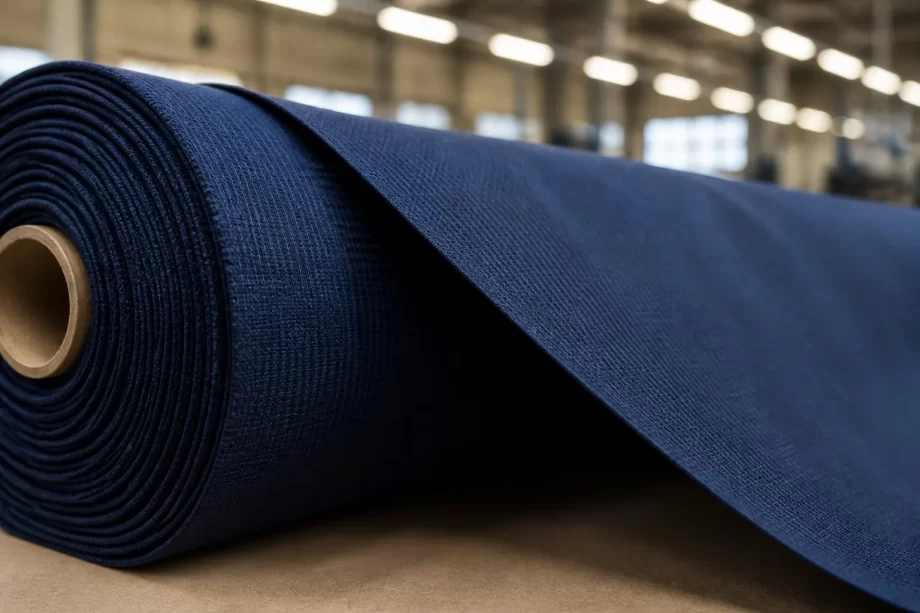
Nylon vs Polyester vs Canvas: Choosing the Right Backpack Fabric
Choosing the right fabric is the single most consequential decision a backpack manufacturer makes. The material determines how the product performs in the field, how it holds up against years of daily abuse, how much it costs to produce, and — critically — how the brand is perceived by buyers. Get it wrong, and even a well-constructed pack will fail early, generate returns, and damage the reputation of the factory behind it.
As a backpack manufacturer, we field questions like this every week from sourcing managers, importers, and brand owners: “Should we go with nylon, polyester, or canvas for our new line?” The honest answer is that there is no universal winner — each fabric solves a different set of problems. What matters is matching the material to the product’s intended use, target price point, and the buyer’s expectations.
This guide breaks down the three workhorse fabrics of the backpack industry from a factory perspective: how each material is made, how it performs, what it costs to source and process, and how to decide which one belongs in your next production run.
- Why Fabric Choice Defines the Backpack
- Nylon: The Lightweight Workhorse
- Polyester: The Cost-Effective All-Rounder
- Canvas: The Durable Classic
- Nylon vs Polyester vs Canvas: Side-by-Side Comparison
- Denier, Thread Count, and Fabric Weight: The Specs That Matter
- Finishes and Coatings That Change the Game
- A Decision Matrix for Product Categories
- Manufacturing Considerations: Cutting, Sewing, and Costing
- Sourcing and Lead Time Considerations
- FAQ
- Conclusion
Why Fabric Choice Defines the Backpack
Before comparing materials, it helps to understand what a backpack fabric actually has to do. A pack is a portable load-bearing structure, and its shell is the first line of defense against everything the world throws at it.
From a manufacturing standpoint, the fabric drives several downstream decisions:
- Hardware compatibility — heavier fabrics demand stronger zippers, heavier webbing, and reinforced attachment points.
- Sewing parameters — needle size, thread weight, stitch density, and machine settings all change with fabric thickness and weave.
- Cutting yield — fabric width, stretch, and pattern repeat affect how efficiently panels can be nested on the cutting table.
- Cost structure — the fabric is often the single largest material cost line in a backpack BOM (bill of materials).
- Brand positioning — a waxed canvas pack reads premium and heritage; a ripstop nylon pack reads technical and modern.
Manufacturer’s note: When a buyer asks for a specific fabric, they are usually asking for a specific performance profile. A sourcing manager who says “canvas” may actually need “heavy, abrasion-resistant, matte finish” — canvas is simply the material they know delivers it. Understanding the performance profile behind the request lets a factory offer better options.
The three fabrics we cover here sit at different points on the spectrum of weight, durability, water resistance, and cost. Understanding where each one sits — and why — is the foundation of intelligent material selection.
Nylon: The Lightweight Workhorse
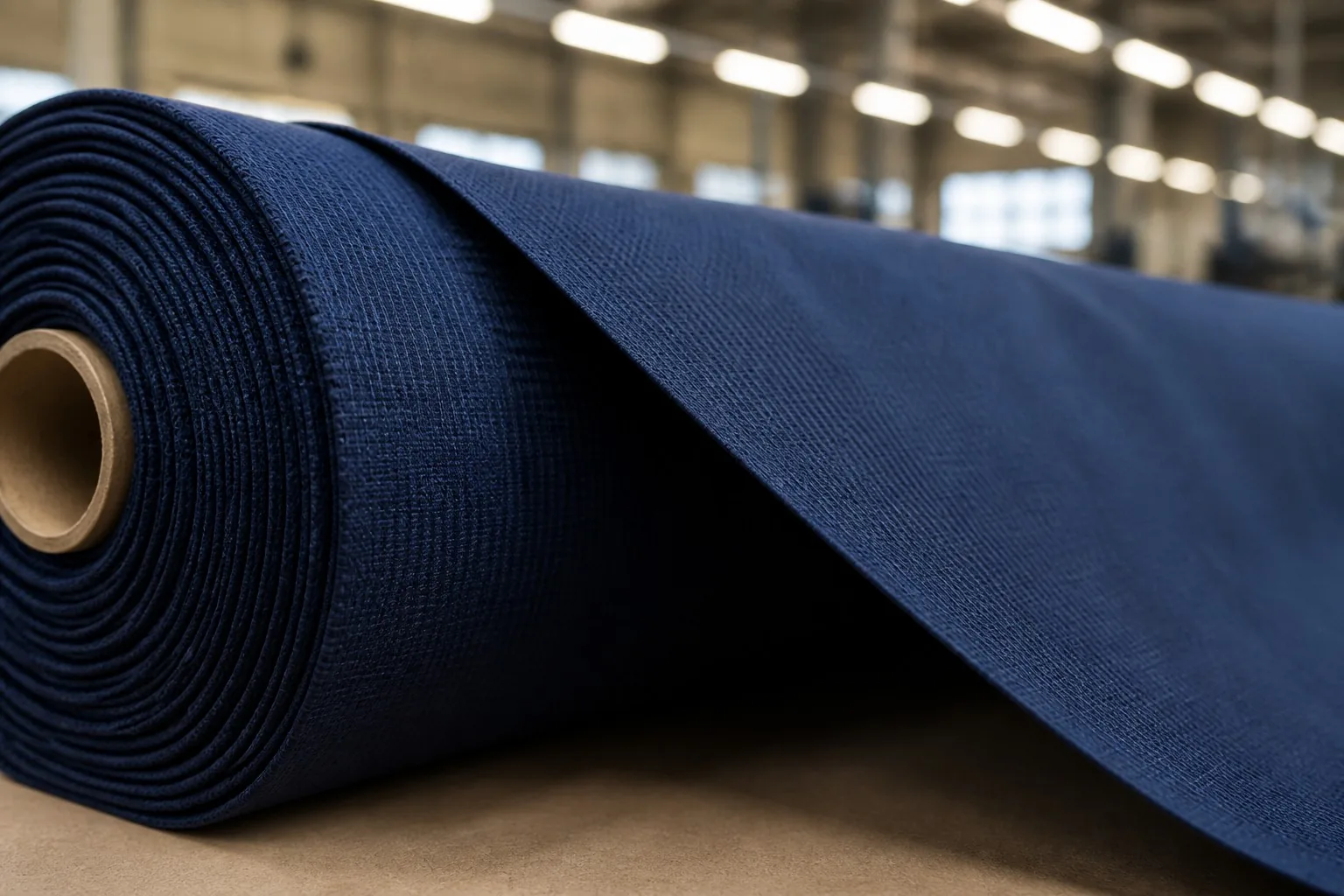
Nylon was developed in 1935 by Wallace Carothers at DuPont and became the first fully synthetic fiber in commercial production. For backpacks, it is prized for a combination of properties that no natural fiber can match: extremely high strength-to-weight ratio, excellent abrasion resistance, and genuine water resistance.
How Nylon Is Made
Nylon is a polyamide polymer produced from petroleum-derived chemicals. The polymer is melted and extruded through spinnerets to form continuous filaments, which are then drawn, texturized, and woven or knit into fabric. The most common backpack constructions are:
| Construction | Description | Typical Use |
|---|---|---|
| Plain weave nylon | Simple over-under weave, smooth surface | Linings, light packs |
| Ripstop nylon | Reinforced with thicker threads on a grid | Technical backpacks, outdoor gear |
| Ballistic nylon | Very dense 2×2 basket weave, extremely tough | Luggage, heavy-duty packs |
| Oxford nylon | Soft, slightly textured weave | Casual bags, linings |
Performance Characteristics
- Abrasion resistance — nylon is inherently tougher than polyester under repeated rubbing; this is the primary reason premium outdoor packs use it.
- Strength-to-weight ratio — nylon delivers more strength per gram than polyester or canvas, allowing lighter pack designs without sacrificing durability.
- Water resistance — nylon absorbs very little water and dries quickly; with a coating it becomes genuinely waterproof.
- Elasticity — nylon stretches more than polyester, which helps absorb impact but can cause shape distortion in poorly constructed packs.
- UV sensitivity — uncoated or lightly coated nylon degrades in prolonged direct sunlight; UV stabilizers and coatings mitigate this.
Cost Reality
Nylon costs more than polyester — typically 20–40% more per linear meter at comparable denier and construction, depending on market conditions. The premium is justified for technical products where weight and durability are the selling points, but it quickly becomes an uncompetitive cost structure for value-oriented lines.
Polyester: The Cost-Effective All-Rounder
Polyester entered the market in the 1950s and became the backbone of the mass-market bag industry. Today it is the most widely used backpack fabric in the world, and for good reason: it delivers 80–90% of nylon’s practical performance at a significantly lower price.
How Polyester Is Made
Polyester (PET) is also petroleum-derived, but the polymerization chemistry is simpler and cheaper than nylon’s. The fiber is extruded, drawn, and woven using essentially the same machinery as nylon — which means factories can switch between the two materials on the same looms with minimal changeover.
| Feature | Nylon | Polyester |
|---|---|---|
| Relative fiber cost | Higher | Lower |
| Abrasion resistance | Excellent | Very good |
| Water absorption | Low | Very low |
| UV resistance | Weak without additives | Stronger inherently |
| Stretch | Moderate | Low (better shape retention) |
| Dyeability | Good | Very good, colorfast |
Performance Characteristics
- Excellent value — the primary reason polyester dominates the mid-market. It offers strong durability at a price point that supports competitive wholesale margins.
- Shape retention — polyester’s lower stretch means packs hold their structure better over time, which matters for molded and semi-structured designs.
- Color fastness — polyester accepts disperse dyes extremely well and holds color through repeated washing and sun exposure better than nylon.
- Moisture behavior — polyester is hydrophobic; it resists water and dries quickly, though untreated polyester is not waterproof.
- Feel — polyester can feel less premium than nylon at equivalent constructions, though modern texturizing has narrowed the gap considerably.
Where Polyester Wins
Polyester is the default choice for school backpacks, promotional bags, budget travel packs, and any product where price-point discipline matters more than absolute performance. For a factory, polyester also offers an advantage in sourcing: it is available from more suppliers in more regions, reducing lead-time risk.
Canvas: The Durable Classic
Canvas is the oldest of the three materials — a plain-weave fabric traditionally made from cotton or hemp, now also available in cotton-polyester blends. It is the fabric of heritage: military duffels, waxed weekenders, and the classic waxed canvas rucksack that never goes out of style.
How Canvas Is Made
Canvas is woven from heavy, tightly twisted yarns in a simple plain weave. What distinguishes canvas grades is the yarn weight and the number of threads per inch:
| Canvas grade | Typical weight | Character | Best for |
|---|---|---|---|
| Light canvas | 10–12 oz/yd² | Flexible, drapes well | Totes, casual bags |
| Medium canvas | 12–15 oz/yd² | Balanced stiffness and durability | Backpacks, weekenders |
| Heavy canvas | 15–20+ oz/yd² | Very stiff, extremely tough | Luggage, work bags |
| Waxed canvas | 12–18 oz + wax finish | Water-resistant, aged patina | Heritage-style packs |
Performance Characteristics
- Abrasion and puncture resistance — at equal weight, canvas is exceptionally tough; heavy canvas shrugs off scrapes that would cut lighter synthetics.
- Aesthetic — canvas carries a natural, premium, artisanal look that no synthetic can replicate. This drives brand value in the heritage and workwear segments.
- Weight — canvas is heavy. A canvas pack typically weighs 30–60% more than an equivalent nylon pack, which is a deal-breaker for some users.
- Water behavior — untreated cotton canvas absorbs water readily and mildews if stored damp. Waxing or coating solves this but adds cost and changes the hand feel.
- Maintenance — canvas is more labor-intensive to care for and shows stains more readily than synthetics.
Cost Reality
Canvas pricing sits between polyester and nylon, but the total cost of ownership for a canvas line is often higher than the material price suggests: heavier fabric means more freight cost, more thread consumption, heavier hardware, and slower sewing. A factory quoting a canvas backpack must account for all of these, not just the fabric line item.
Nylon vs Polyester vs Canvas: Side-by-Side Comparison
For quick reference, here is the full comparison matrix a sourcing team can use when evaluating a new product concept:
| Criterion | Nylon | Polyester | Canvas |
|---|---|---|---|
| Relative material cost | High | Low–medium | Medium |
| Strength-to-weight ratio | Excellent | Very good | Good (heavy) |
| Abrasion resistance | Excellent | Very good | Excellent at heavy weights |
| Water resistance (uncoated) | Low absorption | Very low absorption | Absorbs water |
| Water resistance (coated/waxed) | Excellent | Excellent | Good (waxed) |
| UV resistance | Weak (needs additives) | Good | Good |
| Shape retention | Moderate | Excellent | Very good |
| Weight of finished pack | Lightest | Light | Heaviest |
| Premium feel | Technical/modern | Value/functional | Heritage/premium |
| Sewing difficulty | Easy | Easy | Harder (thick, stiff) |
| Typical market segment | Outdoor, technical, premium | School, promo, value | Heritage, workwear, lifestyle |
Manufacturer’s note: When we quote a new backpack for a client, the fabric decision cascades into every other cost line. Moving from 210D polyester to 900D nylon can add 15–25% to the total landed cost of a pack before a single seam is sewn — because hardware, thread, webbing, and even carton specifications all scale with the fabric.
Denier, Thread Count, and Fabric Weight: The Specs That Matter
Fabric names alone are not enough to specify a material. Two “nylon” fabrics can perform completely differently. A professional spec must include the following parameters:
- Denier (D) — the linear density of the yarn: 210D, 420D, 600D, 900D, 1680D. Higher denier generally means heavier, tougher fabric.
- Thread count / construction — the weave pattern (plain, twill, ripstop, basket) and threads per inch.
- Fabric weight — expressed in g/m² (GSM) for synthetics or oz/yd² for canvas.
- Coating — PU coating (measured in mm water column, e.g., 3000 mm), TPU lamination, or DWR finish.
- Dye method and fastness rating — solution-dyed yarns are more colorfast but cost more.
- Tear strength and abrasion test values — the objective numbers behind “durable.”
| Spec | Example A (value pack) | Example B (premium pack) |
|---|---|---|
| Shell fabric | 600D polyester, plain weave, PU coated | 1680D ballistic nylon, PU coated |
| Lining | 210D polyester | 210D nylon oxford |
| Coating | PU 1000 mm | PU 3000 mm |
| Webbing | 25 mm polyester | 38 mm nylon |
| Zippers | #5 coil | #8 YKK molded |
| Estimated fabric share of BOM | 18–22% | 28–35% |
Finishes and Coatings That Change the Game
Raw fabric is rarely used as-is. The finishing stage — where coatings, lamination, and treatments are applied — is where much of the real performance is created. As a manufacturer, we treat finishing as part of the material spec, not an afterthought.
Common Backpack Finishes
- PU (polyurethane) coating — applied to the back of the fabric, provides water resistance measured in mm water column. 300–1000 mm suits light showers; 3000 mm+ suits serious weather.
- TPU lamination — a stronger, more durable film that is welded rather than glued; used in premium waterproof packs.
- DWR (durable water repellent) — a surface treatment that makes water bead off; it wears off over time and is not a substitute for a coating.
- Wax finish — traditional for canvas; renews with re-waxing and develops an attractive patina, but adds weight and a waxy hand feel.
- UV stabilizers — critical for nylon products exposed to sun; without them, nylon can fade and lose strength within months.
- Anti-mildew and FR treatments — required for some market segments and import regulations.
Manufacturer’s note: When a client asks for a “waterproof” backpack, we always clarify the expected water column rating and test method before quoting. A pack marketed as waterproof but built with a 500 mm PU coating will fail in heavy rain and generate returns — the coating spec must match the marketing claim.
A Decision Matrix for Product Categories
To make the choice concrete, here is how we typically guide clients based on their product category:
| Product category | Recommended fabric | Why |
|---|---|---|
| School backpacks (budget) | 600D polyester, PU coated | Best value, easy care, colorfast |
| School backpacks (premium) | 900D polyester or nylon blend | Durability with reasonable cost |
| Laptop / commuter packs | 420D–900D nylon or polyester | Weight matters; structure and weather resistance required |
| Hiking / outdoor packs | 210D–420D ripstop nylon | Lightest, strongest, packs well |
| Tactical packs | 500D–1000D nylon (Cordura-style) | Extreme abrasion resistance |
| Heritage / lifestyle | 12–18 oz waxed canvas | Premium aesthetic, brand story |
| Work / tool bags | Heavy canvas or 1680D nylon | Puncture and abrasion resistance |
| Promotional / giveaway | 300D–600D polyester | Lowest cost, adequate performance |
Manufacturing Considerations: Cutting, Sewing, and Costing
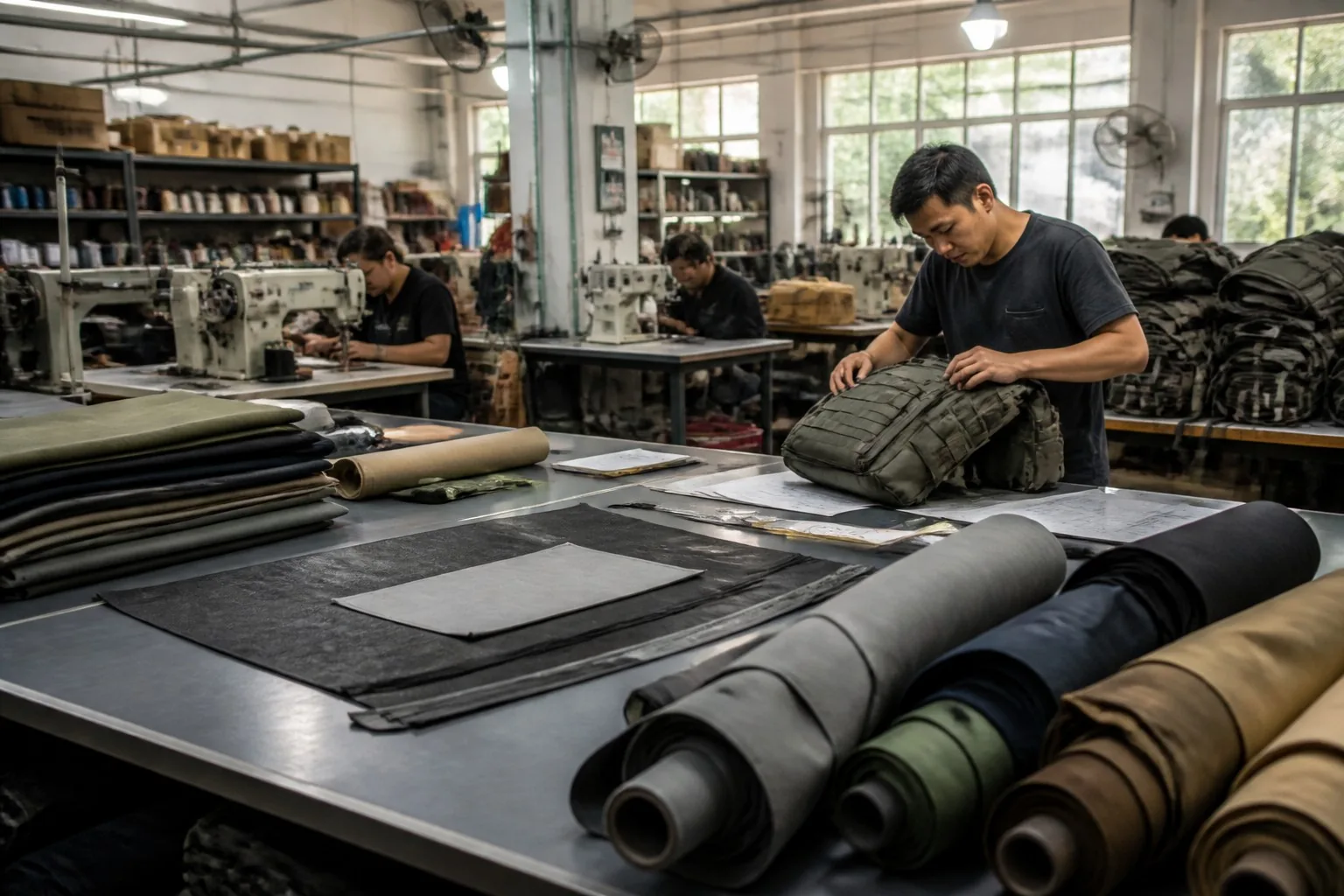
The fabric decision does not end at the material itself — it flows into every step of factory production. Here is what changes on the shop floor:
Cutting
- Yield — polyester and nylon cut cleanly and nest tightly, maximizing material utilization. Heavy canvas cuts more slowly and produces more edge fraying, requiring oversize cutting allowances.
- Fray control — woven fabrics fray at cut edges; edge binding, seam taping, or heat sealing may be required depending on the material.
Sewing
- Needles and threads — heavier fabrics need larger needles (e.g., size 18–22 for heavy canvas vs 14–16 for 600D polyester) and stronger thread (e.g., bonded nylon #69 or #92 vs #40 polyester).
- Stitch density — canvas and ballistic nylon typically require 4–6 stitches per inch with reinforced bar-tacks at stress points.
- Machine strain — sewing heavy canvas is slower and harder on machines; production rates can drop 20–30% versus lightweight synthetics, affecting labor cost per unit.
Testing and Quality
- Abrasion tests — Martindale or Taber tests quantify fabric wear resistance.
- Tear tests — tongue tear or trapezoid tear tests measure resistance to propagation of tears.
- Water column tests — hydrostatic head tests verify coating performance.
- Load tests — finished packs are tested with sandbags or weights to verify seam and strap strength (e.g., a 20 kg load for a school pack).
A Costing Example
To make the trade-offs tangible, consider a typical 25-liter commuter backpack produced in a run of 5,000 units:
| Cost component | 600D polyester | 900D nylon | 12 oz canvas |
|---|---|---|---|
| Fabric cost per unit | $3.10 | $4.60 | $4.20 |
| Hardware & webbing | $2.40 | $3.10 | $3.50 |
| Labor (cutting + sewing) | $5.20 | $5.40 | $6.80 |
| Finishing & coating | $0.80 | $1.10 | $1.50 |
| Estimated factory cost | $11.50 | $14.20 | $16.00 |
| Typical retail price point | $29–39 | $49–79 | $69–129 |
The numbers tell a clear story: polyester supports aggressive pricing, nylon buys technical credibility, and canvas unlocks premium retail positioning. The “right” choice depends entirely on where the brand wants to compete.
Sourcing and Lead Time Considerations
Material availability is a practical constraint that shapes every sourcing decision. A fabric that is technically ideal but takes twelve weeks to procure can derail a launch timeline. Understanding the supply landscape helps factories and their clients plan realistically.
Availability by Material
- Polyester — the deepest supply base. Standard constructions like 600D and 900D are stocked by mills across China, Vietnam, India, and Turkey. Lead times for stocked colors are typically 7–15 days, and MOQs can be as low as 300–500 meters per colorway.
- Nylon — a narrower supply base with fewer mills producing technical constructions. Ripstop and ballistic nylon are usually made to order; lead times run 2–5 weeks, with MOQs of 1,000–3,000 meters per colorway. Solution-dyed nylon extends this further.
- Canvas — cotton canvas is subject to raw cotton price cycles and seasonal availability. Organic cotton certifications add cost and lead time. Blends (cotton-polyester) are more stable in price and availability than 100% cotton.
The Sampling Rule
No specification sheet replaces a physical sample. We always recommend a three-stage sampling protocol before committing to production:
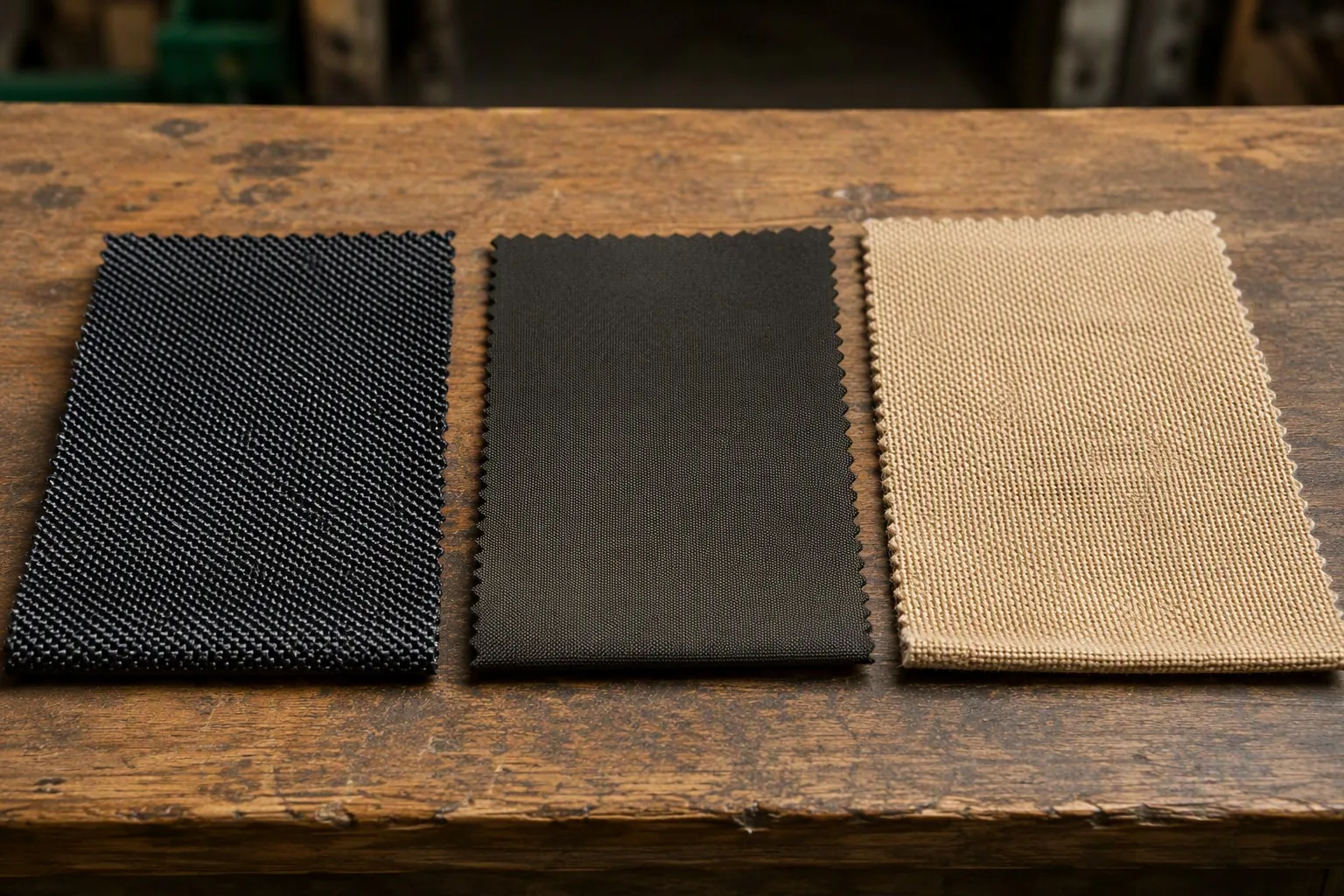
- Swatch stage — request 30×30 cm swatches of each candidate fabric, in the exact colorways planned. Verify hand feel, drape, weight, and color under daylight.
- Panel stage — sew representative panels with the actual hardware planned for the product. Check stitch behavior, seam puckering, edge fraying, and coating durability at fold lines.
- Prototype stage — build one complete pack and run a 30-day field test: daily loading, rain exposure, and abrasion contact with rough surfaces.
Manufacturer’s note: Color is the most common source of sample-to-production disputes. Fabric dye lots vary between batches, and different fabrics absorb the same dye differently — a charcoal that looks identical on nylon and canvas in a swatch may diverge visibly in production. Lock color standards with a physical master swatch, not a digital image, and budget for a color check before each production dye run.
Contingency Planning
Seasoned sourcing teams build redundancy into their fabric plans. Typical safeguards include:
- Qualifying a second mill for the same fabric spec, so supply can shift if the primary mill has capacity issues.
- Ordering 5–10% fabric overage for the production run to cover cutting losses and rework.
- Confirming the fabric’s compliance documents (test reports, certificates, declarations) before production, not after, since import clearance can otherwise stall at customs.
- Agreeing on acceptable color tolerance (e.g., ΔE ≤ 1.5) in writing before the first dye run.
FAQ
Is nylon always better than polyester for backpacks?
No. Nylon has superior strength-to-weight and abrasion resistance, but polyester offers better value, shape retention, and UV resistance. For many products, well-constructed 600D–900D polyester outperforms cheap nylon at a lower cost.
How can I tell if a supplier is using real nylon or polyester?
Request the fabric specification sheet and third-party test reports. A burn test is a quick field check — nylon melts and smells like plastic; cotton canvas chars and smells like paper. For commercial decisions, always rely on documented specs (denier, GSM, coating, test data), not visual inspection alone.
Is waxed canvas waterproof?
Waxed canvas is water-resistant, not waterproof. It handles light rain well, and the wax layer can be renewed, but prolonged exposure to heavy rain will wet it through. If the product must survive a downpour, a coated synthetic is the honest choice.
What does “ripstop” mean, and does it matter?
Ripstop fabric has a grid of thicker reinforcement threads woven in, which stops small tears from spreading. It matters most for lightweight technical packs where a puncture could otherwise turn into a long tear. It adds minimal cost and weight.
What is the minimum order quantity for custom fabric specifications?
It depends on the mill. Standard stocked fabrics (600D polyester, 210D nylon) are available with short lead times at low MOQs. Custom weaves, solution-dyed yarns, or proprietary coatings typically require 3,000–10,000 meters per colorway, with 4–8 weeks additional lead time.
Should I use the same fabric for the whole backpack?
Rarely. Professional packs mix materials: a tough shell fabric, a smooth lining, a stretchy pocket fabric, and a padded back panel. This optimizes both performance and cost — money is spent where it matters, not wasted on premium fabric in hidden areas.
Conclusion
Nylon, polyester, and canvas are not competing for the same job — they serve different product strategies. Polyester is the value engine that dominates volume markets. Nylon is the technical performer that wins in outdoor and premium segments. Canvas is the heritage material that carries brand stories and premium price points.
For a manufacturer, the practical approach is to build capability across all three: maintain reliable sourcing relationships with mills for each material, keep sample libraries so clients can feel the difference, and develop production know-how for the different sewing and finishing requirements each fabric demands.
When you are ready to spec a new line, bring us the product’s intended use, target price point, and volume — we will help you select the fabric that performs, sells, and builds your brand. The right material choice today is what separates a backpack that lasts for years from one that comes back as a return in weeks.