
Custom Backpack Manufacturing: MOQ, Sampling and Lead Time Explained
Every custom backpack order begins with three numbers that define the entire project: the MOQ (minimum order quantity), the sampling timeline, and the production lead time. These three numbers shape the budget, the schedule, and the factory relationship — and they are the source of more misunderstandings between buyers and manufacturers than almost anything else.
A buyer sees a factory’s MOQ of 500 units and thinks “why can’t they make 200?” A factory sees a buyer’s request for 200 units and thinks “how do we cover the setup cost?” Neither is wrong — they are looking at the same number from opposite sides of the cost structure. The same gap exists for sampling timelines and lead times: buyers want speed, factories need process, and without shared understanding, frustration follows.
This guide explains custom backpack manufacturing from the factory side — how MOQs are actually calculated, how the sampling process really works, how lead times are built, and how buyers can negotiate all three intelligently to get the best outcome for their project.
- What MOQ Really Means (and Why It Exists)
- How to Negotiate MOQ Intelligently
- The Sampling Process: What Really Happens
- How Lead Times Are Built
- The Quote: Understanding What You Are Paying For
- Working with Your Factory Through the Timeline
- Common Pitfalls in Custom Backpack Projects
- Building the Complete Custom Backpack Specification
- Payment Terms, Contracts, and Risk Protection
- Quality Assurance and Arrival Inspection
- The Checklist Before You Place a Custom Order
- FAQ
- Conclusion
What MOQ Really Means (and Why It Exists)
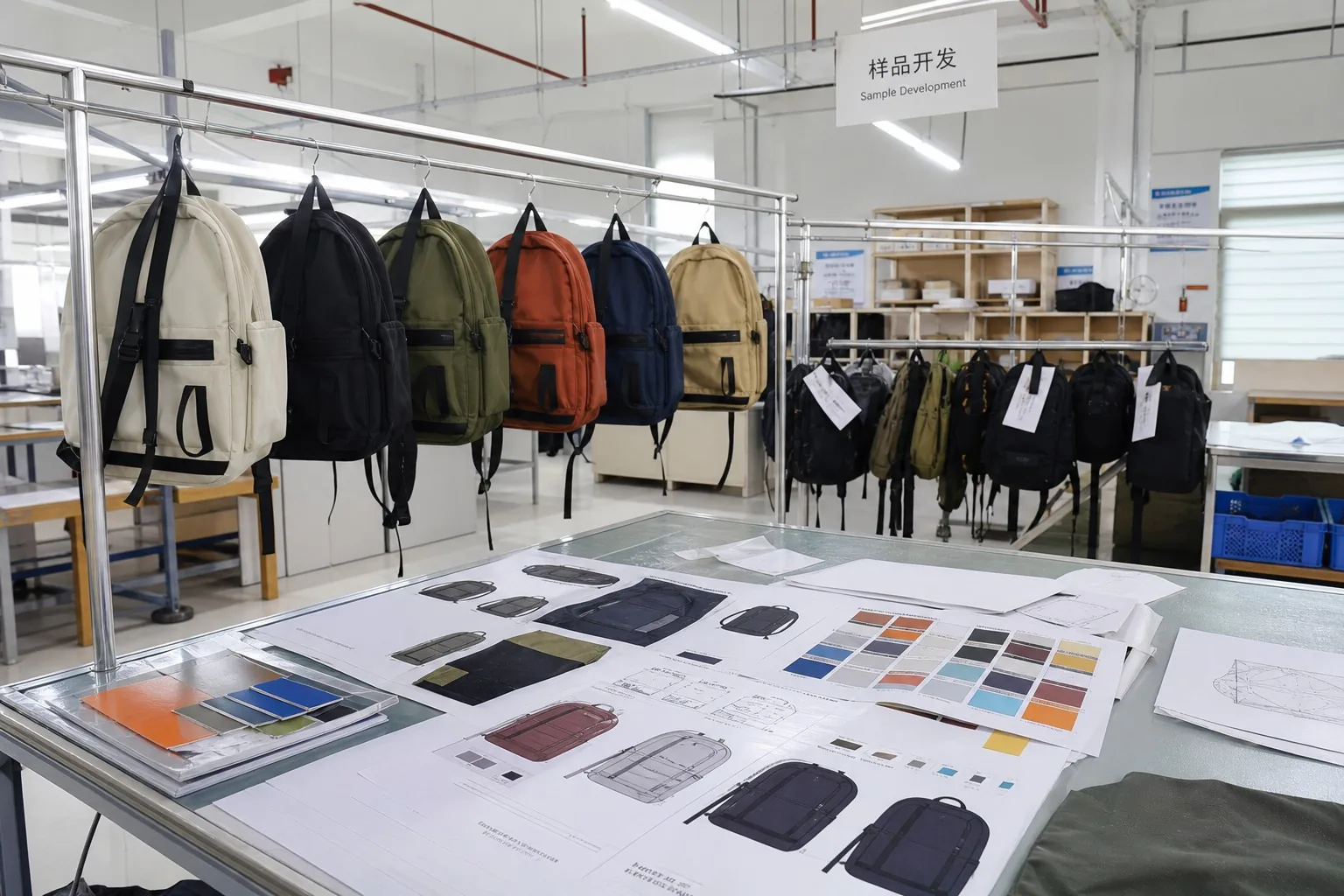
MOQ is not an arbitrary number a factory picks to make life difficult. It is the minimum order quantity at which the factory can produce your product at the quoted price — and ideally at a small profit. Understanding what drives the MOQ is the key to negotiating it.
The Fixed Costs Behind Every Order
Every custom order carries fixed costs that are the same whether you order 100 units or 10,000:
| Cost item | What it covers | Fixed or variable |
|---|---|---|
| Pattern making | Creating the patterns and markers for your design | Fixed |
| Sample development | Making the sample(s) for approval | Fixed |
| Material procurement | Fabric, hardware, zipper minimums from suppliers | Semi-fixed (minimums) |
| Line setup | Configuring machines and stations for the style | Fixed |
| Cutting setup | Marker layout, cutting tooling | Fixed |
| Training | Operators learning the new style | Fixed |
| QC setup | Inspection standards and first-piece checks | Fixed |
| Administration | Order processing, documentation | Fixed |
How MOQ Is Calculated
The factory calculates the per-unit price at different quantities and finds where the price becomes viable:
| Order quantity | Fixed cost per unit | Variable cost per unit | Total factory cost per unit |
|---|---|---|---|
| 100 units | $8.00 (spread over 100) | $8.00 | $16.00 |
| 300 units | $2.67 | $8.00 | $10.67 |
| 500 units | $1.60 | $8.00 | $9.60 |
| 1,000 units | $0.80 | $8.00 | $8.80 |
| 5,000 units | $0.16 | $8.00 | $8.16 |
The fixed cost per unit falls sharply as quantity rises. Below the MOQ, the per-unit price becomes uncompetitive or the factory loses money on the order — which is why the MOQ exists.
Manufacturer’s note: When a buyer asks for a lower MOQ, the honest factory response is not “no” — it is “the unit price must rise to cover the fixed costs.” The negotiation is always about the package: MOQ, price, and tooling. A lower MOQ with a slightly higher price often works for both sides.
MOQ by Product Type
Realistic MOQ ranges vary by product complexity:
| Product type | Typical MOQ |
|---|---|
| Standard ODM backpack (factory design) | 200–500 units |
| Custom colors on existing design | 300–600 units |
| Custom design with existing materials | 500–1,000 units |
| Fully custom design + custom materials | 1,000–3,000 units |
| Custom hardware, molds, or prints | 1,000–3,000+ units |
| Small-batch premium | 100–300 units (premium price) |
How to Negotiate MOQ Intelligently
MOQ negotiation is not about demanding a lower number — it is about understanding what you can trade to reduce the factory’s fixed-cost burden.
The Negotiation Levers
| Lever | How it helps | What you give up |
|---|---|---|
| Accept a higher unit price | Covers fixed costs at lower volume | Margin per unit |
| Pay tooling/mold costs separately | Removes fixed cost from the unit price | Upfront cash |
| Use existing materials/hardware | No material minimums to absorb | Custom material choices |
| Use a factory ODM base design | No pattern or development cost | Design exclusivity |
| Order a trial run + commit to reorders | Factory sees a future volume | Commitment |
| Combine with another order | Shares line setup cost | Scheduling flexibility |
The “Why” Conversation
The most effective negotiation starts with asking why the MOQ is what it is:
- “Is the MOQ driven by material minimums?” → Offer to buy the material you need even if it is below the mill minimum, paying the difference.
- “Is it driven by line setup?” → Ask about combining your order with another style or sharing setup.
- “Is it driven by price viability?” → Discuss a higher per-unit price for a lower quantity.
Manufacturer’s note: A buyer who asks “why” instead of demanding a number gets much further. When we explain that the MOQ is driven by material minimums, the buyer can offer to cover the material difference — and suddenly 300 units is possible. The conversation changes from a deadlock to a problem to solve together.
The Trial Order Strategy
For new products, the smart strategy is often a structured trial:
- Small trial order (at a slightly higher price) to validate the product in the market.
- Measure sell-through and gather customer feedback.
- Scale up with a confirmed larger order that earns the standard price.
This approach trades margin on the first order for lower risk on the whole program — usually the right trade for new products.
The Sampling Process: What Really Happens
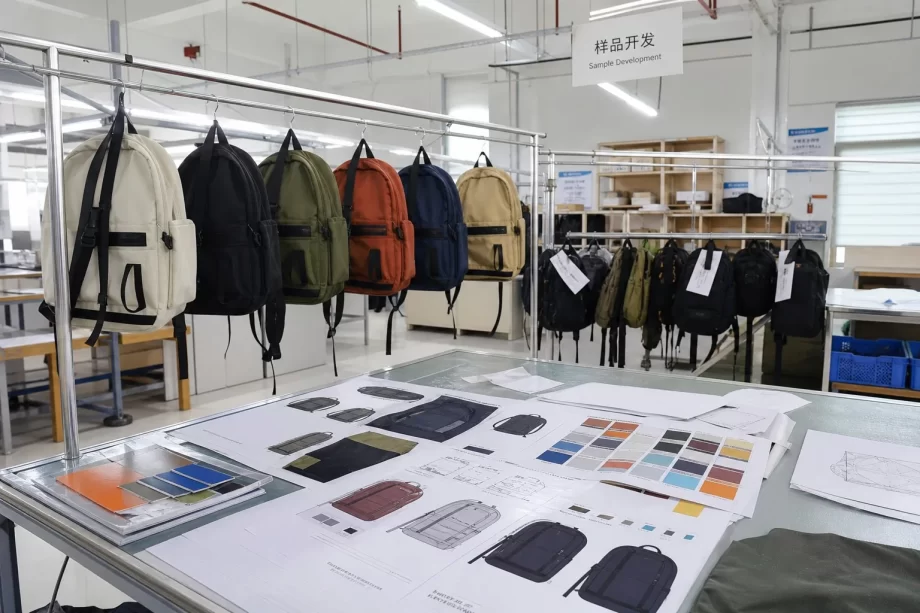
Sampling is where the design becomes a product — and where most of the delays and misunderstandings happen. A clear picture of the process prevents both.
The Sample Stages
| Stage | What it is | Typical timing |
|---|---|---|
| Development sample | First physical version; validates design, materials, construction | 7–15 days |
| Photo sample | Polished version for marketing and pre-sales | Same as development or +2–3 days |
| Pre-production sample (PP) | Made with production materials and process | 3–7 days before bulk |
| Production sample | Random sample from the actual run | During/after production |
What the Factory Does at Each Stage
Development sample:
- Reads the spec sheet and makes patterns
- Sources materials (or confirms existing stock)
- Sews the first sample
- Checks against spec, notes deviations
- Sends to buyer for feedback
Photo sample:
- Polishes construction and finishing
- Confirms color and materials
- Prepared for photography
- Sent for marketing use
Pre-production sample:
- Made with the exact production materials
- Sewn on the production line process
- Used to approve the final look and confirm the line setup
- The buyer’s final approval gate
The Feedback Loop That Determines Speed
The sample cycle speed depends heavily on the buyer’s feedback quality:
- Fast cycle — complete, written feedback with photos, prioritized issues, and clear deadlines.
- Slow cycle — scattered comments, vague descriptions (“the zipper feels wrong”), delayed responses.
| Feedback quality | Typical sample cycles | Time to approved sample |
|---|---|---|
| Clear, complete, fast | 1–2 rounds | 2–4 weeks |
| Moderate | 2–3 rounds | 3–6 weeks |
| Vague, slow | 3–5 rounds | 5–10 weeks |
Manufacturer’s note: The single biggest controllable factor in sampling speed is the buyer’s feedback. A buyer who responds within 24–48 hours with specific, prioritized, written feedback cuts the sampling timeline in half. A buyer who takes a week and sends “can you improve it?” can double it.
Sample Costs: Who Pays and Why
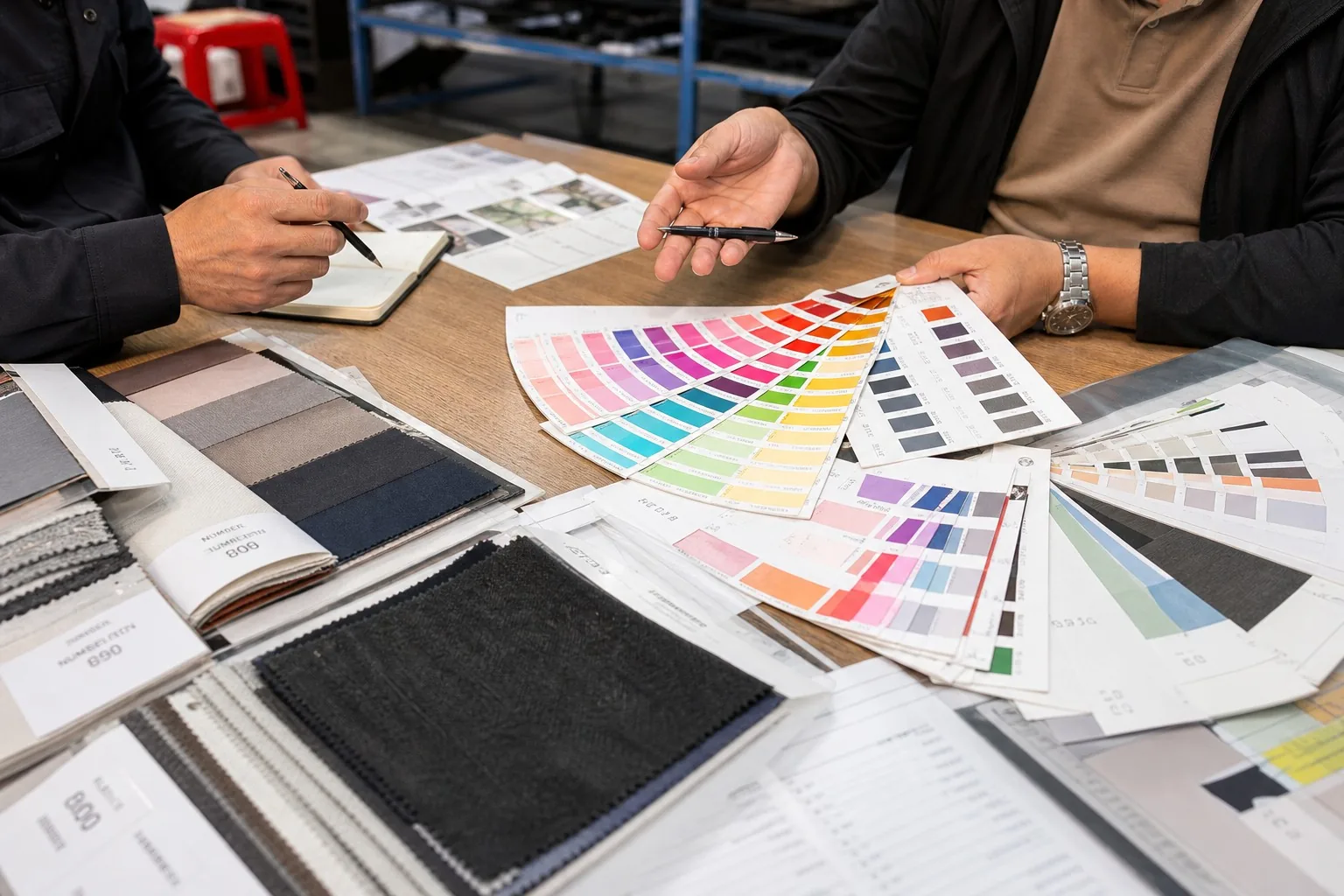
Sample costs are often a point of friction. The reality:
| Sample type | Typical cost arrangement |
|---|---|
| First development sample | Often free with order commitment, or paid (~$30–100) |
| Revisions after the first | Usually paid (materials + labor) |
| Photo samples | Often paid or shared |
| Pre-production sample | Usually included in production |
| Sample shipping | Buyer pays (standard) |
The Common Sampling Mistakes
- Skipping the development sample — “the design is simple, go straight to production” moves all the risk into the bulk run.
- Approving without testing — a sample that looks right but fails a load test will fail in production too.
- Changing the design after approval — every change restarts the cycle and adds cost.
- Not using the pre-production sample — the PP sample is the last chance to catch issues before bulk; skipping it is gambling.
- Feedback without specifics — “make it better” is not feedback; “the strap should be 3 cm longer and the pocket zipper should be #8” is.
How Lead Times Are Built
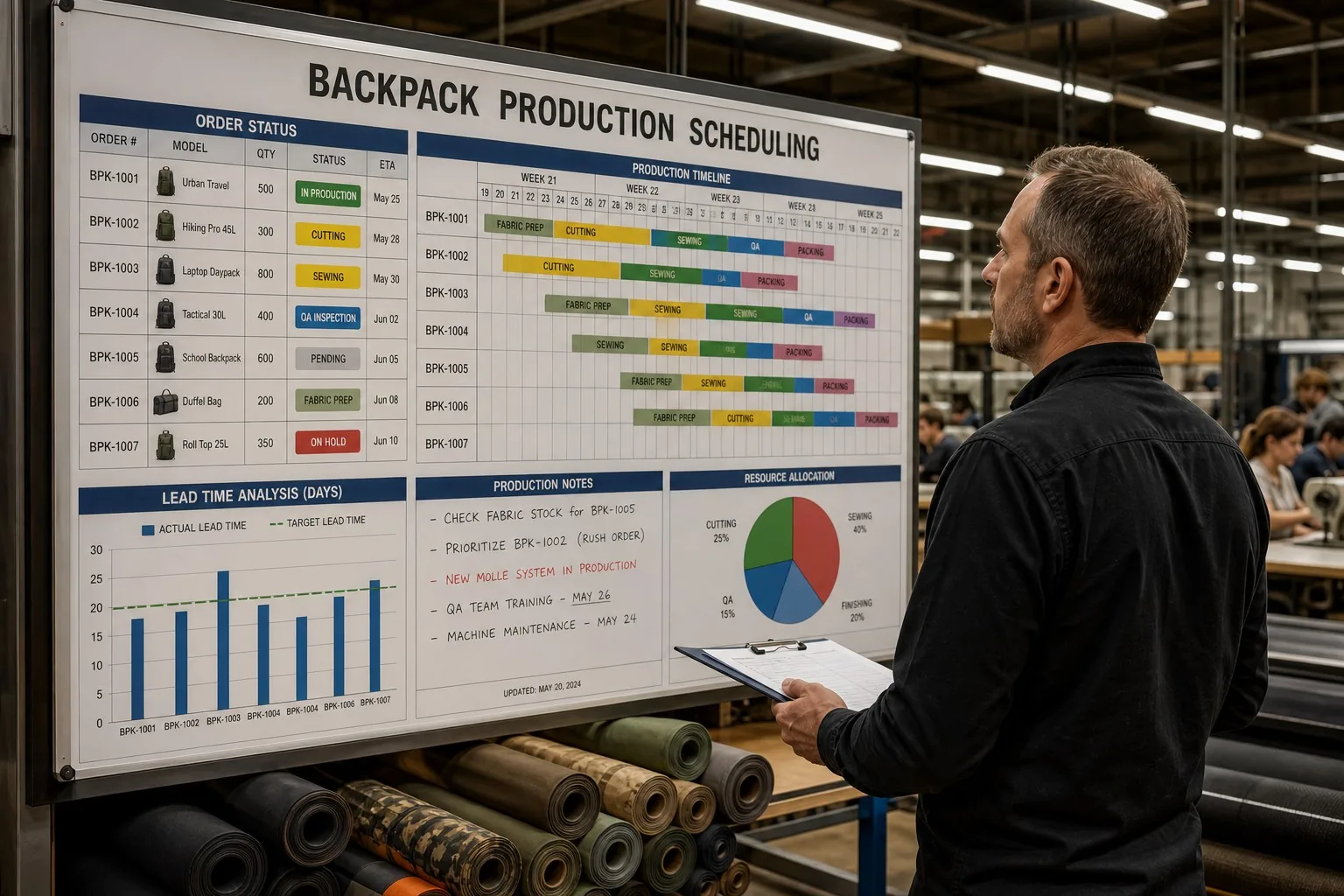
Lead time is not one number — it is a chain of stages, each with its own duration. Understanding the chain shows where time can be saved and where it cannot.
The Lead Time Chain
| Stage | Typical duration | Controllable by |
|---|---|---|
| Design confirmation and spec finalization | 1–2 weeks | Buyer |
| Sampling and approval | 2–6 weeks | Both (feedback speed) |
| Material procurement (if not stocked) | 2–6 weeks | Factory (and buyer decisions) |
| Production | 2–6 weeks | Factory (and order size) |
| Inspection and packing | 3–7 days | Factory |
| Shipping (sea freight Asia → EU/US) | 25–40 days | Logistics (buyer) |
| Customs and delivery | 3–10 days | Logistics (buyer) |
The Total Picture
A typical full lead time from order confirmation to door:
| Scenario | Total lead time |
|---|---|
| Fast (stocked materials, standard design, air freight) | 4–6 weeks |
| Typical (semi-custom, sea freight) | 8–14 weeks |
| Slow (custom materials, full development, sea freight) | 12–20+ weeks |
Where the Time Actually Goes
The most common buyer surprise: the factory’s “lead time” (production) is often only 3–6 weeks, but the total project takes months. The difference is sampling, materials, and shipping — stages that are partly in the buyer’s control.
How to Compress Lead Time
| Action | Time saved | Trade-off |
|---|---|---|
| Use stocked materials and colors | 2–4 weeks | Fewer custom choices |
| Approve samples on the first round | 1–3 weeks | None (just discipline) |
| Use air freight for the first order | 2–5 weeks | Higher freight cost |
| Start material procurement before sample approval | 1–2 weeks | Risk if design changes |
| Use a factory ODM base design | 2–4 weeks | Less customization |
| Confirm the spec completely before ordering | 1–2 weeks | None (just preparation) |
Manufacturer’s note: The most powerful lead-time tool is parallel work: ordering materials and starting pattern work while the sample is being approved. Factories offer this when the design is stable. It saves weeks, and the risk is manageable if the buyer commits to the design.
A Sample Timeline to Visualize
Here is what a typical custom project looks like on a calendar (semi-custom, stocked materials, sea freight):
| Week | Milestone |
|---|---|
| Week 1–2 | Spec confirmed, order placed, deposit paid |
| Week 2–4 | Development sample made and approved |
| Week 4–5 | Photo sample, pre-production sample approved |
| Week 5–9 | Production runs, in-line QC, final inspection |
| Week 9–10 | Packing, pre-shipment inspection, shipment |
| Week 10–16 | Sea freight + customs, arrival at warehouse |
Seeing the whole chain on one calendar makes the total timeline concrete — and shows exactly where your feedback speed, material choices, and logistics decisions affect the end date.
The Quote: Understanding What You Are Paying For
The quote is where everything comes together — and where the numbers need the most scrutiny.
The Quote Components
| Component | What it includes |
|---|---|
| FOB unit price | Product cost loaded on the vessel |
| Tooling/mold cost | One-time cost for new molds, dies, patterns |
| Sample cost | Development and sample charges |
| Packaging | Polybag, carton, inner packing |
| Testing | Lab tests required by the spec or market |
| Payment terms | Deposit schedule and balance terms |
Price vs Quantity: The Real Curve
Price does not fall linearly with quantity — it falls steeply at first, then flattens:
| Quantity | Relative unit price |
|---|---|
| 200 | 1.15× baseline |
| 500 | 1.00× (baseline MOQ price) |
| 1,000 | 0.92× |
| 2,000 | 0.85× |
| 5,000 | 0.78× |
The biggest savings are between the MOQ and 1,000–2,000 units; beyond that, economies flatten. Ordering 3,000 instead of 1,000 does not halve the price — it reduces it maybe 8–10%.
The Red Flags in Quotes
- No cost breakdown — a factory that cannot explain the price cannot justify it.
- Price that drops dramatically with volume — could indicate the MOQ price is inflated.
- Unusually low quote — quality is being cut somewhere; find out where.
- Vague material specs — “good fabric” is not a spec; the price should be tied to defined materials.
Working with Your Factory Through the Timeline
A successful custom project is a collaboration, not a transaction. The relationship dynamics determine whether the timeline holds.
The Buyer’s Responsibilities
- Complete, written specs before ordering
- Fast, specific feedback at each sample stage
- On-time payments (deposits and balances)
- Realistic expectations about timelines and costs
- Early communication about changes or delays
The Factory’s Responsibilities
- Honest lead-time estimates (with buffer)
- Transparent cost breakdowns
- Quality at every stage (samples, first-piece, final inspection)
- Proactive communication about problems
- No hidden substitutions of materials or hardware
The Communication Rhythm
| Phase | Communication cadence |
|---|---|
| Before order | Detailed spec exchange, quote, timeline agreement |
| Sampling | Feedback within 24–48 hours per round |
| Production | Weekly status updates |
| Before shipment | Inspection scheduling, documentation |
| After shipment | Tracking, delivery confirmation |
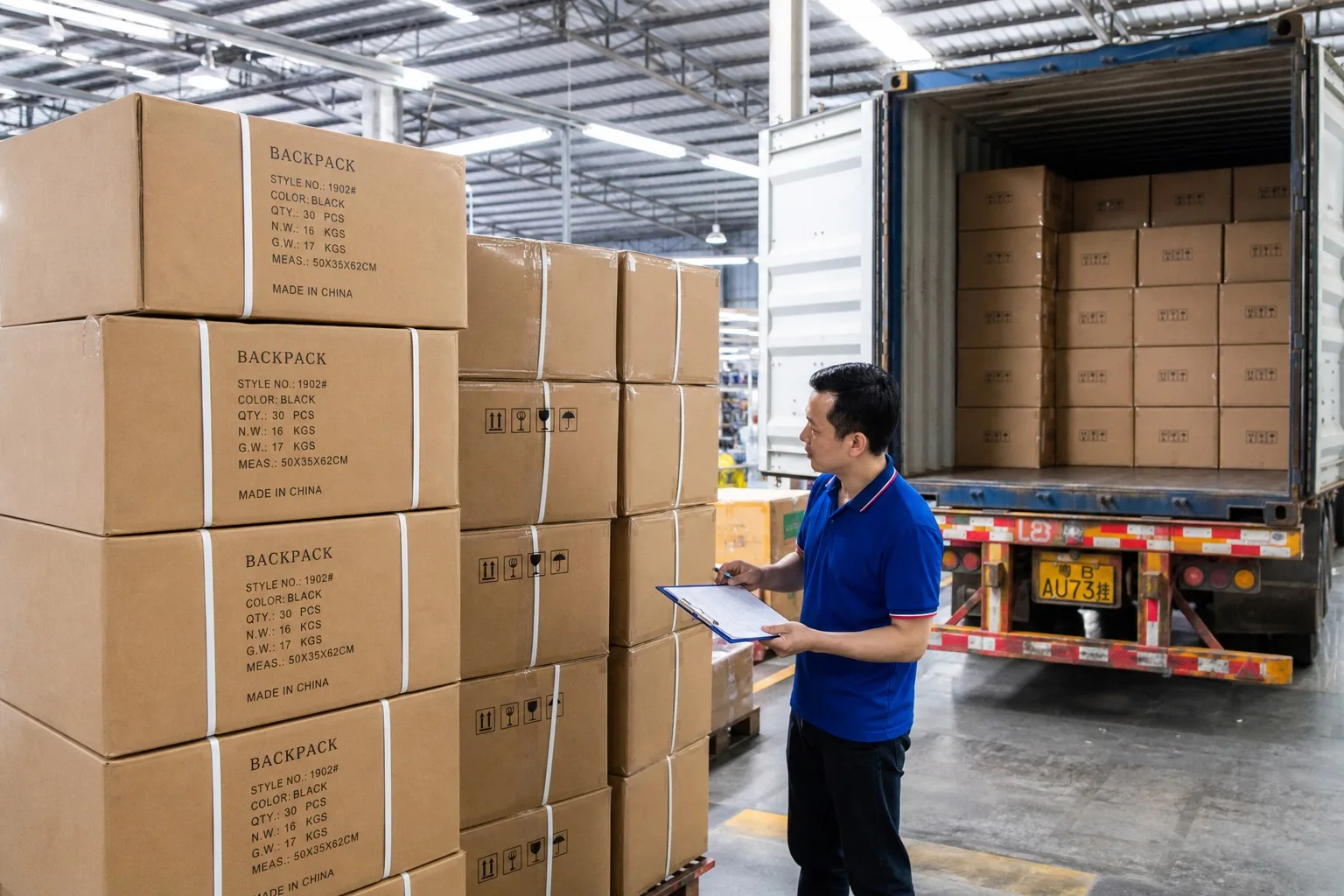
Common Pitfalls in Custom Backpack Projects
Learn from the mistakes that cost other buyers time and money:
Pitfall 1: The Unclear Spec
A vague spec (“medium backpack, blue, good quality”) produces a vague product. Every detail — dimensions, materials, hardware brands, stitch density, packaging — must be written down. The spec sheet is the contract for quality.
Pitfall 2: The Free Sample Trap
Spending months negotiating for free samples while the season slips away costs more than the sample fee. Sample costs are small; timelines are not. Move forward with a reasonable sample arrangement and keep the project moving.
Pitfall 3: Changing Designs Mid-Flight
Every design change after production starts costs money and time — and introduces quality risk. Lock the design at the pre-production sample and treat changes as exceptions with clear cost implications.
Pitfall 4: Ignoring the Materials Timeline
The longest lead item is often the fabric, not the factory. Custom colors and custom materials add weeks. If your launch date is fixed, work backward from it and lock materials first.
Pitfall 5: Skipping the Pre-Shipment Inspection
The cheapest insurance in importing is a pre-shipment inspection. For a fraction of the order value, it verifies quantity, quality, and packing before the container ships. Skipping it saves a little and risks a lot.
Pitfall 6: Underestimating the First Order
A first order with a new factory is a learning process for both sides. Small first orders with clear specs, inspection, and honest feedback build the relationship; huge first orders with no inspection build risk.
Building the Complete Custom Backpack Specification
The single most important document in a custom project is the specification sheet. It is the contract for quality — the reference that resolves every dispute and guides every production decision.
The Specification Sheet Sections
| Section | What it contains | Example |
|---|---|---|
| Product overview | Product name, category, target market | “Commuter pack, 22 L, EU market” |
| Drawings | Technical drawings with dimensions and tolerances | Front/back/side views, ±5 mm |
| Materials | Fabric, hardware, zippers, webbing, foam with specs | 600D polyester PU-coated, YKK #8 |
| Construction | Stitch density, seam allowance, bar-tack placement | 5 SPI, 10 mm allowance, bar-tacks at anchors |
| Colors | Pantone codes, placement per panel | Shell: Pantone 19-4052, lining: 11-0601 |
| Branding | Logo placement, size, method | Chest logo 60 mm, heat transfer |
| Labels | Care, content, compliance labels | Care label, fiber content, CE/EN 71 |
| Packaging | Polybag, carton, packing quantity | 10 pcs/carton, carton 60×40×50 cm |
| Testing | Required tests and standards | Load test 15 kg, hydrostatic head 3000 mm |
| Compliance | Market-specific requirements | REACH, CPSIA (children’s) |
Why Complete Specs Matter
- Accurate quotes — a complete spec produces an accurate quote; a vague spec produces a quote with hidden buffers.
- No substitution — a written spec prevents “equivalent” materials that are rarely truly equivalent.
- Faster sampling — the factory does not need to ask questions or guess; the first sample is closer to right.
- Dispute resolution — when a problem arises, the spec is the referee. Without it, disputes become he-said-she-said.
Manufacturer’s note: The factories that quote the most accurately are not necessarily the cheapest — they are the ones that ask the most questions before quoting. When a factory asks detailed spec questions, it is building an accurate cost model, not being difficult. A buyer who answers those questions well gets a quote that holds.
The Common Spec Gaps
- Missing tolerances — dimensions without tolerances leave quality to interpretation.
- Unspecified hardware — “good buckles” is not a spec; brand, size, and material are.
- Unspecified thread — thread type and size matter more than buyers realize.
- Unspecified test requirements — without defined tests, no one knows if the product passed.
- Unspecified compliance — discovered late, compliance gaps stop shipments at customs.
Payment Terms, Contracts, and Risk Protection
The commercial structure of the order is as important as the product spec. Clear terms protect both sides and prevent the disputes that kill projects.
Standard Payment Terms
| Term | Structure | Best for |
|---|---|---|
| T/T 30/70 | 30% deposit, 70% against B/L copy | Most mid-size orders |
| T/T 50/50 | 50% deposit, 50% before shipment | Higher-trust relationships |
| Letter of credit (L/C) | Bank-backed payment | Large orders, new relationships |
| Trade assurance / escrow | Platform-protected | Marketplace transactions |
The Deposit’s Role
The deposit is not just payment — it covers the factory’s commitment:
- Materials are ordered against the deposit
- Production slots are reserved
- Fixed costs (patterns, samples) are covered
- The factory’s risk is reduced, which supports better pricing
Manufacturer’s note: A buyer who offers a higher deposit often gets better terms elsewhere — a factory that is financially comfortable can quote more competitively and prioritize the order. The deposit is a signal of commitment, and factories respond to commitment.
The Contract Essentials
A simple but complete order agreement should include:
- Product description and spec reference
- Quantity and unit price (FOB/CIF/EXW basis)
- Payment schedule
- Delivery date with buffer
- Quality standards (AQL levels, tests)
- Inspection arrangements
- Claim and remedy terms (repair/replacement/discount)
- IP ownership and exclusivity terms
- Force majeure and dispute resolution
The Intellectual Property Question
For custom designs, IP protection matters:
- Pattern ownership — the patterns and design are your property; the factory cannot produce the design for others.
- Exclusivity — agree on an exclusivity period (e.g., 12–24 months) in the target market.
- Confidentiality — NDA before sharing full specs, especially for novel designs.
- Registration — for high-value designs, register trademarks/designs in your markets.
Quality Assurance and Arrival Inspection
Quality is the reason the whole structure exists — the spec, the samples, the inspections, the contracts. This is how quality is protected through a custom project.
The Quality Gates
| Gate | When | What it catches |
|---|---|---|
| Incoming material inspection | Materials arrive at factory | Wrong fabric, color, hardware |
| First-piece inspection | Each operation starts | Setup errors, tension problems |
| In-line QC | During production | Drifting quality, operator errors |
| Pre-production sample approval | Before bulk | Design/process issues |
| Pre-shipment inspection (AQL) | Before packing/shipping | Final quality and quantity |
| Arrival inspection | Buyer receives goods | Transit damage, final check |
The AQL System in Practice
AQL (Acceptable Quality Limit) sampling defines how many units are inspected and how many defects are acceptable:
| Defect class | Typical AQL | Example |
|---|---|---|
| Critical | 0–1.0 | Safety hazard, unusable product |
| Major | 1.5–2.5 | Broken zipper, wrong color, failed test |
| Minor | 4.0 | Slight cosmetic issue |
The inspection plan defines sample sizes and pass/fail thresholds. A standard pre-shipment inspection covers quantity, appearance, construction, function, labels, and packing.
The Arrival Inspection Checklist
When goods arrive, verify before distributing:
- Quantity against the packing list and invoice
- Visual condition (transit damage, moisture)
- Sample the packs against the approved sample
- Function-test zippers, straps, and buckles
- Check labels, branding, and compliance marks
- Document everything with photos
Handling Defects: The Claim Process
When defects are found, the process:
- Document — photos, quantities, defect descriptions.
- Quantify — determine the defective percentage against AQL.
- Notify — inform the factory immediately with evidence.
- Agree on remedy — repair, replacement, discount, or refund per the contract.
- Learn — feed the defect data back into the spec and QC process.
Manufacturer’s note: The best factories treat defects as information, not blame. A factory that asks “what failed and how many” and fixes the process is a partner worth keeping. A factory that argues about the photos is a factory to replace. The arrival inspection is where that difference becomes visible.
The Reorder Quality Loop
The real value of quality systems is in reorders: the second order should be better than the first, because both sides learned. Feed the field data back — what customers complained about, what held up well — and the spec improves every cycle.
The Checklist Before You Place a Custom Order
A practical final checklist for every custom backpack project:
- [ ] Product use case and target market defined
- [ ] Complete specification sheet written (materials, dimensions, hardware, construction)
- [ ] MOQ and pricing package understood and agreed
- [ ] Sample plan agreed (development, photo, pre-production)
- [ ] Realistic lead-time plan with buffer
- [ ] Payment terms and contract in writing
- [ ] IP and exclusivity terms agreed
- [ ] Test requirements and compliance defined
- [ ] Inspection plan agreed (in-line, pre-shipment)
- [ ] Arrival inspection planned
Work through the checklist before committing — and the project will run dramatically smoother than one started on a handshake and a prayer.
FAQ
What is a typical MOQ for custom backpacks?
Standard ODM designs: 200–500 units. Custom colors on existing designs: 300–600. Fully custom designs with existing materials: 500–1,000. Custom materials, hardware, or molds: 1,000–3,000+. Small-batch premium runs of 100–300 are possible at higher unit prices.
Can I order below the factory’s MOQ?
Sometimes — if you understand what drives the MOQ. Material minimums can be covered by paying the difference, line setup can be shared with other orders, or the unit price can be raised to cover fixed costs. Ask why the MOQ exists and negotiate the package.
How long does sampling take?
The development sample typically takes 7–15 days. With clear feedback, the full approval process (development → photo → pre-production) takes 2–4 weeks; with slow or vague feedback, it can stretch to 6–10 weeks. Your feedback speed is the biggest variable.
What is the total lead time for a custom backpack order?
Total from order confirmation to delivery: 4–6 weeks (fast, stocked materials + air freight), 8–14 weeks (typical, sea freight), or 12–20+ weeks (custom materials + full development). Production itself is usually only 3–6 weeks; sampling, materials, and shipping make up the rest.
How much does a custom backpack sample cost?
First development samples are often free with an order commitment or $30–100. Revisions after the first are usually paid, as are photo samples. Pre-production samples are typically included in production. Sample shipping is normally the buyer’s cost.
How can I reduce my lead time?
Use stocked materials and colors, approve samples on the first round with specific feedback, start material procurement early, use air freight for the first order, or use a factory ODM base design. The biggest lever is parallel work: starting materials and patterns while samples are approved.
The Realities to Accept
Custom manufacturing has truths that no negotiation changes:
- Fixed costs are real — patterns, setup, and material minimums exist whether you order 100 or 10,000 units.
- Speed has a price — air freight, priority slots, and rush sampling all cost more.
- Quality requires time — samples, first-piece checks, and inspections are not delays; they are the process that protects quality.
- The relationship compounds — every clean order, fast payment, and honest conversation makes the next order faster, cheaper, and better.
Buyers who accept these realities and plan around them get dramatically better outcomes than those who fight them.
Conclusion
MOQ, sampling, and lead time are not obstacles — they are the structure of the custom manufacturing process, and understanding them is the difference between a frustrating project and a smooth one. MOQs exist because fixed costs are real, and they can be negotiated intelligently by understanding what drives them. Sampling is a structured process whose speed depends heavily on the quality and speed of buyer feedback. Lead times are chains of stages, most of which are visible and many of which are partly in the buyer’s control.
The buyers who succeed at custom manufacturing treat it as a partnership: complete specs, fast feedback, honest communication, and payment discipline — in exchange for transparent pricing, real timelines, and consistent quality. That exchange is the foundation of every successful custom backpack program.
If you are planning a custom backpack project, our team can walk you through the MOQ structure for your design, show you our sampling process with real timelines, and give you an honest lead-time estimate for your specific product — before you commit.