
PU Leather vs Nylon in Backpack Manufacturing: A Factory Comparison
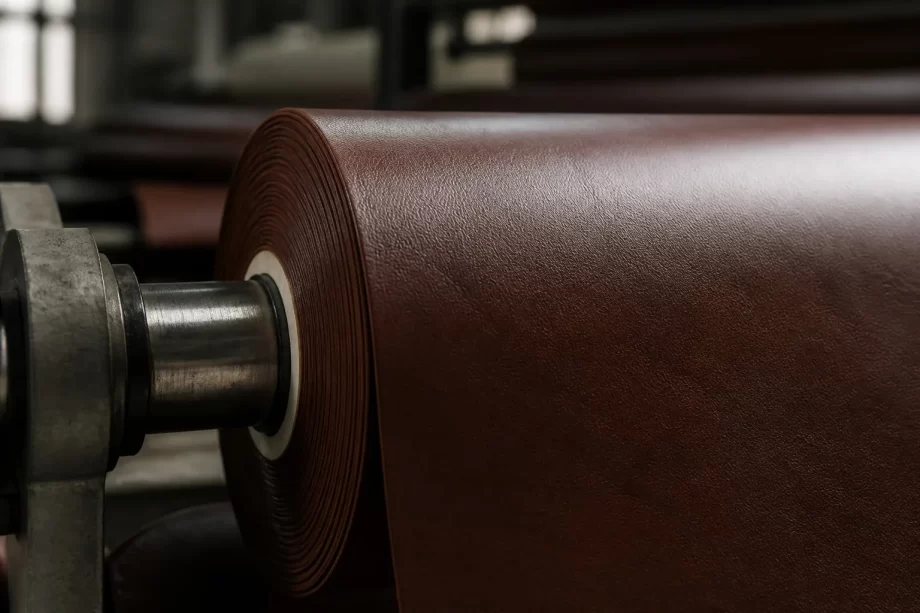
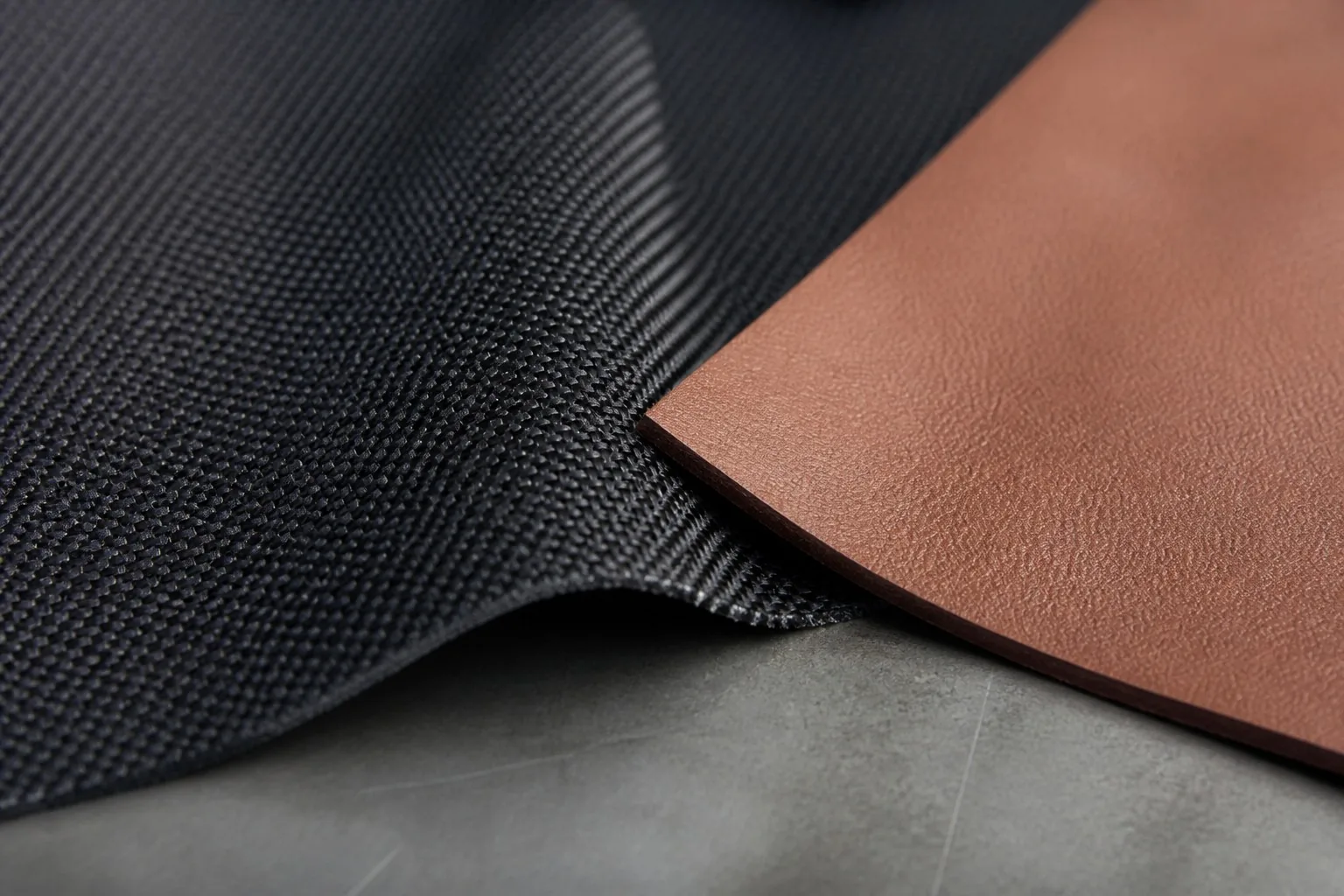
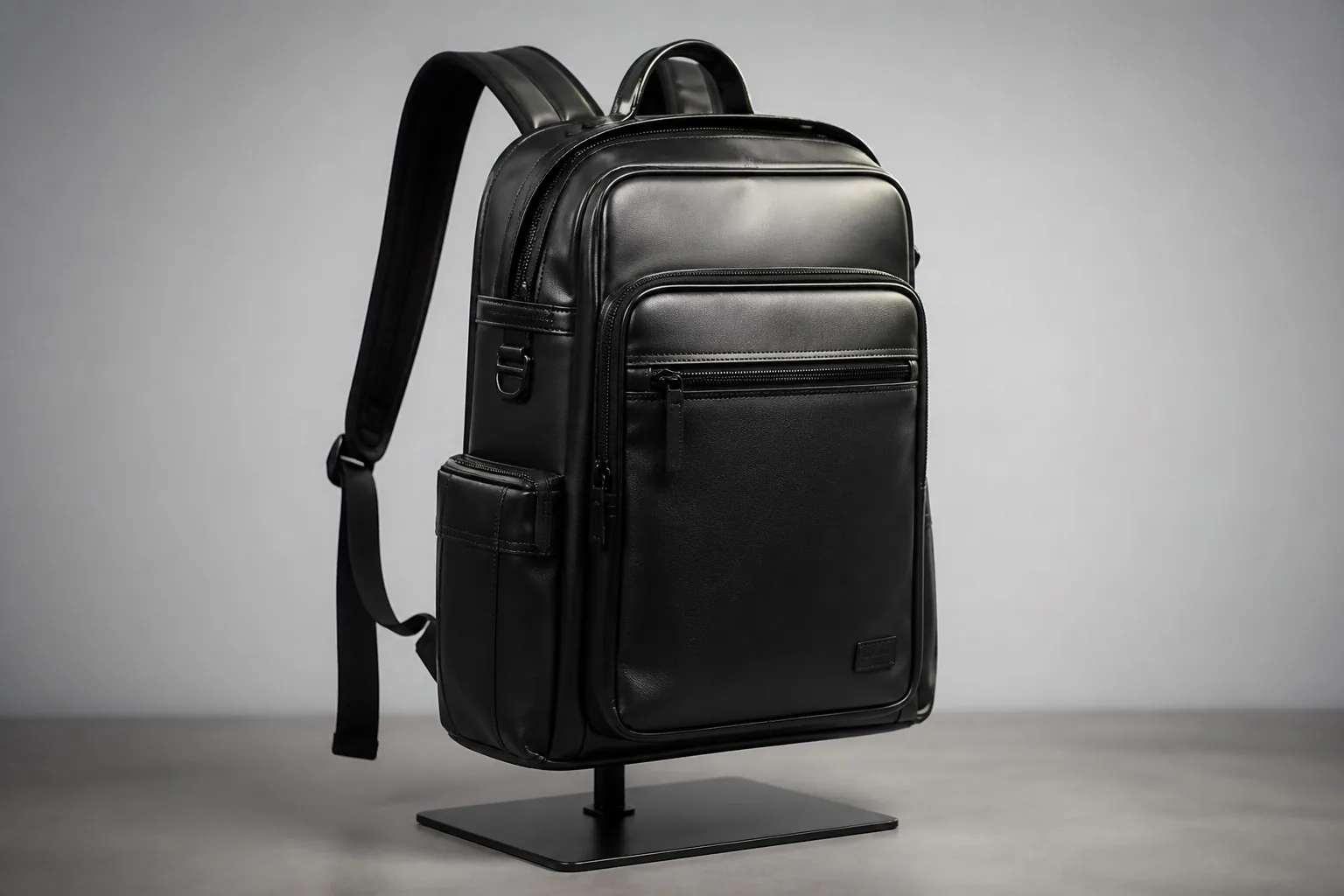
Walk through any bag factory and you will see two very different material worlds. On one side, rolls of nylon in technical weaves and a rainbow of colors — light, strong, and machine-woven at high speed. On the other, sheets of PU leather in smooth, grain-textured finishes — supple to the touch, rich in color, and carrying the visual language of premium goods.
Both materials build backpacks. Both sell in volume. But they are not interchangeable, and choosing between them is one of the most consequential material decisions a backpack brand makes. The choice shapes the product’s look, weight, durability, weather behavior, price point, and even the factory equipment required to make it.
This guide compares PU leather and nylon for backpack manufacturing from a factory perspective: how each material is made, how they perform across the properties that matter, what each costs to work with, which pack categories suit each, and how to decide — with the caveats and manufacturing details that only a factory sees.
- The Two Materials at a Glance
- How PU Leather Is Made
- How Nylon Is Made
- The Head-to-Head Comparison
- The Manufacturing Perspective
- Cost Comparison
- Which Pack Categories Suit Which Material
- Making the Decision: A Buyer’s Framework
- Care and Longevity: What Customers Need to Know
- The Sustainability Dimension
- Working with a Factory on Material Selection
- Construction Details That Make or Break Each Material
- FAQ
- The Trends Shaping Material Choice
- Conclusion
The Two Materials at a Glance
| Property | PU leather | Nylon |
|---|---|---|
| What it is | Polyurethane-coated synthetic leather | Woven polyamide fabric |
| Look | Smooth, leather-like, premium | Technical, textured, athletic |
| Weight | Heavier | Light |
| Strength | Good, but depends on base fabric | Excellent strength-to-weight |
| Abrasion resistance | Moderate to good | Excellent |
| Water resistance | Good initially, coating-dependent | Low absorption; coating needed |
| Weather durability | Coating can crack/peel over time | UV-sensitive; needs additives |
| Sewing behavior | Thicker, stiffer, slower to sew | Easy, fast, forgiving |
| Price point | Mid-premium look | Broad range, often lower |
| Typical use | Fashion, premium, lifestyle packs | School, commuter, outdoor, technical |
Manufacturer’s note: The most common misconception is that one material is simply “better.” In our experience, each material wins in specific products, and the factory’s job is to match the material to the product’s real use. A premium-looking PU leather pack sold to a fashion-conscious commuter and a lightweight ripstop nylon pack sold to a hiker are both right — for their different customers.
How PU Leather Is Made
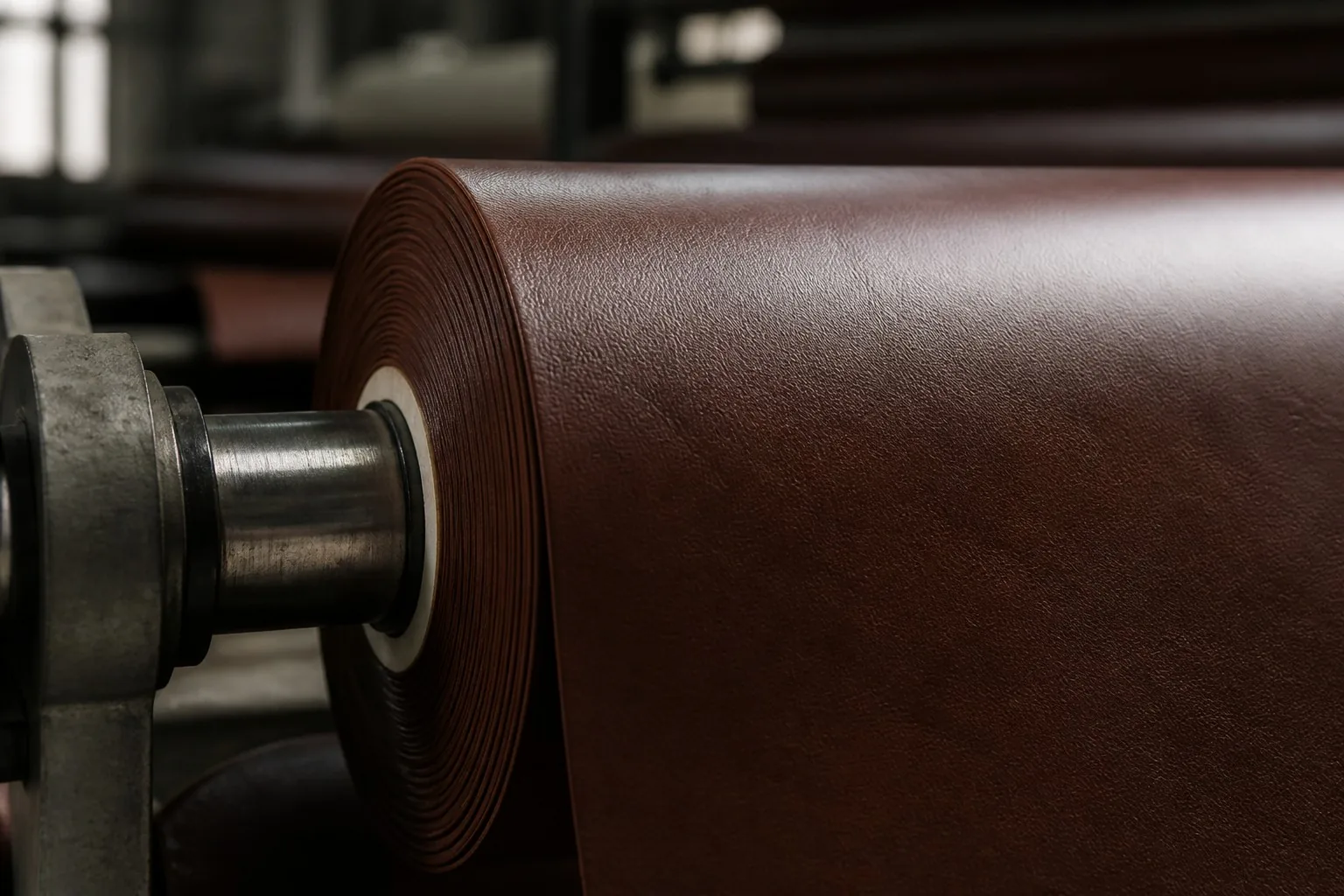
PU leather (polyurethane leather, often called vegan leather or faux leather) is a coated fabric. Understanding its construction is essential because every performance property derives from it.
The Construction
- Base fabric — a knitted or woven substrate (usually polyester, sometimes cotton or nylon) provides strength and flexibility.
- PU coating — polyurethane is applied to the base in one or more layers, creating a continuous, leather-like surface.
- Surface finishing — the coating is embossed with a grain texture and finished with color, sheen, and protective topcoats.
- Quality variants — better PU leathers use multiple coating layers, higher-grade PU resin, and better base fabrics.
The Quality Spectrum
| Grade | Construction | Character | Typical use |
|---|---|---|---|
| Economy | Thin single-layer PU on light knit | Shiny, stiff, lower durability | Budget fashion bags |
| Standard | Medium coating on stable woven base | Good balance, reasonable durability | Mid-market bags |
| Premium | Multi-layer PU on quality base | Soft hand, rich color, longer life | Premium/lifestyle packs |
| Microfiber PU | PU on microfiber nonwoven base | Closest to real leather feel | High-end bags, automotive-grade |
What This Means for Performance
- The base fabric is the strength — a PU leather is only as strong as its substrate. Thin bases tear; quality bases hold.
- The coating is the look and the weakness — the PU surface delivers the leather aesthetic, but it is also what cracks, peels, or scuffs over time.
- Age behavior — PU leather can develop surface wear, edge fraying at the coating, and in humid climates, hydrolysis degradation of the PU resin.
How Nylon Is Made
Nylon (polyamide) is a fully synthetic fiber, extruded, drawn, and woven into fabric. We covered the manufacturing in detail in our earlier fabric guide; here we focus on what matters for the comparison.
The Construction
- Polymer extrusion — nylon polymer is melted and extruded into filaments.
- Weaving — filaments are woven into fabric in constructions like plain weave, ripstop, twill, or ballistic.
- Finishing — the fabric is dyed, coated (PU coating is common on nylon too), or treated with DWR.
- Technical variants — ripstop grids, ballistic weaves, and coated constructions serve different performance needs.
What This Means for Performance
- Strength-to-weight — nylon delivers more strength per gram than almost any other backpack material.
- Durability — excellent abrasion and tear resistance, especially in ripstop and ballistic constructions.
- Weather behavior — nylon absorbs little water and dries fast, but it is not waterproof without coating.
- UV sensitivity — uncoated nylon degrades in prolonged sun; UV stabilizers and coatings mitigate this.
The Head-to-Head Comparison
1. Durability and Abrasion
| Test | PU leather | Nylon |
|---|---|---|
| Abrasion (surface) | Coating scuffs and wears; premium grades much better | Excellent; wears gradually without catastrophic failure |
| Tear resistance | Depends on base fabric; can tear once started | Excellent, especially ripstop |
| Seam holding | Coating makes seams stable; base fabric governs | Excellent seam performance |
| Long-term wear | Coating can crack, peel, or delaminate | Fabric degrades gradually; UV is the main enemy |
Winner: Nylon for raw durability. PU leather can look premium but wears visibly over time; nylon typically outlasts it in demanding use.
2. Weather and Water
| Scenario | PU leather | Nylon |
|---|---|---|
| Light rain | Beads initially; coating resists | Beads if DWR/coated; absorbs if not |
| Heavy rain | Seams leak; coating intact but seams are the issue | Same — coating needed |
| Humidity | Hydrolysis risk in humid climates | No hydrolysis issue |
| Sun exposure | Coating can fade and crack | Needs UV stabilization |
Tie, with caveats. Both need proper construction for real weather protection. PU leather adds hydrolysis risk in humid climates; nylon adds UV risk in sunny ones.
3. Weight
| Pack type | PU leather typical | Nylon typical |
|---|---|---|
| Commuter pack (20 L) | 900–1,300 g | 500–800 g |
| Tote/lifestyle | Heavier proportionally | Lighter |
| Hiking pack | Rarely used (too heavy) | 700–1,500 g depending on size |
Winner: Nylon, decisively. PU leather weighs roughly 50–100% more than comparable nylon construction. For any pack that is carried for long periods, weight is a real cost.
4. Aesthetics and Brand Perception
| Dimension | PU leather | Nylon |
|---|---|---|
| First impression | Premium, elegant, fashion-forward | Technical, active, utilitarian |
| Color depth | Rich, deep, matte or gloss finishes | Wide range, prints and patterns easy |
| Wear character | Can look worn-out when aging | Wears in, looks lived-in |
| Versatility | Fashion and work settings | Sports, outdoor, school |
Winner: Depends on the brand. PU leather says “quality, style, sophistication.” Nylon says “performance, durability, function.” The right choice is the one that matches the brand’s promise.
The Manufacturing Perspective
This is where the comparison gets practical. The two materials behave very differently on the factory floor, and the differences affect cost, lead time, and quality.
Sewing Behavior
| Factor | PU leather | Nylon |
|---|---|---|
| Machine type | Walking-foot preferred; standard machines struggle with stiffness | Standard single-needle works well |
| Needles | Larger, with care to avoid coating damage | Standard sizes |
| Stitch holes | Permanent — holes do not close | Holes close; forgiving |
| Puckering risk | Higher (stiff material) | Lower |
| Edge finishing | Coating edges need care (fraying at coating) | Clean, easy overlock |
| Production speed | Slower | Faster |
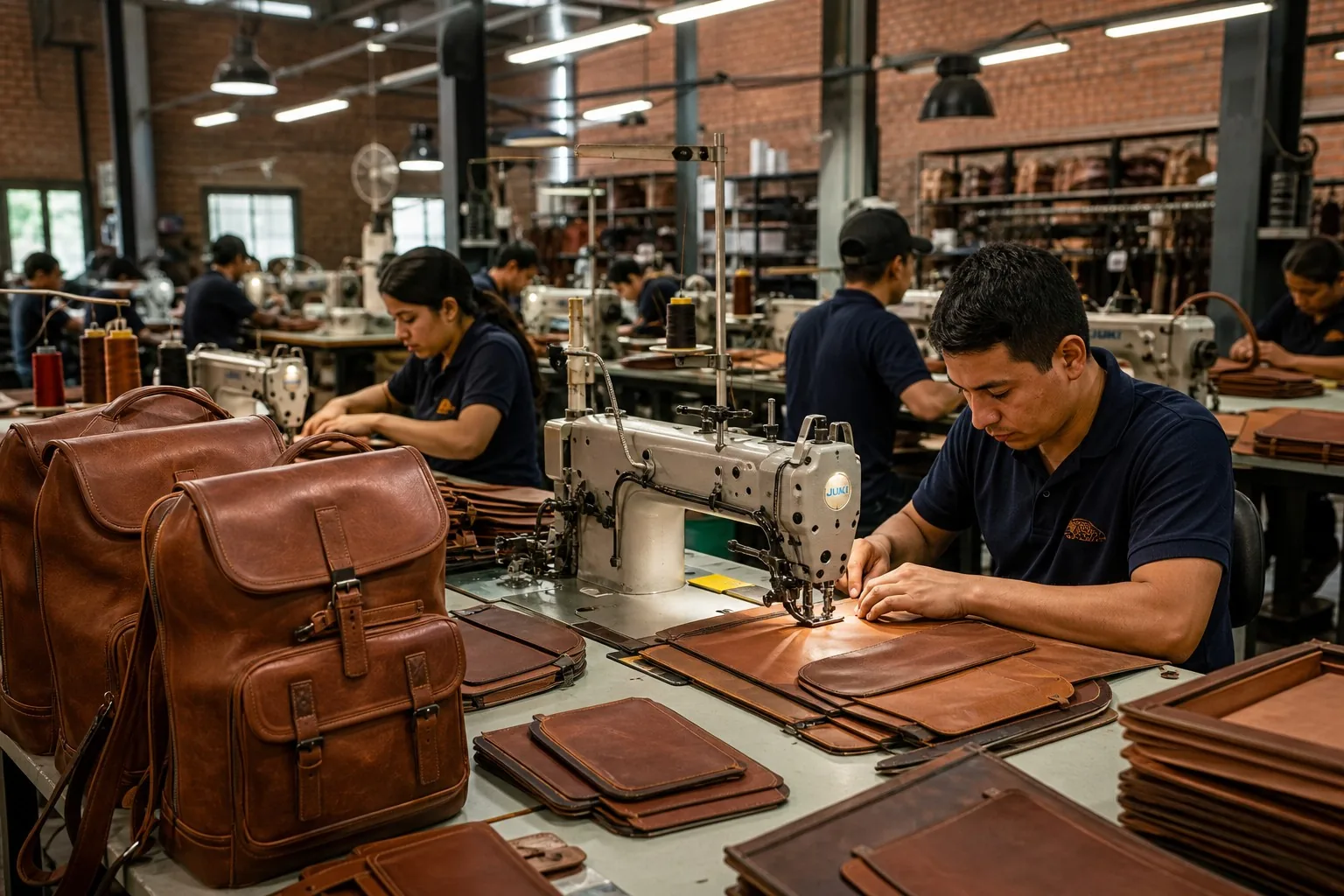
Manufacturer’s note: PU leather is a demanding material to sew well. Stitch holes are permanent, so tension errors and rework are costly — every hole shows. Nylon forgives more, sews faster, and is far easier for operators to learn. This is why nylon lines ramp up faster and PU leather lines need more experienced operators.
Cutting Behavior
| Factor | PU leather | Nylon |
|---|---|---|
| Cutting method | Manual or knife cutting, careful alignment; some grades need die cutting | Straight knife, high-volume cutting |
| Yield | Lower (directionality, surface defect sensitivity) | Higher (nests efficiently) |
| Edge quality | Coating can chip at edges | Clean edges |
| Defect visibility | Surface marks, coating flaws visible | Defects less visible on technical texture |
The Rework Problem
Rework is the hidden cost driver in PU leather production:
- Permanent stitch holes — unpicking a seam leaves visible holes that cannot be removed.
- Surface damage — handling marks, scratches, and creases on the coating are hard to repair.
- Color matching — re-cutting a panel from a different batch can produce visible shading.
For nylon, most of these problems are minor. This makes PU leather orders slower, more quality-sensitive, and more expensive per unit in labor.
Cost Comparison
Cost must be examined at two levels: material cost and total manufacturing cost.
Material Cost
| Material grade | Approximate relative cost |
|---|---|
| Standard 600D nylon | Baseline (1.0×) |
| Ripstop nylon | 1.1–1.5× |
| Economy PU leather | 1.2–2.0× |
| Standard PU leather | 1.5–2.5× |
| Premium PU leather | 2.5–5× |
| Microfiber PU | 4–8× |
Total Manufacturing Cost (Per Unit)
For a comparable 20 L commuter pack:
| Cost component | PU leather pack | Nylon pack |
|---|---|---|
| Material | Higher (see above) | Lower |
| Labor (sewing) | +20–40% (slower, more skill) | Baseline |
| Rework allowance | Higher (visible defects) | Lower |
| Hardware | Similar | Similar |
| Estimated factory cost | +30–80% over nylon | Baseline |
Manufacturer’s note: When a client asks why a PU leather pack costs 40% more than the nylon equivalent, the answer is not just the material — it is slower sewing, more skilled operators, higher rework rates, and more quality control. The retail price difference is usually justified, but the cost difference is real at every stage.
Which Pack Categories Suit Which Material
The decision matrix for the main categories:
| Category | Recommended material | Reasoning |
|---|---|---|
| School packs | Nylon (or polyester) | Durability, weight, cost |
| Commuter/laptop | Both work | PU for style, nylon for weight/function |
| Fashion/lifestyle | PU leather | Premium aesthetic is the product |
| Outdoor/hiking | Nylon | Weight, weather, durability |
| Tactical | Nylon | Maximum durability |
| Heritage/premium | PU or real leather | Aesthetic and brand story |
| Work/tool bags | Nylon or heavy canvas | Durability under abuse |
The Hybrid Approach
Many successful packs combine both materials:
- PU leather exterior, nylon lining — the premium look on the outside, functional durability inside.
- Nylon body, PU leather trim — performance body with premium details (handles, trims, patches).
- PU leather front, nylon back/straps — style where it shows, function where it matters.
The hybrid approach captures the best of both worlds and is one of the most popular design strategies in the market.
Making the Decision: A Buyer’s Framework
Here is the framework we walk clients through when they are choosing between PU leather and nylon:
Step 1: Define the Product’s Job
- Where is the pack used? (Office, street, trail, school?)
- How heavy is the expected load?
- How long is it carried each day?
- What weather will it face?
- Who is the customer, and what does that customer value?
Step 2: Map the Priorities
| Priority | Choose |
|---|---|
| Premium look and brand image | PU leather |
| Light weight for daily carrying | Nylon |
| Maximum durability | Nylon |
| Fashion appeal over function | PU leather |
| Price competitiveness | Nylon |
| Brand story (vegan, sustainable) | PU leather (marketed as vegan leather) |
Step 3: Check the Constraints
- Target price — can the retail price support a PU leather construction?
- Target weight — will the customer accept the extra weight?
- Factory capability — does the factory have experienced operators for PU leather?
- Climate — is the market hot/humid (hydrolysis risk) or sunny (UV risk)?
- Care expectations — will customers maintain PU leather (wiping, conditioning) or expect zero-maintenance?
Step 4: Sample Both
The final decision should be made with physical samples in hand:
- Sew a panel in each material with the planned hardware.
- Compare weight, hand feel, and appearance side by side.
- Run basic abrasion and water tests on both.
- Get cost quotes for both in the planned volumes.
Manufacturer’s note: We always recommend sampling both materials before deciding. The difference between a decision made from spec sheets and one made from physical samples is the difference between a product that sells and one that comes back.
Care and Longevity: What Customers Need to Know
The material choice affects what customers must do to keep the pack looking good. This matters for brand reputation and returns.
PU Leather Care
- Wipe clean — a damp cloth handles most dirt; harsh cleaners damage the coating.
- Avoid prolonged sun — coating fades and cracks with sun exposure.
- Condition periodically — specialized leather conditioners extend coating life.
- Store carefully — creasing can permanently mark the coating.
- Humidity caution — in hot, humid climates, hydrolysis can degrade the PU resin over time.
Nylon Care
- Machine or hand wash — much more forgiving than PU leather.
- Spot clean — most stains remove easily.
- UV caution — prolonged sun fades and weakens uncoated nylon.
- Refresh DWR — for coated/DWR nylon, re-treatment restores water behavior.
The Returns Implication
Returns from material-related issues differ by material:
- PU leather: surface scuffs, peeling, cracking — often perceived as “defective” even when normal wear.
- Nylon: UV fading, seam wear — less common, less severe.
Brands selling PU leather packs need clear care instructions and realistic expectations set at sale; nylon packs need fewer caveats.
The Sustainability Dimension
Sustainability is reshaping material decisions across the backpack industry, and the two materials sit in very different places on the environmental spectrum.
Nylon’s Environmental Profile
| Factor | Nylon |
|---|---|
| Source | Petroleum-derived polymer |
| Recyclability | Mechanically recyclable; recycled nylon (Econyl-style) available |
| Durability benefit | Long product life offsets manufacturing footprint |
| Microplastic concern | Sheds microfibers in washing |
| Certifications | GRS (Global Recycled Standard) for recycled content |
PU Leather’s Environmental Profile
| Factor | PU leather |
|---|---|
| Source | PU resin on polyester base (petroleum-derived, but no animal leather) |
| Recyclability | Complex — multi-layer construction is hard to separate |
| Vegan positioning | The key selling point for animal-conscious markets |
| Solvent use | Production can use solvents; water-based PU is the cleaner option |
| Certifications | Vegan certification; water-based PU claims |
The Nuanced Reality
The sustainability comparison is not as simple as “vegan = green”:
- Durability is a sustainability factor — a nylon pack that lasts 5 years has a lower footprint per use-year than a PU leather pack that looks worn in 2 years and gets replaced.
- Recyclability matters — nylon can be recycled; the multi-layer PU leather construction is hard to recycle.
- The vegan claim is real but limited — PU leather avoids animal products, which matters to a segment of buyers, but it is still a petroleum product.
- Water-based PU is the improvement — brands sourcing water-based PU leather reduce solvent-related impacts.
Manufacturer’s note: When a client asks which material is “greener,” we ask them to define the metric: recycled content, product lifespan, recyclability, or animal-free status. Each material wins on a different metric. A clear sustainability claim requires a clear metric.
The Compliance Layer
Both materials face compliance requirements:
- REACH — restricted substances in the EU cover both PU resin chemistry and nylon dyes/finishes.
- Prop 65 — California’s chemical disclosure rules can apply to PU leather components.
- PFAS — coatings and DWR treatments face tightening PFAS rules; verify the finish chemistry.
- OEKO-TEX — the voluntary standard covers both materials and is increasingly requested.
Sourcing teams should request compliance documentation for both materials before locking the spec — the chemical profile of PU resin and nylon finishes differ, and both have regulated substances to check.
Working with a Factory on Material Selection
The factory relationship shapes how well the material decision is executed. Here is what a good factory should do — and what buyers should ask for.
What a Factory Should Provide
- Material library — physical swatches of the PU leather and nylon grades they work with regularly, so buyers feel the difference.
- Honest manufacturing assessment — a factory that only praises the material you name is not helping; the right factory flags the sewing, rework, and cost implications of each option.
- Comparison samples — sewn panels or prototype packs in both materials with the planned hardware, not just swatches.
- Test data — abrasion, water, and color fastness results for the specific grades proposed.
- Cost transparency — a clear breakdown showing where the price difference comes from.
The Questions to Ask
- Which PU leather grades do you sew regularly, and which do you recommend for this product?
- What is your rework rate on PU leather orders vs nylon orders?
- Do you have operators experienced with PU leather, and are walking-foot machines available?
- Can you produce comparison samples in both materials before we commit?
- What is the realistic lead-time difference between a PU leather order and a nylon order?
The Hidden Quality Difference
The factory’s experience with the material shows up in the details:
- An experienced PU leather shop handles edges, corners, and hardware attachment without coating damage.
- An inexperienced shop leaves visible marks, crooked seams from material stiffness, and premature coating failure at stress points.
- The same pattern sewn in nylon by any competent operator looks fine; sewn in PU leather, it exposes every skill gap.
This is why material choice and factory choice are linked: the right material with the wrong factory performs like the wrong material.
Construction Details That Make or Break Each Material
Beyond the material itself, the construction details determine whether the pack delivers its potential. Each material has specific construction rules.
PU Leather Construction Rules
- Seam design — minimize unpickable mistakes: use correct tension from the first pass, and design seams that hide inevitable stitch holes.
- Edge treatment — raw PU leather edges show the base fabric and can fray; bind or paint edges where visible.
- Corner relief — sharp corners concentrate stress and coating wear; radius corners generously.
- Hardware attachment — bar-tacks on PU leather must be carefully placed; every hole is permanent, so reinforcement patches behind the surface are the norm.
- Foam and structure — PU leather’s stiffness means structured packs are easier to achieve; the material holds shape well.
- Lining choice — the lining does the durability work in a PU leather pack; choose a strong lining (nylon or polyester) since the outer is fashion-focused.
Nylon Construction Rules
- Seam allowances — generous allowances and clean finishing prevent fraying at the edges.
- Reinforcement — bar-tacks at stress points are essential; nylon is strong but stitches and anchors must be reinforced like any fabric.
- Coating care — if the nylon is PU-coated, the coating is on the inside; protect it during sewing (hot needles can damage coatings).
- Tension control — nylon stretches slightly under the needle; consistent tension prevents puckered seams.
- Zipper installation — nylon’s flexibility makes zipper installation forgiving, but tape alignment still determines function.
The Quality Control Differences
| QC checkpoint | PU leather | Nylon |
|---|---|---|
| Incoming inspection | Coating uniformity, surface defects, base fabric | Denier, weave, color, coating |
| Cutting QC | Surface marks, edge chipping | Pattern alignment, fraying |
| Sewing QC | Tension perfection, no holes beyond spec | Stitch density, bar-tack placement |
| Final inspection | Surface condition, coating integrity | Function tests, seam quality |
| The critical eye | Cosmetic perfection matters most | Structural integrity matters most |
Manufacturer’s note: QC priorities mirror the product: a PU leather pack fails on cosmetics (a scratch or a visible hole), while a nylon pack fails on structure (a popped seam or a pulled strap). The inspection checklist should be written to the material, not the other way around.
Prototype-to-Production Discipline
Both materials need the same discipline from prototype to production:
- Prototype with production materials — a prototype made with premium-grade material hides problems that production-grade material will expose.
- First-piece inspection — verify the first production unit of each operation against the approved sample.
- AQL sampling — the finished-goods inspection follows AQL standards for both materials.
- Fit and function testing — load tests, zipper cycles, and water tests apply equally.
FAQ
Which is better for backpacks — PU leather or nylon?
Neither is universally better. Nylon wins on weight, durability, and weather performance; PU leather wins on premium appearance and fashion appeal. The right choice depends on the product’s use, price point, and customer expectations — match the material to the product’s job.
Is PU leather durable enough for daily-use backpacks?
Yes, in the right construction — but choose a quality grade. Economy PU leather with a thin coating scuffs, cracks, and peels; premium multi-layer PU leather on a quality base performs much better. Also match the design: seams and edges are the weak points in any PU leather pack.
Why are PU leather backpacks more expensive than nylon ones?
Three cost drivers: the material itself is more expensive, PU leather sews slower and needs more skilled operators, and rework is costlier because stitch holes are permanent and surface defects are visible. Expect roughly 30–80% higher factory cost for a comparable PU leather pack.
Can I combine PU leather and nylon in one backpack?
Yes — the hybrid approach is popular and effective. Common combinations: PU leather exterior with nylon lining, nylon body with PU leather trim, or PU leather front with nylon back and straps. It captures the premium look where it shows and function where it matters.
How do PU leather and nylon compare in hot, humid climates?
This is a real trade-off. PU leather has hydrolysis risk in hot, humid conditions (the PU resin can degrade over time), while nylon has no hydrolysis issue but fades in sun. For tropical markets, nylon or hydrolysis-resistant PU formulations are safer choices.
Does PU leather need special sewing equipment?
Quality PU leather work benefits from walking-foot machines (which feed stiff layers evenly), larger needles, and experienced operators who understand that stitch holes are permanent. Standard machines can sew economy PU leather but with more puckering and defect risk.
The Trends Shaping Material Choice
Material decisions are not made in a vacuum — market trends are shifting how both materials are used.
The Trends to Watch
- Sustainable nylon — recycled nylon (GRS-certified) is moving from niche to mainstream, closing the sustainability gap and giving nylon brands an eco-story.
- Water-based PU — solvent-free PU leather is becoming available at competitive prices, addressing the main environmental criticism of the material.
- Microfiber PU — this premium grade is blurring the line with real leather at a lower price, strengthening the fashion positioning.
- Hybrid constructions — more brands are using both materials in one product (PU exterior + nylon interior or straps), capturing the best of each.
- Durability as sustainability — both brands and buyers are increasingly valuing product lifespan, which favors nylon in hard-use categories and quality PU leather in fashion categories.
- Regulation — PFAS, REACH, and Prop 65 rules are tightening the compliance burden on coatings and finishes for both materials.
What This Means for Buyers
- The material gap is narrowing — sustainable nylon and cleaner PU leather reduce the old trade-offs.
- Test before you trust — request abrasion, tear, and color fastness data for the specific grades proposed, not the marketing claims. The gap between economy and premium grades of both materials is enormous, and only test data reveals it.
- The hybrid approach is becoming the default for many products.
- Compliance documentation is no longer optional for either material.
- The decision should be revisited every 12–18 months, because materials and their environmental profiles are moving fast.
The Decision in One Line
If you need a pack that is light, tough, and weather-ready, choose nylon. If you need a pack that looks and feels premium, with a fashion-forward aesthetic, choose PU leather — and budget for the extra cost, weight, and care requirements. If you need both, combine them.
The Practical Starter Checklist
Before you finalize the material decision, run through this checklist with your team:
- [ ] Product use case defined (commute, school, outdoor, fashion)?
- [ ] Target retail price and the factory cost it supports?
- [ ] Target weight and the customer’s tolerance for heavier packs?
- [ ] Market climate (humidity, sun) and the material’s weak point in that climate?
- [ ] Factory experience with the chosen material confirmed?
- [ ] Comparison samples requested in both materials?
- [ ] Test data obtained for the specific grades proposed?
- [ ] Compliance documentation (REACH, PFAS, Prop 65) collected?
- [ ] Care instructions planned for the end customer?
- [ ] Hybrid construction considered where it adds value?
A checklist answered with data — not instinct — is the difference between a confident material decision and an expensive guess. The materials will both be available for decades; the product you build with them should be chosen deliberately.
Conclusion
PU leather and nylon are not competitors — they are different tools for different products. Nylon delivers weight, durability, and weather performance at a competitive cost, and it sews fast and forgivingly on the factory floor. PU leather delivers a premium, fashion-forward aesthetic that nylon cannot match, but it costs more, weighs more, sews slower, and demands more care — in production and from the customer.
The right decision comes from defining the product’s job first: the use, the load, the weather, the customer, and the price point. Then map those priorities to the material, check the constraints, and — always — decide with physical samples, not spec sheets.
Many of the most successful packs do not choose at all: they combine both materials, putting the premium surface where it shows and the durable function where it matters. That hybrid approach is often the best answer of all.
If you are choosing materials for a new line, our factory team can produce comparison samples in both materials, share our experience with each, and help you weigh the real trade-offs — cost, weight, durability, and manufacturability — before you commit.