
Factory Audits: Social and Environmental Compliance in Bags
A backpack order travels through a chain of factories, dyers, and tanneries before it reaches your warehouse. Most buyers never see those walls. Audits exist to open them.
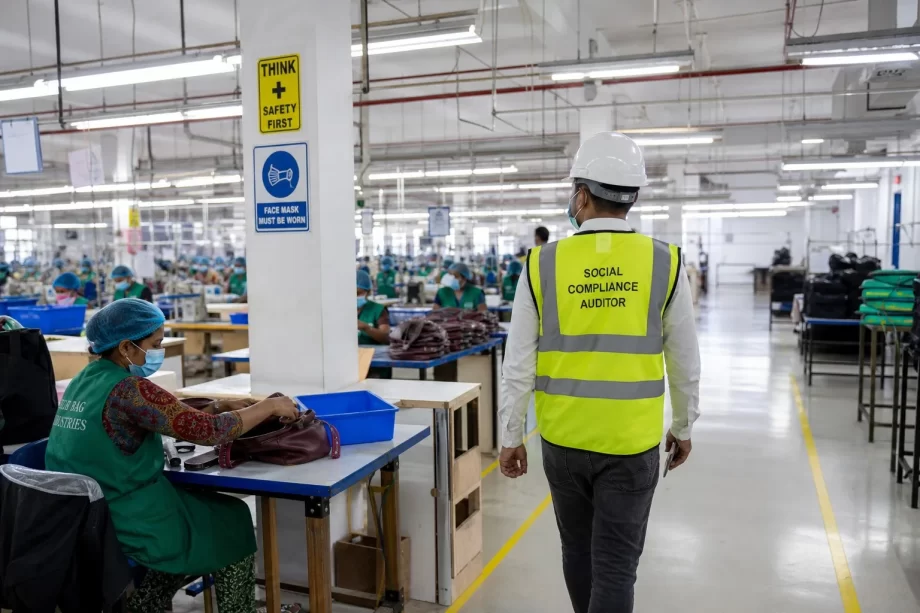
A social and environmental audit checks how a factory treats its workers and the environment. It looks at working hours, wages, safety, dormitories, wastewater, and waste. For bag brands selling into Europe, North America, or Australia, a clean audit is no longer optional — it is a condition of entry.
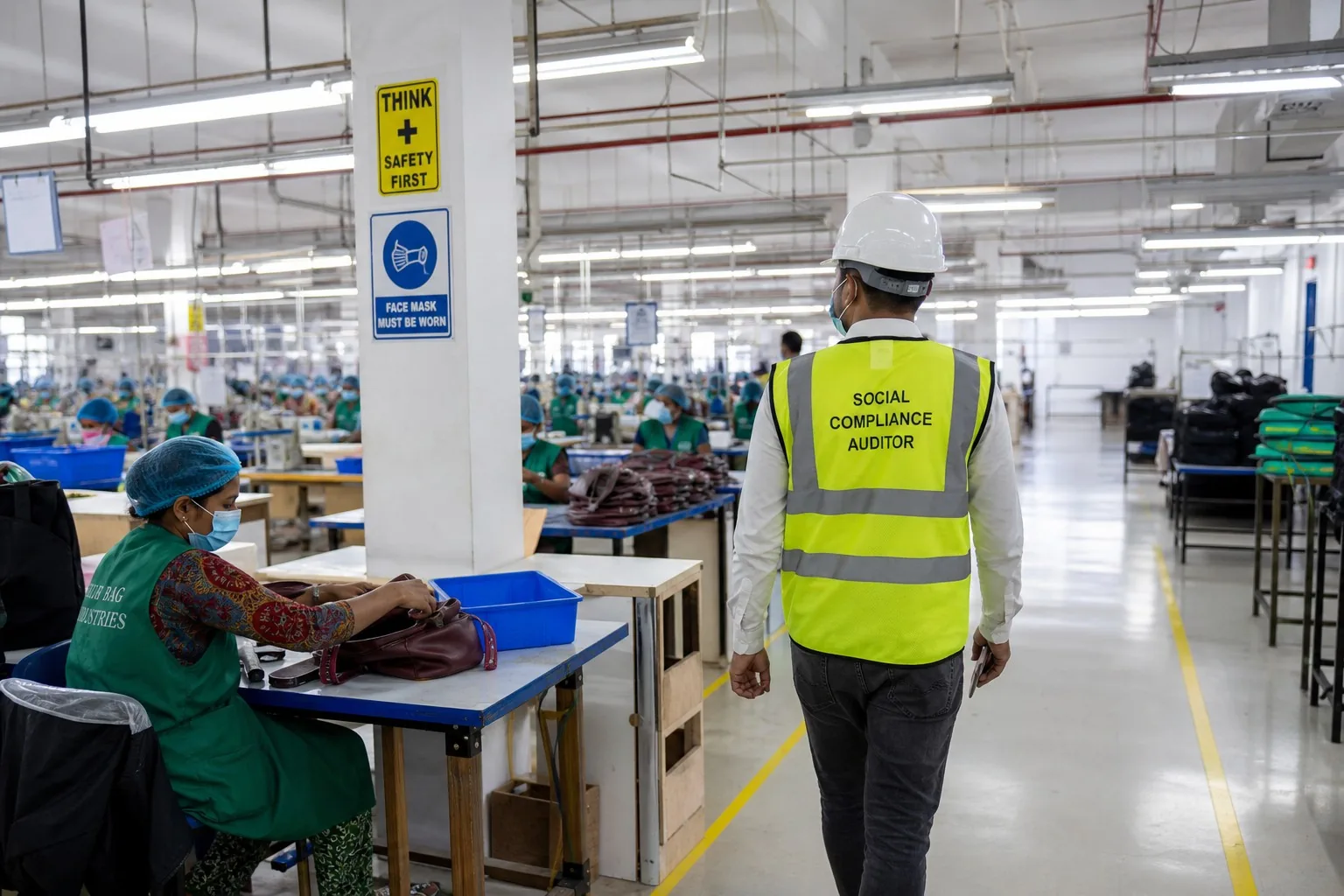
This guide explains what factory audits cover, which standards matter, how the process runs, how results are graded, and how buyers can use audits to protect both their supply chain and their reputation.
- Why Compliance Audits Matter to Buyers
- The Audit Landscape: Which Standards Apply
- What a Social Audit Checks
- What an Environmental Audit Checks
- The Audit Process Step by Step
- How Audit Results Are Graded
- Preparing for an Audit: The Factory Side
- Using Audits to Choose and Manage Suppliers
- Common Findings in Bag Factories
- Beyond Audits: Building Real Compliance
- Environmental Certifications Buyers Value
- The Audit Report in Detail
- The Cost Side of Compliance
- Building an Audit-Ready Factory: The Factory Checklist
- Regional Regulations That Are Changing the Game
- The Buyer’s Audit Strategy in Practice
- Working with an Auditor: Practical Tips
- FAQ
- Conclusion
Why Compliance Audits Matter to Buyers
Many buyers treat audits as a checkbox. That is a mistake with an expensive downside.
A compliance failure at a supplier can freeze your goods at the border, trigger customer claims, or land your brand in the news. One bad factory can undo years of reputation building.
The Cost of a Compliance Failure
| Failure | Direct cost | Hidden cost |
|---|---|---|
| Child labor found | Order cancellation, legal exposure | Brand damage, market bans |
| Excessive overtime | Fines, order holds | Worker turnover, quality slips |
| Safety violation | Injury claims, shutdowns | Production stops, delays |
| Wastewater violation | Regulatory fines | License suspension, bad press |
| Audit zero-tolerance finding | Immediate order loss | All customers review the factory |
What an Audit Really Tells You
An audit is a snapshot, not a guarantee. It tells you three things you cannot learn from a catalog.
First, whether the factory operates within the law and the standards your market expects.
Second, whether the factory’s management can run a disciplined operation. Audit performance correlates with production discipline.
Third, whether the factory is a safe long-term partner. Factories that pass audits consistently are factories that plan ahead.
Manufacturer’s note: Audits also protect good factories. A factory with proper records, safe floors, and fair practices competes on its real strengths. Audits push the industry toward transparency, and transparent factories earn the long-term contracts.
The Audit Landscape: Which Standards Apply
Not all audits are the same. Each framework has its own scope, scoring, and acceptance criteria. Knowing the differences helps you match the audit to your market.

The Major Audit Frameworks
| Framework | Scope | Best known for |
|---|---|---|
| BSCI | Social compliance | European retail, amfori |
| SMETA (SEDEX) | Social + environmental, 2 or 4 pillar | UK and global retailers |
| SA8000 | Social certification | Certification seekers |
| WCA | Social compliance | North American buyers |
| SLCP | Social + labor convergence | Reducing audit fatigue |
| ISO 14001 | Environmental management | System certification |
| Higg FEM | Environmental facility module | Apparel industry, SAC |
How the Frameworks Compare
| Aspect | BSCI | SMETA 4-pillar | SA8000 |
|---|---|---|---|
| Audit type | Membership-based | Open, any brand | Certification |
| Social | Yes | Yes | Yes |
| Environment | Limited | Yes | Limited |
| Business ethics | Limited | Yes | Limited |
| Validity | ~2 years | 1–2 years | 3 years |
| Cost level | Moderate | Moderate | Higher |
Which Audit Your Buyers Will Ask For
Your customers’ requirements usually dictate the framework. A European retailer often asks for BSCI. A UK importer often wants SMETA. A U.S. program may accept WCA or a brand’s own code.
The practical approach is to ask your customer for their accepted audit list. Most big retailers publish their approved auditors and frameworks. Matching the list once saves repeated audits.
What a Social Audit Checks
Social audits examine how the factory treats the people who make your backpacks. The checks are detailed and the records are scrutinized.
Labor Standards and Working Hours
Auditors verify age records and working-hour records against legal limits.
They check that no worker is under the legal minimum age and that young workers follow restricted-hour rules. They also compare time-card data against legal weekly limits, including overtime.
Excessive hours are one of the most common findings in bag factories during peak season. Many factories plan for peaks by hiring temporary staff, but the records must show legal compliance.
Wages and Payroll Records
Wage checks compare what workers should earn against what they receive.
Auditors review minimum wage compliance, overtime pay rates, and whether deductions are lawful. They verify that social insurance and benefits are paid where required.
A frequent gap: the factory pays correctly but keeps incomplete payroll records. The audit finding is then about documentation, not exploitation — but it still needs correction.
Health and Safety on the Floor
The factory tour is where safety is assessed visually.
Auditors check fire exits, extinguishers, emergency lighting, first-aid kits, and machine guards. They verify that sewing machines have needle guards and that operators receive safety training.
They also test worker knowledge. An auditor may stop at a workstation and ask the operator where the nearest fire exit is. Hesitation is a finding.
Dormitories and Worker Welfare
If the factory houses workers, the dormitory is inspected.
Checks cover space per person, sanitation, fire safety, and separation of sleeping and cooking areas. Welfare facilities — drinking water, toilets, breaks — are part of the review.
Canteen and childcare facilities are assessed where they exist. Worker satisfaction interviews often reveal issues that documents hide.

What an Environmental Audit Checks
Environmental compliance is the second pillar. For bag factories, the main issues are water, chemicals, and waste.
Wastewater and Chemical Management
Textile dyeing and leather processing are water-intensive. Auditors check discharge permits and treatment systems.
They verify that wastewater is treated before release and that test reports match discharge records. Chemical storage must be labeled and separated, with safety data sheets available.
For backpack factories that do in-house dyeing or coating, this is the highest-risk area. Factories that outsource wet processes must verify their suppliers’ compliance instead.
Waste and Recycling Systems
Auditors walk the waste flow from cutting tables to disposal.
They check that fabric scraps are sorted, that hazardous waste (inks, solvents, batteries) is separated, and that disposal contracts are legal and documented.
Cutting rooms generate significant fabric waste. Factories with strong waste programs recycle scraps and report the volumes. Weak programs send everything to landfill — and the audit notes it.
Energy and Emissions
Energy checks are usually lighter but growing in importance.
Auditors review energy consumption records, and some frameworks check greenhouse gas reporting. Boiler emissions and air quality in finishing areas may be tested.
European buyers increasingly ask for environmental data alongside social audits. Preparing energy records now saves scrambling later.
The Audit Process Step by Step
Knowing the process helps both factories prepare and buyers interpret results. A typical social audit day runs like this.

The Opening Meeting
The audit starts with a meeting between the auditor and factory management.
The auditor explains the scope, the schedule, and the standards. Management presents the factory profile: size, workforce, products, certifications.
This meeting sets the tone. Factories that are organized here — documents ready, management present — start with a strong impression.
Document Review and Factory Tour
Document review and the tour happen in parallel.
Management provides payroll, time records, age records, safety permits, and environmental documents. The auditor samples and cross-checks them.
Meanwhile, the factory tour verifies what the documents claim. Exits, guards, chemical storage, and worker conditions are observed directly.
Auditors often check records against reality. A factory that claims 40-hour weeks but shows peak-season clock data at 70 hours will be found out.
Worker Interviews
Worker interviews are confidential. Auditors select workers randomly, away from management.
Questions cover hours, pay, safety training, and treatment. Workers are asked whether they work overtime voluntarily and whether they can leave the factory freely.
The interviews are the part factories cannot rehearse. Honest, relaxed workers are the best evidence of a fair workplace.
The Closing Meeting and Report
The auditor summarizes findings with the management before leaving.
Findings are classified by severity, and the factory receives a corrective action plan. The final report is shared with the audit platform and the requesting buyer.
The closing meeting is the factory’s chance to ask questions and plan corrections. Response speed after the audit matters as much as the findings themselves.
How Audit Results Are Graded
Audit results are not pass-fail. They come as graded findings that trigger specific responses.
Zero-Tolerance Findings
Every framework lists zero-tolerance issues. These findings can end the business relationship immediately.
| Zero-tolerance area | Examples |
|---|---|
| Child labor | Underage workers confirmed |
| Forced labor | Bonded work, withheld documents |
| Severe safety risk | Blocked exits, missing fire systems |
| Bribery | Attempted influence of the auditor |
| Falsification | Fabricated records during audit |
The Corrective Action Plan
Findings that are not zero-tolerance become corrective actions with deadlines.
| Severity | Meaning | Typical deadline |
|---|---|---|
| Critical | Immediate risk | Days |
| Major | Serious gap | 1–3 months |
| Minor | Small gap | 3–6 months |
| Observation | Improvement suggestion | 6–12 months |
The corrective action plan is the factory’s roadmap. Each action needs evidence of completion, and the buyer or auditor verifies the closure.
Preparing for an Audit: The Factory Side
Preparation is not about hiding problems. It is about being able to show the truth clearly and completely.
Records That Must Be Ready
| Record | Why it is checked |
|---|---|
| Worker age records | Child labor prevention |
| Time and attendance | Working hours compliance |
| Payroll and wage slips | Minimum wage, overtime pay |
| Social insurance records | Legal benefits |
| Safety training logs | Health and safety |
| Fire drill records | Emergency preparedness |
| Chemical inventory and SDS | Chemical safety |
| Waste disposal contracts | Legal waste management |
Common Findings and How to Avoid Them
| Common finding | Avoidance |
|---|---|
| Incomplete time records | Digital clocking, daily export |
| Missing overtime authorization | Documented approval process |
| Expired fire extinguishers | Monthly safety checklist |
| Unmarked chemical containers | Labeling discipline |
| No worker grievance channel | Posted procedures, logs |
| Dormitory violations | Pre-audit self-check |
A pre-audit self-inspection, done with the same checklist the auditor will use, catches most findings before they become official.
Using Audits to Choose and Manage Suppliers
For buyers, audits are a management tool. Used well, they protect the supply chain and improve supplier performance.
Reading an Audit Report
The report’s grade matters less than the pattern.
One zero-tolerance finding ends the conversation. Repeated majors at the same factory signal a management problem. Isolated minors after years of clean audits are the normal noise of production.
Compare reports over time. A factory whose findings shrink is improving. A factory whose findings grow is a risk, even if the current grade still passes.
Building an Audit Calendar
| Supplier stage | Audit action |
|---|---|
| New supplier | Initial audit before first order |
| Trial orders | Review findings and CAP progress |
| Regular supplier | Audits every 1–2 years |
| High-risk supplier | Annual audits, spot checks |
| Corrective actions | Verification visit within deadlines |
The Audit and the Partnership
Audits work best as a conversation, not a verdict.
Share findings with the factory and agree on a corrective plan. Help the factory understand what your customers require. Factories that see audits as development, not punishment, respond with real improvements.
Common Findings in Bag Factories
Every industry has its own audit patterns. Bag factories share a handful of recurring findings. Knowing them prepares both sides.
The Peak Season Overtime Trap
Bag orders concentrate before school seasons and holidays. Peak-season hours are where most overtime findings appear.
Workers may legally exceed standard hours within limits, but only with proper authorization and pay. Factories that let clock records drift during rushes get majors.
The fix is planning: hire temporary staff, stagger shifts, and cap hours before they approach limits. Peak-season discipline protects the audit and the workforce.
Record Gaps in Smaller Factories
Small workshops often run excellent sewing but weak paperwork. Payroll may be complete; time records may be rough.
Auditors treat missing records as potential problems, not proof of problems. But the finding still requires corrective action, and repeated record findings erode trust.
Digital clocking and weekly record exports close the gap at low cost. The factory that treats records as a daily habit avoids the finding entirely.
Fire Safety Shortcuts
Fire safety is visual, so it is checked at every audit. The same shortcuts appear repeatedly.
Blocked exits, missing extinguisher inspections, and locked emergency doors are classic findings. In dormitory audits, missing smoke alarms and single exits are zero-tolerance territory.
A monthly fire-safety walk, with a photo log, prevents the shortcuts from becoming findings.
Beyond Audits: Building Real Compliance
An audit proves a moment; a system proves a culture. The factories that pass consistently run real programs between audits.
Policies and Training
Compliance starts with written policies that workers actually know.
Child labor prohibition, anti-harassment rules, and safety procedures should be posted in the local language. Training sessions must be documented, with attendance records.
The test is simple: stop any worker and ask what the policy says about overtime. A worker who answers correctly proves the policy is real.
Grievance Mechanisms
Workers need a channel to raise problems without fear.
A functioning grievance system includes a confidential mailbox or hotline, a documented review process, and protection against retaliation. Auditors check whether complaints are logged and resolved.
Factories with real grievance channels find small problems early. Factories without them discover problems in worker interviews — or in the news.
Chemical Management Programs
Chemicals appear in bag production through coatings, adhesives, and inks. Management must be systematic.
Inventory lists, safety data sheets, labeled storage, and staff training form the basics. Restriction lists from customers add another layer.
European buyers increasingly require compliance with the ZDHC program or restricted substance lists (RSL). Factories that adopt chemical management early lead the market.
Environmental Certifications Buyers Value
Beyond audits, product-level certifications signal environmental performance to end customers.
OEKO-TEX and bluesign
OEKO-TEX Standard 100 certifies that finished products are free from harmful substances. bluesign covers the whole production chain, from chemicals to finished goods.
For backpack fabrics and hardware, OEKO-TEX is the common request. bluesign is rarer but powerful for outdoor brands.
Certificates must match the specific product. A factory can hold a certification for one fabric line and fail another, so verify the scope.
GRS Recycled Content
The Global Recycled Standard (GRS) verifies recycled content and responsible production. Brands use it to back sustainability claims.
GRS covers chain of custody, so the certification must run from yarn to finished pack. Buyers asking for recycled fabrics will ask for the GRS certificate chain.
Higg FEM Data
The Sustainable Apparel Coalition’s Higg Facility Environmental Module collects facility-level environmental data.
Large apparel brands use Higg FEM scores to compare suppliers on energy, water, and waste. Reporting is annual, and scoring improves with verified data.
Bag factories supplying fashion and outdoor brands increasingly receive Higg FEM requests alongside social audits.
The Audit Report in Detail
The report is where the audit becomes actionable. Knowing how to read it protects your decisions.
Reading the Score and Grade
Each framework grades differently, but the logic is consistent.
Scores combine severity, frequency, and scope of findings. A single major in one area may pass overall, while repeated minors in the same area signal a systemic issue that a headline grade hides.
Look behind the grade at the finding list. Two factories with the same BSCI grade can have completely different risk profiles.
The Finding Categories
| Category | What it covers | Typical examples |
|---|---|---|
| Labor | Hours, wages, age, contracts | Overtime records, payroll gaps |
| Health and safety | Floor, dormitory, welfare | Exits, guards, training |
| Environment | Water, waste, chemicals | Discharge, storage labels |
| Ethics | Corruption, transparency | Gifts to officials, false records |
| Management systems | Policies, training, audits | Missing procedures |
CAP Verification Visits
A corrective action plan is only as good as its closure.
Buyers should schedule verification visits when major actions are due. The visit confirms the evidence: updated records, installed equipment, completed training.
Factories that close actions on time earn trust and simpler audits next round. Factories that miss deadlines signal that compliance is not a priority.
The Cost Side of Compliance
Compliance has a price. Understanding the numbers helps both buyers and factories budget realistically.
What Compliance Costs a Factory
| Item | Typical cost range |
|---|---|
| BSCI membership and audit | $500–3,000 |
| SMETA audit | $1,500–4,000 |
| SA8000 certification | $5,000–15,000 |
| Fire safety upgrades | Varies by building |
| Digital time system | $1,000–5,000 |
| Environmental testing | $500–2,000 per year |
| Compliance staff | 0.5–2 full-time roles |
The Buyer’s Share
Buyers rarely pay the full audit bill, but they pay for compliance in the unit price.
Factories with clean audits carry higher overhead. That overhead appears in the FOB price — usually a few percent. The alternative is cheaper goods with hidden compliance risk.
Most serious buyers accept the premium. It is the price of a supply chain that survives inspection, regulation, and customer scrutiny.
The Compliance-Value Trade
| Approach | Result |
|---|---|
| Cheapest factory, no audit | Low price, high risk |
| Audited factory, clean report | Moderate price, controlled risk |
| Certified factory, strong programs | Higher price, long-term security |
Building an Audit-Ready Factory: The Factory Checklist
For factory managers, a disciplined sequence builds audit-readiness from scratch.
| Step | Action |
|---|---|
| 1 | Assign a compliance owner |
| 2 | Write policies in local language |
| 3 | Install digital time and attendance |
| 4 | Clean up payroll and insurance records |
| 5 | Run a fire and safety walk with photo log |
| 6 | Label chemicals, gather safety data sheets |
| 7 | Set up waste sorting and contracts |
| 8 | Create a grievance channel |
| 9 | Train workers, document attendance |
| 10 | Self-audit with the same checklist |
| 11 | Join the required platform (e.g., amfori BSCI) |
| 12 | Book the audit with room for corrections |
Regional Regulations That Are Changing the Game
Audits used to be voluntary requests from retailers. Regulations are turning them into legal obligations.
The European Approach
The EU Corporate Sustainability Due Diligence Directive (CSDDD) pushes responsibility for human rights and environment up the chain.
Large EU companies must identify, prevent, and remediate harms in their supply chains. That requirement flows to suppliers — including bag factories — through contracts and audits.
The EU also restricts imports linked to forced labor. Due diligence evidence, including audit reports, becomes the defense.
The U.S. Approach
The UFLPA (Uyghur Forced Labor Prevention Act) creates a presumption that goods from certain regions involve forced labor.
Importers must prove their supply chains are clean. Traceability documents and audits become part of the evidence package.
Customs scrutiny can hold containers at the border while documentation is verified. Buyers now build compliance files before shipping, not after.
The Practical Effect
| Regulation | What it demands | What it means for factories |
|---|---|---|
| EU CSDDD | Due diligence down the chain | More audits, better records |
| UFLPA | Proof of clean supply chain | Traceability documentation |
| EU Deforestation-free | Material origin proof | Leather and cotton sourcing records |
| Modern slavery acts | Reporting on risks | Supplier disclosure requests |
Compliance is becoming a trade requirement, not a marketing choice. The factories with clean, documented operations will export freely. The rest will wait at borders.
The Buyer’s Audit Strategy in Practice
A practical strategy turns audits from paperwork into protection.
The Audit Portfolio
| Supplier tier | Audit approach |
|---|---|
| Core strategic factories | Full audit every year, CAP verification |
| Key volume factories | Full audit every 1–2 years |
| Secondary factories | Shared-platform report review |
| New candidates | Desk check, then initial audit |
| Wet-process suppliers | Environmental focus audits |
The Escalation Policy
Define what happens at each finding level before you need it.
| Finding level | Buyer response |
|---|---|
| Clean or minor | Continue, review next cycle |
| Major findings | CAP with deadlines, verification visit |
| Repeated majors | Hold new orders until corrected |
| Zero tolerance | Stop orders, exit plan |
The Annual Compliance Calendar
| Month | Activity |
|---|---|
| Q1 | Review reports, set audit calendar |
| Q2 | Run audits before peak season |
| Q3 | Verify CAPs, review peak-hour data |
| Q4 | Plan next year, update standards |
Working with an Auditor: Practical Tips
Both factories and buyers deal with auditors directly. A few practical habits make the process smoother and more honest.
For Factories
| Tip | Why it helps |
|---|---|
| Assign one coordinator | Single point of contact, consistent answers |
| Prepare documents in advance | Shorter audit, fewer record findings |
| Fix small issues before the audit | Prevents minor findings from stacking |
| Answer questions directly | Evasiveness reads as concealment |
| Ask questions in the closing meeting | Clarify expectations before the report |
For Buyers
Auditors work for the audit company, not for you. The report is independent, and that independence is the value.
Resist asking the auditor for favors or softer findings. A report you can rely on is worth more than a clean one you cannot trust.
Share the report with the factory promptly and discuss the CAP together. The goal is improvement, not punishment — the factory that fixes findings becomes a stronger supplier.
The Human Side
Audits inspect systems, but people run them. Factories with respectful managers and trained workers pass with fewer surprises.
Worker interviews are the human core of the audit. Factories that treat workers fairly have nothing to fear from the questions. Factories that manage by fear hear about it in the confidential interviews — and in the findings that follow.
FAQ
What is the difference between a social audit and an environmental audit?
A social audit checks labor practices — working hours, wages, age, safety, and worker treatment. An environmental audit checks the factory’s impact — wastewater, chemicals, waste, and energy. Many frameworks combine both, such as SMETA’s four-pillar audit.
Which factory audit does a bag brand need?
The framework depends on your customers. European retailers commonly accept BSCI, UK importers often require SMETA, and some North American programs use WCA. Ask your customer for their accepted audit list, then match it.
How long does a factory audit take?
A full social audit typically takes one to two days on site, plus report preparation. The factory tour, document review, and worker interviews run in parallel. Environmental audits add time for facility checks and sampling.
How often should a factory be audited?
Most social audit reports are valid for one to two years. High-risk factories or factories with corrective actions should be audited annually, with verification visits between audits to confirm that corrections were completed.
What happens if a factory fails an audit?
Failures are graded. Zero-tolerance findings (child labor, forced labor, falsified records) usually end the relationship immediately. Other findings generate a corrective action plan with deadlines. The buyer decides whether to continue based on the severity and the factory’s response.
How much does a factory audit cost?
A typical social audit costs several hundred to a few thousand U.S. dollars, depending on the framework, factory size, and location. The cost is usually paid by the factory or shared with the buyer. Set-up fees apply when a factory joins a membership platform like amfori BSCI.
Can a factory use one audit for multiple customers?
Yes, and this is the point of shared platforms. One BSCI or SMETA audit is visible to all customers who request that platform’s reports. Shared audits reduce audit fatigue and cost while keeping standards consistent across the supply chain.
The Ten Questions Every Buyer Should Ask a Factory
Walk into any candidate factory and ask these ten questions. The answers reveal the compliance culture faster than any certificate wall.
- “May we see your latest audit report, including the findings?”
- “How many corrective actions are still open, and when do they close?”
- “Show us yesterday’s time and attendance records.”
- “How do workers report a problem without fear?”
- “Where are your fire exits, and when was the last drill?”
- “Who manages chemicals, and where are the safety data sheets?”
- “How is overtime authorized and paid during peak season?”
- “What happens when a worker is injured?”
- “Which of your suppliers does the dyeing and finishing?”
- “What would your workers say about working here?”
Certificate walls impress. Answers to these questions tell the truth. The best factories welcome both the questions and the audit behind them.
Conclusion
Factory audits are the window into the parts of your supply chain you never see. They verify that the people sewing your backpacks are treated fairly, that the factory operates safely, and that its environmental footprint is controlled.
For buyers, audits are both protection and intelligence. They protect against brand damage, regulatory risk, and supply shocks. They reveal which factories are disciplined, which are improving, and which are risky.
For factories, a clean audit is a commercial asset. It opens doors to serious buyers and builds trust that survives seasons. We run our factory to the standards we publish — ask for our audit report and judge us by the findings.
The best supply chains are not the cheapest or the fastest. They are the most transparent. Audits are how transparency is measured — and how great partnerships are built.