
Batch vs Continuous Production: Scheduling Backpack Orders
Walk into a bag factory and look at the sewing floor. You will see one of two rhythms.
In some factories, operators sew the same operation all day on piles of identical panels. In others, work passes hand to hand down the line, and a finished pack emerges every few minutes. These are two different production models: batch and continuous flow.
The choice between them shapes lead time, quality, cost, and flexibility. It also determines what a buyer should expect from a factory — and how orders should be scheduled.
This guide compares both models from the factory floor perspective, shows when each makes sense, and explains how scheduling decisions protect delivery dates.
- Two Ways to Run a Sewing Line
- Batch Production in Practice
- Continuous Flow in Practice
- Batch vs Continuous: The Comparison
- Choosing the Right Model for Your Orders
- Changeover: The Scheduling Bottleneck
- Scheduling the Factory Floor
- The Economics of Production Models
- Material and Cutting Scheduling
- Special Situations in Scheduling
- Case Study: Two Orders, Two Models
- Measuring the Schedule
- The Buyer-Factory Scheduling Agreement
- Reading the Factory’s Production Rhythm
- Quality Across the Models
- Technology and the Modern Schedule
- Training the Workforce
- Scheduling Conflicts in the Real World
- How Buyers Should Place Orders for Smooth Scheduling
- Building a Schedule That Survives Contact
- Subcontracting: When the Factory Runs Out of Line
- FAQ
- Conclusion
Two Ways to Run a Sewing Line
Before comparing, the two models need clear definitions. Factories rarely run pure versions, but the logic starts there.
Batch Production, Defined
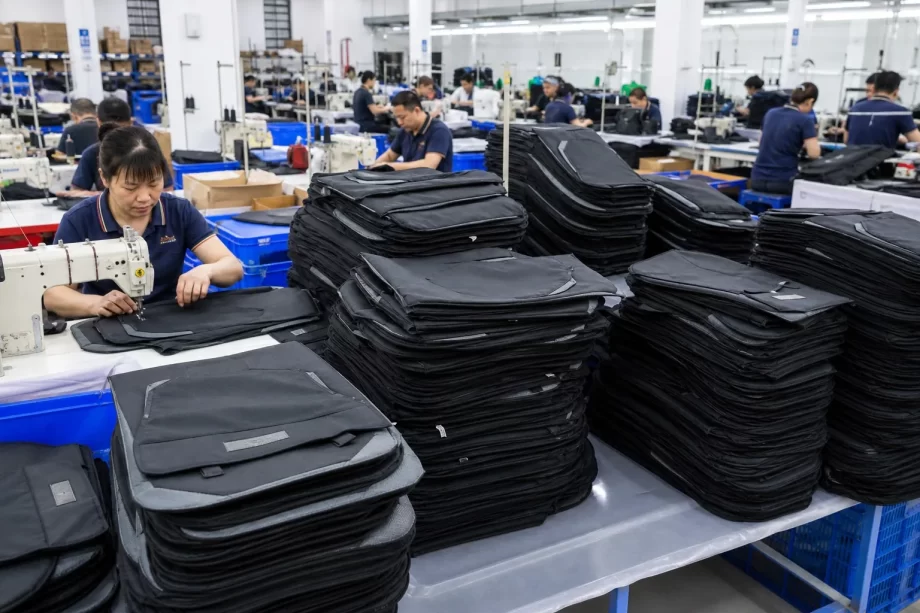
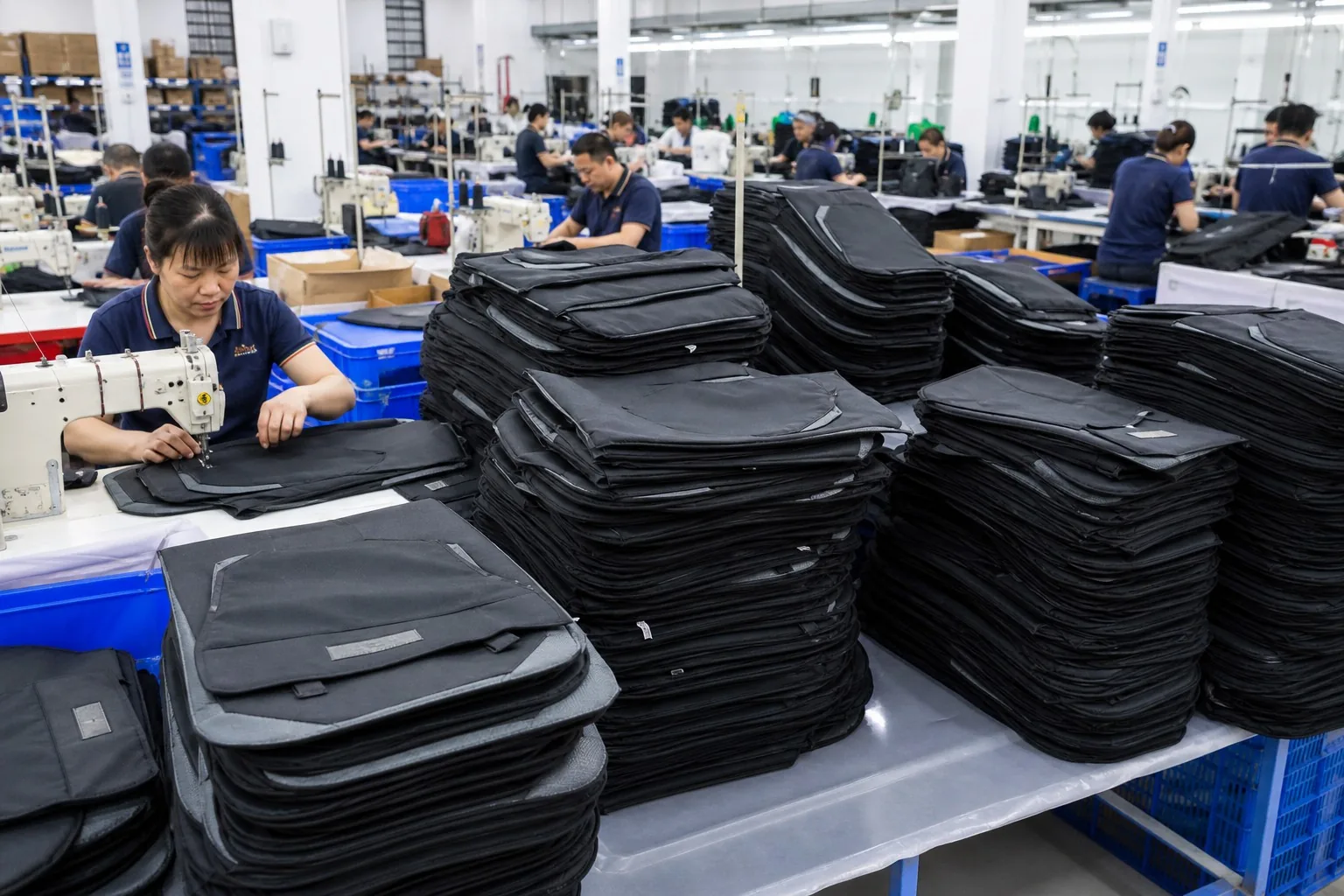
Batch production groups work by operation. One operator sews fronts all day, another sews backs, and the pieces wait in piles between steps.
When a batch of fronts is done, the pile moves to the next workstation. The line works through one style, then changes over to the next.
The rhythm is start-stop. Work accumulates between stations, and the final pack appears only when the last operation finishes.
Continuous Flow, Defined
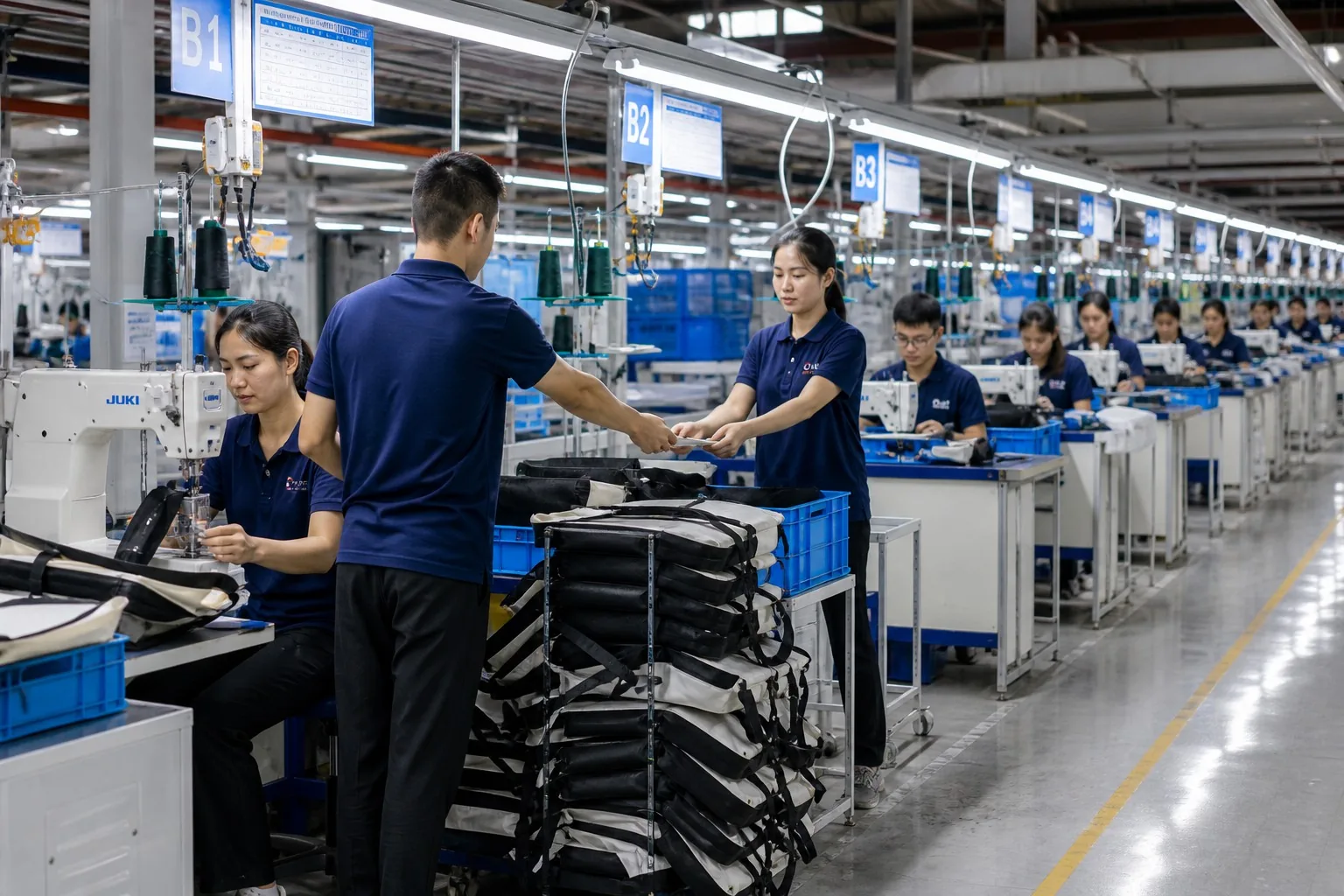
Continuous flow moves one piece at a time. Each operator completes one task, then passes the work immediately to the next station.
The line is balanced so each station takes similar time. Work does not pile up because every station moves at the same pace.
The rhythm is steady. Finished packs emerge throughout the day, not in waves.
The First Question to Ask
Which model fits an order? The answer depends on quantity, style complexity, and delivery urgency.
A factory that runs only batches can still deliver good quality — but the scheduling logic differs from a flow factory. Buyers who understand the model ask better questions and plan better dates.
Batch Production in Practice
Batch production is the traditional model in bag manufacturing. Most factories run it for most styles.
Why Factories Start with Batches
Batch logic is simple and forgiving. Operators learn one operation and repeat it, building speed.
New styles, small quantities, and frequent changes all suit batch work. When a style changes, only the affected stations adjust — the rest keep sewing.
Batch production also tolerates operator skill gaps. A slower operator slows only their own pile, not the whole line.
The Batch Size Decision
The batch size balances efficiency against work-in-progress.
| Batch size | Strengths | Weaknesses |
|---|---|---|
| Very small (50–100) | Quick turnaround, less WIP | More changeovers, higher cost |
| Medium (200–500) | Balanced efficiency | Moderate WIP |
| Large (1,000+) | Lowest unit cost | Slow to finish, high WIP |
Small batches finish faster for the buyer but cost more per unit. Large batches lower the price but stretch the schedule.
The Hidden Cost of Large Batches
Large batches hide three costs that do not appear on the quote.
First, work-in-progress ties up cash and floor space. Piles of half-finished packs wait for the last operations.
Second, defects discovered late affect entire batches. If the back panel is cut wrong, thousands of pieces may need rework.
Third, delivery timing suffers. A buyer waiting for 1,000 finished packs watches the batch crawl through finishing at the end.
Continuous Flow in Practice
Continuous flow is the lean ideal. It is harder to build and run — and it rewards those who do.
Building a Flow Line
A flow line starts with the product breakdown. Each operation becomes a station, and stations are arranged in order.
Operators are cross-trained so the line can absorb absences. Workstations are sized for one piece, not a pile.
The goal: one piece in, one piece out, with nothing waiting in between.
Balancing the Workstations
Balance is the heart of flow. Each station should take roughly the same time — the takt time.
| Station time | Line result |
|---|---|
| All stations balanced | Smooth flow, predictable output |
| One station slower | Bottleneck, pile-up before it |
| One station faster | Idle time, wasted capacity |
Balancing requires measuring every operation. Factories use standard time studies to set workloads.
When Flow Breaks Down
Flow is fragile. Style changes, fabric issues, and absent operators break the rhythm.
A single slow station stops the whole line. That is why flow factories invest in training, machine maintenance, and quick changeovers.
When flow works, the benefits are large: short lead times, low work-in-progress, and defects found within minutes.
Batch vs Continuous: The Comparison
The two models differ across every dimension a buyer cares about.
Quality Control Differences
| Quality aspect | Batch | Continuous |
|---|---|---|
| Defect detection | End of batch | Within minutes |
| Rework cost | High (whole batch) | Low (few pieces) |
| Operator skill | Single operation | Multi-operation |
| First-piece discipline | Per batch | Per style, ongoing |
Lead Time Differences
| Schedule aspect | Batch | Continuous |
|---|---|---|
| First finished piece | After full cycle | Within minutes |
| Full order completion | Batch end | Steady throughout |
| Changeover delay | Per batch | Per style run |
| Small order turnaround | Slower per unit | Faster |
Flexibility Differences
Batch wins on flexibility. A factory can slot a small order between batches with minimal disruption.
Continuous wins on volume and speed. Once the line is balanced, it produces steadily with less supervision.
Choosing the Right Model for Your Orders
Few factories run one model exclusively. Smart factories match the model to the order.
Small Orders and New Styles
New styles belong in batch mode. The pattern is unproven, the operators are learning, and defects are likely.
Run a small batch, inspect the results, and correct the issues. Once the style is stable, decide whether to move it to flow.
Repeat Orders and Volume
Established styles with steady volume belong in flow mode. The operations are proven, and the line can be balanced precisely.
Repeat orders justify the setup cost of a flow line. The same style running every month pays for the training and balance work.
The Hybrid Line
Most factories run hybrid floors: flow lines for volume styles, batch stations for new and small orders.
The hybrid approach uses capacity fully. It also complicates scheduling — which brings us to changeover.
Changeover: The Scheduling Bottleneck
Every switch between styles costs time. Changeover is the hidden thief of factory capacity.
What a Changeover Costs
| Changeover element | Batch cost | Flow cost |
|---|---|---|
| Machine settings | Low–medium | Medium–high |
| Pattern and marker change | Medium | Medium |
| Operator retraining | Low | High |
| Line balancing | None | High |
Flow lines change over slowly because the whole line must rebalance. That is why flow factories run fewer, longer style cycles.
Sequencing Rules
Schedulers follow simple rules to minimize changeover damage.
| Rule | Effect |
|---|---|
| Group same materials | Fewer fabric changes |
| Group same hardware | Fewer parts changes |
| Run similar styles together | Shared setup steps |
| Schedule new styles in batches | Learning curve contained |
| Place changeovers at shift ends | Less disruption |
Scheduling the Factory Floor
The schedule converts orders into production reality. Both sides benefit from understanding it.
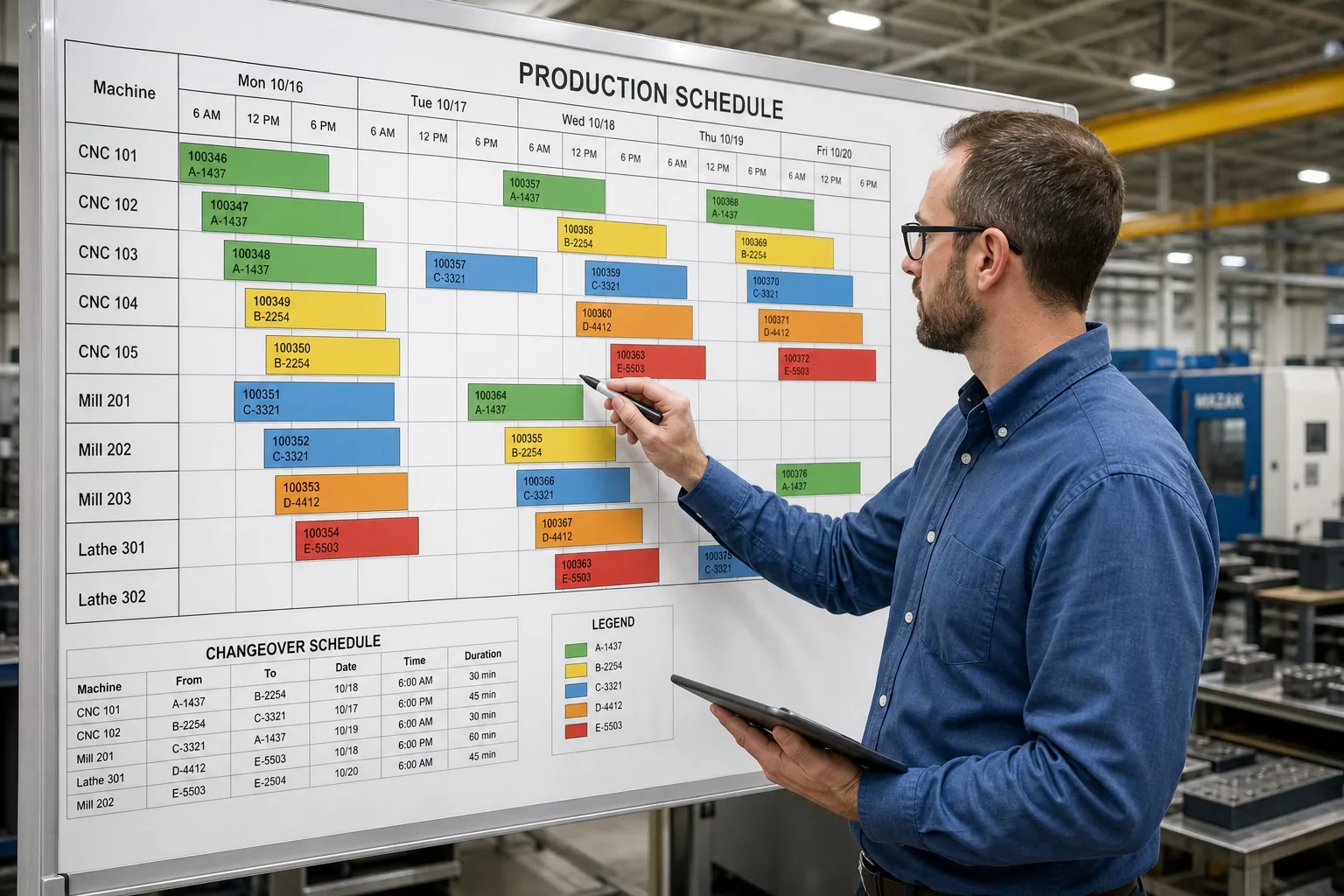
The Loading Schedule
Factories load capacity in stages: cutting, sewing, finishing.
Each stage has its own lead time. Sewing is usually the bottleneck, so schedules center on the sewing lines.
A realistic schedule shows every order with material dates, sewing dates, and finishing dates. Buyers who ask for this schedule get honest delivery dates.
Order Priorities
When capacity is tight, the factory prioritizes. The rules are usually simple.
| Priority | Order type |
|---|---|
| First | Confirmed orders with materials ready |
| Second | Rush orders with agreed premiums |
| Third | Long-standing commitments |
| Last | New inquiries without confirmed dates |
How Buyers Can Help
Buyers influence scheduling more than they think.
| Buyer action | Scheduling effect |
|---|---|
| Confirm orders early | Slots reserved ahead |
| Freeze materials | No mid-run changes |
| Share forecasts | Factory plans capacity |
| Accept partial shipments | Early delivery, less pressure |
| Avoid last-minute changes | No rework or delays |
Manufacturer’s note: The schedule is a promise, and promises need both sides. When a buyer holds dates firm and the factory commits real slots, batch or flow, delivery works.
The Economics of Production Models
Money follows the model. Understanding the cost structure helps buyers interpret quotes and factories make decisions.
Labor Productivity
| Model | Operator focus | Skill level | Output per hour |
|---|---|---|---|
| Batch | One operation | Lower per operator | Depends on batch |
| Flow | Balanced tasks | Higher, multi-skill | Steady, predictable |
| Hybrid | Mixed | Mixed | Best overall use |
Work-in-Progress Costs
Work-in-progress is capital sitting on the floor. Batch systems carry more of it.
A batch of 1,000 packs in progress ties up material value for the full production cycle. Flow systems carry only the pieces moving between stations.
The cost difference appears in the factory’s working capital — and sometimes in the buyer’s deposit requirements.
Space and Equipment
| Resource | Batch | Flow |
|---|---|---|
| Floor space per unit | Higher (piles) | Lower (flow) |
| Machines per style | Shared | Dedicated |
| Changeover equipment | Minimal | More jigs and guides |
| Training cost | Lower | Higher |
Material and Cutting Scheduling
Production starts before the sewing line — in the material room and the cutting table.
Fabric Lead Times
Stock fabrics cut in days. Custom fabrics take weeks, plus dyeing time for special colors.
The schedule must include material arrival before sewing starts. A line waiting for fabric is capacity lost.
Buyers who confirm materials early protect the schedule. Material confirmation is the single most powerful scheduling lever.
The Cutting Room Sequence
Cutting feeds the sewing lines. The cutter plans markers to maximize yield and match sewing demand.
Cutting too early creates piles; cutting too late starves the lines. Good factories cut to a schedule linked to the sewing plan.
Special Situations in Scheduling
Real orders do not arrive evenly. Scheduling handles the exceptions.
Rush Orders
Rush orders break the schedule — until a factory learns to price and slot them.
| Rush element | Factory response |
|---|---|
| Material availability | Stock fabrics only |
| Sewing capacity | Reserve line or overtime |
| Finishing speed | Priority queue |
| Cost impact | Rush premium applied |
The premium pays for the disruption. Factories that charge honestly for rushes can afford to offer them.
Seasonal Peaks
Backpack demand peaks before school seasons. Factories plan months ahead.
| Peak planning step | Timing |
|---|---|
| Reserve capacity with key buyers | 3–6 months ahead |
| Confirm material orders | 2–3 months ahead |
| Hire and train temporary staff | 1–2 months ahead |
| Run overtime within legal limits | Peak period |
Multi-Color Orders
One style with six colors runs as six sub-batches. Each color needs its own fabric, cutting, and quality check.
Schedulers group colors to minimize changeovers. Buyers can help by confirming color ratios early.
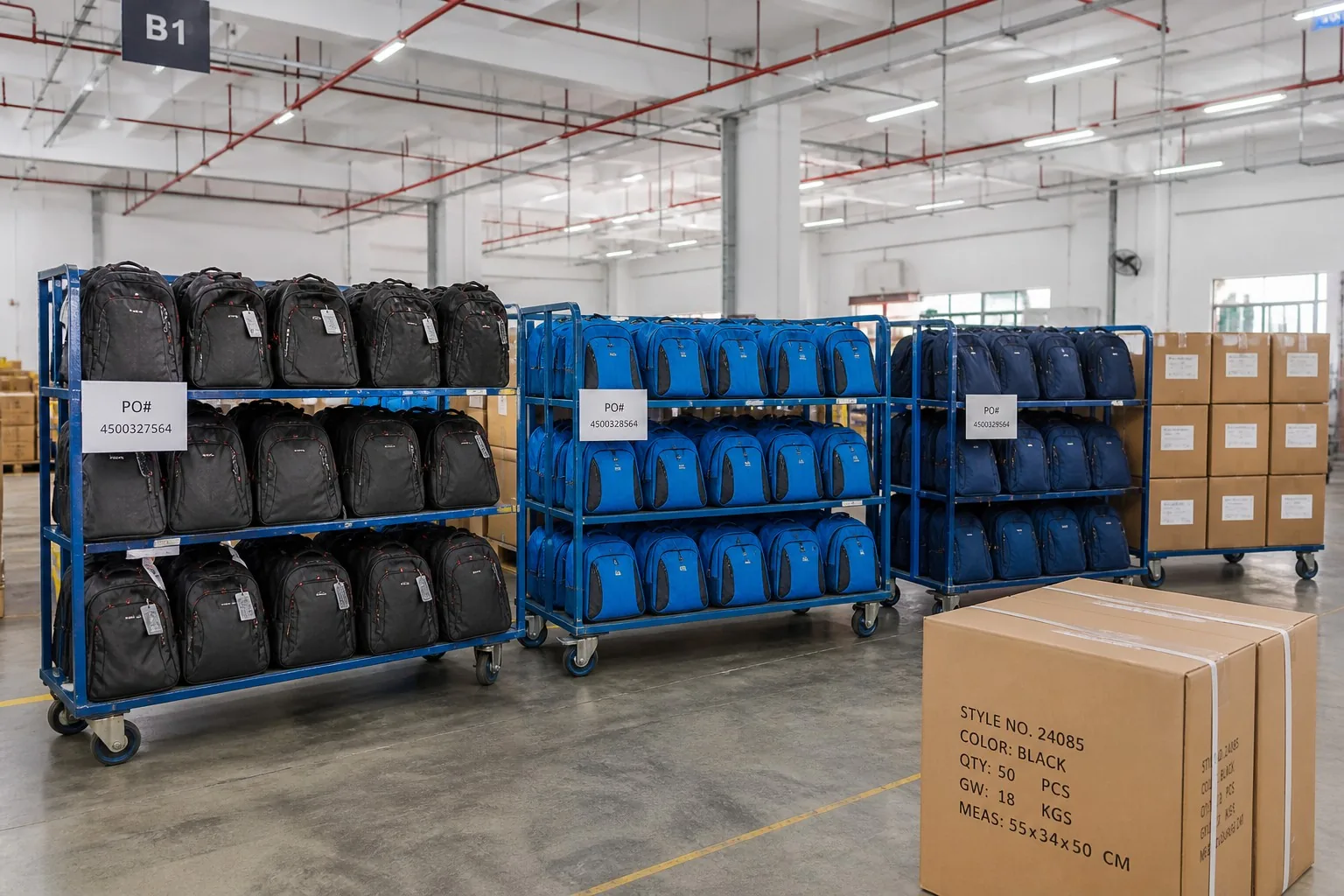
Case Study: Two Orders, Two Models
The choice becomes concrete with real numbers.
The Repeat Order
A brand orders 2,000 commuter packs every quarter. The style is stable and proven.
The factory balances a flow line: cutting feeds sewing steadily, and 2,000 packs finish in 12 working days. Defects are caught in minutes. The buyer receives regular shipment updates.
Flow converts volume into speed and control.
The New Style
The same brand launches a new travel pack, 500 units, unproven pattern.
The factory runs it in batches. Pattern issues surface after the first 100 pieces; the factory corrects and continues. The order finishes in 10 days with acceptable rework.
Batch converts uncertainty into manageable risk.
The Lesson
The model follows the order, not the factory’s preference. Matching model to order is the real skill.
Measuring the Schedule
A schedule without measurement is a hope. Factories track two numbers above all.
On-Time Delivery
On-time delivery measures completed orders against promised dates. The target is 90% or better.
History is the strongest signal a buyer can read. A factory with 95% on-time delivery runs real schedules.
Schedule Adherence
Schedule adherence measures the plan against reality — what ran today versus what was planned.
| Adherence rate | Meaning |
|---|---|
| 95%+ | Plan is real |
| 85–95% | Normal friction |
| Below 85% | Planning or execution problem |
Schedule adherence predicts delivery reliability better than promises do.
The Buyer-Factory Scheduling Agreement
The best schedules are agreements between equals. Both sides commit.
What the Buyer Commits
| Commitment | Effect |
|---|---|
| Firm order dates | Clean planning |
| Early material confirmation | No line starvation |
| Realistic forecasts | Capacity reserved |
| Prompt approvals | No hidden delays |
What the Factory Commits
| Commitment | Effect |
|---|---|
| Honest capacity numbers | Realistic quotes |
| Confirmed line slots | No overbooking |
| Progress updates | Early warning |
| Corrective actions | Problems fixed fast |
Manufacturer’s note: When both sides keep their commitments, the schedule holds. When either side slips silently, the delivery date becomes fiction. Talk early — a schedule can absorb a problem reported in week one, but not one hidden until week six.
Reading the Factory’s Production Rhythm
A quick floor visit reveals which model a factory runs and how well it works.
The Batch Factory Signals
Piles of work between stations signal batch production. The question is whether the piles are controlled.
Look for clear batch labels, orderly stacking, and planned quantities. Chaos in the piles means chaos in the schedule.
The Flow Factory Signals
A flow line shows balance. Watch for waiting operators, pile-ups, or stations running out of work.
Ask the line leader about the takt time and the day’s target. A confident answer means the line is managed.
The Questions to Ask
| Question | What it reveals |
|---|---|
| “Which styles run on this line?” | Model and stability |
| “How long is the changeover?” | Scheduling capability |
| “Where is work waiting?” | Balance and bottlenecks |
| “What is today’s output target?” | Management discipline |
| “When is the next style change?” | Planning horizon |
Quality Across the Models
Quality systems adapt to the production model. Each has natural strengths and blind spots.
Quality Gates in Batch
Batch quality depends on first-piece checks and end-of-batch inspection.
The first piece of each batch is checked against the approved sample before the run continues. If the first piece passes and the setup does not drift, the batch is sound.
The blind spot is drift. An unnoticed needle change or tension shift can affect hundreds of pieces before the end-of-batch check.
Quality Gates in Flow
Flow quality is continuous. Line QC patrols stations and catches issues while they are small.
The blind spot is speed. Fast-moving lines tempt operators to skip checks under pressure.
The Golden Rules That Apply to Both
| Rule | Batch | Flow |
|---|---|---|
| First-piece check before running | Yes | Yes |
| Approved sample at every station | Yes | Yes |
| Written defect records | Yes | Yes |
| Line QC presence | Periodic | Continuous |
| Defect feedback within the hour | Delayed | Immediate |
Quality discipline matters more than the model. A disciplined batch factory beats a sloppy flow factory every time.
Technology and the Modern Schedule
Digital tools are changing how factories plan and track production.
Production Software
Spreadsheets manage simple schedules. Software handles complexity.
Modern systems track orders, materials, line loading, and progress in one place. They flag conflicts before they become delays.
Even simple factories benefit from digital time tracking and order status boards that everyone can see.
Digital Tracking on the Floor
| Tool | What it tracks |
|---|---|
| Barcode scanning | Work-in-progress location |
| Digital clocking | Real attendance and hours |
| Line displays | Daily targets and output |
| Messaging apps | Instant updates between shifts |
The factory floor generates data continuously. Factories that read it schedule better and deliver more reliably.
Training the Workforce
People run both models. Training decides how well they run.
Cross-Training for Flow
Flow lines need operators who can cover multiple stations.
Cross-training starts with volunteers, then builds systematically. Each operator learns the next station, then the next, until the line survives absences.
The investment is weeks; the payoff is a line that does not stop when one person is sick.
Onboarding New Operators
New operators follow a standard path: safety, then basic sewing, then production on simple operations.
| Week | Training stage |
|---|---|
| 1 | Safety and machine basics |
| 2 | Simple operations under supervision |
| 3 | Standard production with QC checks |
| 4 | Full speed with normal checks |
Factories that rush training pay in defects and rework. Factories that train properly build lines that last.
Scheduling Conflicts in the Real World
Even good schedules meet reality. The conflicts are predictable — and so are the fixes.
The Overbooked Line
Sales quotes every order with the shortest possible lead time. Production ends up with more orders than capacity.
The fix is a capacity gate: no quote without a confirmed slot. It is uncomfortable for sales and honest for everyone.
Buyers who ask “is the slot confirmed?” get a real answer. Buyers who accept any promised date get surprised later.
Material Delays
Fabric arrives late, and the sewing line starves. The schedule slides even though the line is innocent.
The fix is material visibility. Factories that track material dates and warn buyers early absorb delays into the plan.
Buyers hold the biggest lever: confirming materials early. Every week of early confirmation is a week of schedule protection.
The Optimistic Promise
Factories promise dates they know are tight because buyers push. The promise fails, and trust erodes on both sides.
The fix is honest quoting. A realistic date with a confirmed slot beats an optimistic date with crossed fingers.
Manufacturer’s note: We quote dates we can keep, then keep the dates we quote. When a buyer needs faster, we say what it costs in real terms — a rush premium, a partial shipment, or a schedule adjustment. Honesty about trade-offs builds the longest partnerships.
How Buyers Should Place Orders for Smooth Scheduling
Order placement habits shape the schedule months before production starts.
The Ideal Order Package
| Element | Why it matters |
|---|---|
| Complete spec | No mid-run questions |
| Material approvals | Fabric, color, hardware locked |
| Confirmed quantities | No last-minute changes |
| Realistic dates | Room for buffer |
| Forecast visibility | Factory reserves capacity |
The Order Confirmation Package
When the order is confirmed, both sides lock the details in writing.
| Confirmed item | Detail |
|---|---|
| Style and quantity | Exact numbers |
| Material status | Arrival dates |
| Production window | Sewing start and finish |
| Shipment date | Loading and delivery |
| Quality standard | Sample reference |
A written confirmation prevents the drift that kills schedules. Ambiguity is the enemy of on-time delivery.
The Forecast Advantage
Buyers who share forecasts win capacity. Factories reserve lines for committed forecasts and fill gaps with spot orders.
Forecasts do not need to be perfect. A range — “2,000–3,000 units next quarter” — is enough to plan.
Building a Schedule That Survives Contact
Every factory promises delivery. The ones that deliver share the same habits.
The Buffer Habit
| Buffer level | Where it lives |
|---|---|
| Material buffer | Stock on critical fabrics |
| Capacity buffer | 10–15% unassigned line time |
| Time buffer | 3–5 days before shipment date |
Buffers are not waste. They are the shock absorbers that keep promises alive when reality bites.
The Update Habit
Factories that communicate weekly — progress, issues, corrections — give buyers control.
Buyers who receive bad news early can act. Buyers who discover delays at the port cannot.
The Review Habit
| Review | Frequency | Purpose |
|---|---|---|
| Daily output vs plan | Daily | Catch drift |
| Weekly schedule review | Weekly | Adjust priorities |
| Monthly delivery review | Monthly | Measure on-time rate |
| Quarterly capacity review | Quarterly | Plan seasons ahead |
Subcontracting: When the Factory Runs Out of Line
Peak demand exceeds capacity in every factory. Subcontracting spreads the overflow — with care.
What Gets Subcontracted
| Operation | Subcontract risk | Control method |
|---|---|---|
| Simple stitching | Low | Sample check, training |
| Full pack assembly | High | QC presence, strict AQL |
| Printing and embroidery | Medium | Proof approval |
| Cutting | Low | Yield reporting |
| Finishing | Medium | Daily inspections |
The Subcontract Rules
Good factories subcontract only simple, well-documented operations. They train the subcontractor on the first pieces and inspect the output before it returns.
Buyers should know when subcontracting happens. Ask which operations run in-house and which are external — the answer reveals real capacity.
Full-assembly subcontracting changes the quality equation. Some factories hide it until problems appear. The honest ones declare it and control it.
The Capacity Warning
Subcontracting is a tool, not a strategy. A factory that subcontracts most of its volume is a trading company with sewing machines.
For critical orders, buyers should verify where the packs are actually made. A surprise factory in the chain is a risk to quality, compliance, and your brand.
FAQ
Which is better for small orders — batch or continuous production?
Batch production suits small and new orders. It tolerates learning curves and frequent changes without rebalancing the whole line. Continuous flow pays off when volume is steady and the style is proven.
Does continuous flow production improve quality?
Yes, mainly through speed of detection. In flow, a defect appears within minutes of being created, so few pieces are affected. In batch, a defect may be discovered only when the whole batch is finished — rework is larger.
Why do factories quote longer lead times for small orders?
Small orders carry proportionally more setup and changeover time. The factory must stop one style, adjust machines and patterns, and start another. Those costs and delays are spread over fewer units.
Can a factory run both models at the same time?
Most do. Volume styles run on flow lines while new and small orders run in batch stations. The hybrid floor uses capacity efficiently, though scheduling becomes more complex.
How can a buyer tell if a factory schedules well?
Ask for the loading schedule with material, sewing, and finishing dates. Visit the floor and watch for balanced work flow. Check whether the factory meets its own planned dates — delivery history is the clearest proof.
What is the ideal batch size for a backpack order?
It depends on the style, factory, and material lead times. As a rule, batch sizes of 300–500 balance efficiency and flexibility for most factories. Larger sizes lower unit cost but stretch delivery; smaller sizes finish faster but cost more.
Do large orders always need continuous production?
No. Large orders can run in large batches with good results. Continuous flow adds value when orders repeat regularly, so the line stays balanced across months. One-time large orders may run more efficiently as well-managed batches.
The Model-to-Order Match: A Quick Reference
| Your order | Best model | Why |
|---|---|---|
| 100–300 units, new style | Batch | Learning curve, corrections |
| 300–800 units, established | Batch or short flow | Balance efficiency |
| 800–3,000 units, repeat style | Flow or large batch | Volume economics |
| 3,000+ units, committed forecast | Dedicated flow | Maximum control |
| Mixed styles, small each | Batch with grouping | Changeover management |
| Urgent, materials ready | Priority batch | Fastest start |
The Six Scheduling Questions for Buyers
Before every order, ask the factory these questions.
| Question | Purpose |
|---|---|
| “Which line will run my order?” | Model and commitment |
| “When is my material confirmed?” | Schedule foundation |
| “What is the sewing start date?” | The real clock |
| “How many units per day?” | Output check |
| “When is finishing done?” | Packing and inspection |
| “What is the confirmed ship date?” | The promise |
The answers turn a vague promise into a verifiable plan. Factories that answer all six with specifics are factories that schedule for real.
The Three Scheduling Truths
Whatever model a factory runs, three truths govern delivery:
- The schedule is the product. Buyers do not buy sewing hours — they buy packs on a date. Every scheduling decision serves that date.
- The bottleneck rules the floor. Find the slowest station, and the whole line moves at its speed. Improve it, and everything accelerates.
- Communication is capacity. A problem reported early can be scheduled around. A problem hidden until the deadline cannot.
The Final Question
Before signing an order, ask the factory one question: “Show me the line, the model, and the schedule for my order.”
A factory that answers with specifics — this line, this flow, this date — has a real plan. A factory that answers with generalities is selling hope.
Batch or continuous, the difference between a promise and a plan is the difference between a factory that talks and a factory that delivers.
Conclusion
Batch and continuous production are two rhythms of the same music. Batch offers flexibility and simplicity; flow offers speed and control. Neither is universally better.
The best factories match the model to the order. New styles start in batches, prove themselves, and graduate to flow lines when volume justifies it. Schedulers protect capacity by managing changeovers, and buyers support delivery by planning ahead.
For buyers, the practical lesson is simple. Understand which model your factory runs, ask how orders are sequenced, and lock your materials and dates early. A factory that plans well — in either model — delivers.
We run hybrid floors at our factory, matching each order to the rhythm that fits. Ask us which styles belong on the flow line, and which belong in batches — we will show you the schedule behind the answer.