Colour and material direction is the part of a bag program that decides whether a range looks current or dated, and it is also the part with the longest lead time. A colour decision made in a showroom takes months to become dyed fabric, approved lab dips, and a consistent production run.
For a B2B buyer, the challenge is not knowing what is trending. It is translating a trend into a specification that a mill can dye, a factory can cut, and a quality team can accept or reject objectively.
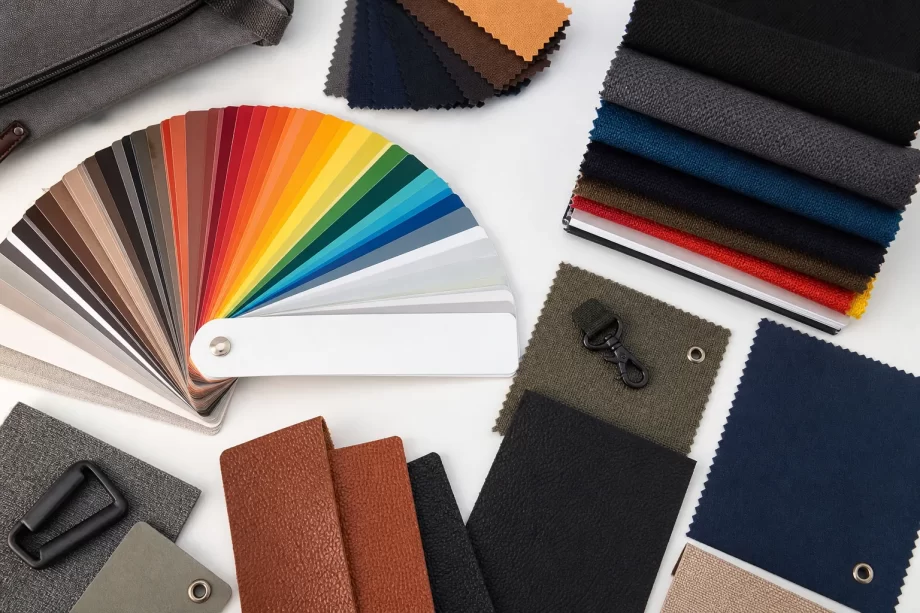
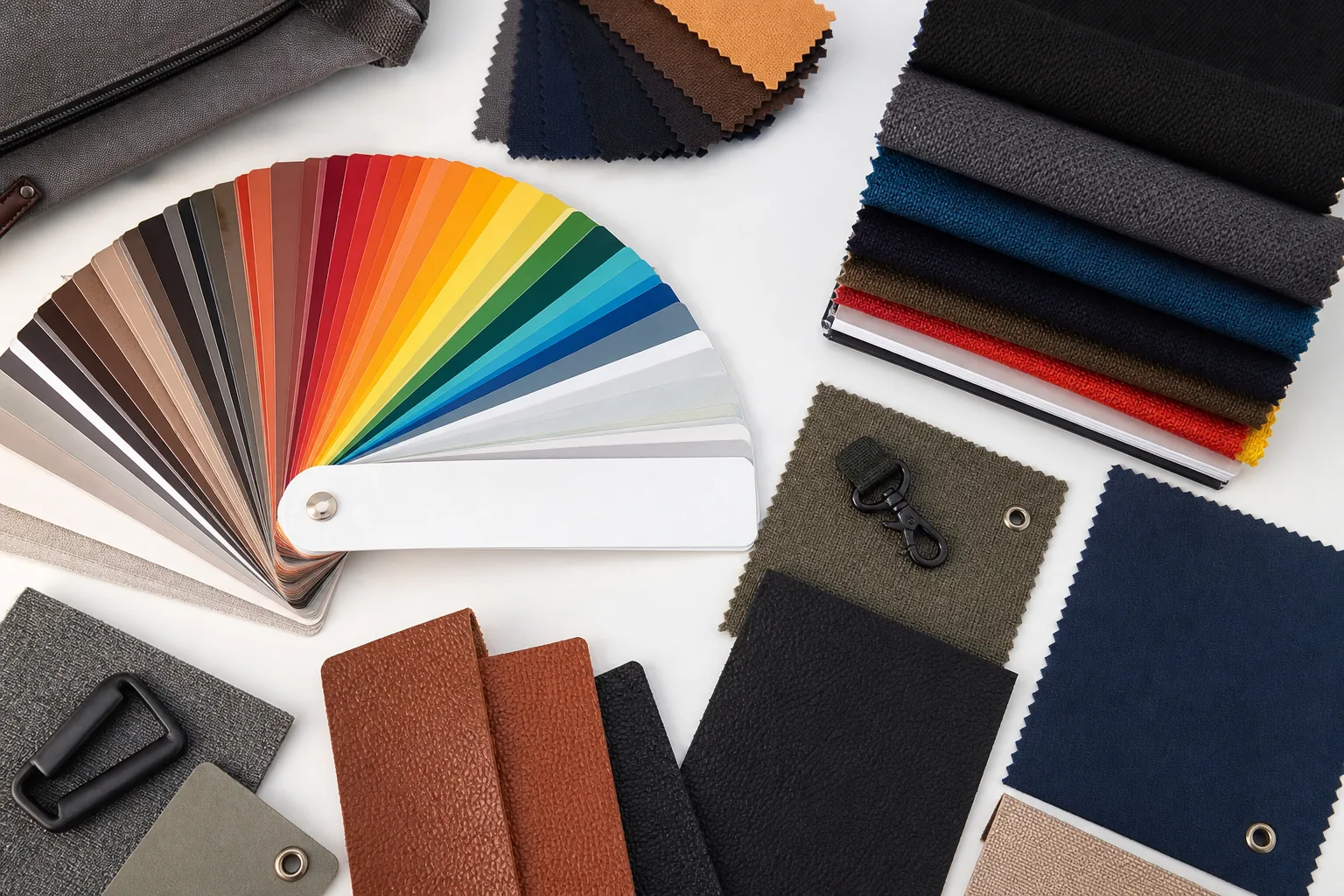
Colour swatch fan and fabric samples on a specification table
This guide covers colour and material trend work from a bag manufacturer’s perspective: how trends reach production, how colour is specified and approved, how material direction is chosen for different segments, how a seasonal range is managed across styles, the cost and minimum order implications of colour choices, and the controls that keep colour consistent between the approval sample and the shipped goods.
Why Colour and Material Direction Decides a Program
Colour drives the first impression at the shelf, and material drives the perceived value. Both are decided early, and both are difficult and expensive to change once production has started.
The Decision Impact Table
Decision
Impact
Colour palette
Range coherence
Colour count
Minimum order and cost
Material direction
Perceived quality
Finish and texture
Price positioning
Trim colour
Consistency
Hardware finish
Visual balance
The Lead Time Table
Stage
Typical duration
Trend research
Weeks
Colour selection
Days to weeks
Mill colour feasibility
Weeks
Lab dip submission
Weeks
Lab dip approval rounds
Weeks
Bulk dyeing
Weeks
Production
Weeks
The Cost Impact Table
Factor
Effect on cost
Number of colours
Per-colour minimum
Special colours
Custom dyeing
Low volume per colour
Higher unit cost
Coated or laminated fabric
Longer development
New material development
Tooling and testing
The Risk Table
Risk
Consequence
Colour approved from a screen
Mismatch with bulk
Trend adopted too late
Missed season
Too many colours
Cost and inventory
Material not available in the required colour
Design change
Trim colour mismatch
Visible inconsistency
The Successful Program Table
Characteristic
Benefit
Coherent palette
Strong shelf presence
Realistic colour count
Controlled cost
Proven materials
Predictable production
Documented standards
Objective approval
Early mill involvement
Fewer surprises
Factory note: The most expensive colour mistake is approving a shade from a digital image. Screens, printers, and lighting all shift colour, and a shade that looks correct on a monitor can be unachievable in a dyed fabric. Approval must always be against a physical standard viewed under defined lighting.
How Trends Reach Bag Manufacturing
Trends move through a chain of intermediaries before they reach a production line. Understanding the chain explains why timing matters more than the trend itself.
The Trend Chain Table
Stage
Actor
Trend forecasting
Colour authorities and forecasters
Material development
Mills and material suppliers
Range planning
Brands and buyers
Sample development
Factories and sample rooms
Approval
Buyers and quality teams
Production
Factories and mills
The Trend Sources Table
Source
Character
Colour forecasting services
Seasonal palettes
Textile trade fairs
Material direction
Sports and outdoor shows
Technical direction
Retail observation
Commercial validation
Mill look books
Available materials
Brand archives
Continuity references
The Adoption Timing Table
Timing
Risk
First mover
Uncertain demand
Early adopter
Balanced risk
Mainstream
Competitive pricing
Late follower
Markdown risk
The Trend Translation Table
Trend element
Manufacturing translation
Colour direction
Mill colour feasibility
Material direction
Available construction
Surface finish
Coating or lamination
Texture
Weave or knit structure
Trim direction
Hardware finish
Sustainability theme
Certified material sourcing
The Feasibility Table
Question
Why it matters
Can the mill dye this shade?
Determines availability
Is the material available in this construction?
Affects sampling
What is the minimum per colour?
Determines range size
What is the lead time?
Determines the calendar
Is there a certified version?
Compliance requirement
Is the finish durable?
Field performance
Colour Specification and Standards
A colour is only controlled if it is specified as a standard with a reference and a tolerance. Naming a colour is not a specification.
The Specification Elements Table
Element
Example
Reference system
Standard colour system code
Physical standard
Approved swatch
Lighting condition
Defined light source
Tolerance
Stated difference limit
Substrate
Fabric, webbing, trim
Finish
Coating or treatment
The Colour System Table
System
Use
Standard colour reference
Universal communication
Mill internal references
Production control
Brand reference
Own palette control
Physical swatch
Approval standard
The Substrate Table
Substrate
Consideration
Main body fabric
Largest visible area
Webbing
Different dye uptake
Lining
Lower visibility, colour shift
Mesh
Structure affects appearance
Foam and padding
Not visible but affects edges
Hardware
Separate finish specification
The Tolerance Table
Application
Tolerance direction
Main body fabric
Tight
Trim and webbing
Moderate
Lining
Wider
Hardware
Per finish standard
The Lighting Table
Condition
Purpose
Daylight equivalent
Standard viewing
Retail lighting
Store appearance
Indoor lighting
Everyday appearance
Ultraviolet exposure
Colour fastness
The Metamerism Table
Situation
Risk
Different dye classes
Colour shifts between light sources
Different substrates
Shade differs in the same light
Different finishes
Reflectance changes appearance
Mixed suppliers
Inconsistent behaviour
Colour Approval and the Lab Dip Process
Lab dips are the mechanism that turns a colour intention into a reproducible recipe. The approval sequence, and the discipline applied to it, determines how closely bulk production matches the approved standard.
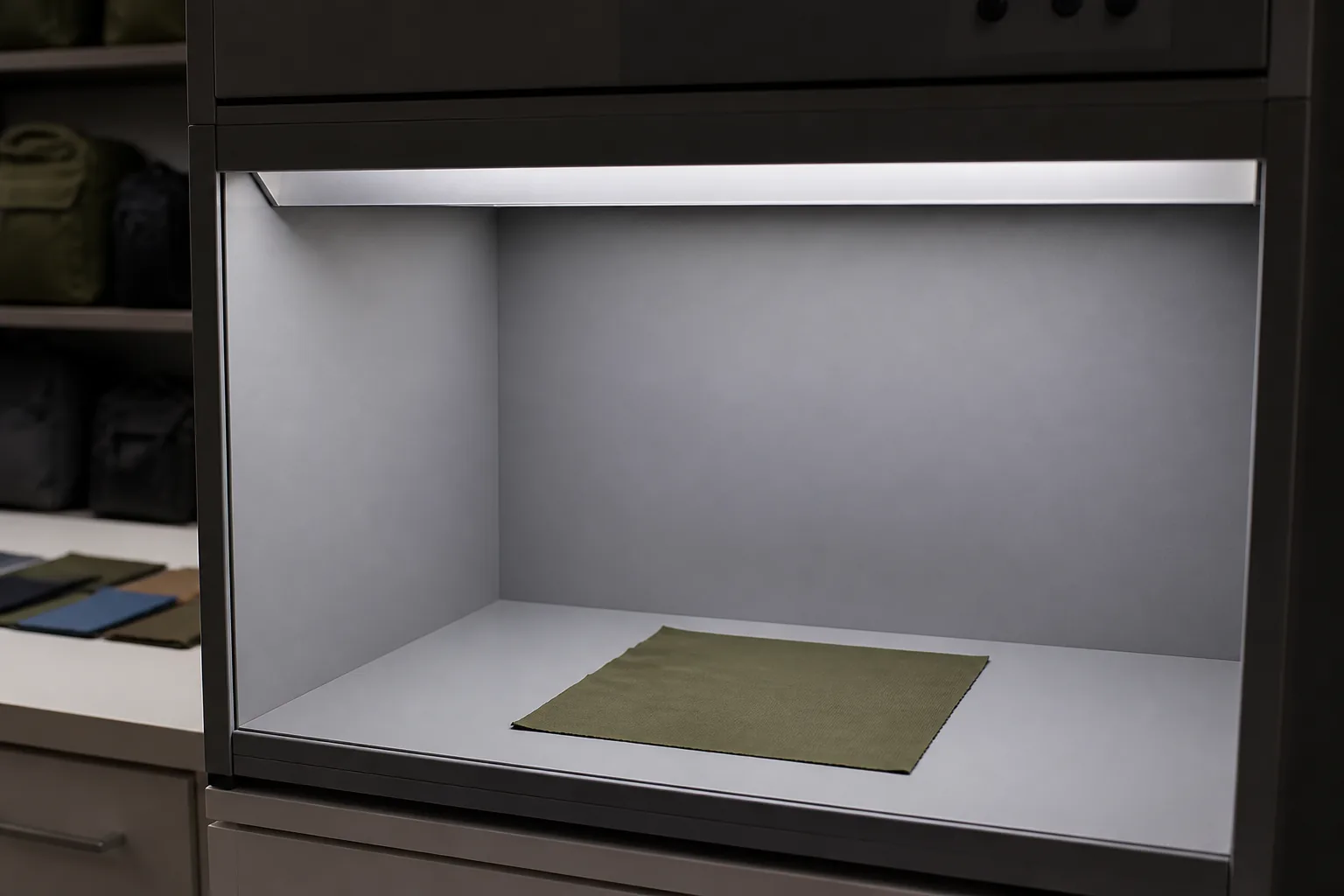
Colour approval station with a fabric swatch under controlled lighting
The Approval Sequence Table
Step
Action
1
Colour direction agreed with the buyer
2
Mill feasibility confirmed
3
Lab dips submitted
4
Dips assessed against the standard
5
Comments issued and dips resubmitted
6
Standard approved and retained
7
Bulk dyeing against the approved standard
The Lab Dip Table
Element
Requirement
Submission format
Physical swatch on the actual substrate
Quantity
Multiple small swatches per round
Reference
Compared against the buyer standard
Lighting
Defined viewing condition
Record
Dated and retained
The Comment Table
Comment type
Meaning
Approved
Proceed to bulk
Approved with comment
Acceptable for sampling, refinement expected
Resubmit
Shade outside tolerance
Not achievable
Mill cannot meet the target
Adjust direction
New target required
The Approval Discipline Table
Practice
Benefit
Assess in a controlled light booth
Consistent judgement
Compare against the physical standard
Avoids memory error
Assess on the production substrate
Reflects the real material
Record the light source used
Reproducible decisions
Retain two approved standards
One for the mill, one for the factory
The Standard Retention Table
Holder
Purpose
Mill
Bulk dyeing reference
Factory
Incoming comparison
Buyer
Arbitration reference
Archive
Continuity across seasons
The Bulk Approval Table
Stage
Check
Bulk lot submission
Compared against the approved standard
Within-lot consistency
Even shade across the roll
Between-lot consistency
Across deliveries
Against other substrates
Trim and body coordination
Record
Retained with the lot
The Common Colour Problem Table
Problem
Likely cause
Bulk lighter or darker than the dip
Dyeing variation
Shade differs between rolls
Poor lot control
Colour shifts under retail light
Metamerism
Trim does not match the body
Different dye uptake
Colour looks different after coating
Finish effect
Fading in use
Colour fastness
Material Direction and Selection
Material choice carries the trend message and determines the technical performance of the bag. The two must be planned together.
The Material Categories Table
Category
Character
Woven synthetic fabric
Durable and versatile
Coated fabric
Water resistance
Recycled fabric
Sustainability positioning
Knit fabric
Stretch and softness
Natural fibre
Premium appearance
Technical laminate
High performance
The Material Selection Table
Requirement
Suitable material
Abrasion resistance
High-denier woven
Water resistance
Coated or laminated
Light weight
Low-denier with a ripstop structure
Sustainability claim
Certified recycled content
Premium appearance
Natural fibre or fine weave
Cost control
Standard woven synthetic
The Material Trend Table
Direction
Manufacturing implication
Recycled content
Certification and traceability
Lower environmental impact finishes
Availability limits
Textured surfaces
New construction development
Matte finishes
Coating specification
Two-tone constructions
Additional processing
The Performance Table
Property
Verified by
Abrasion resistance
Test method
Tear strength
Test method
Water resistance
Test method
Colour fastness
Test method
Dimensional stability
Test method
The Availability Table
Material
Availability character
Standard woven synthetic
Broad
Coated fabric
Broad, fewer colours
Recycled certified fabric
Growing, colour-limited
Technical laminate
Limited suppliers
Natural fibre
Variable quality
Custom construction
Development time
The Trim Coordination Table
Element
Coordination requirement
Webbing
Shade and texture
Binding
Shade matching
Zipper tape
Colour and finish
Mesh
Shade tolerance
Hardware
Finish and tone
Translating Trends by Product Segment
The same trend direction produces different specifications depending on the segment the bag is built for.
The Segment Table
Segment
Colour character
Outdoor and hiking
Earth tones and technical brights
Urban commuter
Neutral and muted tones
School and campus
Broader palette and prints
Travel and luggage
Dark neutrals
Business and laptop
Black, charcoal, and navy
Promotional
Brand colour matching
The Segment Material Table
Segment
Material direction
Outdoor
Abrasion-resistant technical fabric
Urban
Textured woven with matte finish
School
Durable woven, print capability
Travel
Coated fabric for durability
Business
Fine weave with premium hand
Promotional
Cost-efficient standard fabric
The Palette Size Table
Segment
Typical palette
Outdoor
Small, seasonal accent
Urban
Small to moderate
School
Larger
Travel
Small
Business
Very small
Promotional
Per client
The Segment Risk Table
Segment
Risk
Outdoor
Colour fastness under UV
Urban
Shade consistency across trims
School
Print registration
Travel
Abrasion at contact points
Business
Shade variation on dark colours
Promotional
Exact brand colour matching
The Positioning Table
Price position
Material signal
Entry
Standard woven, simple finish
Mid
Textured fabric, coordinated trim
Premium
Fine weave, matched hardware
Technical
Certified performance material
Factory note: Dark shades hide construction irregularities and show dust, lint, and shade variation more readily than mid-tones. On black and charcoal programs, the incoming inspection for shade consistency should be tightened, and the cutting room should be kept clear of light-coloured lint, because the visible defect rate on dark fabric is driven by contamination rather than by dyeing.
Managing a Seasonal Colour Range
A colour range is managed as a system rather than as a list of shades. The way colours are shared across styles determines both the cost and the coherence of the collection.
The Range Structure Table
Element
Purpose
Core colours
Continuity across seasons
Seasonal colours
Freshness
Accent colours
Highlight and contrast
Carry-over colours
Reduced risk
The Colour Count Table
Range size
Typical colour count
Single style
Two to four
Small collection
Four to six
Medium collection
Six to ten
Large collection
Ten or more
The Shared Material Table
Approach
Benefit
One fabric across styles
Volume consolidation
Shared trim references
Fewer approvals
Shared lining colour
Simplifies purchasing
Shared hardware finish
Visual coherence
The Carry-Over Table
Colour type
Planning horizon
Core black
Multi-season
Core navy
Multi-season
Core grey
Multi-season
Seasonal accent
One season
Trend colour
One season, limited depth
The Calendar Table
Stage
Timing
Trend and palette selection
Well before the season
Mill feasibility
Early
Lab dip rounds
Before range freeze
Range freeze
Fixed date
Bulk dyeing
After approval
Production
Per shipping window
The Range Freeze Table
Rule
Reason
Colour changes closed at freeze
Protects the calendar
Material changes closed at freeze
Protects testing
Late additions assessed for feasibility
Prevents delay
Approved standards distributed
Consistency
The Inventory Table
Risk
Mitigation
Slow-selling colour
Smaller initial depth
Colour discontinuity
Carry-over planning
Excess trim stock
Shared references
Remnant fabric
Use across styles
Cost and Minimum Order Implications
Colour decisions carry direct cost consequences. Each additional shade brings its own minimum order, its own dyeing run, and its own approval cycle.
The Cost Structure Table
Element
Character
Fabric cost per colour
Volume dependent
Dyeing minimum
Per shade
Lab dip cost
Per round, per colour
Trim matching
Per colour, per component
Testing
Per colour where applicable
Inventory carrying cost
Per colour
The Minimum Order Table
Factor
Effect
Number of colours
Splits the fabric volume
Fabric weight
Affects the minimum
Coating requirement
Raises the minimum
Custom construction
Raises the minimum
Standard stock colours
Lowest minimum
The Cost Comparison Table
Colour choice
Relative cost
Stock colour from the mill
Lowest
Standard shade, custom dyeing
Moderate
Special shade, custom dyeing
Higher
Colour matched to a brand reference
Higher with approval rounds
Low volume special colour
Highest per unit
The Optimisation Table
Action
Effect
Reduce the colour count
Lower cost and inventory
Consolidate across styles
Higher volume per shade
Use stock colours for lining and trim
Reduced approvals
Reuse colours across seasons
Continuity and savings
Plan colour depth by sell-through
Better inventory
The Sourcing Table
Consideration
Practice
Mill capability
Confirm before committing to a colour
Colour depth
Plan per shade, not per range
Lead time
Plan around the dyeing calendar
Availability of recycled colour
Confirm early
Backup shade
Identify an alternative
The Quotation Table
Field
Content
Fabric reference
Construction and shade
Colour count
Per style
Minimum per colour
Stated
Lead time
Per colour
Approval stages
Counted in the timeline
Common Problems and Corrections
Colour and material problems usually appear at one of three points: at approval, at incoming inspection, or at retail. Each point has its own correction.
The Problem Matrix
Symptom
Likely cause
Correction
Bulk shade outside tolerance
Dyeing variation
Reject the lot against the standard
Shade varies within a roll
Poor mill control
Segregate and assess the roll
Trim colour does not match
Different substrates
Specify trim shade separately
Colour changes under retail light
Metamerism
Re-select the dye class
Colour fades in use
Colour fastness
Change the fastness specification
Material not available in the shade
Availability limits
Re-select a close available shade
Recycled fabric shade inconsistent
Recycled feedstock variation
Tighten acceptance or change the supplier
Surface looks glossier than approved
Finish difference
Confirm the finish specification
Fabric feels different from the sample
Construction change
Verify against the approved sample
Colour approval takes too long
Too many rounds
Submit fewer, better-prepared dips
The Diagnosis Order Table
Step
Check
1
Confirm the physical standard is the approved one
2
Reassess in the defined lighting condition
3
Compare across lots and rolls
4
Check the trim and body together
5
Verify the finish and construction
6
Confirm the dye class and substrate
7
Escalate to the mill with records
The Prevention Table
Control
Effect
Controlled light booth
Consistent judgement
Retained approved standards
Reliable reference
Incoming shade check
Detects variation early
Separate trim specification
Prevents mismatch
Construction verification
Confirms the material
Dated approval records
Traceability
The Correction Table
Finding
Action
Isolated shade deviation
Segregate the roll
Lot deviation
Reject or negotiate against the standard
Trim mismatch
Re-source the trim
Fastness failure
Re-specify and re-test
Availability gap
Re-select the closest available shade
Process gap
Revise the specification
Factory note: Keeping two sets of the approved colour standard, one with the mill and one at goods-in, resolves most disputes about shade. When a bulk lot is questioned, the factory compares the delivered material against its retained standard under the defined light source, records the result, and escalates with that record rather than with a photograph, which cannot represent shade reliably.
Sustainability Claims in Material Direction
Sustainability is now a material direction in its own right, and it carries a documentation obligation that ordinary colour work does not.
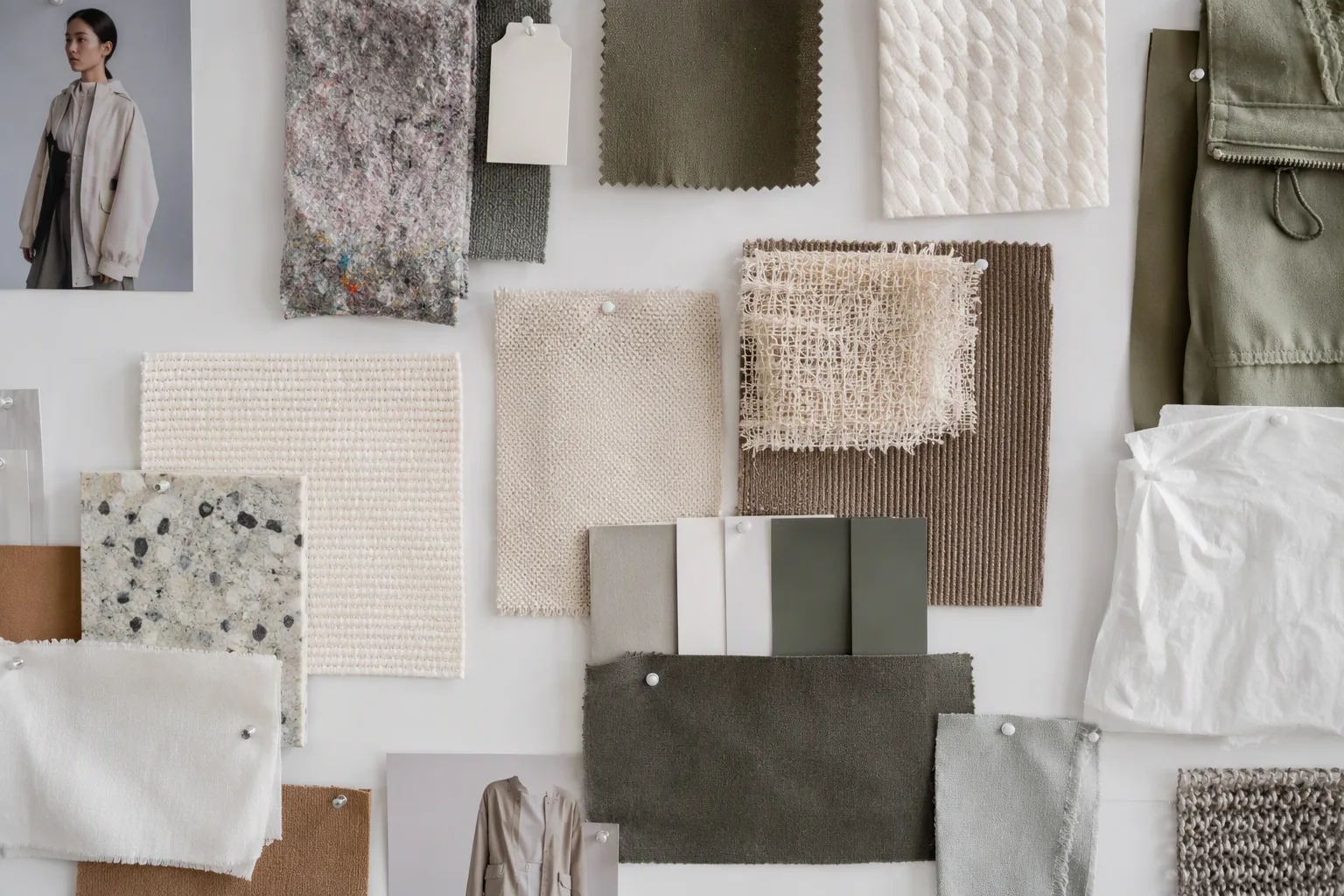
Material trend board with technical and recycled fabric swatches
The Claim Table
Claim
Evidence required
Recycled content
Chain of custody certificate
Organic content
Certification
Restricted substances
Test report
Recycled fibre percentage
Transaction certificate
Lower-impact finish
Supplier documentation
The Certification Table
Certification
Scope
Recycled content standard
Recycled material verification
Organic textile standard
Organic fibre verification
Restricted substances list
Chemical compliance
Traceability standard
Chain of custody
The Traceability Table
Stage
Requirement
Fibre source
Documented origin
Yarn or fabric mill
Certificate
Dyeing and finishing
Recorded
Factory
Verified purchase
Finished goods
Traceable to the lot
The Colour Limitation Table
Limitation
Effect on design
Narrower shade range
Fewer colour options
Batch-to-batch variation
Tighter acceptance needed
Longer lead time
Earlier commitment
Higher minimum
Larger colour depth
Premium cost
Positioning decision
The Positioning Table
Position
Material approach
Compliance-led
Meet the requirement, minimal claim
Feature-led
Certified material as a product feature
Lead story
Sustained content and documentation
The Communication Table
Practice
Reason
Claim only what is certified
Avoids unsubstantiated statements
State the percentage
Precision
Name the standard
Verifiability
Keep certificates current
Audit readiness
Align labels with evidence
Compliance
Consistency from Sample to Bulk
The gap between an approved sample and a bulk shipment is where colour programs most often fail. Closing that gap is a process question, not an inspection question.
The Consistency Risk Table
Stage
Risk
Approved standard
Standards diverge between holders
Mill dyeing
Lot-to-lot variation
Coating
Shade shift from the finish
Cutting
Batch mixing
Assembly
Mixing lots in one unit
Shipping
Weather and handling
The Control Point Table
Control point
Action
Standard distribution
Physical standards to all parties
Mill lot control
Per-lot comparison
Incoming inspection
Shade check per delivery
Cutting control
Single lot per bundle
Assembly control
Traceability to the lot
Final check
Against the retained standard
The Lot Management Table
Practice
Benefit
One lot per bundle
Visible consistency
Lot-recorded cutting sheets
Traceability
Segregated storage
Prevents mixing
Colour-coded lot labels
Fast identification
Recorded lot on the shipping list
Complaint resolution
The Verification Table
Verification
Method
Shade against the standard
Visual in the defined light
Within-lot consistency
Across the roll
Trim coordination
Body and trim together
Finish confirmation
Against the approved sample
Construction check
Weight and hand feel
The Documentation Table
Record
Content
Approved standard
Dated, retained
Lab dip history
Rounds and comments
Mill lot records
Per delivery
Incoming inspection
Per lot
Production record
Lot per unit
The Dispute Table
Situation
Evidence to present
Shade questioned
Retained standard and lighting record
Trim mismatch
Separate specifications
Finish difference
Approved sample
Fastness claim
Test report
Construction claim
Approved construction
The Improvement Table
Action
Effect
Fewer approvals by better-prepared dips
Shorter calendar
Earlier mill involvement
Fewer feasibility surprises
Reduced colour count
Better volume per shade
Shared trim references
Fewer mismatches
Retained standards
Faster resolution
The Colour and Material Checklist
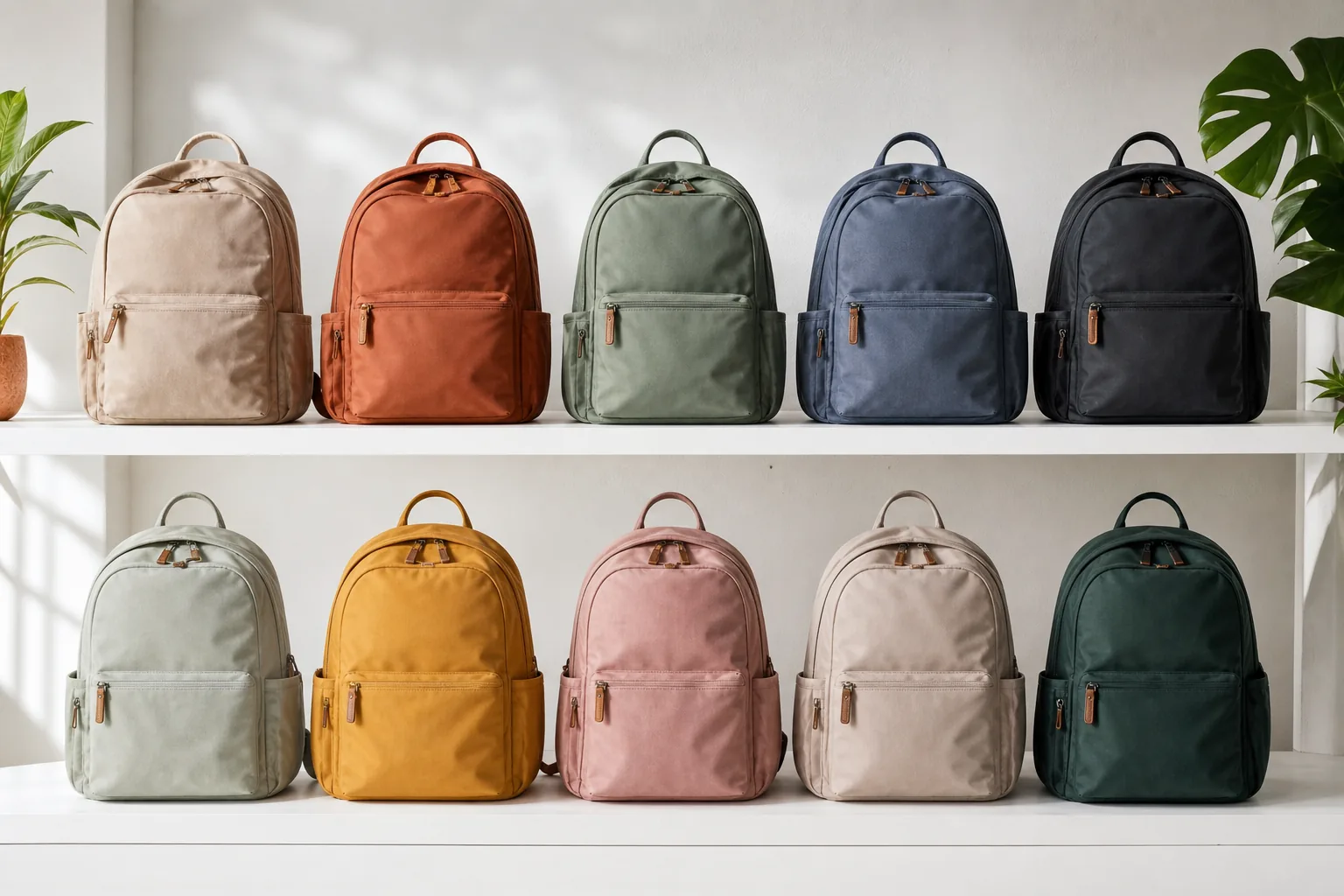
Seasonal sample range of backpacks in coordinated colours
Before Range Planning
Item
Done
Target segment defined
☐
Price position defined
☐
Seasonal direction reviewed
☐
Carry-over colours confirmed
☐
Colour count decided
☐
Material direction agreed
☐
Certification requirement confirmed
☐
Colour Specification
Item
Done
Colour reference system stated
☐
Physical standard prepared
☐
Substrate stated per component
☐
Tolerance stated
☐
Viewing condition defined
☐
Fastness requirement stated
☐
Trim specification separated
☐
Approval
Item
Done
Mill feasibility confirmed
☐
Lab dips submitted on the production substrate
☐
Dips assessed in the defined lighting
☐
Comments recorded and dated
☐
Standard approved and retained by all holders
☐
Bulk lots compared against the standard
☐
Production
Item
Done
Incoming shade inspection performed
☐
Lot separation maintained in cutting
☐
Lot traceability recorded
☐
Trim coordinated at assembly
☐
Final check against the retained standard
☐
The Eight Rules
Rule
Reason
Never approve a colour from a screen
Colour is not reproducible digitally
Approve on the production substrate
Dye uptake varies by material
Assess in a defined lighting condition
Judgement must be reproducible
Retain physical standards with every party
Prevents disputes
Separate trim colour specifications
Substrates differ
Confirm mill feasibility before range freeze
Availability decides the calendar
Control lots through cutting and assembly
Prevents mixing
Claim only certified sustainability attributes
Compliance and credibility
FAQ
How long does a colour approval take from selection to bulk?
Typically several weeks to a few months, depending on the mill, the colour, and the number of lab dip rounds. Feasibility review, dip submission, assessment, comments, and resubmission each take time, and bulk dyeing follows approval. The approval rounds are the variable a buyer controls most directly: submitting better-prepared dips against a clear physical standard reduces the number of rounds and protects the production calendar.
Why does the bulk fabric look different from the approved lab dip?
Because lab dips are produced at laboratory scale and bulk dyeing is a production process with its own variation. Shade differences arise from dye concentration control, machine differences, lot size, and the substrate itself. This is why the specification must include a tolerance rather than an exact match, why bulk lots are compared against the retained standard, and why a lot outside tolerance should be rejected before the fabric is cut.
What is metamerism and why does it matter for bags?
Metamerism is the phenomenon where two colours that appear to match under one light source look different under another. It occurs when materials use different dye classes or different substrates, which is common on a backpack where the body fabric, webbing, binding, and zipper tape are all different materials. The practical consequence is a bag that matches in the showroom and mismatches in a store, so colour should be assessed on all coordinated components under the same defined lighting.
How many colours should a B2B backpack range include?
Fewer than most buyers expect, and the constraint is economic rather than aesthetic. Each colour carries its own minimum order, dyeing run, lab dip cycle, trim matching, and inventory. A core set of two to four colours per style, shared across the collection, usually gives a coherent range at a controllable cost. Extra colours are best added as seasonal accents with limited depth rather than distributed across every style.
Can recycled fabrics be colour matched as precisely as conventional fabrics?
They can be matched, but the available shade range is narrower and batch-to-batch variation is often greater because the feedstock varies. The practical approach is to select from shades the mill already produces in recycled construction rather than to specify an arbitrary shade, to allow slightly wider acceptance where the design permits, and to plan a longer lead time because recycled lines are run less frequently than standard ones.
Should trim and webbing use the same colour specification as the body fabric?
No. They should be specified separately, even when the intention is that they match visually. Webbing, binding, mesh, and zipper tape take up dye differently from the body fabric and are often produced by different suppliers using different processes. Specifying each component against its own standard, with the intended visual relationship stated, gives the mill and the factory an achievable target rather than an impossible one.
How do I stop colour variation between production lots?
Control the lots rather than the units. One fabric lot should be used per cut bundle so that a single bag cannot contain mixed shades, lots should be recorded on the cutting sheets so any complaint can be traced, and lots should be stored separately with clear identification. Where a program runs over several lots, the incoming inspection compares each delivery against the retained standard before the fabric is released to cutting.
What causes dark colours to show more defects than light ones?
Dark shades reflect less light, which makes dust, lint, and contamination highly visible while hiding the subtle construction irregularities that light colours reveal. On black and charcoal programs the practical controls are to keep the cutting and assembly areas free of light-coloured lint, to tighten incoming shade inspection because variation is more visible, and to ensure the fabric is cleaned rather than wiped, since wiping spreads contamination.
Is a physical colour standard still necessary when digital tools exist?
Yes. Digital tools help with communication, range presentation, and approval workflow, but a screen cannot represent the appearance of a dyed fabric reliably because display calibration, lighting, and material texture all change what the viewer sees. The physical standard remains the reference that the mill dyes to and the factory compares against, and without it there is no objective basis for accepting or rejecting a bulk lot.
Conclusion
Colour and material direction is where a bag range becomes commercially coherent or becomes an inventory problem. The trend itself is the easy part. The work lies in translating it into shades a mill can dye repeatedly, materials that are available in the required construction, and standards that a factory can accept or reject objectively.
The discipline has four parts. Plan the palette around the segment and the price position rather than around the trend alone, and keep the colour count within what the volume can support.
Specify every colour against a physical standard with a stated tolerance, on the actual production substrate, and define the lighting under which it will be assessed. Confirm mill feasibility and material availability before the range is frozen, because availability decides the calendar more often than design does. And control consistency by lot through incoming inspection, cutting, and assembly, with a retained standard available to every party.
For factories, colour competence is visible to the buyer at the first bulk shipment: a range that arrives matching the approved standards is remembered, and a range that does not is re-inspected on every future order.
For buyers, the two changes worth making today are to approve colour only on a physical standard viewed under defined lighting, and to keep one approved standard at goods-in as well as at the mill. Neither adds cost, and together they remove most of the arguments that colour work generates.