Chemical Compliance for Bags: REACH, Prop 65 and RSL
Chemical Compliance for Bags: REACH, Prop 65 and RSL
A backpack can be perfectly made — clean stitching, correct dimensions, approved materials — and still be refused at the port, pulled from a retail shelf, or recalled at the brand’s expense. The reason is chemistry: a substance present in a dye, a coating, a zipper pull, or a printed logo that exceeds a regulatory limit.
Chemical compliance is the least visible and most expensive failure mode in bag manufacturing. Quality defects affect one shipment. A restricted substance problem can affect an entire production line across multiple markets, trigger a recall, and create legal exposure.
Textile chemical testing laboratory with sample preparation
This guide covers chemical compliance for backpack and bag production from a factory perspective: the regulatory landscape across major markets, what an RSL is and how it works, which substances create the greatest risk in bags, how testing is planned and interpreted, how to control the supply chain, and how to handle a failure when it occurs.
Compliance is a gate, not a differentiator. A product that fails cannot be sold in the market at all, regardless of its design or price.
The Failure Consequences
Consequence
Impact
Customs hold
Delay and cost
Retail rejection
Full shipment loss
Recall
Cost plus reputational
Fines
Direct financial
Legal action
Compensation exposure
Marketplace delisting
Loss of channel
Brand damage
Long-term
The Cost Escalation Table
Stage detected
Relative cost
Material sourcing
Lowest
In-house laboratory
Low
Third-party pre-production
Moderate
Pre-shipment testing
High
Retailer warehouse
Very high
Consumer market
Highest
The Compliance Drivers
Driver
Source
Government regulation
Legal requirement
Retailer requirement
Commercial condition
Brand policy
Voluntary standard
Certification
Market positioning
Insurance condition
Risk management
Consumer expectation
Reputation
The Responsibility Chain
Party
Responsibility
Raw material supplier
Declare content
Fabric mill
Control dyes and finishes
Component maker
Control hardware finish
Factory
Verify incoming materials
Brand
Specify and test requirements
Retailer
Enforce the standard
The Common Misunderstandings
Misunderstanding
Reality
“Our supplier says it is compliant”
Requires evidence, not assurance
“We tested last season”
Materials and lots change
“It is only a small part”
Small parts cause most failures
“We used the same supplier”
Same supplier, different batch
“Testing is too expensive”
Recall is more expensive
“It is fabric only”
Hardware and print matter equally
The Compliance Cycle
Stage
Activity
1
Identify applicable requirements
2
Set the RSL
3
Collect material declarations
4
Test high-risk materials
5
Approve materials
6
Control production
7
Test the finished product
8
Retain documentation
Factory note: The most expensive sentence in bag manufacturing is “the supplier assured us”. Assurance is not evidence. A compliant program is built from signed declarations, test reports with traceable sample identification, and a material control system that prevents substitution.
The Regulatory Landscape
Requirements differ by market. A single product sold into several markets must meet the strictest applicable standard.
The Major Frameworks
Market
Framework
European Union
REACH
United States
Consumer product safety rules
California
Proposition 65
United States, children
CPSIA
Canada
Consumer product safety
Japan
Household goods regulation
China
National textile standards
The Framework Comparison
Framework
Scope
Character
REACH
Chemical substances in the EU
Substance list with limits
Prop 65
California consumer exposure
Warning or reformulation
CPSIA
Children’s products
Strict content limits
TSCA
US chemical regulation
Reporting obligations
POPs regulation
Persistent pollutants
Bans and limits
The REACH Essentials
Element
Detail
Scope
Products placed on the EU market
Substance list
SVHC candidate list and Annex XVII
SVHC
Substances of very high concern
Threshold
Notification above defined concentration
Annex XVII
Restricted substances with limits
Obligation
Manufacturer and importer
The SVHC Process
Step
Requirement
1
Identify SVHC above the threshold
2
Provide information in the supply chain
3
Notify where required
4
Respond to customer requests
5
Maintain documentation
The Prop 65 Essentials
Element
Detail
Scope
Products sold in California
Mechanism
Warning or reformulation
Listed substances
Approximately 900
Enforcement
Private right of action
Key risks
Lead, phthalates, others
Strategy
Test and reformulate
The Prop 65 Risk Table
Substance group
Common source in bags
Lead
Hardware, coatings, print
Phthalates
Flexible plastic parts
Cadmium
Metal plating, pigments
Formaldehyde
Finishes and adhesives
Diisononyl phthalate
Soft plastic components
The Market Requirement Table
Market
Test focus
EU
SVHC screening, azo dyes, formaldehyde
US general
Lead, phthalates
California
Lead, phthalates, listed substances
Japan
Formaldehyde, dye restrictions
Germany
Azo dyes, heavy metals
Nordic markets
Strict additional limits
The Update Frequency Table
Framework
Changes
REACH SVHC list
Twice yearly
Annex XVII
Periodic additions
Prop 65 list
At least annually
Retailer RSL
Quarterly or annually
Brand RSL
Per brand cycle
The Compliance Trap
Trap
Consequence
Using last year’s RSL
Missed new substances
Testing only fabric
Hardware failures
Ignoring print and logo
Ink-related failures
Skipping recycled materials
Contamination risk
Assuming the same standard everywhere
Market-specific recall
Factory note: Regulatory lists change on a schedule, and material specifications do not. A supplier declaration signed two years ago may be compliant with a list that no longer exists. Build a review cadence into the compliance calendar rather than relying on historical paperwork.
The RSL Explained
The Restricted Substances List is the practical instrument that converts regulation into factory instructions.
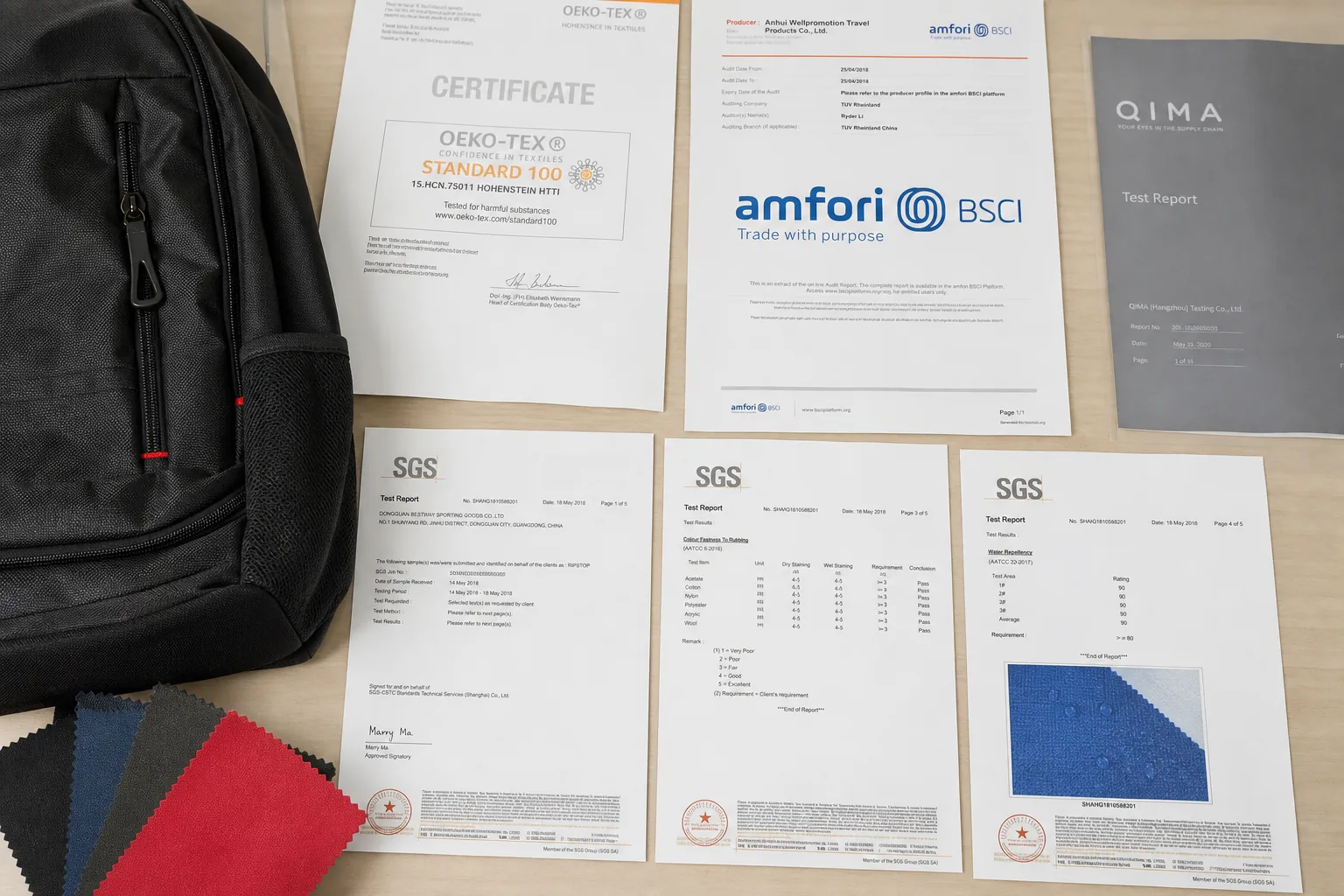
Compliance test reports and certificates beside material swatches
What an RSL Contains
Element
Content
Substance name
Chemical identification
CAS number
Unique chemical identifier
Limit value
Maximum permitted
Test method
How it is measured
Applicable materials
Where it applies
Reference regulation
Legal source
The RSL Sources
Source
Character
Legal RSL
Based on regulation
Retailer RSL
Stricter than law
Brand RSL
Brand-specific
Industry standard
Sector agreement
Certification scheme
Standards-based
The RSL Hierarchy
Level
Strictness
Legal minimum
Baseline
Retailer requirement
Stricter
Brand requirement
Often strictest
Certification
Depends on scheme
The RSL Categories
Category
Examples
Azo dyes
Certain colourants
Heavy metals
Lead, cadmium, mercury
Formaldehyde
Finishing agents
Phthalates
Plasticisers
Organotin
Anti-microbial finishes
Chlorinated phenols
Preservatives
PFAS
Water and stain repellents
APEO
Surfactants
Nickel release
Metal hardware
The Limit Structure Table
Limit type
Meaning
Not detected
Below the detection limit
Below a threshold
Concentration limit
Below a reporting limit
Trace permitted
Ban
Not permitted at all
The Application Matrix
Material
Typical RSL concern
Woven fabric
Azo dyes, formaldehyde
Coated fabric
Phthalates, PFAS
Lining
Dyes, formaldehyde
Leather
Chromium VI, azo dyes
Foam
Phthalates, flame retardants
Webbing
Dyes, finishing agents
Zipper
Nickel release, lead
Buckle
Phthalates, lead
Metal hardware
Heavy metals, nickel
Print and logo
Heavy metals, solvents
Adhesive
Solvents, formaldehyde
The Priority Matrix
Risk level
Material type
Highest
Printed or coated surfaces
High
Flexible plastic components
High
Metal with plating or coating
Moderate
Dyed textiles
Moderate
Leather and coated leather
Lower
Undyed natural materials
The RSL Implementation Steps
Step
Action
1
Obtain the applicable RSL
2
Map it to each material
3
Send requirements to suppliers
4
Collect declarations
5
Identify high-risk materials
6
Test where required
7
Approve and record
8
Re-verify on a cycle
The Declaration Requirements
Requirement
Detail
Signature
Authorised person
Date
Within validity
Material identification
Traceable
RSL version
Referenced
Test report reference
Where applicable
Commitment to notify
Changes reported
The Documentation Table
Document
Purpose
RSL document
Requirement definition
Supplier declaration
Compliance statement
Test report
Verification evidence
Material safety data
Composition information
Certificate
Certification proof
Change notification
Ongoing control
The RSL Version Control
Issue
Control
New version released
Map changes to materials
Substance added
Retest affected materials
Limit tightened
Re-verify suppliers
Material changed
Full re-evaluation
Supplier changed
Same evaluation as a new material
Where Bags Fail Chemical Testing
Failures cluster in predictable places. Knowing them allows targeted testing rather than broad and expensive screening.
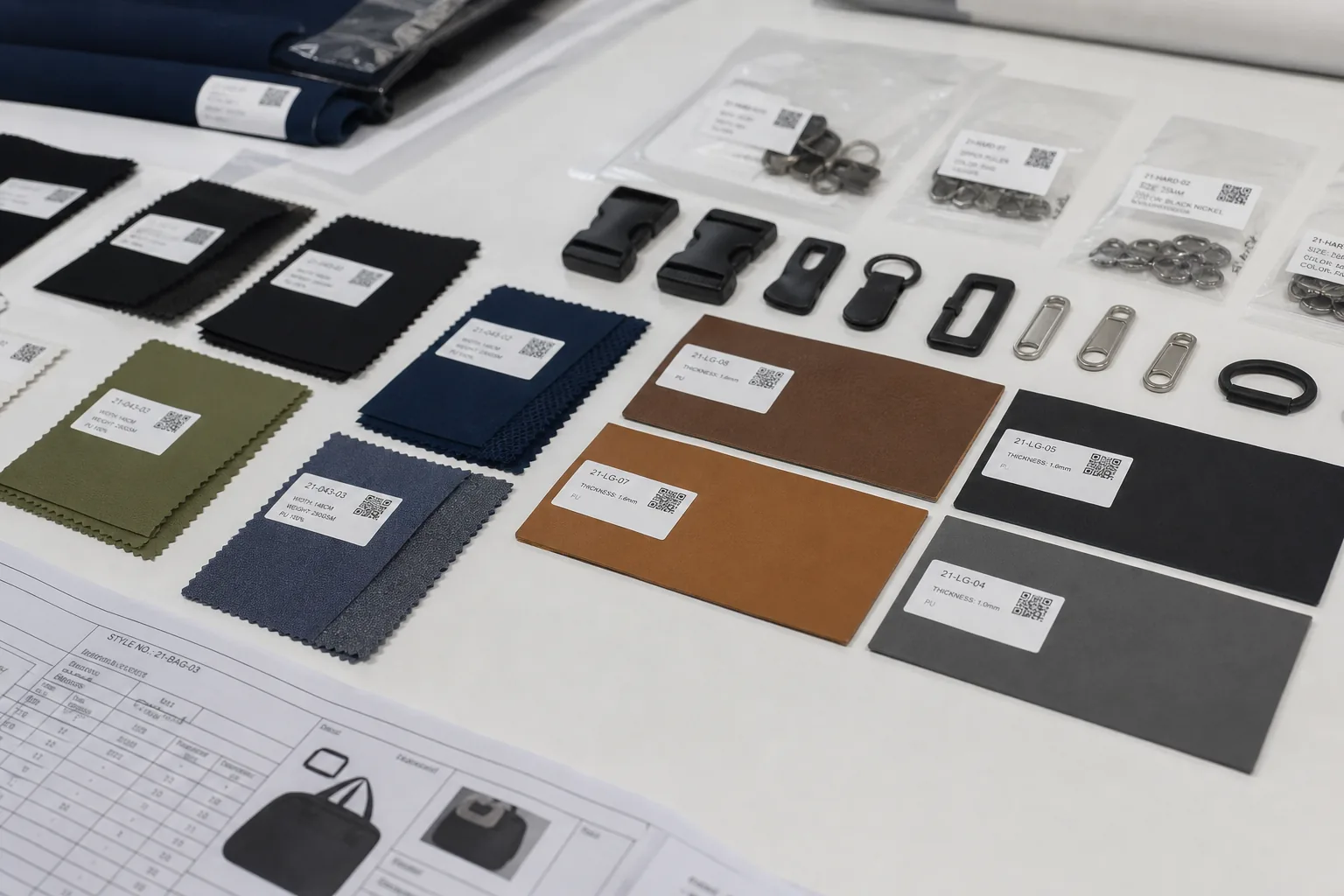
Material samples with identification labels for traceability
The High-Risk Components
Component
Typical failure
Zipper pull and slider
Nickel release, lead
Metal buckles
Lead, cadmium
Coated fabric
Phthalates, PFAS
Printed logo
Heavy metals, solvents
Foam padding
Phthalates, flame retardants
Handle wrap
Dyes, formaldehyde
Elastic
Azo dyes
Labels and tags
Ink-related substances
Adhesive
Formaldehyde, solvents
Heat transfer film
Phthalates, heavy metals
The Risk by Process
Process
Risk
Dyeing
Azo dyes, heavy metals
Printing
Heavy metals, solvents
Coating
Phthalates, PFAS
Laminating
Adhesives, solvents
Plating
Nickel, cadmium, lead
Finishing
Formaldehyde
Softening
Phthalates
The Failure Frequency Table
Substance group
Relative failure frequency
Lead in metal and print
High
Phthalates in soft plastic
High
Nickel release from metal
Moderate to high
Azo dyes in textile
Moderate
Chromium VI in leather
Moderate
Formaldehyde in finishes
Moderate
PFAS in repellent finishes
Increasing attention
The Component Priority Table
Priority
Components
1
Metal hardware and zippers
2
Soft plastic components
3
Printed and coated surfaces
4
Foam and padding
5
Dyed textiles
6
Leather
7
Labels and trims
The Recycled Material Consideration
Risk
Explanation
Variable input
Feedstock source varies
Legacy contamination
Historic substances
Inconsistent quality
Different processing
Documentation gaps
Traceability is harder
Testing need
Higher than virgin material
The Colour Risk Table
Colour
Risk note
Bright reds and oranges
Certain pigments
Yellows
Pigment restrictions
Deep blacks
Dye concentration
Metallic finishes
Metal content
Fluorescent shades
Specific chemistry
The Common Failure Causes
Cause
Prevention
Substituted component
Approved supplier list
Substituted dye
Material specification control
New print supplier
Print approval
Cost-driven material change
Change control
Leftover stock used
Inventory control
Multi-source without testing
Test each source
Planning and Interpreting Tests
Testing is expensive, so it should be targeted. A well-designed test plan covers the highest risks at the lowest cost.
The Test Categories
Test
Purpose
SVHC screening
Detect candidate list substances
Heavy metals
Lead, cadmium, mercury
Phthalates
Plasticiser content
Azo dye
Banned colourants
Formaldehyde
Finish content
Nickel release
Metal contact
pH value
Textile suitability
Colour fastness
Migration risk
PFAS screening
Fluorinated compounds
The Test Method Table
Substance
Typical method
Heavy metals
Acid digestion with spectrometry
Phthalates
Solvent extraction with chromatography
Azo dyes
Reductive cleavage then analysis
Formaldehyde
Extraction then colorimetric or chromatographic
Nickel release
Migration test
PFAS
Targeted analysis
The Test Planning Table
Material risk
Test approach
New supplier, high risk
Full screening
Known supplier, low risk
Declaration plus periodic test
Changed material
Full screening
Recycled content
Full screening
Repeat order
Reduced, risk-based
The Sample Selection Table
Sample
Requirement
Component level
Each high-risk part
Colour level
Each colour tested
Material level
Each distinct material
Finished product
Final verification
Control sample
Retained reference
The Test Frequency Guide
Situation
Frequency
New material
Once, before approval
New supplier
Once, before approval
Ongoing supply
Annually or per brand policy
High-risk component
Every production lot
Changed specification
On each change
The Report Interpretation Table
Result
Meaning
Pass
Below all limits
Not detected
Below detection limit
Trace
Detectable, below limit
Fail
Above limit
Inconclusive
Insufficient detection capability
The Limit Interpretation Table
Term
Care point
Detection limit
Method dependency
Reporting limit
Differs from the detection limit
Legal limit
Regulation-based
Client limit
Often stricter
Test method version
Affects comparability
The Report Validity Checks
Check
Purpose
Sample identification
Matches the submitted material
Test method stated
Comparability
Laboratory accreditation
Credibility
Report date
Validity
Limits referenced
Correct standard
Photographs included
Sample confirmation
The Common Testing Errors
Error
Consequence
Sample not representative
False pass
Only one colour tested
Missed failure
Report reused
Invalid evidence
Unaccredited laboratory
Rejected result
Whole product tested only
No component traceability
Sample sent by the supplier
Chain of custody risk
The Test Cost Structure Table
Test scope
Relative cost
Single substance
Lowest
Substance group
Low
Component screen
Moderate
Full material screen
High
Full product screen
Highest
The Cost Optimisation Table
Method
Saving
Test the highest-risk components
Fewer tests
Require supplier reports
Shared cost
Group tests per material
Batch pricing
Retain control samples
Avoids retesting the same material
Test each colour only once per source
Reduces duplication
Factory note: Chain of custody matters. When the supplier sends the sample and receives the report, the factory has no independent evidence that the tested material is the material being used. Draw samples in-house, label them with the lot number, and keep the report tied to that identification.
Supply Chain Documentation and Control
Compliance is maintained by documents and process, not by testing alone.
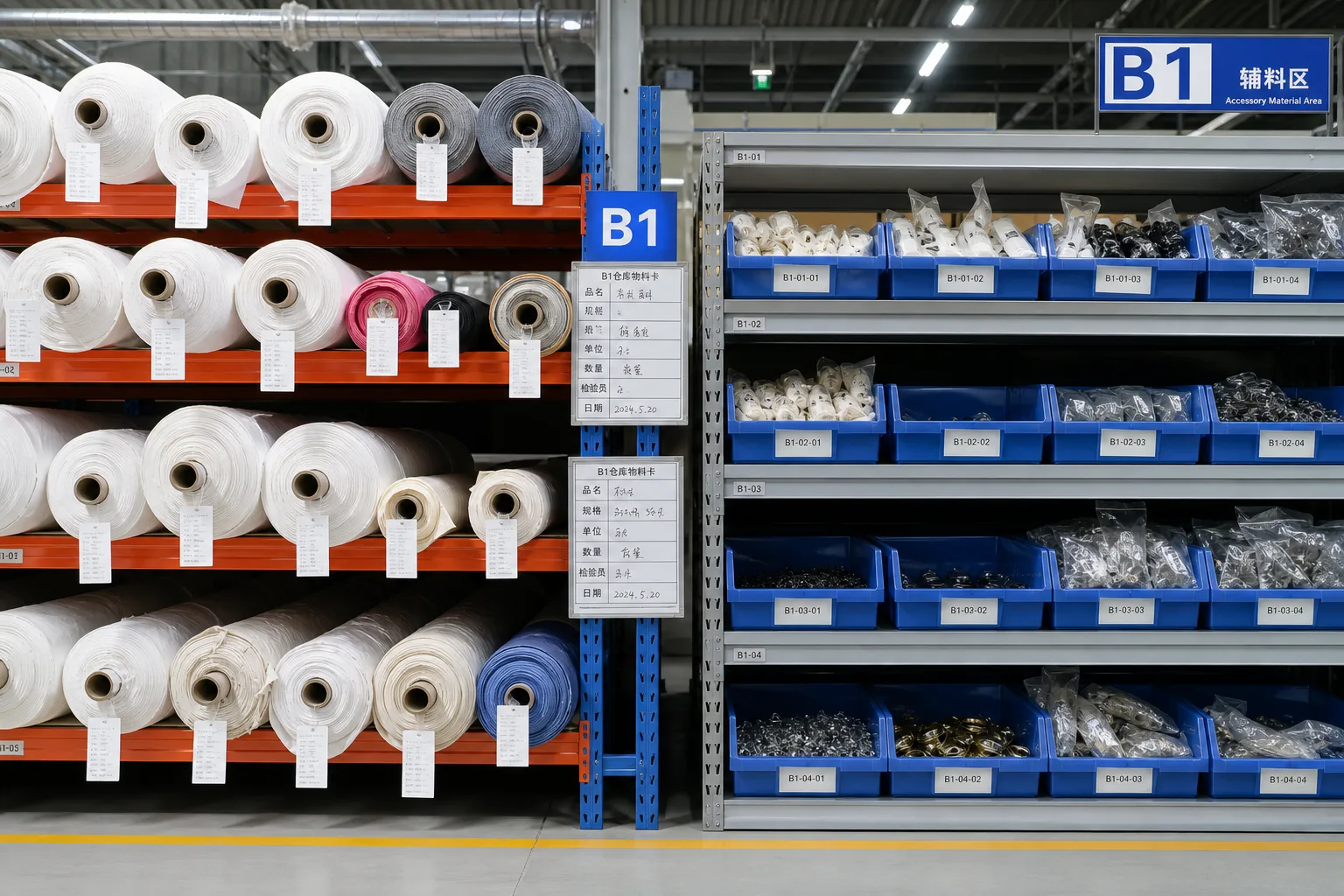
Controlled material storage with labelled inventory in a factory
The Document Chain
Document
Issued by
Material declaration
Supplier
Test report
Laboratory
Certificate of compliance
Supplier
Safety data sheet
Chemical supplier
Change notification
Supplier
Approval record
Factory
The Supplier Requirements Table
Requirement
Purpose
Declaration per material
Confirms content
RSL acknowledgement
Confirms understanding
Change notification clause
Catches substitutions
Test report provision
Provides evidence
Traceability data
Links to the lot
Audit right
Verifies control
The Contract Clauses
Clause
Effect
Compliance warranty
Legal obligation
RSL reference
Defines the standard
Change notification
Prevents silent substitution
Evidence provision
Requires documentation
Cost of failure
Allocates liability
Audit rights
Enables verification
The Approved Material List
Field
Content
Material code
Internal reference
Supplier
Source
Specification
Exact description
Compliance status
Approved with evidence
Approval date
Validity
Test reference
Evidence link
Review date
Next verification
The Factory Control Points
Point
Control
Incoming inspection
Verify against the approved list
Warehouse identification
Labelling and segregation
Cutting release
Only approved materials
Line substitution
Prohibited without approval
Change control
Documented process
Traceability
Material linked to finished goods
The Traceability Table
Level
Recorded
Material lot
Supplier and batch
Production order
Which lot used
Finished goods
Which order
Shipment
Which cartons
Customer
Which destination
The Substitution Risk Table
Risk
Control
Cheaper component
Approved list only
Different dye lot
Colour approval
Alternative supplier
Pre-approval
Excess stock use
Inventory discipline
Rework material
Approval before use
The Audit Checklist
Item
Check
Approved material list current
☐
Declarations on file per material
☐
Test reports valid and traceable
☐
Incoming inspection records
☐
Warehouse labelling correct
☐
No unapproved material on the floor
☐
Change records complete
☐
Retained samples stored
☐
The Storage Conditions Table
Material
Storage requirement
Coated fabric
Away from solvents
Foam
Away from heat and light
Adhesive
Per shelf life
Metal hardware
Dry, corrosion protected
Finished goods
Clean, dry, pest controlled
The Training Requirements Table
Role
Training
Purchasing
RSL and supplier requirements
Warehouse
Identification and separation
Cutting
Approved materials only
Quality
Inspection and documentation
Management
Legal obligations
The Records Retention Table
Record
Retention
Test reports
Per brand or market rule
Declarations
While material is in use plus a period
Traceability records
Per contract
Retained samples
Per brand requirement
Change records
Permanently
Reducing Risk by Material and Process
Most compliance failures are designed in during material selection. Choosing materials with known chemistry removes most of the risk before testing.
The Material Selection Table
Material
Lower-risk choice
Fabric dye
Supplier with azo-free certification
Coating
Water-based rather than solvent-based
Foam
Phthalate-free formulation
Metal finish
Nickel-free or low-release plating
Print ink
Water-based, heavy-metal-free
Adhesive
Formaldehyde-free
Water repellent
PFAS-free finish
Plastic parts
Phthalate-free polymer
The Process Choice Table
Process
Lower-risk alternative
Solvent coating
Water-based coating
Plastisol print
Water-based ink
Chrome tanning
Chrome-free tanning
Nickel plating
Alternative finish
Solvent adhesive
Hot melt or water-based
Fluorinated repellent
PFAS-free chemistry
The Design Decisions Table
Decision
Compliance effect
Fewer printed areas
Lower ink risk
Fewer coated panels
Lower phthalate risk
Metal type specified
Predictable nickel risk
Single dye source
Traceability
Mono-material design
Easier verification
Simpler construction
Fewer adhesives
The Supplier Capability Table
Capability
Why it matters
Chemical management system
Systematic control
Certifications held
Third-party verification
Test history
Evidence of performance
Traceability system
Identifies lots
Change notification process
Prevents surprises
Waste treatment
Compliance evidence
The Due Diligence Table
Step
Activity
1
Request declarations
2
Verify certificates with issuers
3
Test high-risk materials
4
Audit the supplier process
5
Approve with evidence
6
Re-verify on a cycle
Building a Compliance System in the Factory
A system turns individual actions into a repeatable process. The components are simple; the discipline is the hard part.
The System Components
Component
Purpose
Compliance policy
States obligations
RSL register
Holds requirements
Approved material list
Controls sourcing
Test plan
Defines verification
Supplier agreements
Creates obligations
Traceability records
Enables investigation
Training program
Builds capability
Review cycle
Keeps it current
The Responsibility Matrix
Role
Responsibility
Management
Policy and resources
Compliance officer
System ownership
Purchasing
Supplier compliance
Quality
Testing and inspection
Warehouse
Identification and control
Production
Using approved materials only
The Compliance Calendar
Activity
Frequency
RSL review
Quarterly or on update
Supplier declaration collection
Annual
High-risk component testing
Per lot or per schedule
Internal audit
Semi-annual
Training refresh
Annual
Management review
Annual
The Risk Assessment Table
Material
Likelihood
Severity
Control
Printed logo
Medium
High
Test each print run
Metal zipper
Medium
High
Supplier declaration plus test
Coated fabric
Medium
High
Chemistry specification
Foam
Low
Medium
Formulation declaration
Dyed fabric
Low
Medium
Azo-free certification
Lining
Low
Low
Standard verification
The Monitoring Metrics
Metric
Target
Materials with valid declarations
100%
High-risk materials tested
100%
Test failure rate
Trend to zero
Supplier response time
Within agreed days
Documentation completeness
100%
Audit findings closed
Within agreed days
The Internal Audit Table
Area
Check
Purchasing records
Approved sources only
Warehouse
Correct labelling
Production floor
No unapproved material
Quality records
Current and complete
Documentation
Traceable and retrievable
The Communication Requirements
Audience
Content
Suppliers
RSL and requirements
Production teams
Material control rules
Management
Status and risks
Brand customers
Compliance evidence
Auditors
Full documentation
Handling a Compliance Failure
A failure is manageable when it is detected early and handled systematically. Panic and improvisation make it worse.
The Failure Response Steps
Step
Action
1
Confirm the failure and the substance
2
Identify the affected material and lot
3
Determine the affected production
4
Isolate and quarantine stock
5
Assess market exposure
6
Notify the customer per contract
7
Investigate the root cause
8
Correct and verify
9
Document and prevent recurrence
The Containment Table
Scope
Action
Material only
Return to supplier, replace
Work in progress
Hold and assess
Finished goods
Quarantine and decide
Shipped goods
Notify and plan
Market stock
Recall assessment
The Root Cause Table
Cause
Corrective action
Substituted material
Enforce the approved list
Wrong dye batch
Dye lot control
New print supplier
Print approval process
Supplier change without notice
Contract clause enforcement
Documentation error
Clerical control
Recycled input contamination
Input screening
The Corrective Action Table
Level
Action
Immediate
Quarantine and replace
Short term
Retest and verify
Long term
Process change
Systemic
Supplier or process change
Preventive
Add a control point
The Customer Communication Table
Situation
Communication
Failure found before shipping
Full disclosure and plan
Failure found after shipping
Immediate notice
Retailer testing found it
Full cooperation
Recall required
Coordinated plan
The Cost Allocation Table
Cost
Usually borne by
Retesting
Factory or supplier
Replacement production
Per contract
Freight
Per contract
Recall costs
Per contract and law
Fines
Responsible party
The Prevention Table
Prevention
Effect
Pre-approval testing
Stops problems early
Approved material list
Prevents substitution
Lot traceability
Enables quick containment
Supplier agreements
Creates obligations
Regular auditing
Maintains control
Retained samples
Supports investigation
The Investigation Record Table
Field
Content
Failure description
Substance and result
Material
Code, supplier, lot
Quantity affected
Units and shipments
Root cause
Determined cause
Corrective action
Steps taken
Verification
Retest result
Preventive action
Added control
Factory note: The fastest way to turn a compliance failure into a lost customer is to argue about it before containing it. Quarantine first, quantify second, explain third, and only then discuss who pays. Customers remember the response, not the substance.
The Compliance Cost and Timeline
Compliance has a real budget. Planning it prevents both overspending and under-spending.
The Cost Elements
Element
Relative cost
Testing
Moderate
Documentation labour
Moderate
Certification fees
Moderate
System management
Low to moderate
Material premium
Varies
Corrective action
High when it happens
The Testing Budget Table
Scope
Relative annual cost
Single material type
Lowest
High-risk components only
Low
Full component coverage
Moderate
Full coverage plus PFAS screening
High
The Timeline Table
Activity
Lead time
Supplier declaration
1–2 weeks
Component testing
1–3 weeks
Full material screening
2–4 weeks
Certification application
Weeks to months
The Planning Table
Project stage
Compliance activity
Design
Material selection
Sampling
Initial testing
Pre-production
Full verification
Production
Lot control
Shipping
Documentation pack
Ongoing
Review cycle
The Budget Allocation Table
Area
Suggested share
Testing
40–50%
Documentation and management
20–30%
Certification
10–20%
Training
5–10%
Contingency
10%
The Value Table
Benefit
Effect
Market access
Enables sales
Retailer approval
Unlocks programs
Recall avoidance
Protects margin
Brand protection
Protects reputation
Premium positioning
Supports price
Factory note: Compliance spending is cheapest at the material selection stage and most expensive after the container has sailed. A budget that covers testing before production approval costs a fraction of the same testing performed after a retail rejection.
The Compliance Checklist for Buyers
One checklist covering the decisions that determine whether a bag program stays compliant through production.
Before Development
Item
Done
Target markets identified
☐
Applicable regulations confirmed
☐
Retailer requirements obtained
☐
RSL version selected
☐
Compliance owner assigned
☐
Budget allocated
☐
Before Material Approval
Item
Done
Material list complete
☐
Declarations requested
☐
High-risk components identified
☐
Test plan defined
☐
Samples drawn in-house
☐
Laboratory selected
☐
Before Production
Item
Done
Test results reviewed
☐
All colours tested
☐
Reports valid and traceable
☐
Approved material list issued
☐
Supplier contract clauses signed
☐
Traceability system in place
☐
Before Shipping
Item
Done
Final product verification done
☐
Documentation pack complete
☐
Retained samples stored
☐
Compliance statement issued
☐
Records archived
☐
Practical Testing Workflow
A step-by-step workflow for a typical backpack program moving into a new market or using a new material.
The Workflow Table
Step
Activity
Output
1
Identify markets and requirements
Requirement list
2
Obtain the RSL
Reference document
3
Break the bag into materials
Material list
4
Rank materials by risk
Priority ranking
5
Request supplier declarations
Declaration file
6
Draw samples in-house
Identified samples
7
Submit to an accredited laboratory
Test request
8
Review results against limits
Pass or fail
9
Correct any failures
Revised material
10
Approve materials
Approved list
11
Control production
Process controls
12
Retain documentation
Evidence pack
The Sample Identification Table
Field
Detail
Material code
Internal reference
Supplier
Name
Lot
Batch number
Colour
Colour reference
Date drawn
Date
Drawn by
Responsible person
The Material Breakdown Table
Level
Example
Assembly
Front panel
Material
Coated polyester
Component
Zipper
Sub-component
Slider, pull, tape
Consumable
Adhesive
The Risk Ranking Table
Rank
Criteria
Highest
Printed, coated, plated, flexible plastic
High
Dyed textile, leather, foam
Moderate
Undyed textile, webbing
Low
Natural undyed fibre
The Correction Table
Failure
Typical correction
Lead in print
Change ink supplier
Phthalate in plastic
Change polymer
Nickel release
Change plating
Azo dye
Change dye source
Formaldehyde
Change finishing process
PFAS
Change repellent chemistry
FAQ
Is chemical testing required for every backpack order?
Not for every order, but testing is required before approving new materials, new suppliers, new colours, and new print or hardware sources. Established materials with valid declarations and a stable supply chain can move to a periodic testing cycle rather than lot-by-lot testing, provided the brand or retailer accepts that approach.
What is an RSL and where do I get one?
A Restricted Substances List states which substances are limited, at what concentration, and by which test method. Legal RSLs derive from regulations such as REACH; many retailers and brands publish their own, often stricter versions. Ask your customer for the applicable RSL, or build one from the strictest regulation in your target markets.
Which backpack components fail chemical testing most often?
Metal hardware and zipper components, soft plastic parts, and printed or coated surfaces. Nickel release from metal, lead in print and plating, and phthalates in flexible plastics account for a large share of failures. These are also the components most likely to be substituted without notification, which is why they need both specification control and testing.
Does Proposition 65 apply to backpacks sold outside California?
Prop 65 applies to products sold into California, but many brands apply its limits globally because it is strict and enforcement through private action is a real risk. Products that comply with Prop 65 generally also meet the requirements of most other US markets, which is why it is often adopted as a default standard.
How long does chemical testing take?
Component-level testing typically takes one to three weeks and full material screening two to four weeks, depending on the laboratory and the substances tested. Certification programs can take weeks to months. Build testing into the development calendar rather than treating it as a step that happens after production is complete.
What documents should a supplier provide for compliance?
A signed material declaration referencing the applicable RSL version, a test report from an accredited laboratory where testing applies, safety data sheets for chemicals used, and a commitment to notify changes. Verify certificates directly with the issuing body rather than accepting a scanned copy alone.
What happens if a shipment fails chemical testing?
Confirm the substance and result, identify the affected material and lot, quarantine stock, assess market exposure, and notify the customer per contract. Then investigate the root cause, correct and verify, and document a preventive control. Containment before negotiation — arguing about responsibility while non-compliant stock is still in the warehouse makes the situation worse.
Do recycled materials create additional compliance risk?
They can. Recycled feedstock varies in source and may carry legacy substances, and the documentation chain is often shorter than for virgin materials. Treat recycled content as a high-risk material: require full declarations, test before approval, and control the incoming lots rather than assuming equivalence with virgin input.
Conclusion
Chemical compliance is invisible when it works and decisive when it fails. It is not a quality issue that can be inspected at the end of the line; it is a specification and documentation discipline that begins with material selection.
The framework is consistent across markets. Identify the applicable requirements for the destination, obtain the RSL, map it against every material and component, and rank those materials by risk. Require signed declarations, draw samples in-house so the evidence is independent, test with an accredited laboratory, and tie every report to a traceable material identification.
The factory side matters as much as the paperwork. Approved material lists prevent substitution, warehouse identification and traceability enable quick containment, and contract clauses that require change notification turn a supplier’s silence into a breach rather than a surprise.
For manufacturers, a functioning compliance system is a commercial asset: brands stay with plants that can produce evidence on demand and that can absorb a new RSL version without disruption.
For buyers, the discipline is straightforward — test before approval rather than before shipping, control the materials that reach the cutting table, and keep the records that turn an assurance into proof. The cheapest compliance moment is always the one before the fabric is cut.