Bag Labelling Requirements: How Do Factories Get Every Label Right?
Bag Labelling Requirements: How Do Factories Get Every Label Right?
A care label costs a few cents and can stop a container. Of all the compliance work a bag factory performs, labelling is the least expensive to get right and the most expensive to get wrong at the border, because a missing fibre content statement or an incorrect origin marking is a documentary defect that no amount of product quality can offset.
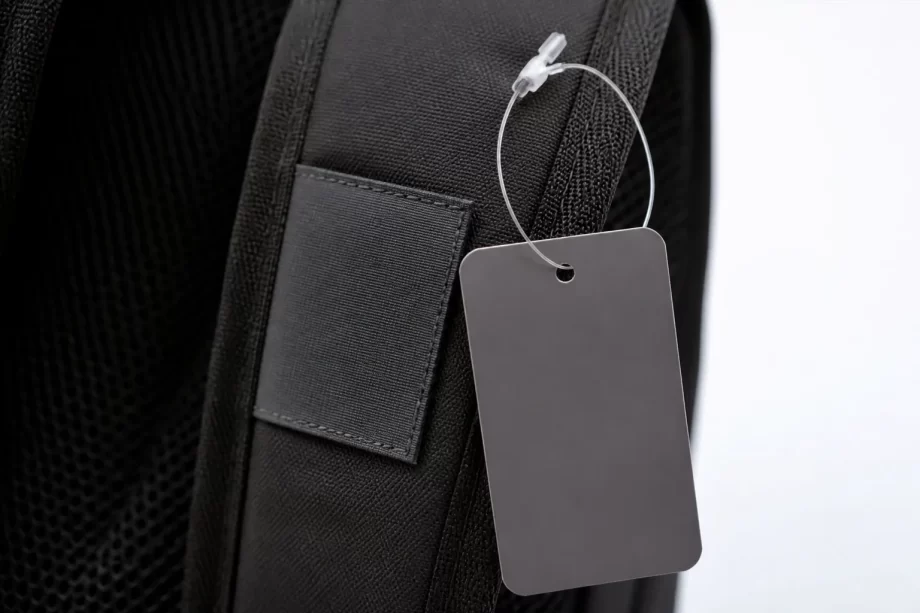
A backpack strap with a woven care label and a printed hangtag attached by a plastic loop
This guide covers labelling and consumer information from a bag manufacturer’s perspective. It starts with why labelling behaves as a compliance system rather than a decoration, and with the full set of labels a bag may carry.
It then covers care labelling and fibre content, country of origin and traceability, warnings and age grading, retail-specific requirements, language and symbol rules, label durability testing, supplier declarations and records, and the failures that recur most often.
Labelling is usually managed as a purchasing item: choose a label supplier, approve an artwork, and reorder when the roll runs out. That model fails because a label is a legal statement about the product, and the statement has to remain true for every variant, every market, and every production run.
The Function Table
Function
Audience
Identify the product
Retailer and consumer
Declare fibre content
Customs and consumer
State origin
Customs
Give care instructions
Consumer
Carry warnings
Consumer and regulator
Enable traceability
Brand and auditor
The Failure Cost Table
Failure
Consequence
Missing fibre content
Import refusal
Incorrect origin
Duty reassessment
Wrong care instruction
Damage claims
Missing warning
Product recall risk
Illegible label
Retail rejection
Wrong language
Market rejection
The Ownership Table
Decision
Owner
Label content
Brand and compliance
Label artwork
Brand
Label material
Factory
Attachment method
Factory
Durability testing
Factory
Market verification
Brand
The Variant Table
Variant dimension
Label impact
Colourway
Usually none
Size
Sometimes
Market
Language and content
Material substitution
Fibre content
Component change
Origin and content
Packaging change
Warnings
The Cost Table
Item
Share of unit cost
Woven label
Low
Printed label
Lower
Hangtag
Low
Attachment labour
Low
Testing
Moderate
Rework if wrong
High
A label is the cheapest component in the bag and the only one that can make the whole shipment non-compliant on its own.
The Control Table
Control
Purpose
Approved label set
One source of truth
Version number
Prevents outdated labels
Market matrix
Correct per destination
Attachment specification
Consistent placement
Durability test
Legibility after care
Pre-production check
Catches errors early
The Full Label Set
A bag can carry six or more separate information carriers, and each answers a different legal question. Factories that treat them as one artwork often find that the care label carries the origin, the hangtag carries the fibre content, and nothing carries the warning.
The Label Table
Label
Content
Care label
Wash and care instructions
Fibre content
Material percentages
Origin label
Country of manufacture
Warning label
Safety statements
Size label
Product size
Brand label
Trademark and identity
The Placement Table
Position
Character
Side seam
Durable, hidden
Inner lining
Protected, accessible
Shoulder strap
Visible in use
Base seam
Hidden, high wear
Hangtag
Removable
Printed panel
Permanent
The Attachment Table
Method
Durability
Woven label, stitched
Highest
Printed label, stitched
High
Heat transfer
High, surface dependent
Adhesive
Low
Hangtag loop
None, by design
Printed directly
Variable
The Market Table
Market
Emphasis
United States
Fibre content and origin
European Union
Language and care
United Kingdom
Care and fibre
Japan
Detailed care and quality
Australia
Care and fibre
Canada
Bilingual content
The Content Table
Element
Typical requirement
Fibre names
Standard terminology
Percentages
Stated by weight
Origin
Country of manufacture
Care
Symbols or words
Warnings
Prescribed wording
Importer
Name and address
The label set is a matrix, not a list: each market and each product type determines which carriers are required, which may be combined, and which must appear in a specific language.
Care Labelling and Fibre Content
Care information protects the consumer from ruining the product and protects the factory from a claim that the product failed. Fibre content protects the consumer from being misled and protects the importer from a customs finding.
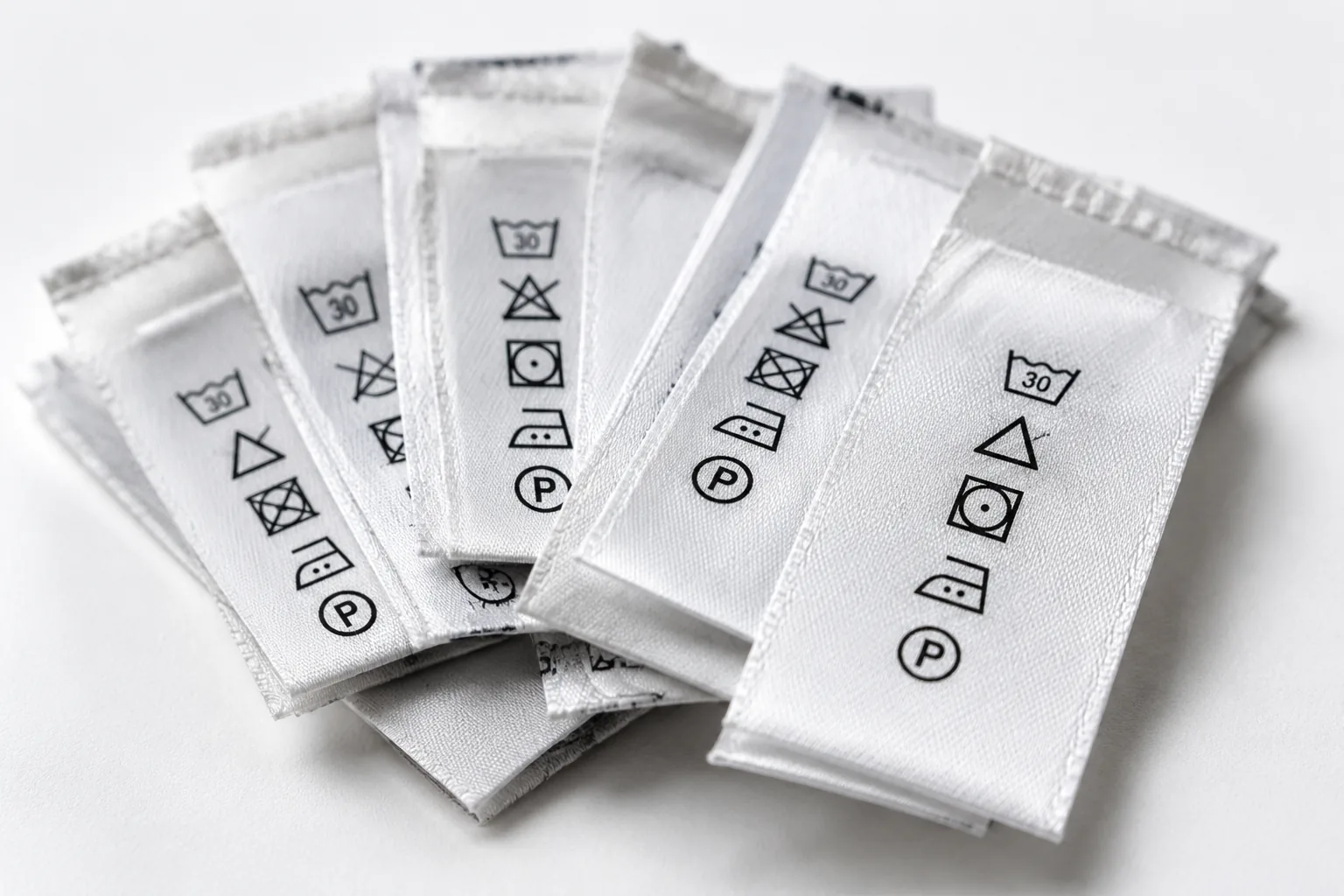
A cluster of textile care labels fanned out showing woven edges and printed pictograms
The Fibre Table
Fibre
Naming issue
Polyester
Recycled variant declared
Nylon
Polyamide naming
Cotton
Organic claim evidence
Polypropylene
Often in webbing
Leather
Species and finish
Coating
Separate component
The Percentage Table
Rule
Application
By weight
Dry weight basis
Tolerance
Small allowances
Trims excluded
Usually lining included
Coating counted
As a component
Mixed fibre
Listed in order
Below threshold
May be grouped
The Care Table
Instruction
Driver
Machine wash
Fabric and trim tolerance
Hand wash
Coating and structure
Do not wash
Leather and bonded
Do not tumble
Foam and coating
Do not bleach
Colour and coating
Iron temperature
Synthetic sensitivity
The Symbol Table
Symbol group
Meaning
Wash tub
Washing method
Triangle
Bleaching
Square
Drying
Iron
Heat level
Circle
Professional care
Cross
Prohibition
The Verification Table
Test
Purpose
Fibre composition
Laboratory analysis
Colourfastness
Care claim support
Dimensional stability
Shrinkage claim
Care cycle
Instruction validity
Coating integrity
Wash tolerance
Label legibility
After care
The care instruction is a promise about what the product will survive. Testing the product to a different cycle than the one on the label is a common and avoidable failure.
The Claim Table
Claim
Evidence needed
Organic content
Certification chain
Recycled content
Transaction records
Water resistant
Test method and result
Antibacterial
Treated component proof
Leather type
Species and process
Made in
Substantial transformation
Country of Origin and Traceability
Origin is a customs concept before it is a marketing concept, and the two often disagree. A bag that is cut and sewn in one country from material made in another may be marked with either, depending on the rules applied, and getting it wrong is a duty issue rather than a label issue.
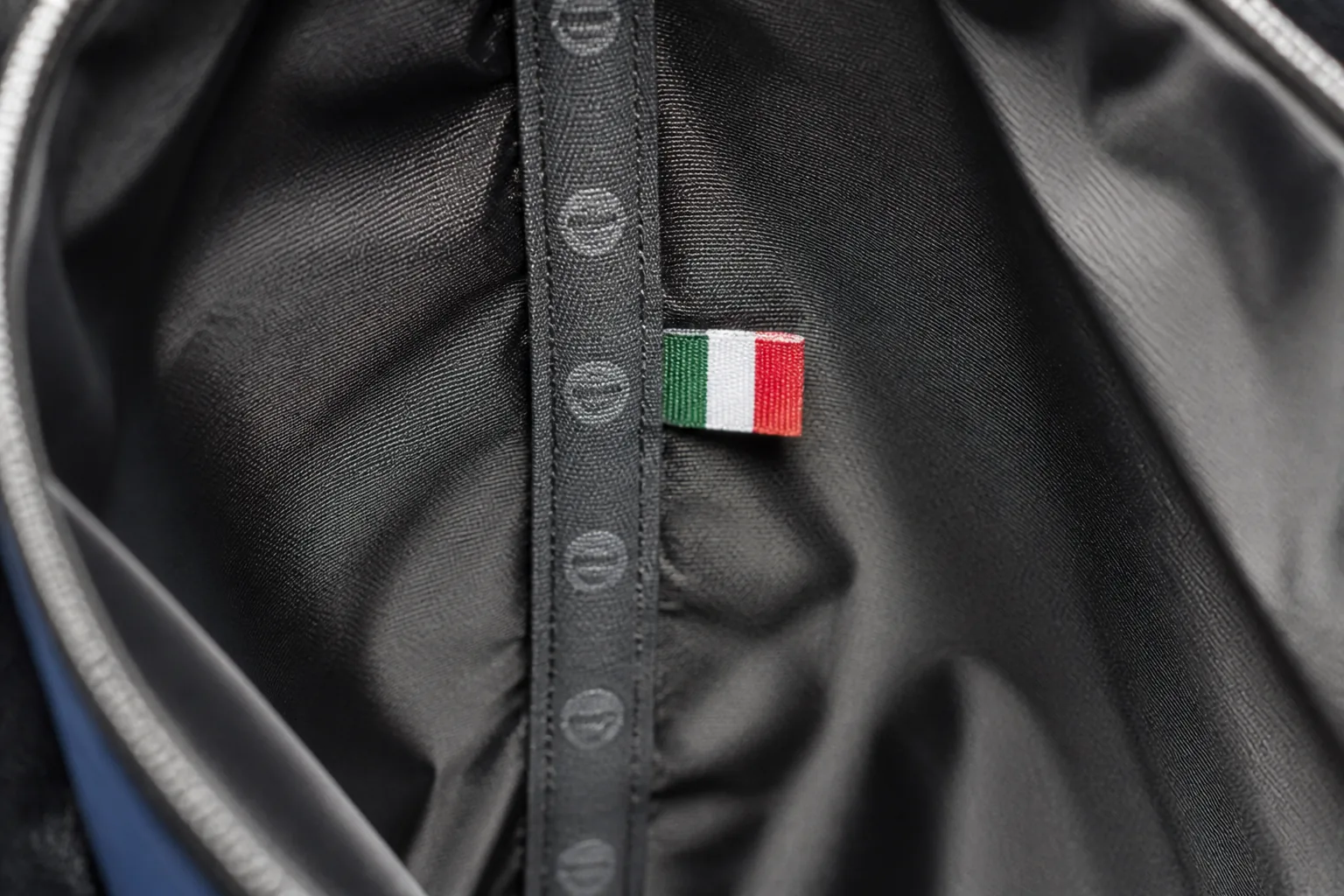
A bag interior seam with a printed origin marking tape and a small woven flag label
The Origin Table
Rule basis
Determines
Substantial transformation
Manufacturing country
Tariff shift
Classification change
Value added
Percentage threshold
Specific process
Named operations
Retail marking
Point-of-sale disclosure
Preference scheme
Duty eligibility
The Transformation Table
Operation
Usually sufficient
Cutting and sewing
Yes
Assembly from parts
Often
Adding a lining
Sometimes
Printing only
Rarely
Packing only
No
Relabelling only
No
The Marking Table
Requirement
Form
Country name
Legible, permanent
Origin language
Market language
Importer identity
Name or registration
Placement
Accessible, durable
Method
Woven, printed or stamped
Consistency
Matches documents
The Traceability Table
Element
Purpose
Production order
Links to buyer
Cut record
Fabric batch
Sewing line
Operator and date
Label batch
Label traceability
Carton marking
Shipment identity
Retained sample
Dispute evidence
The Documentation Table
Document
Supports
Certificate of origin
Preferential duty
Supplier declaration
Material origin
Production records
Substantial transformation
Invoice
Value and description
Packing list
Quantity reconciliation
Test reports
Content claims
Origin is decided by what happened to the goods, not by where the label was sewn on. A factory that documents its cutting and assembly records can defend an origin claim; one that documents only its shipping documents cannot.
Warnings, Age Grading and Safety Information
Warning information is the label element most likely to be prescribed word for word, and the least forgiving of paraphrase. A warning that is technically accurate but not in the prescribed form is a non-compliant warning.
The Warning Table
Warning type
Trigger
Suffocation
Plastic packaging
Small parts
Children’s products
Strangulation
Cords and loops
Flammability
Children’s products
Chemical
Treated materials
Assembly
Convertible products
The Age Table
Grade
Requirement
Under three
Small parts and cord rules
Three to six
Reduced but present
Six to twelve
General safety
Twelve plus
Near adult
Not for children
Explicit statement
Multi-age
Strictest applies
The Wording Table
Element
Requirement
Exact phrase
As prescribed
Language
Market language
Capitalisation
Often specified
Position
With the warning
Contrast
Legible against background
Symbol
Where permitted
The Warning Placement Table
Warning
Position
Packaging warning
On the polybag
Cord warning
On the bag
Small parts
On the product or packaging
Age grading
With the product information
Care warning
On the care label
Importer details
On the label or packaging
The Consistency Table
Inconsistency
Risk
Age grade differs from artwork
Retail rejection
Warning missing on packaging
Recall exposure
Language not the market’s
Border query
Symbol without wording
Non-compliance
Two versions in one carton
Confusion at retail
Label differs from listing
Consumer complaint
A warning is not communication, it is a prescribed statement, and the difference is that a paraphrase is legally equivalent to an omission.
Retail-Specific Requirements
Retailers add a layer of requirements above the legal minimum, and those requirements are contractual rather than statutory. They are also the ones that reject shipments at the distribution centre, because a retailer checks its own specification rather than the law.
The Retailer Table
Requirement
Typical form
Vendor mark
Printed on carton
Style reference
On label or hangtag
Barcode
Fixed format and placement
Country of origin
On carton and product
Carton labelling
Defined layout
Compliance certificate
On file
The Hangtag Table
Element
Purpose
Brand mark
Identity
Style name
Recognition
Material summary
Consumer information
Care summary
Quick reference
Barcode
Scanning at till
Origin
Retail disclosure
The Carton Table
Marking
Content
Vendor
Supplier identity
Style
Product reference
Colour
Variant
Size ratio
Assortment
Quantity
Units per carton
Destination
Store or DC
The Barcode Table
Issue
Consequence
Wrong symbology
Till rejection
Poor contrast
Scan failure
Wrong placement
Manual override
Duplicate code
Stock error
Damaged print
Rejection
Unregistered code
Retail refusal
The Approval Table
Step
Output
Specification received
Requirement list
Artwork prepared
Draft label set
Retailer approval
Signed proof
Pre-production sample
Physical check
Bulk production
Consistent output
Shipment audit
Compliance evidence
Retail requirements change more often than regulations, and a label set approved two seasons ago is not evidence of current compliance.
Language, Symbols and Legibility
Language rules are where international programmes fail most quietly. A label that is correct in one language is not compliant in a market that requires two, and a symbol set that is accepted in one region may be unknown in another.
The Language Table
Market
Language rule
United States
English
Canada
English and French
European Union
Local language of sale
United Kingdom
English
Japan
Japanese
Middle East
Arabic, often bilingual
The Regional Symbol Table
Region
Symbol system
Europe
ISO care symbols
United States
Words plus symbols
Japan
Domestic symbol system
Australia
Domestic system
Global retail
Brand-defined set
Mixed
Symbols plus words
The Legibility Table
Factor
Requirement
Font size
Minimum specified
Contrast
Against label background
Print quality
No fill-in or blur
Durability
Survives care cycles
Position
Visible when opened
Language density
Avoid crowding
The Translation Table
Risk
Control
Machine translation
Native review
Regional variants
Market-specific wording
Technical terms
Standard glossary
Legal phrases
Approved templates
Abbreviations
Spelled out
Symbol mismatch
Cross-check
The Crowding Table
Problem
Result
Too many languages
Illegible text
Small font
Readability failure
Overlapping print
Rejection
Mixed symbol sets
Confusion
Multi-market label
Compromise
Single-market label
Higher cost
A multi-market label that is legible in none of its markets satisfies no regulator and no retailer, which is why market-specific sets usually cost less than the rework they prevent.
Label Durability and Testing
A label has to remain legible for the life of the product, which for a bag means years of use and repeated cleaning. Durability is a material and attachment question, and it is testable before production rather than discovered by a consumer.
A labelling compliance workbench with a printed label roll, a scanner and a folder of documents
The Durability Table
Test
Method
Wash endurance
Repeated care cycles
Abrasion
Rubbing against fabric
Laundering symbols
Legibility after cycles
Adhesion
Peel after ageing
Colourfastness
Bleed onto label
Attachment strength
Pull test
The Failure Table
Failure mode
Cause
Faded print
Ink and wash chemistry
Curled edges
Adhesive and heat
Torn label
Lightweight substrate
Unreadable text
Print density
Detached label
Poor stitching
Bleed staining
Dye migration
The Material Table
Material
Character
Woven polyester
Durable, crisp
Printed nylon
Soft, less durable
Coated paper
Cheap, not washable
Tyvek-type
Strong, limited print
Heat transfer
Permanent, surface bound
Leather stamp
Permanent, varies
The Specification Table
Requirement
Value to define
Substrate
Material and weight
Print method
Woven, printed, transfer
Attachment
Stitch type and count
Position
Seam and offset
Legibility target
After stated cycles
Test standard
Method and cycles
The Audit Table
Check
Frequency
Pre-production label proof
Every order
Attachment strength
Per batch
Print legibility
Per batch
Wash test
Per material change
Label batch trace
Per shipment
Retail audit result
Per season
A label that becomes illegible after five washes is not a durable label, it is a delayed defect, and the consumer discovers it long after the factory could have.
Supplier Declarations and Records
The factory signs a declaration it did not write, based on information it did not generate. That chain is the weakest link in labelling compliance, and it is the one an auditor follows first.
The Declaration Table
Declaration
Covers
Fibre composition
Material percentages
Origin
Place of manufacture
Restricted substances
Chemical compliance
Care performance
Tested claims
Packaging
Recyclability and warnings
Label content
Accuracy
The Supplier Table
Supplier type
Declaration needed
Fabric mill
Composition and origin
Label printer
Material and content
Hardware supplier
Coating and substances
Coating plant
Formulation
Packaging supplier
Material grade
Subcontractor
Process and origin
The Record Table
Record
Retention purpose
Approved label artwork
Version control
Retailer approval
Contract evidence
Test reports
Claim support
Label batch records
Traceability
Pre-production sample
Reference
Shipment audit
Compliance proof
The Version Table
Change
Action
Fibre substitution
New test and label
Market addition
New language set
Retailer update
Reapproval
Supplier change
New declaration
Symbol update
Artwork revision
Error correction
Withdraw old stock
The Auditor Question Table
Question
Evidence
Is this the approved label
Signed proof
Does content match the product
Test report
Is the origin correct
Production records
Are warnings complete
Specification check
Is the language right
Market matrix
Is the label durable
Test result
When an auditor asks for the approved label, the factory should be able to produce a signed artwork, a matching physical sample, and a test report, and all three should refer to the same version.
Sustainability Information and Digital Labels
Sustainability information is moving onto the label, and the direction of travel is from voluntary claims to required disclosure. For a bag factory that means a new category of label content that has to be evidenced like fibre content rather than written like marketing copy.
The Disclosure Table
Disclosure
Basis
Recycled content
Transaction records
Material composition
Laboratory analysis
Country of origin
Production records
Durability statement
Test results
Repairability
Design documentation
Disposal guidance
Market requirement
The Evidence Table
Claim
Weak evidence
Recycled polyester
Supplier assertion
Bio-based content
Marketing description
Lower carbon
Estimate without method
Recyclable
No facility identified
Compostable
No certification
Sustainable leather
Undefined term
The Digital Table
Format
Character
QR code to product page
Flexible, network required
Data carrier
Machine readable
Batch-linked record
Traceability
Static URL
Simple, no update
Retailer portal
Programme-specific
Printed label only
No update path
A digital label does not remove the obligation to hold the evidence, it only changes where the consumer reads it, and an unevidenced claim remains unevidenced whether it is printed or linked.
The Preparation Table
Step
Action
Map requirements
By destination
Collect evidence
Per material
Define wording
Approved terms only
Test the carrier
Durability and scan
Train the line
New label positions
Review annually
Requirement drift
Labelling on Samples and Development Orders
Sample bags are labelled too, and the labels used on them are frequently wrong because the market matrix is still being decided. A sample that arrives with the wrong origin marking or a missing care label creates a compliance impression that the production run then has to correct.
The Sample Label Table
Sample stage
Label expectation
Concept sample
Brand label only
Fit sample
Brand and size
Photo sample
Retail-ready appearance
Salesman sample
Full set, marked as sample
Pre-production
Production label set
Shipment sample
Identical to bulk
The Sample Risk Table
Risk
Control
Placeholder content
Marked as sample
Wrong market language
Matrix applied early
Missing warning
Specification checklist
Non-durable material
Production substrate
Untested claims
Evidence before print
A salesman sample is a promise about the production label set, and a promise that has not been checked against a test report is the beginning of a later dispute.
Common Labelling Failures
The same failures recur across factories and seasons, and almost all of them are process failures rather than knowledge failures. The factory knows what the label should say; it does not have a mechanism that guarantees the right label reaches the right bag.
The Recurring Failure Table
Failure
Root cause
Old label version used
No withdrawal step
Mixed labels in one carton
No line-side control
Fibre content not updated
Substitution undocumented
Origin printed on carton only
Spec misread
Warning in one language
Market matrix missing
Label missing on some units
Attachment checked by sample
The Cause Table
Root cause
Countermeasure
Artwork version control
Single approved file
Label stock rotation
First-in first-out
Line-side reconciliation
Count labels against units
Change notification
Written substitution approval
Training
Label awareness at attachment
Audit
Packed-unit inspection
The Detection Table
Stage
What is checked
Artwork approval
Content and language
Label receipt
Against approved proof
Pre-production
First-off unit
In-line
Attachment and position
Final inspection
Packed unit
Shipment audit
Carton and unit
Checking a label on an artwork file is not checking a label. The only meaningful check is on a packed unit, because that is what the consumer and the customs officer will see.
Working With a Label Supplier
The label supplier is a compliance supplier whether or not the purchase is managed that way. Labels arrive as printed rolls that look almost identical between versions, and the supplier’s version control becomes the factory’s version control.
The Label Supplier Table
Capability
Why it matters
Woven or printed
Substrate and durability
Colour consistency
Brand and retail approval
Version control
Prevents old artwork
Sample service
Physical proof
Lead time
Fits production schedule
Reorder discipline
Same version on repeat
The Label Order Table
Item
Specification
Artwork version
Stated on the order
Substrate
Material and weight
Print colours
Reference or Pantone
Fold and cut
Dimensions
Packing
Rolls or cut pieces
Quantity tolerance
Over or under
The Receipt Check Table
Check
Method
Version matches order
Read the label
Colour matches proof
Compare to approved
Dimensions
Measure
Print quality
Inspect at reading distance
Quantity
Count or weigh
Attachment test
Sew a trial unit
The Reorder Risk Table
Risk
Control
Old version reordered
Version in part number
Colour drift
Retained approved sample
Substrate change
Specification locked
Quantity shortfall
Buffer stock
Obsolescence
Withdraw at change
A label supplier that keeps the artwork version in the part number makes the factory’s version control almost automatic, and one that does not makes it almost impossible.
Line-Side Control and Training
Labelling fails at the point of attachment far more often than at the point of artwork, because the operator at the machine is handling labels that look almost identical to each other.
The Line-Side Control Table
Control
Method
Label issue
Counted issue per order
Reconciliation
Balance at end of run
Segregation
One style per station
Visual aid
Approved sample at station
First-off check
Supervisor sign-off
Changeover
Clear-down verified
The Training Table
Audience
Content
Attachment operators
Position and orientation
Line supervisors
Reconciliation and first-off
Quality inspectors
Content verification
Warehouse
Carton marking
Merchandisers
Market matrix
The Visual Aid Table
Aid
Purpose
Approved sample
Reference unit
Label photograph
Position and orientation
Market card
Which label for which market
Defect board
Common errors
Change notice
Current version
The Changeover Table
Step
Requirement
Remove old labels
Zero residue at station
Verify new labels
Against approved proof
First-off unit
Supervisor approval
Record
Style, version, time
Resume
Only after sign-off
Most mislabelled shipments are not the result of a wrong decision. They are the result of a correct label being left at a station after the style changed.
The Labelling Checklist
Specification
Item
Done
Market matrix completed
☐
Fibre content confirmed by test
☐
Origin basis documented
☐
Warnings identified
☐
Languages confirmed
☐
Retail requirements received
☐
Artwork
Item
Done
Label set drafted
☐
Translation reviewed natively
☐
Retailer approval signed
☐
Version number applied
☐
Durability specified
☐
Barcode verified
☐
Production
Item
Done
Label receipt checked against proof
☐
Issue counted and reconciled
☐
Position and orientation verified
☐
First-off unit approved
☐
Packed unit inspected
☐
Old label stock withdrawn
☐
Shipment
Item
Done
Carton marking matches spec
☐
Unit and carton counts reconcile
☐
Test reports on file
☐
Declarations collected
☐
Photographs retained
☐
Audit sample kept
☐
FAQ
Which labels does a bag legally need?
It depends on the market and the product type, but the core set is consistent: fibre content, country of origin, care instructions, and any warning that applies. A bag sold in the United States needs fibre content and origin, and care information where the product requires it. A bag sold in the European Union needs care and fibre information in the language of the market of sale. Children’s products add warnings and age grading, and packaging adds its own warnings in several markets. The practical approach is to build a market matrix listing every destination and every required carrier, rather than working from a single universal template that satisfies none of them completely.
Who is responsible for label content, the factory or the brand?
Legally the importer or brand usually carries the obligation, and operationally the factory carries the risk. The brand decides what the label says, because the brand owns the specification and the market position. The factory is responsible for attaching the approved label correctly, on every unit, in the right position, and for verifying that the label it received matches the approved version. Problems arise when that split is blurred: a factory that writes its own fibre content without a test report, or a brand that approves artwork without checking the market language. The workable arrangement is a written approval per label set, a version number, and a physical approved sample held at the line.
How is fibre content determined, and who pays for the test?
By laboratory analysis of the finished material, using a recognised method that identifies each fibre type and calculates its percentage by weight. The test is usually commissioned at development or at the first production run, and repeated when a material is substituted. Who pays depends on the commercial relationship, but the obligation to hold the evidence sits with whoever makes the claim. In practice the factory commissions the test for materials it sources and passes the report to the brand, and the brand keeps it on file for the market in which it sells. A report that covers only the shell fabric and not the lining, webbing, or coating is an incomplete basis for a content claim.
How should a multi-market order be labelled?
With market-specific label sets rather than a single compromise label. A label carrying six languages in a small font becomes illegible in all six, which satisfies no regulator and no retailer. The workable structure is one label per market or per language group, issued and reconciled separately at the line, with a market card at the station showing which set applies to which destination. Where a single production run serves several markets, the run is usually split into batches with a clear changeover, and the changeover is recorded. The extra cost of separate label sets is almost always lower than the cost of a rejected shipment or a relabelling operation at the distribution centre.
What causes origin marking disputes?
A mismatch between what the documents say and what the production records show. Origin is determined by where the goods were substantially transformed, which for a bag normally means where the panels were cut and assembled, not where the fabric was woven or where the label was attached. A dispute typically arises when the certificate of origin states one country, the carton marking states another, and the production records show a third because part of the order was subcontracted. The defence is documentation: cut records, assembly records, and subcontractor declarations that together show what happened to the goods, retained for the period the market requires.
How durable does a care label need to be?
Durable enough to remain legible for the life of the product under the care instructions printed on it. That is a testable requirement rather than a judgement: the label is subjected to the stated care cycle repeatedly, and then checked for legibility, attachment, and colour bleed. A coated paper label on a washable bag fails by definition, because the substrate cannot survive the process it is describing. The specification should name the substrate, the print method, the attachment method, and the number of cycles the label must survive, and the test should be run whenever any of those change rather than once at the start of the programme.
What is the most common labelling failure in production?
A correct label left at a station after a style or market change. The label itself was approved and the content was right, but the changeover was incomplete, so units from the new run carried the previous label. It is a process failure rather than a knowledge failure, and it is why reconciliation matters: labels issued against labels consumed, with a balance checked at the end of the run, catches the error while the cartons are still in the factory. Checking an artwork file or a first-off sample does not catch it, because the error appears in the middle of a run rather than at the beginning.
Can a hangtag replace a sewn-in label?
Only where the market allows it, and for a bag that is usually not the case for care and fibre information. A hangtag is removable by design, which is precisely why regulators treat it as an unreliable carrier for information the consumer needs after purchase. Origin marking is sometimes permitted on packaging or a tag, and retail-specific style and barcode information is normally on a tag. The safe structure is to treat the sewn-in label as the permanent record for content, care, and warnings, and the hangtag as a commercial and retail carrier that adds information rather than replacing it.
Conclusion
Labelling is the cheapest compliance system in a bag factory and the one with the highest consequence per gram. A woven label costs a fraction of a cent, and the same label can hold up a container at the border if the fibre content is wrong, the origin is inconsistent, or the warning is missing.
The system that works has four components. A market matrix that states, for every destination, which carriers are required and in which language. An approved label set with a version number, a signed proof, and a physical sample held at the line.
A production control that issues labels against an order, reconciles them at the end of the run, and verifies the packed unit rather than the artwork. And a record set, comprising test reports, declarations, and audit samples, that can be produced when an auditor or a retailer asks.
The failures that recur are not exotic. They are an old label left at a station after a changeover, a fibre content that was never updated after a material substitution, a market added to the order without its language set, and an origin printed on the carton but not on the product. Each is preventable with a checklist and a reconciliation count, and each costs far more than the label itself.
For buyers, the practical questions are which carriers apply to each destination, who approved the current version, what test supports the fibre content, and whether the label was verified on a packed unit. A supplier that can answer those four is controlling its labelling. A supplier that answers with an artwork file has not yet checked the thing that ships.