Chemical Inventory Lists: What Must a Bag Factory Disclose to Buyers?
Chemical Inventory Lists: What Must a Bag Factory Disclose to Buyers?
A chemical inventory list is the document that connects what a bag factory actually uses to what a buyer has promised its own customers. When the two disagree, the factory’s list is the evidence that settles the question.
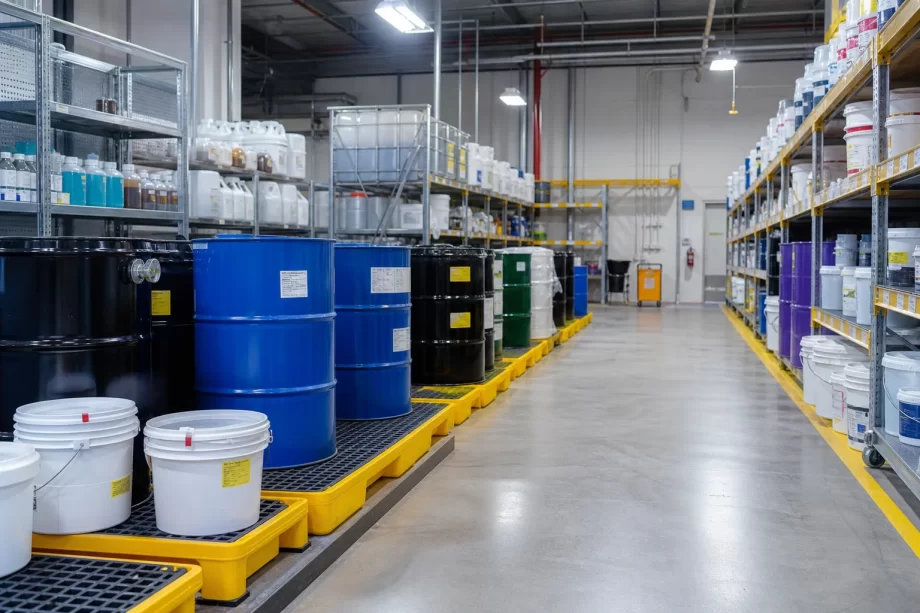
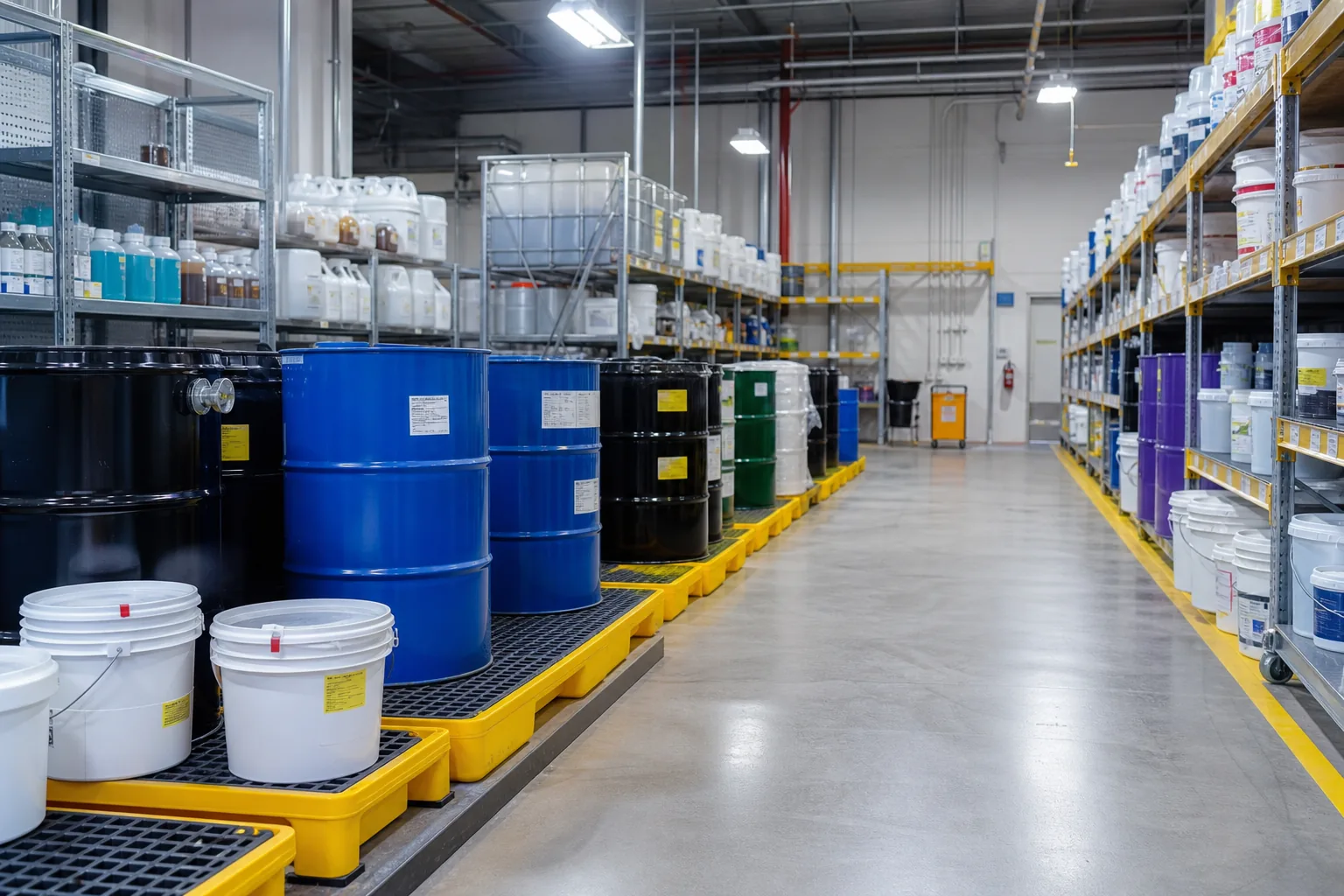
Factory chemical store with labelled drums on spill containment pallets
Most bag plants already hold the raw material for this document in three places: purchase records, safety data sheets and the process knowledge of the people running the coating, printing and finishing lines. What is usually missing is a structure that turns those three into a single list a buyer can read against a restricted substance list.
This guide covers what the inventory has to contain, how it maps to MRSL and RSL frameworks, how safety data sheets should be managed, which formats buyers accept, and how the list is kept current when formulations change.
The perspective is that of a manufacturing plant answering a brand’s compliance team rather than writing a marketing statement.
The inventory exists to answer a specific question: which chemical preparations enter the product, the process or the effluent, and what is in them.
The Purpose Table
Purpose
Consumer of the list
Buyer compliance
Brand compliance team
Restricted substance check
Screening analyst
Waste and effluent reporting
Environmental authority
Worker safety
Plant EHS
Traceability
Auditor
Product recall
Quality team
The Inventory Content Table
Field
Why needed
Trade name
Identification
Supplier
Accountability
CAS number
Substance identity
Function
Process role
Quantity
Volume risk
Location
Site control
The Scope Table
Scope
Included
Direct materials
Adhesives, coatings
Process chemicals
Oils, cleaners
Finishing agents
Repellents, softeners
Printing inks
Pigments, solvents
Maintenance chemicals
Lubricants
Packing materials
Adhesive tape
The Excluded Table
Item
Reason
Office supplies
Not product related
Cleaning in office areas
Out of scope
Fuel
Separate reporting
Refrigerant
Separate scheme
Water treatment
Effluent route
Lab reagents
Small volume
The Maturity Table
Level
Character
Register only
Names listed
Basic
Names and suppliers
Structured
CAS and function
Screened
Checked against lists
Controlled
Change managed
Integrated
Purchasing linked
Build the inventory from purchase records rather than from memory, because the chemicals a factory forgets are almost always the ones bought occasionally and stored in an unlabelled container.
Legal and Buyer Frameworks
The inventory is a factory document, but its structure is dictated by frameworks written elsewhere, and those frameworks do not use identical categories.
The Framework Table
Framework
Focus
REACH
Registration and authorisation
MRSL
Manufacturing inputs
RSL
Product content
ZDHC
Industry convergence
Proposition 65
Consumer warning
National chemical law
Local duty
The Framework Requirement Table
Requirement
Typical source
Substance disclosure
Buyer code
Prohibited list
RSL
Process restriction
MRSL
Concentration limit
RSL threshold
Testing evidence
Buyer protocol
Annual refresh
Contract
The Difference Table
Concept
Distinction
MRSL
Inputs banned
RSL
Product limits
SDS
Hazard information
Declaration
Supplier statement
Test report
Measured data
Certificate
Scheme assurance
The Buyer Table
Buyer type
Typical demand
Global brand
Full inventory
Retail programme
Summary list
Discounter
RSL attestation
Public buyer
Documented evidence
Marketplace seller
Platform form
Trading company
Name list only
The Obligation Table
Party
Duty
Factory
Accurate inventory
Supplier
Substance data
Brand
Restricted list
Laboratory
Verified results
Auditor
Independent check
Authority
Enforcement
Ask the buyer which framework version applies before compiling, because a list built to an outdated restricted substance list is worse than no list at all.
MRSL and RSL Explained
The two lists point in opposite directions, and confusing them is the most common reason a factory discloses the wrong document.
The Direction Table
List
Applies to
MRSL
What enters the process
RSL
What remains in the bag
Both
Overlapping substances
Neither
Packaging rules
The Mapping Table
Chemical use
MRSL relevance
Water repellent
High
Coating polymer
High
Adhesive
High
Dye
High
Cleaning solvent
Moderate
Machine lubricant
Low
The Threshold Table
Expression
Meaning
Below detection
Not measured above limit
Below limit
Compliant by number
Not detected
Method dependent
Absent
Declared not used
Trace
Unintentional presence
Reportable
Above disclosure level
The Evidence Table
Claim
Document
MRSL conformant
Supplier declaration
RSL compliant
Test report
Both
Combined file
Scheme certified
Certificate
Screened only
Internal record
Unknown
No record
The List Gap Table
Gap
Risk
MRSL claimed as RSL
False assurance
RSL tested, inputs ignored
Process exposure
Old list version
Non-compliance
Partial scope
Hidden substances
No test
Unverified claim
Declaration only
Weak evidence
Use the MRSL to choose what you buy and the RSL to prove what you ship, because a supplier declaration covers the first and never the second.
Building the Inventory
A usable inventory is built once with a defined structure and then maintained, and the structure matters more than the software used to hold it.
The Registration Table
Field
Example content
Internal code
Sequential identifier
Trade name
Supplier product name
Supplier
Legal entity
CAS number
Substance identifier
Function
Purpose in process
Quantity band
Annual volume
The Site Table
Location
Typical chemicals
Chemical store
Bulk containers
Coating line
Coating mixes
Printing area
Inks and solvents
Cutting room
Lubricants
Assembly line
Adhesives
Packing area
Tapes and labels
The Source Table
Source
Data
Purchase orders
Names and volumes
Safety data sheets
Composition
Supplier declarations
Restricted status
Line records
Actual usage
Store issue book
Movement
Waste records
Disposal route
The Method Table
Step
Action
Collect
Gather purchase data
Consolidate
Remove duplicates
Identify
Assign CAS numbers
Classify
Assign function
Screen
Check against lists
Approve
Sign off version
The Build Quality Table
Attribute
Test
Complete
All purchases covered
Current
Dated within cycle
Traceable
Linked to invoice
Specific
Named substances
Consistent
Same definitions
Signed
Named approver
Assign one internal code per chemical and never reuse it, because a code that changes meaning breaks every historical record that refers to it.
Chemical Classification and Naming
Substances are identified by number rather than by name, and a list built on trade names alone cannot be screened by anyone outside the factory.
The Identifier Table
Identifier
Strength
CAS number
Globally unique
EC number
European register
Trade name
Supplier specific
Generic name
Ambiguous
Function name
Descriptive
Mixture code
Internal
The Class Table
Class
Example use
Polymer dispersion
Coating base
Crosslinker
Durability
Surfactant
Wetting
Pigment paste
Colour
Solvent
Carrier
Biocide
Preservation
The Ambiguity Table
Problem
Effect
Proprietary blend
Hidden content
Name variant
Duplicate records
Translation drift
Mismatch
Grade change
Silent substitution
Reformulation
Stale entry
Supplier rename
Broken link
The Verification Table
Check
Method
CAS valid
Registry lookup
Composition complete
SDS section three
Function plausible
Process knowledge
Quantity plausible
Purchase volume
Supplier active
Vendor master
Duplicate scan
Code comparison
The Normalisation Table
Rule
Purpose
One code per substance
Consistency
English names
Buyer readability
CAS as key
Screening
Function in fixed list
Analysis
Supplier legal name
Traceability
Version date
Currency
Screen on CAS numbers and use trade names only for internal reference, because two suppliers can sell the same substance under names that share no characters.
Safety Data Sheets and Their Gaps
The safety data sheet is the primary source for composition, and it is also the document most often accepted without being read.
Safety data sheet binder open on a workshop bench beside gloves and safety glasses
The Section Table
Section
Content
Identification
Product and supplier
Hazards
Classification
Composition
Substances and ranges
First aid
Response
Handling
Storage rules
Disposal
Waste route
The Sheet Gap Table
Gap
Consequence
Range disclosure
Concentration unknown
Trade secret claim
Substance withheld
Old revision
Outdated hazard
Wrong language
Misunderstood
Local template
Incomplete sections
Missing mixture detail
Screening blocked
The Sheet Control Table
Control
Requirement
Collection
Before first delivery
Revision check
On each delivery
Language
Buyer and worker language
Storage
Accessible at point of use
Register
Indexed by code
Review
Annual
The Sheet Request Table
Situation
Action
No SDS
Refuse delivery
Old revision
Request current
Incomplete
Written query
Secret claim
Request confirmation
Language gap
Request translation
New supplier
Full set first
The Worker Table
Need
Provision
Understanding
Local language
Access
Printed copy nearby
Training
Handling briefing
PPE guidance
Section eight
Spill response
Section six
Health surveillance
Where required
Refuse to accept a delivery without a current sheet in a language the operators can read, because the sheet is the only document that tells them what they are handling.
Concentration and Impurities
Compliance depends on how much of a substance is present, not only on whether it appears in the list, and the difference between a trace and a percentage is the difference between a pass and a failure.
The Level Table
Level
Typical handling
Major component
Declared in full
Minor component
Declared with range
Impurity
Often undeclared
Residual monomer
Trace level
Contaminant
Process dependent
By-product
Undeclared
The Impurity Table
Source
Typical impurity
Polymerisation
Residual monomer
Pigment synthesis
Heavy metal traces
Solvent recovery
Cross contamination
Water supply
Salts and organics
Recycled feedstock
Variable content
Equipment residue
Carry-over
The Calculation Table
Step
Purpose
Identify substance
Screening
Obtain concentration
Threshold check
Convert to product mass
Bag-level relevance
Compare with limit
Compliance
Record basis
Defensibility
Flag margin
Risk buffer
The Margin Table
Situation
Interpretation
Well below limit
Comfortable
Near limit
Variability risk
At limit
Non-compliant practice
Above limit
Failure
Undetectable
Method limit
Unknown
Cannot claim
The Adjustment Table
Change
Effect
Higher add-on
Dilutes concentration
Lower add-on
Raises concentration
Thinner film
Less mass per bag
Reformulation
New screening
New supplier
New data
Recycling loop
Impurity build-up
Compare concentrations on the same basis the limit uses, because a figure quoted on the preparation and a limit written for the finished article cannot be compared directly.
Supplier Chemical Declarations
The factory’s list is assembled from supplier statements, and the quality of those statements determines whether the list survives scrutiny.
The Declaration Table
Type
Content
Full composition
All substances
Restricted statement
Named list only
Non-use declaration
Absence claim
Conformity certificate
Scheme claim
Test report
Measured values
Combined file
Several documents
The Supplier Request Table
Element
Requirement
Product identity
Matches invoice
Version reference
Dated
Signatory
Authorised person
Scope
Site or product
Framework
Named list
Validity
Period stated
The Supplier Quality Table
Signal
Meaning
Generic template
Low specificity
No signature
Weak evidence
No version date
Unverifiable
Copy of a copy
Chain unclear
Blanket statement
Untested
Product specific
Strong
The Follow-Up Table
Response
Action
Complete
File and screen
Partial
Written query
Refused
Escalate to buyer
Confidential
Request confirmation
Delayed
Set deadline
Withdrawn
Re-screen
The Supplier Record Table
Record
Purpose
Declaration file
Evidence
Correspondence
Due diligence
Screening result
Decision
Approval note
Accountability
Review date
Currency
Superseded copy
History
Ask for the declaration to name the product code that appears on your purchase order, because a declaration that covers a product family proves nothing about the drum in your store.
Process Chemicals Versus Material Chemicals
Two categories of chemical reach a bag: those that become part of the product and those that only touch it during manufacture, and the disclosure requirements differ.
The Category Table
Category
Fate
Coating
Remains on fabric
Adhesive
Remains in seam
Ink
Remains on surface
Detergent
Rinsed away
Lubricant
Consumed or removed
Solvent
Evaporated
The Process Requirement Table
Category
Disclosure focus
Material chemical
RSL content
Process chemical
MRSL and effluent
Both
Full inventory
Cleaning agent
Substitution risk
Maintenance fluid
Spill risk
Packaging adhesive
Product contact
The Residue Table
Process
Residue risk
Washing
Detergent traces
Dyeing
Auxiliary residue
Finishing
Softener film
Coating
Solvent residue
Printing
Plasticiser migration
Packing
Adhesive transfer
The Effluent Table
Stream
Concern
Wash water
Surfactant load
Coating cleanup
Solvent content
Printing cleanup
Ink residue
Boiler blowdown
Chemical treatment
Cooling water
Biocide
Storm water
Spill pathway
The Process Control Table
Control
Applies to
Approval list
All chemicals
Purchase restriction
Process chemicals
Substitution plan
High-risk items
Storage segregation
Incompatible pairs
Disposal route
Waste streams
Record keeping
Both categories
List process chemicals alongside material chemicals, because a buyer’s auditor who finds an undeclared solvent in the store stops trusting the rest of the inventory.
Restricted Substance Screening
Screening is the step that turns a list into a compliance position, and it has to be repeatable so that today’s answer matches next quarter’s.
The Screen Table
Step
Output
Match substance
Found or not
Check threshold
Within limit
Check scope
Product applicable
Record basis
Reference list
Flag exception
Action needed
Approve
Signed decision
The Outcome Table
Outcome
Meaning
Clear
No listed substance
Within limit
Below threshold
Above limit
Prohibited use
Unknown
Data missing
Exempt
Defined exemption
Pending
Awaiting data
The Action Table
Outcome
Response
Clear
Proceed
Within limit
Monitor
Above limit
Substitute
Unknown
Request data
Exempt
Document basis
Pending
Hold approval
The Screen Record Table
Element
Purpose
Screening date
Currency
List version
Reference
Substance found
Finding
Concentration
Threshold test
Decision
Accountability
Reviewer
Traceability
The Review Table
Trigger
Action
New substance
Full screen
List update
Re-screen all
Supplier change
Re-screen item
Test failure
Investigate
Complaint
Verify claim
Annual
Refresh
Record the version of the restricted list used for each screening decision, because a decision without its reference version cannot be defended two years later.
Declaration Formats Buyers Accept
Format matters because a correct list in an unreadable layout is treated as a missing document, and most buyers specify a template.
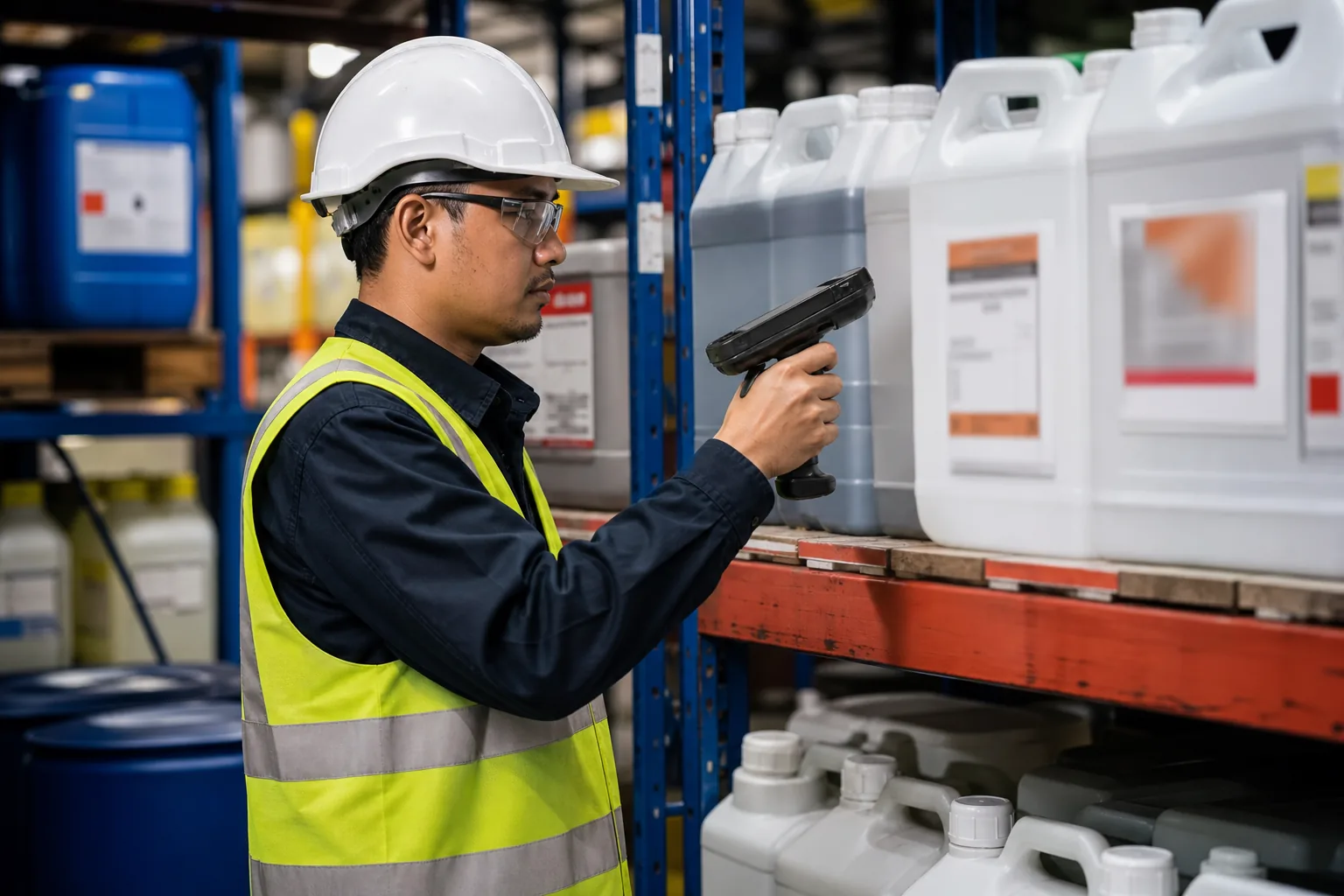
EHS officer scanning a barcode label on a chemical container
The Format Table
Format
Typical user
Excel template
Most brands
Platform upload
Retail programmes
PDF signed
Formal submission
Online portal
Certification schemes
API feed
Large suppliers
Email list
Small buyers
The Column Table
Column
Content
Chemical name
Trade and generic
CAS number
Identifier
Function
Process role
Supplier
Legal name
Annual quantity
Volume band
Restricted status
Screen result
The Submission Table
Step
Requirement
Template version
Buyer supplied
Completion
All rows
Units
Buyer convention
Sign-off
Authorised person
Attachments
SDS where asked
Deadline
Contractual
The Rejection Table
Reason
Frequency
Wrong template
Common
Missing CAS
Common
Blank quantities
Frequent
No signature
Frequent
Outdated list
Occasional
Illegible scan
Occasional
The Improvement Table
Action
Benefit
Master file maintained
Fast export
Column mapping
Reuse
Named owner
Accountability
Pre-submission check
Fewer rejections
Archive per buyer
Audit trail
Annual dry run
Readiness
Keep a master file in your own structure and export to each buyer’s template, because rebuilding the list per buyer is how inconsistencies between submissions appear.
Testing Versus Declaration
A declaration states what should be present and a test measures what is, and buyers increasingly want both because each catches what the other misses.
The Comparison Table
Aspect
Declaration
Test
Cost
Low
Per sample
Speed
Immediate
Days to weeks
Coverage
All substances
Targeted list
Accuracy
Supplier dependent
Laboratory dependent
Scope
Inputs
Product
Repeatability
Document
Sample
The Test Type Table
Test
Detects
Targeted analysis
Named substances
Screening scan
Broad classes
Extraction test
Migratable content
Total content
Full mass
Migration simulation
Use exposure
Ageing test
Release over time
The Sampling Table
Level
Sample
Material
Fabric lot
Component
Zipper batch
Assembly
Finished bag
Production
Line sample
Shipment
Container sample
Annual
Verification
The Testing Failure Table
Result
Interpretation
Pass
Compliant
Fail
Investigate cause
Inconclusive
Method issue
Below detection
Compliant at limit
Above limit
Stop shipment
Inconsistent
Sampling problem
The Combination Table
Approach
Use
Declaration only
Low-risk items
Test only
High-risk items
Both
Brand requirement
Sequential
Screen then verify
Periodic test
Ongoing assurance
Risk-based
Proportional
Test the items where a declaration is weakest, which usually means coatings, adhesives and printed areas rather than the shell fabric everyone already checks.
Storage, Handling and Traceability Records
The inventory describes chemicals in principle; the store and the line records show which ones were actually present, and auditors compare the two.
The Store Table
Element
Requirement
Segregation
Incompatible separation
Containment
Bunded storage
Labelling
Original label intact
Access
Authorised staff
Ventilation
Adequate flow
Inventory check
Periodic count
The Handling Table
Practice
Control
Decanting
Labelled secondary vessel
Measuring
Dedicated equipment
Mixing
Written recipe
Transfer
Closed system
Cleaning
Solvent discipline
Disposal
Approved route
The Store Record Table
Record
Purpose
Goods receipt
Entry record
Issue note
Line consumption
Batch record
Recipe used
Stock count
Reconciliation
Waste manifest
Disposal proof
Training log
Competence
The Traceability Table
Link
Evidence
Order to delivery
Invoice
Delivery to store
Receipt note
Store to line
Issue slip
Line to batch
Batch card
Batch to shipment
Packing list
Shipment to buyer
Commercial document
The Discrepancy Table
Signal
Meaning
Consumption exceeds purchase
Unrecorded source
Stock below count
Loss or error
Container unlabelled
Control gap
Expired stock in use
Shelf-life failure
Waste volume mismatch
Disposal route issue
Batch card missing
Recipe unknown
Reconcile purchases against issue notes every quarter, because a gap between the two is the fastest way to find chemicals that never entered the inventory.
Change Control for Formulations
Formulations change quietly, and each change resets the compliance position of everything the chemical touches.
The Change Table
Change
Effect
Supplier substitution
New composition
Grade upgrade
Different additive
Concentration shift
Threshold movement
Process temperature
Residue change
New finish
New substance
Discontinuation
Replacement search
The Trigger Table
Signal
Action
Supplier notice
Re-screen
SDS revision
Review entry
Price change
Verify identity
Quality complaint
Investigate
Test failure
Full review
Buyer list update
Programme refresh
The Approval Table
Step
Owner
Request
Production
Technical review
Engineering
Compliance screen
EHS
Buyer notification
Sales
Trial approval
Quality
Release
Management
The Documentation Table
Document
Update
Inventory entry
New version
Screening record
New basis
SDS file
Latest revision
Buyer submission
If required
Batch documentation
New reference
Training material
If hazards change
The Change Failure Table
Failure
Consequence
Silent substitution
Unknown composition
No re-screen
Prohibited substance
Old SDS retained
Wrong hazard data
Buyer not informed
Contract breach
Batch card unchanged
Traceability gap
Trial skipped
Production loss
Require written notice of any formulation change as a purchase condition, because a supplier that reformulates without telling you transfers the compliance risk to your plant.
Subcontractor and Outsource Coverage
Chemicals used outside the main plant still end up on the bag, and an inventory that stops at the factory gate understates the product.
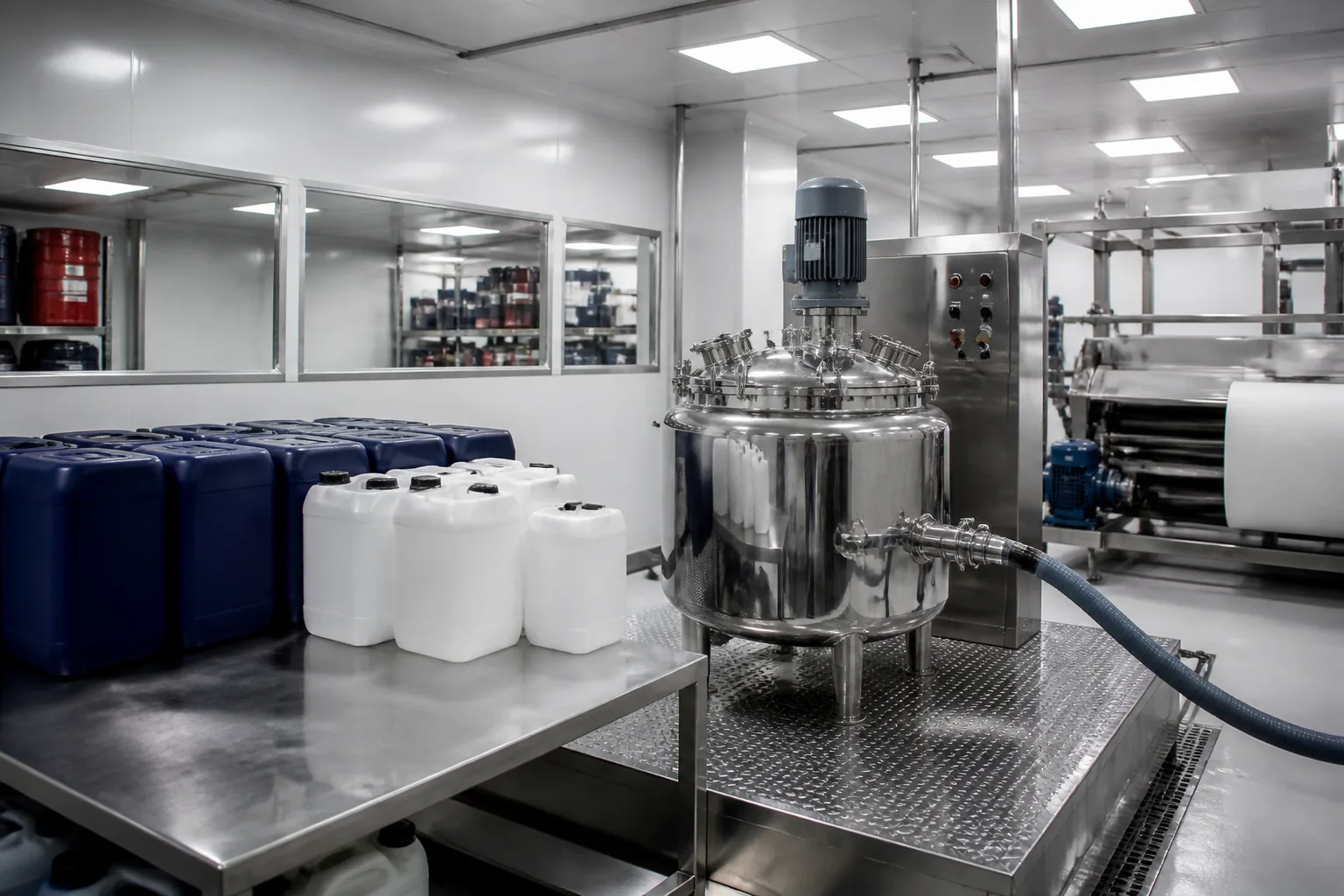
Coating kitchen mixing station with sealed chemical containers and mixing vessel
The Outsource Table
Process
Typical location
Coating
Specialist plant
Printing
Outside printer
Embroidery
Satellite unit
Plating
Metal finisher
Washing
Laundry
Heat transfer
Transfer shop
The Coverage Table
Scope
Requirement
In-house
Full inventory
Approved vendor
Chemical list requested
Unapproved vendor
Not permitted
Home work
Excluded from use
Trading supplier
Declaration required
Service provider
Process chemicals
The Outsource Request Table
Supplier type
Data requested
Coating plant
Formulation summary
Printer
Ink and solvent list
Plating shop
Process chemistry
Laundry
Detergent list
Embroidery
Thread and backing
Packing unit
Adhesives
The Outsource Gap Table
Gap
Risk
Vendor refuses
Undisclosed content
List generic
No CAS numbers
Outdated
Reformulation missed
No contract clause
No right to data
Sample only
Production differs
Language gap
Misread data
The Outsource Control Table
Control
Purpose
Contract clause
Data obligation
Vendor approval
Screening gate
Site visit
Verification
Sample test
Independent check
Annual refresh
Currency
Termination right
Enforcement
Put the chemical disclosure obligation into the vendor agreement before the first order, because a supplier with no contractual duty to disclose has no reason to answer.
Confidentiality and Business Risk
The inventory contains formulation information that suppliers consider proprietary, and the factory sits between that confidentiality and the buyer’s demand for detail.
The Tension Table
Party
Interest
Supplier
Protect formulation
Factory
Prove compliance
Buyer
Verify content
Auditor
Inspect evidence
Authority
Enforce law
Competitor
Acquire intelligence
The Mechanism Table
Mechanism
Effect
Non-disclosure agreement
Legal cover
Summary disclosure
Reduced detail
Sealed file
Auditor access only
Function-only list
Hides chemistry
Third-party escrow
Controlled release
Buyer portal
Restricted access
The Confidentiality Content Table
Field
Can be shared
Trade name
Usually yes
Supplier name
Often yes
CAS number
Yes
Concentration
Sometimes
Full formulation
Rarely
Process parameters
No
The Risk Table
Risk
Consequence
Over-disclosure
Supplier dispute
Under-disclosure
Buyer rejection
Leak to competitor
Commercial loss
Verbal sharing
No record
Uncontrolled file
Data spread
Refusal to share
Order loss
The Practice Table
Practice
Benefit
Standard NDA
Predictable
Defined access list
Control
Summary template
Consistency
Sealed evidence pack
Audit ready
Supplier consent
Relationship
Buyer explanation
Trust
Explain the confidentiality mechanism before the buyer asks for detail, because a factory that refuses to share without explaining why looks like a factory with something to hide.
Common Audit Findings
Audit findings on chemical inventories are repetitive, and almost every one of them can be found internally before an auditor arrives.
The Finding Table
Finding
Frequency
Inventory incomplete
Very common
Unlabelled container
Common
Expired SDS
Common
No screening record
Common
Missing CAS numbers
Frequent
Outdated buyer submission
Frequent
The Cause Table
Cause
Effect
No owner
Neglect
Purchase outside process
Hidden entries
Store disorder
Unidentified drums
Language barrier
Misunderstood data
Software gap
Manual errors
Time pressure
Deferred updates
The Detection Table
Check
Finds
Store walk
Unlisted drums
Purchase audit
Missing entries
SDS index review
Expired sheets
Code scan
Duplicates
Screening log review
Gaps
Buyer file review
Stale submissions
The Correction Table
Finding
Correction
Missing entry
Add and screen
Unlabelled drum
Identify or dispose
Expired SDS
Request current
No screening
Screen and record
Duplicate code
Consolidate
Stale file
Reissue
The Prevention Table
Measure
Effect
Named owner
Accountability
Purchase gate
Control at entry
Store discipline
Physical order
Quarterly self-audit
Early detection
Training
Competence
Buyer calendar
Timely submission
Walk the store quarterly with the inventory in hand, because the gap between the list and the shelves is where every finding begins.
Update Cadence and Versioning
A chemical list is a living document, and its usefulness depends on the discipline of versioning rather than on the quality of any single edition.
The Cycle Table
Frequency
Activity
On receipt
New chemical check
Monthly
Store reconciliation
Quarterly
Screening review
Semi-annual
Supplier refresh
Annual
Full rebuild
On list change
Immediate re-screen
The Version Table
Element
Convention
Version number
Sequential
Effective date
Stated
Approver
Named
Change summary
Brief
Superseded copy
Retained
Distribution list
Recorded
The Change Log Table
Field
Purpose
Date
Traceability
Item changed
Scope
Reason
Justification
Approver
Accountability
Buyer notified
Compliance
Documents updated
Consistency
The Retention Table
Record
Period
Inventory versions
Several years
Screening decisions
Several years
SDS revisions
Life plus margin
Buyer submissions
Contract term
Test reports
Several years
Vendor declarations
Current plus prior
The Readiness Table
Test
Standard
Buyer asks today
Same-day export
Auditor visits
File complete
Formula changes
Re-screened in days
New list version
Impact assessed
New supplier
Screened before use
Recall scenario
Batch traceable
Keep the superseded version of every inventory and every submission, because the question in a dispute is what you knew at the time, not what you know now.
Programme Ownership and Costs
An inventory with no owner decays within two seasons, and the cost of maintaining it is small compared with the cost of a failed submission.
The Owner Table
Role
Duty
EHS manager
Inventory owner
Purchasing
Entry control
Store keeper
Physical accuracy
Production
Batch records
Compliance
Buyer submissions
Management
Sign-off
The Cost Table
Element
Relative cost
Data collection
Low
Software or spreadsheet
Low
Screening time
Moderate
Testing
Per sample
Training
Low
Consultant support
Optional
The Benefit Table
Benefit
Effect
Faster buyer approval
Shorter sales cycle
Fewer test failures
Lower cost
Substitution lead time
Managed change
Audit readiness
Fewer findings
Recall capability
Risk control
Worker safety
Compliance
The Failure Cost Table
Event
Cost
Rejected submission
Delay
Failed test
Rework
Shipment hold
Storage and penalties
Order cancellation
Revenue
Recall
Severe
Regulatory penalty
Variable
Assign the inventory to a named person with calendar time in the job, because a document owned by everyone is updated by no one.
FAQ
What is the difference between a chemical inventory and an RSL declaration?
The inventory lists what the factory buys and uses, with substance identity and function, and it covers both product chemicals and process chemicals. An RSL declaration states whether restricted substances are present in the finished article, usually against a specific list version and often supported by testing. The inventory is the working document that makes the declaration possible; the declaration is the buyer-facing output. A factory that submits a declaration without an inventory beneath it cannot answer a follow-up question about where a substance would have come from.
Do we need CAS numbers for every chemical we use?
For anything that must be screened, yes, because substance lists are indexed by CAS number and a trade name cannot be matched reliably. Mixtures present a practical problem: suppliers sometimes disclose only substance classes or ranges. In that case record what is available, flag the entry as partially identified, and request fuller disclosure through the supplier. An inventory with honest gaps is more defensible than one with invented identifiers.
How often should the inventory be updated?
Continuously at the entry point, meaning every new chemical is registered before first use, and formally on a quarterly and annual cycle. Quarterly review catches store-level drift and screening gaps; the annual rebuild catches accumulated change and aligns with most buyers’ submission calendars. Any change in the restricted list version, any supplier reformulation and any test failure should trigger an immediate re-screen rather than waiting for the next cycle.
Can we refuse to disclose a supplier’s formulation to a buyer?
You can limit the detail and control the route, but refusing to disclose anything usually costs the order. The workable position is to share substance identity and function, keep concentration detail under a non-disclosure agreement, and make the full file available to auditors under controlled access. Suppliers should be told at the point of purchase what will be shared and with whom, so that the arrangement is agreed before a buyer asks.
What should we do if a screening finds a prohibited substance?
Establish where it entered, how much is present, and which products and shipments are affected. Stop shipment on affected lots, notify the buyer with the facts and a plan, and begin substitution. Record the decision and its basis. The most damaging response is silence while a replacement is sourced, because the buyer’s own testing will usually find the substance before the substitution is complete, and the delay becomes the finding rather than the substance.
Is a safety data sheet enough evidence for a buyer?
No. A sheet describes hazards and gives composition in ranges, which is not sufficient to screen against a threshold. Buyers accept a sheet as supporting documentation alongside a declaration and, for higher-risk items, a test report. Treat the sheet as the source for building the inventory entry, not as the compliance evidence for the product.
How do we cover chemicals used by subcontractors?
Through the vendor agreement, which should require disclosure of process chemicals before the first order and on any change, and through a sampling or testing programme for the parts they supply. Where a subcontractor refuses to disclose, the practical options are to move the process in house, change vendor, or accept the risk with the buyer informed. The one option that does not work is listing the subcontractor as approved while knowing nothing about its chemistry.
What does a buyer actually check in an audit?
Typically whether the inventory matches what is physically in the store, whether sheets are current and in a language operators read, whether screening records exist for each chemical, whether batch records show which chemicals were used, and whether the last submission matches the current list version. The findings are almost always about consistency between documents rather than about the presence of a prohibited substance.
Conclusion
A chemical inventory is unglamorous work that decides whether a bag factory can answer a compliance question with evidence. The list itself is simple; keeping it true is the discipline.
Four things make the difference. Substance identity has to be recorded as a number rather than a trade name, so that the list can be screened by someone who does not work in the plant. Process chemicals have to be listed alongside product chemicals, because the solvent in the store is what an auditor finds first.
Every entry needs a screening decision against a named list version, so that the compliance position can be reconstructed later. And the whole document needs an owner with calendar time, because an inventory maintained by nobody is out of date within a season.
The commercial case is straightforward. A factory that can export its inventory into a buyer’s template on the day of the request, and can reconcile it against the shelves during an audit, spends its time on production rather than on explanations. The cost of that capability is a spreadsheet, a quarterly walk and a named person.
Where the inventory meets the product is the point of real value: the restricted substance decision that keeps a shipment moving, and the substitution that happens before a buyer’s test finds the problem.