PFAS Restrictions and Bag Textiles: What Changes for Factories?
PFAS Restrictions and Bag Textiles: What Changes for Factories?
PFAS regulation has moved from a chemical-industry concern to a bag-factory problem in less than a decade. The materials that made a backpack resist rain and stains are now the materials a buyer’s restricted substance list is most likely to name.
Compliance documentation desk with test report binders and a tagged fabric swatch
The change is not only about which finish a factory buys. It affects the substance declarations a factory signs, the test reports it has to hold, the way a water-repellent claim can be worded, and the evidence trail a buyer will ask for at audit.
This guide sets out what PFAS are, which parts of a backpack actually carry them, how the main regulatory approaches differ, how detection works, what the PFAS-free alternatives do and do not deliver, and what a factory has to change in its documentation and production flow.
The perspective is that of a plant producing nylon and polyester bags with coated shells, foam padding, webbing and plastic hardware for brand and retail buyers.
Per- and polyfluoroalkyl substances are a large family of chemicals defined by carbon-fluorine bonds, and that bond is what makes them both useful and persistent.
The Family Table
Group
Typical use
Fluorotelomers
Side-chain DWR
Perfluorinated acids
Legacy chemistry
Fluoropolymers
High-performance films
Perfluoropolyethers
Lubricants
Fluorinated surfactants
Wetting agents
Precursors
Convert to others
The Property Table
Property
Why it mattered
Low surface energy
Water and oil repellency
Thermal stability
Withstands coating cure
Chemical resistance
Survives washing
Low friction
Zips and slides
Oleophobicity
Stain resistance
Durability
Long service life
The Application Table
Bag component
PFAS role
Shell fabric
DWR finish
Coating
Water and oil barrier
Zippers
Lubricant and repellency
Webbing
Repellent treatment
Foam
Sometimes treated
Labels and thread
Rarely
The Persistence Table
Characteristic
Consequence
Carbon-fluorine bond
Resists degradation
Mobility
Travels in water
Bioaccumulation
Builds in organisms
Long-chain concern
Regulated first
Short-chain shift
Regulated next
Polymer exemption
Contested
The Terminology Table
Term
Meaning
PFAS
Broad chemical family
PFOA
Regulated legacy substance
PFOS
Regulated legacy substance
C6 and C8
Chain-length shorthand
Fluorine-free
No PFAS chemistry
Total fluorine
Screening metric
The single most useful thing a factory can learn about PFAS is that the definition is broad enough to catch chemistries sold as replacements, so a claim of compliance has to be built on testing rather than on a brand name.
The Regulatory Landscape
Regulation is developing along three different lines, and a factory supplying several markets has to satisfy the strictest applicable approach rather than a single harmonised rule.
The Approach Table
Approach
Mechanism
Substance bans
Named chemicals prohibited
Class restrictions
Whole family limited
Concentration limits
Threshold values
Reporting duties
Disclosure required
Labelling
Consumer information
Extended producer duty
Waste stage
The Jurisdiction Table
Region
Character
European Union
Broad class approach
United States
State-level variation
United Kingdom
Diverging from EU
Asia
Developing frameworks
Retailer programmes
Often stricter
Brand lists
Strictest in practice
The Limit Basis Table
Basis
Typical expression
Total PFAS
Parts per billion
Individual substance
Parts per billion
Total organic fluorine
Screening value
Sum of precursors
Combined limit
Detection limit
Method dependent
Reporting floor
Lower than limit
The Timing Table
Stage
Factory impact
Proposal
Buyer questions begin
Consultation
Specification reviews
Adoption
Documentation changes
Transition period
Inventory decisions
Enforcement
Testing and penalties
Review cycle
Repeated updates
The Obligation Table
Duty
Who holds it
Product compliance
Brand
Material disclosure
Factory
Test evidence
Factory or supplier
Traceability
Factory
Labelling
Brand
Records
Both
Regulation sets the floor, and brand restricted substance lists usually sit above it, so a factory that manages only to the legal minimum will still fail a buyer’s audit.
Scope: Which Bags and Components Are Caught
The practical question for a factory is not whether PFAS are restricted but which of its components carry them, and the answer is rarely limited to the shell fabric.
The Component Table
Component
Likelihood of PFAS
DWR shell fabric
High
Coated shell
High
Waterproof zipper
Moderate
Standard zipper
Low
Repellent webbing
Moderate
Untreated webbing
Low
The Product Table
Bag type
Exposure
Outdoor daypack
High
Travel pack
Moderate
School bag
Low to moderate
Laptop sleeve
Low
Hydration pack
High
Tool bag
Moderate
The Claim Risk Table
Marketing claim
PFAS implication
Water repellent
Likely treated
Stain resistant
Likely treated
Weatherproof
Likely coated and treated
Water resistant
Possibly treated
Easy clean
Possibly treated
Untreated
Unlikely
The Supply Table
Source
Control
Fabric mill
Declaration and test
Coating plant
Formulation disclosure
Zipper supplier
Lubricant declaration
Webbing supplier
Finish declaration
Foam supplier
Treatment declaration
Hardware supplier
Coating declaration
The Boundary Table
Question
Why it matters
Finished article or part
Different thresholds
Homogeneous material
Test unit
Assembly
Composite testing
Packaging
Often in scope
Spare parts
Separate assessment
Repairs
Ongoing supply
Map the finish status of every component before writing any declaration, because a PFAS-free shell with a treated zipper tape is still a non-compliant bag.
Restricted Lists and Thresholds
A restricted substance list converts regulation into a testable specification, and the way thresholds are expressed determines whether a passing report actually proves anything.
The List Table
List type
Content
Brand list
Named substances and limits
Retailer programme
Additional test scope
Industry standard
Shared reference
Regulatory annex
Legal limits
Scheme requirement
Certification basis
Internal list
Factory control
The Expression Table
Expression
Practical meaning
Below detection
Not found by method
Below limit
Compliant to threshold
Sum parameter
Group total
Individual limits
Per substance
Total fluorine
Screening only
Reporting limit
Declared value
The Gap Table
Gap
Risk
Detection limit above threshold
Unverifiable
Method not specified
Incomparable
Sample not representative
False pass
Component not tested
Hidden non-compliance
Report out of date
Process drift
Supplier declaration only
No evidence
The Comparison Table
Criterion
Strong limit
Weak limit
Named substances
Specific list
Vague category
Detection limit
Well below threshold
Near threshold
Scope
All components
Main fabric only
Method
Named standard
Unspecified
Frequency
Per batch or season
Once ever
Records
Traceable
Summary only
The Verification Table
Step
Purpose
Read the limit
Know the target
Check the method
Know the detection limit
Check the scope
Know what was tested
Check the lab
Know the accreditation
Check the date
Know the version
Compare to product
Know the match
Ask for the detection limit as well as the result, because a report that reports “not detected” against a threshold it cannot reach is evidence of nothing.
DWR Chemistry and the Alternatives
Durable water repellency is the function most affected by PFAS restriction, and the alternatives fall into a small number of families with distinct strengths and weaknesses.
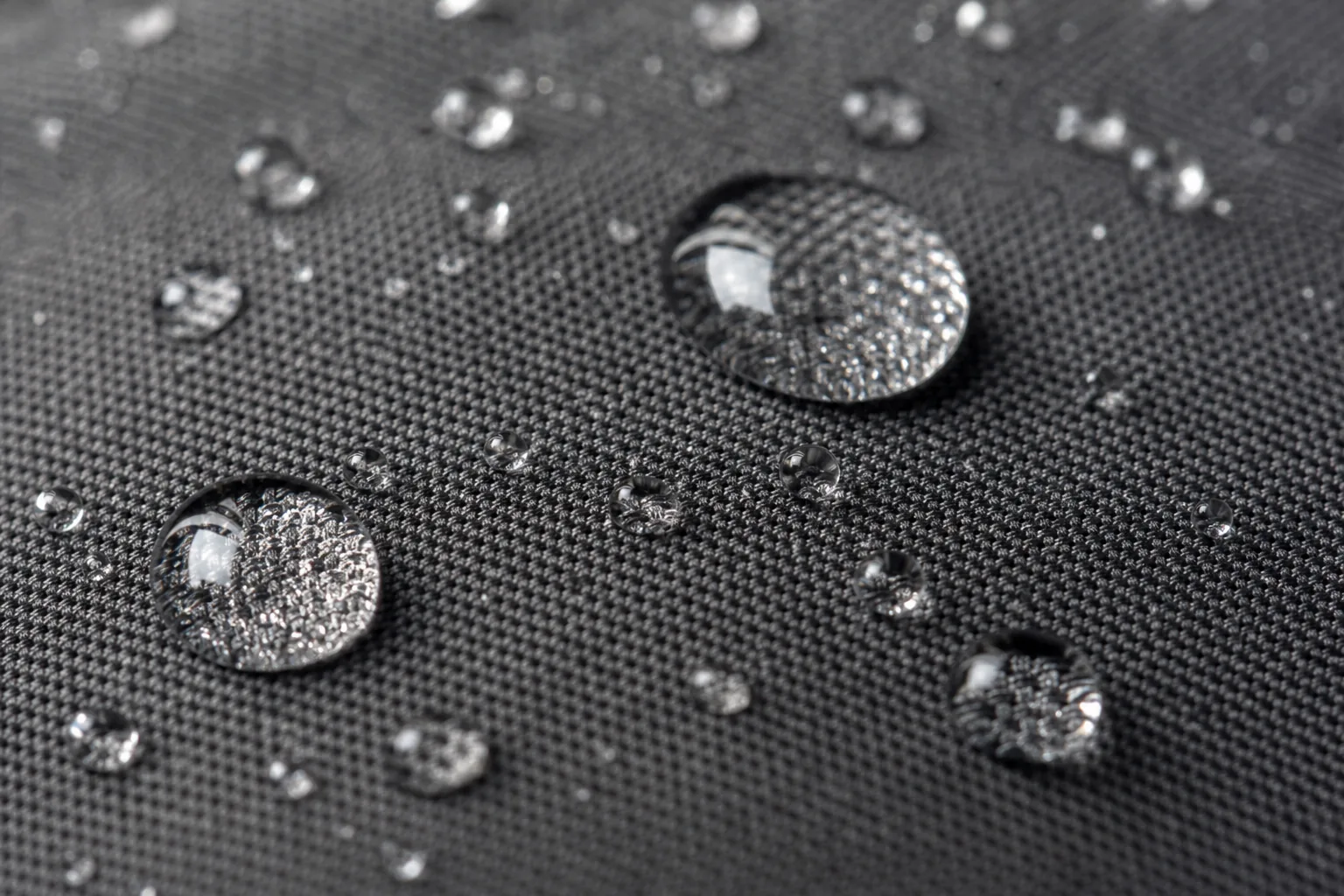
Water droplets beading on a treated nylon fabric surface in extreme close-up
The Alternative Table
Chemistry
Character
Hydrocarbon wax
Good water, no oil
Silicone
Soft hand, moderate water
Dendrimer
Good water, improving
Polyurethane
Film-forming, durable
Hybrid systems
Balance properties
Unfinished fabric
No claim
The Performance Table
Property
Fluorinated
Fluorine-free
Water repellency
High
Moderate to high
Oil repellency
High
Low
Stain resistance
High
Limited
Hand feel
Firm
Softer
Durability to wash
High
Improving
Cost
Higher
Comparable
The Failure Table
Weakness
Practical effect
Low oil repellency
Fingerprints and oils show
Wash durability
Retreat needed
Abrasion loss
Wears at contact points
Heat sensitivity
Cure window narrow
Foaming
Application problems
Compatibility
Coating interaction
The Test Table
Test
What it shows
Spray rating
Surface repellency
Bundesmann
Rain penetration
Oil repellency rating
Resistance to oils
Hydrostatic head
Pressure resistance
Wash then spray
Durability
Abrasion then spray
Wear resistance
The Selection Table
Bag use
Sensible chemistry
Urban daypack
Hydrocarbon or silicone
Travel pack
Dendrimer or hybrid
Outdoor pack
Hybrid or polyurethane
Laptop sleeve
Silicone for hand
Children’s bag
Hydrocarbon
Tool bag
Polyurethane
Choose the alternative by the claim the bag makes, because a hydrocarbon finish can hold a “water repellent” claim while an “oil and stain resistant” claim needs a conversation with the buyer.
Performance Trade-offs Buyers Notice
A PFAS-free finish changes how the fabric behaves, and the differences show up in tests the buyer already runs rather than in new ones.
The Trade-off Table
Change
Buyer perception
Lower oil resistance
Marks appear faster
Softer hand
Often preferred
Reduced wash durability
Complaints after cleaning
Faster wetting at seams
Leaks reported
Different sheen
Visual mismatch
Slight colour shift
Approval issue
The Durability Table
Exposure
Fluorine-free behaviour
Initial spray
Good to excellent
After five washes
Reduced
After twenty washes
Often fails
After abrasion
Localised failure
After flexing
Cracking at folds
After storage
Stable
The Mitigation Table
Issue
Response
Wash durability
Specify retreat
Seam wetting
Seam sealing
Oil marks
Darker colourways
Abrasion loss
Reinforced panels
Colour shift
Early approval
Sheen difference
Finish selection
The Claim Support Table
Claim
Supportable with fluorine-free
Water repellent
Usually yes
Water resistant
With construction
Waterproof
Needs coating or membrane
Stain resistant
Limited, specify test
Oil repellent
Rarely
Easy clean
Depends on soil type
The Communication Table
Audience
Message
Buyer technical
Test data comparison
Buyer marketing
Claim boundaries
Retailer
Programme compliance
Consumer via label
Care and retreat
After-sales
Expectation setting
Compliance
Documentation
Tell the buyer which claims the new finish cannot carry before the artwork is approved, because a label that promises oil resistance is harder to withdraw than a specification that never offered it.
Testing Methods and Detection Limits
PFAS testing is not a single test, and the method chosen determines what the report can and cannot prove. A factory ordering testing without specifying the method is buying a document rather than evidence.
Laboratory technician preparing fabric samples in labelled vials for chemical screening
The Method Table
Method
Target
Targeted analysis
Named substances
Total fluorine
All fluorine
Total organic fluorine
Organic fraction
Screening combustion
Indicator only
Precursor assay
Convertible substances
Non-targeted screening
Unknowns
The Limit Table
Method
Typical strength
Targeted analysis
Very low limits
Total fluorine
Moderate
Total organic fluorine
Moderate
Screening
Coarse
Precursor assay
Specific
Non-targeted
Variable
The Sample Table
Sample type
Requirement
Shell fabric
Full width piece
Coated fabric
Include coating
Zipper tape
Separate component
Webbing
Separate component
Foam
Separate component
Composite
Assembly test
The Lab Table
Criterion
Requirement
Accreditation
Recognised scope
Method statement
Named standard
Detection limit
Stated numerically
Sample handling
Documented
Report format
Per component
Turnaround
Planned
The Program Table
Frequency
Basis
Per new material
Introduction
Per supplier change
Risk trigger
Per season
Routine
Per batch
High risk
Annual
Low risk
On complaint
Investigation
Order targeted analysis at a detection limit well below the buyer’s threshold, and use a total fluorine screen only as an indicator that something needs a closer look.
Reading a Test Report Properly
Most compliance disputes are not about whether a test was done but about what the report actually covered, and the reading discipline is straightforward.
The Report Table
Field
What to check
Sample description
Matches the material
Method
Named standard
Detection limit
Below threshold
Result
Per substance
Units
Consistent
Date
Within validity
The Scope Table
Question
Concern
Which components
Coverage
Which colourways
Variation
Which finishes
Treatment
Which supplier
Source
Which batch
Traceability
Which market limit
Applicability
The Red Flag Table
Signal
Meaning
No detection limit
Unverifiable
Method unnamed
Not comparable
Result as pass only
No data
Sample generic
Not traceable
Lab unaccredited
Weak standing
Report edited
Authenticity doubt
The Interpretation Table
Result
Reading
Not detected below limit
Compliant to that limit
Detected below threshold
Compliant, disclose
Above threshold
Non-compliant
Total fluorine high
Investigate source
Mixed components
Split the sample
Inconclusive
Retest
The Archive Table
Record
Retention
Report original
Long term
Sample photo
With report
Supplier declaration
Long term
Material reference
Per style
Test request
Traceability
Correspondence
Audit trail
Read the sample description before the result, because a passing report for a fabric the factory no longer buys is the most common documentation failure found at audit.
Supplier Declarations and Data Collection
A factory’s PFAS position is only as strong as the declarations behind it, and collecting them is an administrative exercise that most plants do badly the first time.
The Declaration Table
Document
Content
Full material declaration
All substances present
Declaration of non-use
Absence statement
Test report
Measured result
Safety data sheet
Hazard information
Process statement
Treatment applied
Change notification
Future commitment
The Request Table
Element
Requirement
Scope
Component named
Limit
Threshold stated
Method
Standard named
Evidence
Report attached
Validity
Date stated
Signature
Authorised person
The Response Table
Supplier reply
Adequacy
Full declaration and report
Strong
Declaration only
Weak
Verbal assurance
Unacceptable
Generic certificate
Unverifiable
Refusal to declare
Disqualifying
Partial scope
Gap to close
The Collection Table
Stage
Action
Onboarding
Declaration required
Sampling
Test requested
Approval
Documents verified
Bulk order
Certificate per batch
Annual
Refresh declarations
On change
Re-qualification
The Database Table
Field
Purpose
Supplier
Traceability
Material
Reference
Declaration status
Control
Test report
Evidence
Expiry date
Renewal
Component use
Impact analysis
Build the declaration register before the first buyer audit rather than during it, because collecting twenty supplier declarations in a week is a negotiation, not a process.
PFAS in Coatings, Foams and Trims
The shell fabric gets the attention, but the smaller components are where compliance programmes usually leak.
The Coating Table
Coating type
PFAS risk
Polyurethane
Low to moderate
Acrylic
Low
Fluoropolymer
High
Silicone
Low
Water-based PU
Low
Hybrid
Depends on formulation
The Foam Table
Foam
Risk
Polyethylene
Low
EVA
Low
Polyurethane
Low to moderate
Recycled foam
Variable
Treated foam
Depends on finish
Laminated foam
Check adhesive
The Trim Table
Trim
Risk
Zipper tape
Moderate
Zipper lubricant
Moderate
Reflective tape
Low to moderate
Webbing
Moderate
Elastic
Low
Thread
Low
The Adhesive Table
Adhesive
Consideration
Solvent-based
Formulation disclosure
Water-based
Lower risk
Hot melt
Usually low
Reactive
Check additives
Tape
Carrier and adhesive
Seam tape
Both layers
The Assembly Table
Process
Risk introduced
Seam sealing
Tape chemistry
Heat transfer
Film chemistry
Screen printing
Ink additives
Lamination
Adhesive chemistry
Embroidery
Thread finish
Packing
Bag and label
Test the assembled product as well as the components, because the compliance question a buyer asks is about the bag they receive, not about the fabric the factory bought.
Changeover in Production
Moving to a fluorine-free finish is a material change with process consequences, and the switch has to be scheduled rather than announced.
Materials store with labelled fabric rolls and a supplier document folder
The Changeover Table
Element
Change
Fabric finish
New chemistry
Coating formulation
Compatibility check
Cure settings
Adjusted window
Bath life
Shorter typically
Line cleaning
Thorough required
Waste handling
New waste stream
The Compatibility Table
Interaction
Risk
Finish and coating
Adhesion loss
Finish and dye
Colour shift
Finish and softener
Repellency loss
Finish and flame retardant
Performance conflict
Seam tape and finish
Bond failure
Print and finish
Ink transfer
The Trial Table
Step
Output
Lab pad
Basic repellency
Pilot run
Line behaviour
Wash test
Durability
Bag assembly
Seam and bonding
Field trial
Real use
Bulk
Confirmation
The Inventory Table
Item
Decision
Treated fabric in stock
Sell through or isolate
Coated rolls
Traceability
Zippers
Declare or replace
Labels
Claim update
Packaging
Claim consistency
Finished goods
Disclose
The Planning Table
Constraint
Effect
Trial lead time
Weeks
Test turnaround
Weeks
Supplier stock
Variable
Approval sequence
Buyer dependent
Production window
Seasonal
Documentation
Parallel task
Run the changeover as a project with a dated trial, a tested bag and an approved specification, because a finish substitution slipped into a running order is the failure mode that produces recalls.
Cost and Lead Time Effects
The commercial effects of PFAS compliance are modest per bag in most cases, but they are uneven across the supply chain and they rarely arrive alone.
The Cost Table
Element
Direction
Alternative finish
Comparable to higher
Coating adjustment
Small increase
Testing
Recurring cost
Certification
Administrative cost
Documentation
Staff time
Retreatment
Possible add-on
The Driver Table
Driver
Effect
Speciality chemistry
Higher price
Small volume
Poor economy
Testing scope
Cost per component
Lab turnaround
Expedite fees
Supplier leverage
Price variance
Market timing
Scarcity premium
The Lead Time Table
Stage
Added time
Material sourcing
Weeks
Sampling
Weeks
Testing
Weeks
Buyer approval
Variable
Bulk production
Unchanged
Documentation
Parallel
The Allocation Table
Party
Absorbs cost
Fabric mill
Finish development
Factory
Testing and admin
Brand
Product cost
Retailer
Margin
Consumer
Price
Shared
Negotiated
The Recovery Table
Lever
Effect
Consolidate finishes
Fewer tests
Standardise components
Lower risk
Volume commitments
Better pricing
Shared testing
Cost spread
Early specification
Avoids rework
Supplier partnership
Access to data
Put the testing and documentation cost into the quotation as a line item rather than absorbing it, because a compliance cost that is invisible in the price is the first cost cut in a price negotiation.
Customer Communication and Contracts
PFAS questions arrive through several channels, and the answer that works for a technical buyer will fail in a contract negotiation if it is not tied to a defined scope.
The Question Table
Buyer question
What it tests
Are your bags PFAS-free
Product status
Which components
Scope
How do you know
Evidence
What limit
Threshold basis
When was it tested
Currency
What if it changes
Control
The Answer Table
Question
Defensible answer
Free claim
Per stated limit and method
Scope
Component list attached
Evidence
Report reference
Limit
Buyer list cited
Test date
Report date and batch
Control
Change notification clause
The Wording Table
Wording
Risk level
PFAS-free to limit X
Defensible
No PFAS added
Weak, hides carryover
Fluorine-free
Clear if tested
Compliant with list Y
Defensible
Environmentally safe
Undefined
100% free
Absolute, avoid
The Contract Table
Clause
Purpose
Specification reference
Defines the claim
Test obligation
Assigns cost
Notification duty
Prevents surprise
Indemnity
Allocates liability
Audit right
Verification
Record retention
Evidence
The Escalation Table
Situation
Response
Test shows detection
Disclose and investigate
Supplier cannot declare
Replace or test
Buyer changes limit
Reassess scope
Retailer programme
Update documentation
Complaint received
Root cause
Regulatory change
Programme review
Write the PFAS clause against a named list and a named method, because “PFAS-free” without those two references is an obligation with no measurable boundary.
Common Failures and Audit Findings
The findings that appear repeatedly in buyer audits are procedural rather than chemical, and most of them are cheap to prevent.
The Finding Table
Finding
Cause
Declaration expired
No renewal process
Report for obsolete fabric
Version control
Component untested
Scope gap
No detection limit stated
Poor test request
Claim exceeds evidence
Marketing input
Records missing
Filing practice
The Root Cause Table
Cause
Prevention
No owner
Named responsibility
No register
Central database
No calendar
Renewal schedule
No scope standard
Component checklist
No claim review
Sign-off gate
No supplier pressure
Contract clause
The Corrective Table
Finding
Action
Expired declaration
Request and file
Obsolete report
Retest current material
Untested component
Add to scope
Weak report
Reorder with method
Overclaim
Revise wording
Missing record
Reconstruct and control
The Audit Preparation Table
Document
Ready
Restricted substance policy
☐
Component scope list
☐
Supplier declarations
☐
Test reports current
☐
Claim register
☐
Change control record
☐
The Maturity Table
Level
Character
Reactive
Answers requests
Documented
Register exists
Controlled
Change managed
Verified
Independent testing
Designed
Specified from outset
Leading
Supplier development
Keep a single register of declarations, reports and claims with expiry dates, because every audit finding in this area traces back to a document that existed somewhere but not where it was needed.
Building a Compliance Programme That Lasts
A PFAS programme built for one buyer’s audit does not survive the next buyer, and the difference between a project and a system is whether it keeps working when nobody is asking.
The Ownership Table
Role
Responsibility
Compliance lead
Register and claims
Materials engineer
Alternatives and testing
Purchasing
Supplier declarations
Quality
Batch records
Production
Process control
Sales
Claim discipline
The Cadence Table
Interval
Activity
Per material
Declaration and test
Per batch
Certificate check
Monthly
Register update
Quarterly
Expiry review
Annually
Full reassessment
On regulation
Programme review
The Indicator Table
Metric
Meaning
Declarations current
Coverage
Reports in date
Evidence currency
Components in scope
Completeness
Open gaps
Risk exposure
Claim matches
Consistency
Findings closed
Control
The Investment Table
Item
Level
Register system
Low
Testing programme
Moderate
Lab relationship
Low
Training
Low
Alternative development
Moderate
Supplier development
Moderate
The Progression Table
Year
Objective
First
Scope and baseline
Second
Alternatives qualified
Third
Supplier coverage
Fourth
Claim discipline
Fifth
Design integration
Ongoing
Regulatory tracking
Treat the programme as a control system with owners, dates and indicators, because the regulatory cycle will produce another change and the factory that has a register updates it rather than starting again.
The Factory PFAS Checklist
Scope and Risk
Item
Done
Component list built
☐
Finish status mapped
☐
Buyer lists collected
☐
Thresholds recorded
☐
High-risk styles flagged
☐
Claim register started
☐
Materials and Alternatives
Item
Done
Fluorine-free options sampled
☐
Performance compared
☐
Wash durability tested
☐
Coating compatibility checked
☐
Hand and colour approved
☐
Retreat advice written
☐
Testing
Item
Done
Method specified
☐
Detection limit below threshold
☐
All components in scope
☐
Lab accredited
☐
Report archived
☐
Retest date scheduled
☐
Documentation
Item
Done
Supplier declarations current
☐
Certificates per batch
☐
Claims matched to evidence
☐
Contract clause agreed
☐
Change notification agreed
☐
Register reviewed quarterly
☐
FAQ
Do all backpacks contain PFAS?
No, and the presence depends almost entirely on whether the fabric or components were given a repellent finish. An untreated canvas or a plain polyester bag with no water-repellent claim is unlikely to contain PFAS. The high-risk items are shells with durable water repellency, coated fabrics where the coating formulation includes fluorochemistry, and components such as zipper tapes or webbing that carry a separate treatment. The practical step for a factory is to map which styles make a water or stain claim and treat those as the priority for testing, rather than testing everything indiscriminately.
Can a bag be labelled water repellent without PFAS?
Yes, and the fluorine-free alternatives can support a water repellent claim when the finish is correctly specified and tested. What changes is the boundary of the claim. Hydrocarbon, silicone and dendrimer finishes give good water repellency but much lower oil repellency, so a claim that combines water and stain resistance is harder to support. The word to avoid is waterproof, which describes construction and coating rather than finish. The practical approach is to test the specific claim with a spray rating and a rain penetration test after washing, and to state the durability basis alongside the claim.
What test should a factory ask for?
Start with targeted analysis against the buyer’s named substance list, at a stated detection limit well below the applicable threshold. That gives a per-substance result that can be compared with the specification. A total fluorine or total organic fluorine screen is useful as an indicator when the substance list is unknown or when there is reason to suspect an undeclared treatment, but it does not identify which substance is present and cannot on its own prove compliance with a named-substance limit. Where a supplier declines to disclose formulation, the screen is a reasonable first filter before targeted testing.
Does a supplier declaration of non-use count as evidence?
It counts as a starting point and it is not evidence on its own. A declaration establishes what the supplier says about their process, and it is valuable because it covers substances a targeted test might not look for. But declarations are frequently outdated, signed by someone without formulation knowledge, or written against a different threshold than the buyer’s list. The defensible position combines a current declaration with a test report for the specific material, and both tied to the same material reference. At audit, the pair is far stronger than either document alone.
Which components are most often missed?
Zipper tapes and lubricants, webbing and bindings, foam treatments, and seam sealing tape. Each is a separate material that may carry its own finish, and each is small enough to be excluded from a testing scope without anyone noticing. Adhesives used in lamination and heat transfer films used for decoration are also commonly overlooked. A useful discipline is to build the component list from the bill of materials rather than from the fabric order, because the bill of materials is the only list that reflects what actually ships inside the bag.
How long does a PFAS changeover take?
In practice the material work is shorter than the approval and documentation work. Sampling a fluorine-free finish and confirming basic repellency takes weeks, but wash durability testing, coating compatibility checks, bag assembly trials and buyer approval typically extend the programme across two to three months for a single style family. Where the buyer’s restricted substance list is new or the retailer programme requires independent testing, add further time. The realistic planning assumption is that a changeover started after the bulk order is placed will not complete before shipment, so the decision belongs at the development stage.
What happens if a test shows a detection below the limit?
It is compliant, and it should be disclosed rather than hidden. A result below the threshold means the material meets the specification as written, and a detection at a low level is often traceable to cross-contamination in a mill that also processes treated fabric. What matters is that the number, the method and the detection limit are all recorded, so that the result is comparable with the next test and with the buyer’s requirement. Presenting a low detection as “not detected” is the error that turns a routine result into a credibility problem when the buyer runs their own test.
How should a factory prepare for a buyer audit on PFAS?
With a register rather than a folder. The audits that go badly are the ones where documents exist but cannot be located quickly, or where the report on file covers a fabric that has since been replaced. A workable register lists each material and component, the supplier, the declaration status, the test report reference, the detection limit and the expiry date, with a named owner and a renewal calendar. Add the claim register, so that any wording used in marketing or on a label can be traced to a specific report. That structure answers most audit questions in minutes.
Conclusion
PFAS compliance is a documentation problem attached to a materials problem. The chemistry is difficult, but the failures that damage a factory are usually administrative: an expired declaration, a report for a fabric no longer used, a component left out of the testing scope, or a marketing claim that outran its evidence.
The material side is manageable. Fluorine-free finishes can hold a water repellent claim on most bag constructions, and the trade-offs are predictable: lower oil repellency, reduced wash durability, a softer hand and a narrower cure window. Those trade-offs belong in the specification and in the label wording, decided before artwork approval rather than after a complaint.
The testing side requires precision. Targeted analysis against the buyer’s named list, at a stated detection limit below the threshold, with every component in scope, is the only combination that produces evidence rather than a document. A total fluorine screen is a useful indicator and a poor proof.
The supply chain side requires persistence. Declarations expire, suppliers change formulations, and mills process treated and untreated fabric on the same equipment. A register with owners, dates and renewal triggers turns that volatility into a controlled process.
For a factory, the credible position is a mapped component scope, a tested fluorine-free alternative for every style that makes a repellency claim, current declarations from every material supplier, and claims that quote the basis on which they are made. That position survives an audit, and it is also the position from which a buyer conversation about cost becomes a conversation about specification.