Anti-Mould and Antimicrobial Bag Treatments: How Long Do They Last?
Anti-Mould and Antimicrobial Bag Treatments: How Long Do They Last?
A treated bag and an untreated bag made from the same fabric look and feel identical on the day they are packed. The difference appears weeks later, in a container crossing the equator, in a humid warehouse, or in a customer’s wardrobe, when one develops a musty odour and a mottled surface and the other does not.
That delayed outcome is what makes antimicrobial and anti-mould treatments difficult to buy with confidence. The property cannot be inspected at goods-in, it degrades over time and through washing, and the claims that surround it are more tightly regulated than most bag components.
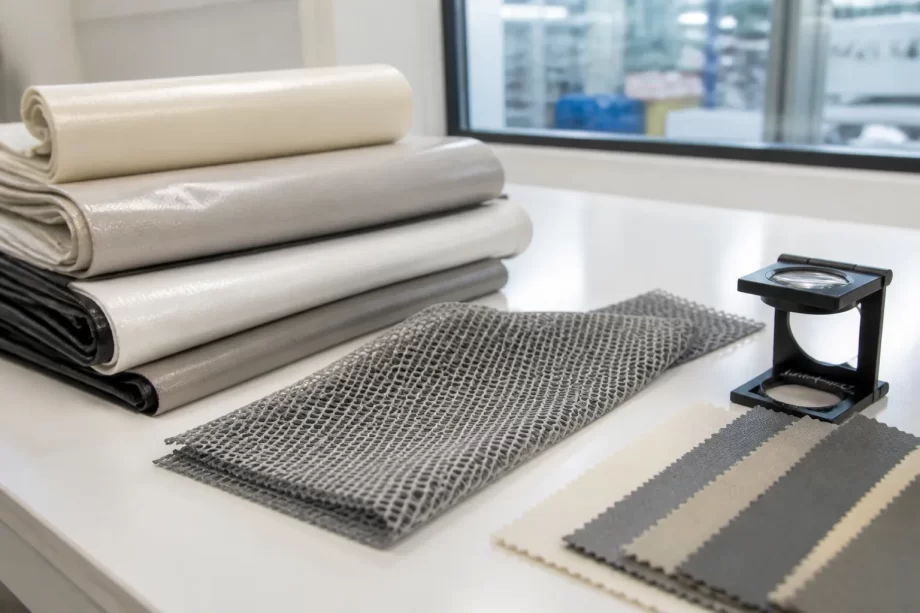
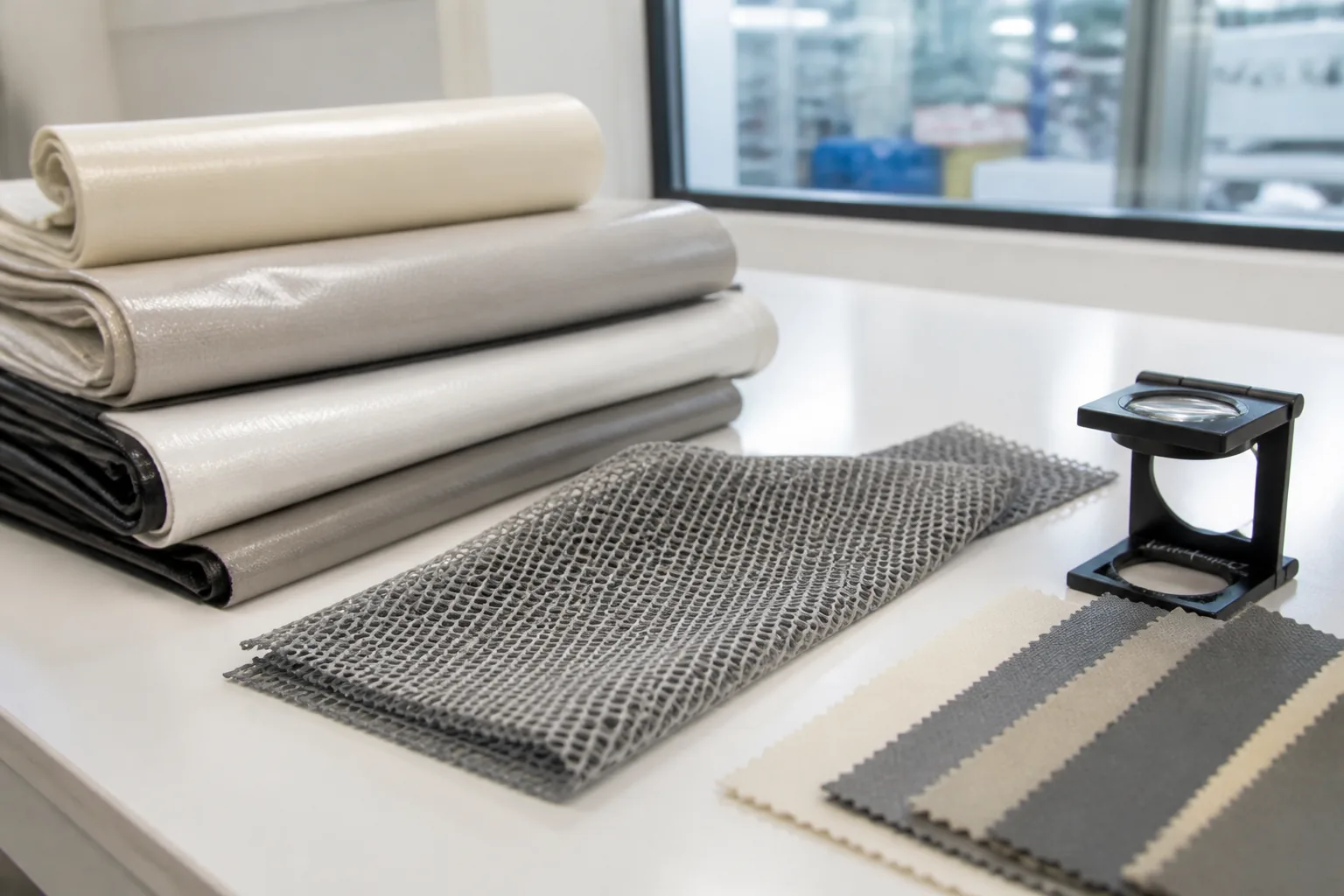
Treated bag lining fabrics and swatches laid out on a clean inspection bench
This guide covers antimicrobial and anti-mould treatments from a backpack manufacturer’s perspective: why treated materials matter in a bag programme, how the treatments actually work, and which chemistries are available and what each does.
It then covers how a treatment is selected for an application, how it is applied in production, how efficacy and durability are tested, which regulatory and claim restrictions apply, and how treated materials are sourced, stored, and controlled through the order.
Mould and odour are commercial problems before they are technical ones. A shipment rejected at destination for mildew is a total loss of the goods, the freight, and the buyer’s confidence, and the cause is usually a combination of moisture, temperature, and an untreated material that provided food for growth.
The Failure Driver Table
Driver
Effect
Residual moisture
Enables spore germination
High humidity
Sustains growth
Warm temperature
Accelerates growth
Organic soil
Provides nutrients
Poor air circulation
Traps moisture
Extended transit
Long exposure window
The Consequence Table
Consequence
Impact
Odour
Unusable for retail
Staining
Permanent appearance defect
Material degradation
Reduced strength and life
Shipment rejection
Total landed loss
Buyer claim
Cost and relationship damage
Repeat order loss
Commercial exclusion
The Risk Profile Table
Product type
Risk level
Bag with textile lining
Higher
Lined and padded pack
Higher
Unlined synthetic pack
Lower
Cotton or canvas bag
Higher
Bag with foam padding
Higher
Bag stored in humid market
Higher
The Treatment Function Table
Function
What it addresses
Antimicrobial
Microbes on the material
Anti-mould
Fungal growth in storage
Anti-odour
Bacterial odour generation
Moisture management
Water held in the material
Barrier effect
Moisture reaching the fill
The Requirement Source Table
Source
Basis
Destination market climate
Climate-driven risk
Transit route
Port and route exposure
Retailer standard
Programme requirement
Buyer field experience
Past claim history
Product end use
Gym, travel, outdoor
Regulatory framework
Treatment-specific limits
The Moisture Path Table
Path
Entry point
Residual moisture
Material not fully dried
Condensation
Temperature swing in transit
Ambient humidity
Warm humid destination
Handling
Wet hands and wet floors
Packing
Damp carton or liner
Container rain
Condensation on the container roof
Microbes need water, and a bag assembly has several ways to acquire it. Residual moisture from an incompletely dried treated roll is the most common internal source, because the water travels with the material into the finished bag and is then sealed in by the carton and the container.
Manufacturer note: The commercial logic of treating a bag is usually argued backwards. Factories treat a material, then try to prove it worked, and discover during a claim that the treated fabric was only one part of the chain. A bag has an outer shell, a lining, a foam fill, webbing, and thread, and mould does not respect which of these was treated. If the lining is treated and the foam is not, the foam becomes the growth site. The first design question is therefore which materials in the assembly need protection, not which treatment to buy.
How Antimicrobial and Anti-Mould Treatments Work
Antimicrobial treatments and anti-mould treatments are frequently marketed as one product and are not the same thing. Understanding the distinction prevents a specification that protects against the wrong organism.
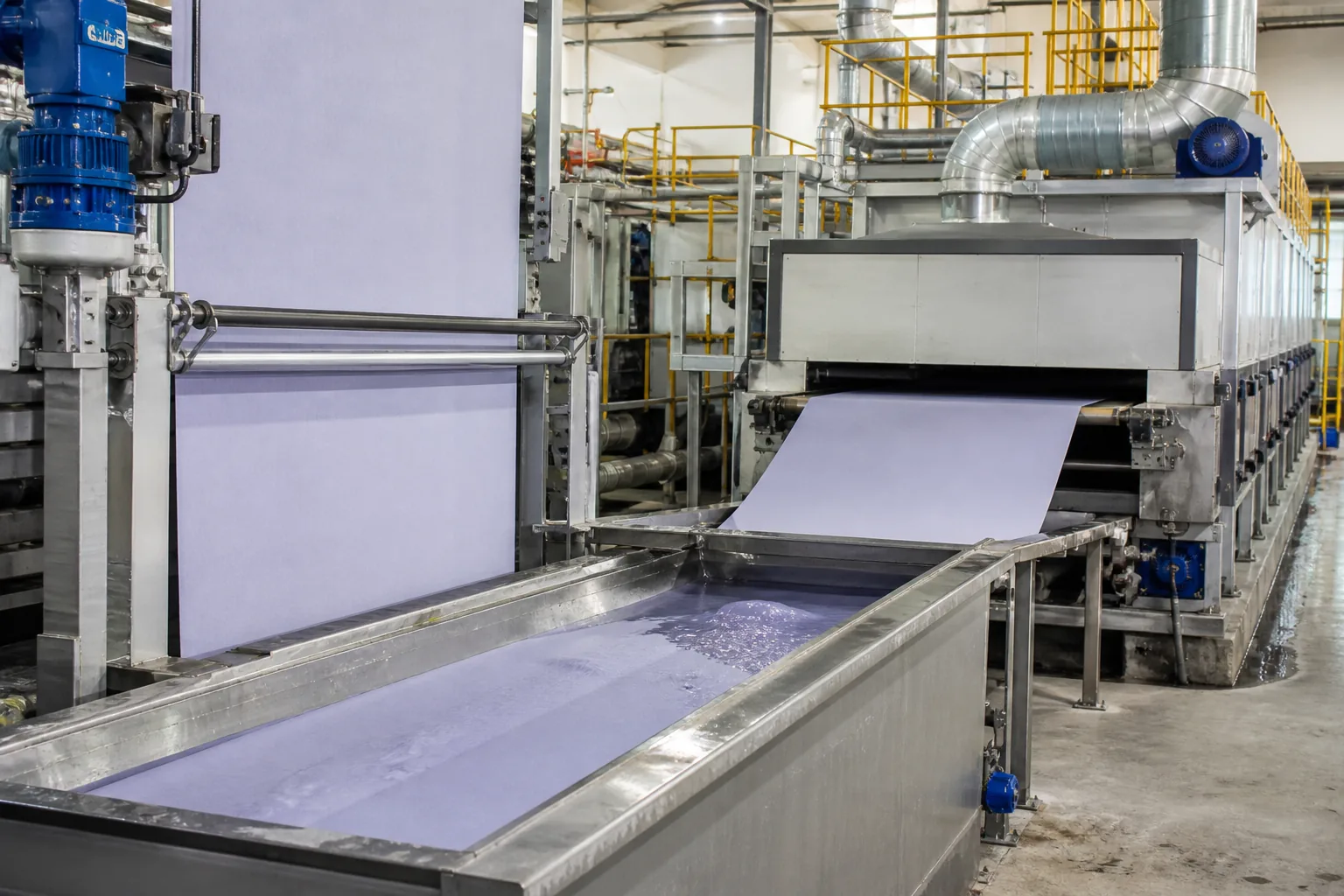
Fabric passing through a padding trough and drying oven during a treatment application
The Organism Table
Organism
Result
Bacteria
Odour, staining, degradation
Mould fungi
Mottling, musty odour, rot
Yeast
Odour and spoilage
Algae
Discolouration in wet conditions
Mildew complex
Combined stain and odour
The Mechanism Table
Mechanism
Action
Cell wall disruption
Destroys the organism
Metabolic inhibition
Stops growth
Reproduction inhibition
Prevents multiplication
Surface binding
Ties the active to the fibre
Controlled release
Slow availability over time
Barrier formation
Blocks access to nutrients
The Delivery Table
Delivery
Where it sits
Fibre-integrated
Inside the fibre
Exhaust applied
Bonded to the fibre
Pad applied
Coated on the surface
Spray applied
Surface deposit
Coating additive
Within the coating
Foam additive
Within the fill
The Durability Table
Threat
Effect
Washing
Actives removed or deactivated
Abrasion
Surface active worn away
UV exposure
Chemical degradation
Heat
Loss of activity
Storage time
Gradual loss
Repeated moisture cycling
Active depletion
The Scope Table
Scope
Meaning
Material
Protects the treated fabric
Assembly
Selected components treated
Product
Whole item addressed
Packaging
Protection during transit
Storage
Protection during shelf life
The Limit Table
Limitation
Implication
Cannot sterilise
Reduces growth, not a guarantee
Not a substitute for dryness
Moisture still drives growth
Activity declines
Duration must be stated
Coverage gaps
Untreated parts remain vulnerable
Organism specificity
Not every treatment suits every organism
The Design Sequence Table
Step
Decision
One
Identify which components are at risk
Two
Decide the organism of concern
Three
Choose the treatment type
Four
Decide the application route
Five
Set the durability requirement
Six
Define the verification method
Treatment Types and Their Mechanisms
The chemistry available to a bag factory falls into a small number of families, and each family carries a different balance of durability, cost, sensory effect, and regulatory acceptance.
The Chemistry Table
Family
Typical behaviour
Silver-based
Broad activity, durable
Quaternary ammonium
Effective, wash-sensitive
Zinc-based
Broad, often odour-suppressing
Chitosan and biobased
Lower durability, favourable profile
Halamine and chlorine-release
Rechargeable activity
Photocatalytic
Requires light to act
The Chemistry Comparison Table
Property
Silver
Quaternary ammonium
Zinc
Biobased
Durability to washing
High
Moderate
Moderate
Lower
Sensory effect
Low
Possible odour
Low
Variable
Cost
Higher
Lower
Moderate
Moderate
Skincare sensitivity
Low
Possible
Low
Low
Regulatory scrutiny
Moderate
Moderate
Moderate
Lower
Suitability for lining
Good
Good
Good
Variable
The Organism Match Table
Concern
Suitable direction
Bacterial odour
Silver, quaternary ammonium
Mould in storage
Zinc, silver
Combined odour and mould
Silver-zinc systems
Frequent washing
Fibre-integrated silver
Low-cost programme
Quaternary ammonium
Biobased requirement
Chitosan-based
The Compatibility Table
Substrate
Consideration
Polyester lining
Good bonding potential
Nylon lining
Good bonding potential
Cotton and canvas
Absorbent, exhaust works well
Foam fill
Additive approach needed
Coated fabric
Coating additive preferred
Webbing
Dependent on fibre
The Functional Interaction Table
Interaction
Risk
With a water repellent
Reduced treatment pickup
With a softener
Active masked
With a flame retardant
Chemical interference
With a colourant
Shade shift
With an adhesive
Bond strength change
With a coating
Additive compatibility
The Sensory Table
Attribute
What to check
Odour on the material
Noticeable immediately
Odour after packing
Develops in the bag
Skin contact
Hand feel and irritation
Colour
Shade and yellowing
Hand feel
Stiffness change
Breathability
Reduced airflow
Selecting a Treatment for the Application
Selection is driven by the product’s exposure, not by the treatment’s headline performance. A gym bag and a travel backpack present different risks and justify different decisions.
The Exposure Profile Table
Profile
Dominant risk
Tropical destination
Storage mould
Long sea transit
Condensation and mould
Gym and sports use
Bacterial odour
Outdoor and wet use
Repeated moisture cycling
Indoor commuting
Low risk, low treatment
Food and cooler bags
Odour and bacteria
The Selection Table
Requirement
Direction
Wash durability
Fibre-integrated active
Mould control in storage
Zinc or silver system
Odour control in use
Silver or quaternary ammonium
Low sensory impact
Silver, low add-on
Cost containment
Quaternary ammonium
Biobased preference
Chitosan system
The Component Priority Table
Component
Priority
Textile lining
High
Foam padding
High
Outer shell
Medium
Webbing and straps
Medium
Thread and binding
Low
Packing materials
Separate issue
The Cost Table
Cost element
Note
Treatment chemical
Per kilogram or per metre
Application labour
Line and handling
Drying energy
Often overlooked
Testing
Per programme requirement
Rework risk
Wet or uneven application
Documentation
Declarations and reports
The Trade-off Table
Trade-off
Effect
Higher add-on
More protection, more sensory risk
Longer durability
Higher cost
Broader spectrum
Possible regulatory burden
Lower cost active
Shorter effective life
Biobased active
Lower durability, better story
The Decision Record Table
Item
Recorded
Organism of concern
Design file
Treatment family chosen
Specification
Add-on level
Process sheet
Application route
Process sheet
Durability target
Specification
Verification method
Quality plan
Manufacturer note: A treatment specification that names only the chemical family is not a specification. The same silver-based product applied at a low add-on, dried gently, and packed with residual moisture will fail where a higher add-on applied evenly and dried properly will hold for the life of the bag. The add-on level, the drying condition, and the residual moisture at packing are the variables that decide the outcome, and all three are factory-controlled rather than supplier-controlled. Writing them into the process sheet is what converts a purchased claim into a manufacturing result.
Applying Treatments in Production
Application quality decides whether the purchased treatment performs. Uneven pickup, incomplete drying, and contamination on the line are the common causes of a treated material that tests well on the supplier’s certificate and poorly on the shipped bag.
The Application Route Table
Route
Where applied
At the mill
During finishing
At the coater
Within the coating
At the bag factory
Padding or spraying
In the foam
Added to the foam mix
In the print paste
With the print
The Process Control Table
Parameter
Control
Add-on level
Measured per batch
Pickup uniformity
Visual and gravimetric
Bath concentration
Checked and logged
Drying temperature
Within the window
Line speed
Set and verified
Cure time
Per the process sheet
The Drying Table
Issue
Consequence
Under-dried
Moisture retained in the roll
Over-dried
Active degraded
Uneven drying
Patchy protection
Fast drying
Migration of the active
Warm packing
Condensation in the pack
The Contamination Table
Source
Control
Untreated material mixed in
Batch segregation
Dirty equipment
Cleaning between runs
Wrapping after drying
Clean packaging
Water quality
Filtered supply
Storage before use
Covered and dry
The Handling Table
Stage
Practice
After treatment
Cool before wrapping
Before cutting
Inspect for wet spots
During sewing
Keep off the floor
After assembly
Dry environment
Before packing
Moisture check
At packing
Desiccant as specified
The Process Verification Table
Check
Method
Add-on
Gravimetric per batch
Uniformity
Sampling across the width
Dryness
Moisture measurement
Sensory
Odour and hand check
Record
Logged against the batch
Testing Efficacy and Durability
Efficacy is measured against a named organism under a defined method, and durability is measured as the proportion of that efficacy retained after washing, abrasion, or time. Neither can be established by inspection, and neither is transferable between materials.
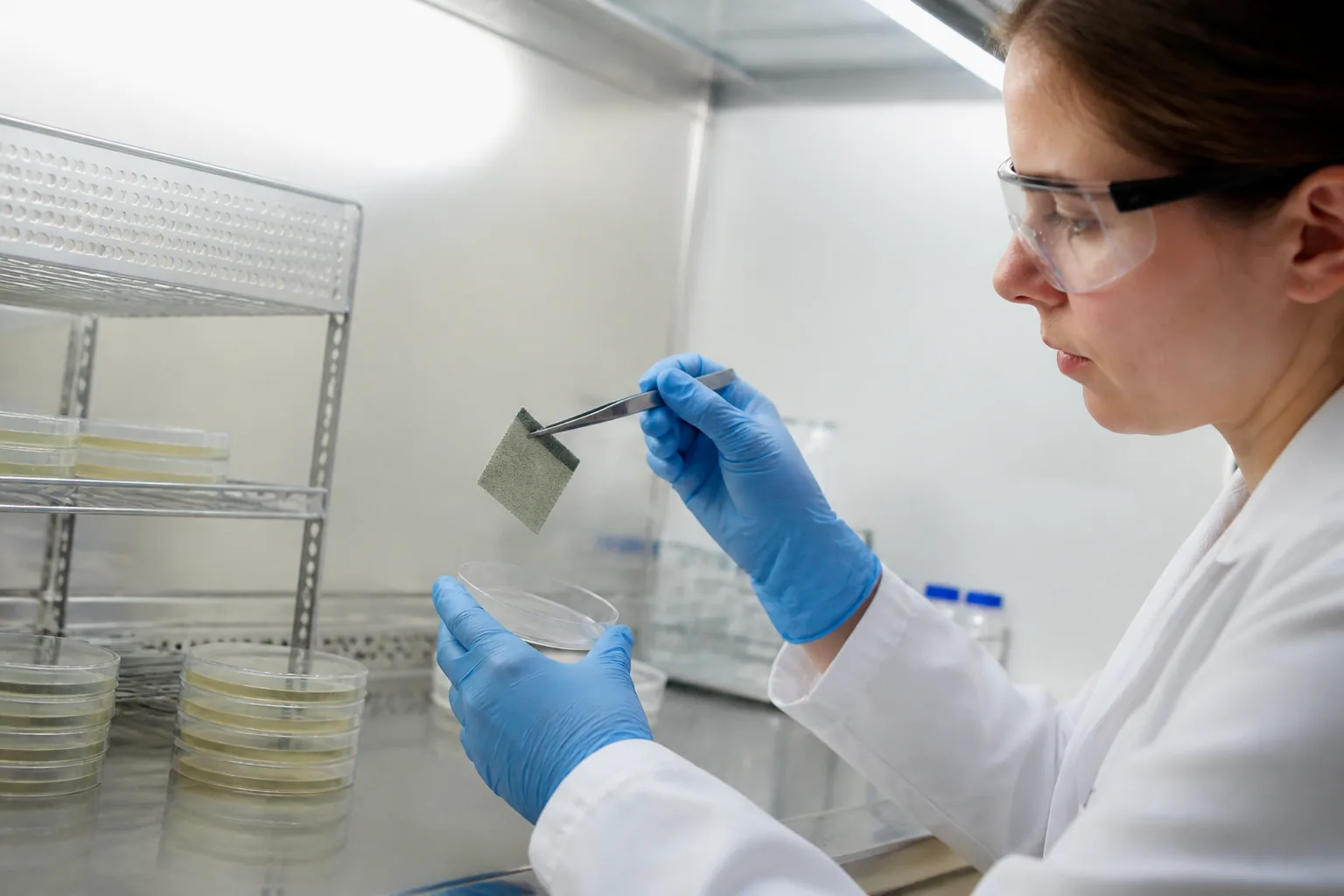
A technician examining a treated textile swatch over a culture dish in a laboratory
The Test Type Table
Test
What it measures
Qualitative agar plate
Growth or no growth
Quantitative suspension
Reduction in organism count
AATCC-style textile method
Activity on fabric
Mould resistance test
Growth on the material
Soil burial test
Degradation in soil
Odour panel
Perceived odour reduction
The Method Parameter Table
Parameter
Why it matters
Test organism
Determines relevance
Inoculum level
Sets the challenge
Contact time
Affects the result
Temperature
Affects growth
Moisture condition
Affects mould tests
Neutralisation
Validates the result
The Durability Test Table
Sequence
Purpose
Baseline test
Original activity
Wash cycles
Retention after laundering
Abrasion cycles
Retention after wear
Ageing
Retention over time
Simulated storage
Mould resistance after transit
Retest
Compare to baseline
The Interpretation Table
Result
Reading
Strong reduction
Effective at the tested condition
Moderate reduction
Partial control
Marginal reduction
Unreliable in service
No reduction
Ineffective
Inconsistent across samples
Process variability
Good baseline, poor retention
Durability problem
The Sample Table
Aspect
Requirement
Source
Representative production
Condition
As packed
Handling
Clean and sterile as required
Identification
Batch and treatment code
Retention
Kept for reference
Photography
Recorded before testing
The Record Table
Record
Purpose
Supplier test report
Material claim
Incoming verification
Confirms the claim
Process records
Add-on and drying
Durability results
Retention evidence
Batch code
Traceability
Claim statement
Supports labelling
The Testing Limit Table
Limitation
Implication
Test conditions differ from use
Results are indicative
One organism tested
Broader spectrum unproven
Laboratory result only
Field performance may vary
Time compression
Long-term ageing extrapolated
Substrate variation
Results are not transferable
Manufacturer note: The single most useful durability test is not the one on the supplier’s certificate but the one run after the garment’s own wash cycle. A treatment that passes a laboratory challenge on a pristine swatch and loses most of its activity after five domestic washes tells the buyer something the certificate never will, and it tells the factory what the care label should say. Running the baseline, the washes, and the retest as one sequence against the same batch is what produces a number that can be quoted in a specification instead of a claim that has to be hedged.
Regulatory Limits and Claim Restrictions
Antimicrobial treatments are regulated as chemical articles in most markets, and the wording used to describe them is controlled more tightly than the physical product. A claim that a bag is antibacterial is a regulated statement in several jurisdictions.
The Regulatory Focus Table
Area
What is regulated
Treated articles
Whether the article is regulated
Active substance
Approval to use the substance
Biocidal products
Notification or authorisation
Labelling
Wording and claims
Advertising
Substantiated claims only
Children’s products
Additional substance limits
The Claim Table
Claim
Constraint
Antibacterial
Requires substantiation
Antifungal
Restricted in several markets
Kills bacteria
Usually not permitted on articles
Reduces odour
Must be supportable
Prevents mould
Strong claim, needs evidence
Hygienic
Vague, but still reviewable
The Wording Table
Safer phrasing
Why
Treated to resist odour
Describes the benefit
Contains a silver-based treatment
Describes the content
Helps reduce odour
Qualified statement
Treated fabric lining
Factual disclosure
Care instructions apply
Limits the expectation
The Disclosure Table
Information
Where
Active substance
Specification and declaration
Add-on level
Process record
Care requirement
Label
Treatment presence
Product description
Market restrictions
Compliance file
The Substance Limit Table
Consideration
Note
Restricted substances
Check against the market list
Children’s limits
Stricter in most markets
Skin contact
Direct contact rules apply
Waste water
Application process impact
Labelling language
Market-specific
The Compliance Review Table
Item
Frequency
Active substance status
Before each programme
Claim wording
Before publication
Label wording
Per programme
Substance declarations
Per lot
Market updates
Annual review
Advertising copy
Before release
Manufacturer note: Claim wording is where a compliant treated bag most often becomes non-compliant. The material may be correctly treated, the test reports may be in order, and the marketing copy may still say something the regulation does not permit, such as asserting that the bag kills bacteria or prevents mould entirely. The practical control is to keep the approved wording for each claim version on file with the region it applies to, and to treat a change of wording with the same discipline as a change of material, because in several markets the statement is the regulated part of the product.
Sourcing, Storage and Shelf Life
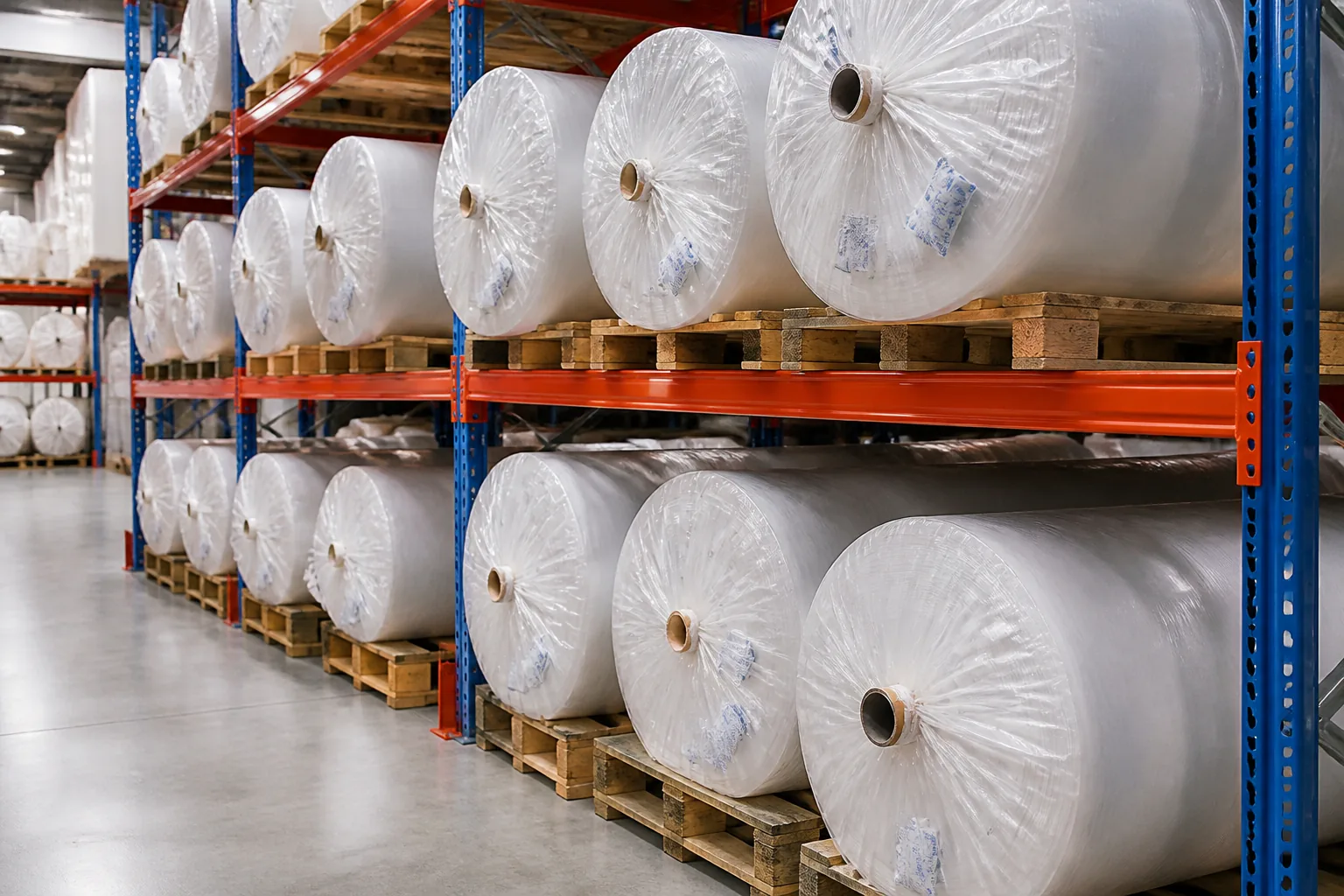
A treated material begins losing activity the moment it is produced, and the rate depends on how it is stored. A treatment that would have protected a bag for two years can be spent before the bag is packed if the roll sits damp in a warm warehouse.
Rolls of treated lining fabric stored on racking with desiccant and moisture-barrier wrapping
The Supplier Control Table
Control
Purpose
Declared active substance
Identifies the chemistry
Declared add-on
Sets the performance basis
Efficacy report
Evidence of activity
Durability report
Retention evidence
Handling requirement
Prevents degradation
Shelf life statement
Defines usable life
The Incoming Control Table
Check
Method
Identity
Label and article number
Add-on verification
Gravimetric or certificate
Moisture content
Measurement
Odour
Sensory check
Packaging integrity
Visual
Sample retention
Reference piece
The Storage Condition Table
Condition
Requirement
Humidity
Low and controlled
Temperature
Moderate and stable
Air circulation
Present
Direct sunlight
Avoided
Floor contact
Prevented
Pests
Controlled
The Packaging Table
Element
Function
Moisture barrier wrap
Blocks humidity
Desiccant
Absorbs residual moisture
Sealed carton
Physical protection
Labelling
Batch and date
Ventilation need
Reversed for high-barrier
Opening discipline
Reseal after use
The Shelf Life Table
Factor
Effect
Storage humidity
Faster loss
Storage temperature
Faster loss
Packaging quality
Slower loss
Add-on level
Higher lasts longer
Active type
Chemistry-dependent
Time in the finished bag
Adds to total age
The Finished Goods Table
Consideration
Practice
Moisture at packing
Verified before closing
Desiccant
Specified and present
Carton condition
Dry and intact
Container loading
Ventilation managed
Transit duration
Matched to protection
Destination climate
Considered in the plan
The Transit Exposure Table
Exposure
Mitigation
High ambient humidity
Desiccant in the carton
Day and night cycling
Ventilated loading
Long route
Higher add-on and better barrier
Multiple handling points
Intact barrier packaging
Delayed clearance
Dry storage at destination
Tropical discharge port
Prompt onward movement
Transit is the part of the chain a factory influences least and must plan for most carefully, because a container crossing several climate zones will condense moisture on the inside of the roof and drip it onto the top layer of cartons.
The Traceability Table
Question
Record
Which treatment was used?
Specification and batch
What add-on was applied?
Process record
How was it stored?
Warehouse log
When was it packed?
Production record
What was shipped?
Shipping record
Which claim applies?
Approved artwork
The Treatment Control Checklist
Specification
Item
Done
Organism of concern identified
☐
Components at risk listed
☐
Treatment family specified
☐
Add-on level specified
☐
Durability target stated
☐
Verification method defined
☐
Materials
Item
Done
Lining treated
☐
Foam treatment addressed
☐
Shell requirements reviewed
☐
Compatibility with finishes checked
☐
Sensory check performed
☐
Supplier declarations obtained
☐
Production
Item
Done
Bath concentration controlled
☐
Add-on measured per batch
☐
Drying within window
☐
Uniformity verified
☐
Line cleanliness controlled
☐
Hand-off to sewing dry
☐
Testing
Item
Done
Baseline efficacy tested
☐
Wash durability tested
☐
Retention compared to baseline
☐
Mould resistance assessed
☐
Results filed against the batch
☐
Compliance
Item
Done
Active substance permitted
☐
Claim wording approved
☐
Label wording approved
☐
Children’s limits checked
☐
Advertising copy reviewed
☐
Storage and Packing
Item
Done
Storage humidity controlled
☐
Barrier packaging used
☐
Desiccant specified and present
☐
Moisture checked before packing
☐
Shelf life recorded
☐
Batch traceability complete
☐
The Eight Rules
Rule
Reason
Treat every component at risk
Untreated foam becomes the growth site
Specify add-on, not just chemistry
Concentration decides performance
Control drying and packing moisture
Residual water defeats the treatment
Test durability, not only efficacy
Retention is the practical number
Write the durability target into the spec
Makes the claim checkable
Follow the care label in the test
The label and the test must agree
Control claim wording as carefully as material
The statement is regulated
Record storage conditions
Activity is lost in the warehouse
Manufacturer note: Treatment cost is usually measured at the point of purchase and forgotten at the point of storage. A treated roll that sits for six months in an uncontrolled warehouse has already spent part of the protection that was paid for, and the effect is invisible until the bag is unpacked in a humid market. Rotating stock, keeping the storage area dry, and recording the date the material entered the warehouse cost almost nothing and are the difference between a treatment that is present in the specification and a treatment that is still present in the product.
FAQ
What is the difference between an antimicrobial and an anti-mould treatment?
Antimicrobial is the broader term and covers activity against microorganisms, which includes bacteria, mould fungi, and yeasts, while anti-mould refers specifically to protection against fungal growth. In practice the distinction matters because the two problems have different causes and different consequences. Bacterial activity on a lining produces odour and staining during use, often driven by sweat and humidity from the wearer. Mould growth produces a musty smell and mottled staining, and it usually develops during storage or transit under warm and humid conditions. A treatment chosen for odour control is not automatically the best choice for storage mould, so the organism of concern should be named in the specification.
How long does a treated bag stay protected?
There is no single figure, because the effective life depends on the active substance, the add-on level, how the bag is washed, and how it is stored. The useful way to think about it is as a budget that is spent by three things: mechanical loss through washing and abrasion, chemical degradation from heat and light, and simple time in storage. A treatment applied at a low add-on and stored in a damp warehouse may be largely spent before the bag is sold, while the same chemistry at a higher add-on stored dry will still be active well into the product’s life. This is why a durability target belongs in the specification rather than being assumed.
Are antimicrobial treatments safe for children’s bags?
They can be, but children’s products attract stricter substance limits in most markets, and the treatment is an additional chemical in the article that has to be assessed against those limits. The considerations are the identity and approval status of the active substance, the possibility of skin contact through a lining or a strap, and any market-specific restriction on the substance class. Because the assessment depends on both the chemistry and the market, the treatment should be reviewed as part of the product’s compliance file rather than purchased on general availability. Where a restriction applies, an alternative chemistry or an alternative design that avoids the lining treatment may be the more practical route.
Does the treatment survive washing?
Partly, and how much depends on the mechanism. Treatments applied to the surface of a fabric are more vulnerable than those bound to the fibre or integrated into it, because surface deposits are progressively removed by mechanical action in the wash and by the action of detergents. Some chemistries are also deactivated by particular wash conditions, and fabric softeners can coat the active and reduce its effect while the substance is still physically present. The only way to quote a retention figure is to run the baseline test, apply the actual care cycle that will be printed on the label, and retest the same batch against the same organism.
Can we claim that our bags are antibacterial?
Only with care, and in some markets not in those words. Statements about controlling microorganisms are treated as regulated claims in several jurisdictions, and wording such as claiming that a product kills bacteria is usually reserved for authorised biocidal products rather than for treated articles. The safer practice is to describe the treatment factually, for example by stating that the lining contains a silver-based treatment or that the bag is treated to help reduce odour, and to support even that wording with a test report. The wording should be approved for the specific market before it appears on a label, a hangtag, or an online listing.
Why did a treated shipment still develop mould?
Because the treatment reduces the likelihood of growth rather than eliminating the conditions that cause it. Mould needs moisture, a suitable temperature, and something to grow on, and if a container carries residual moisture from an under-dried material, a wet packing process, or condensation during a temperature swing in transit, the treatment only slows what the environment is driving. The usual root causes are moisture at packing, unprotected foam or webbing that was never treated, and a long transit through a hot and humid route. Treating the material without controlling the moisture in the packed carton is the most common reason a treated programme still generates a claim.
Should the foam padding be treated as well as the lining?
In most programmes it should, because foam is an excellent reservoir for moisture and a large internal surface area that is difficult to dry once wet. A treated lining over an untreated foam block leaves the growth site in place, and the resulting odour arrives from inside the bag rather than from the surface the buyer is looking at. Foam is usually treated by adding the active to the foam mix rather than by a surface application, so it has to be specified with the foam supplier rather than added at the bag factory. Where a programme decides against treating the foam, the moisture management around it becomes correspondingly more important.
How should treated materials be stored at the factory?
Dry, moderate in temperature, out of direct sunlight, and off the floor. Treated material should be kept in its barrier packaging with the desiccant still in place, and the packaging should be resealed after a partial roll is used rather than left open. The warehouse should be ventilated and monitored, because a warm and humid store will consume part of the treatment’s effective life before the material is ever cut. Recording the date the material enters and leaves the warehouse makes it possible to see how much of the shelf life has been used, which matters when a programme’s destination is a humid market and the transit time is measured in weeks.
Conclusion
Antimicrobial and anti-mould treatments occupy a difficult position in a bag programme because the property they provide is invisible at every stage a factory normally inspects. The delivered material looks like the approved sample, and the finished bag looks like the shipment before it.
The difference only appears weeks later in a container or a warehouse, so everything that decides the outcome has to be written down and controlled rather than observed.
The control chain has four links. The first is scope: decide which components in the assembly are at risk, and treat the foam and the lining rather than the lining alone, because an untreated internal component becomes the growth site the treatment was bought to prevent.
The second is specification: name the organism of concern, the treatment family, the add-on level, the durability target, and the verification method, so that the requirement can be checked rather than asserted.
The third link is process control in the factory, which is where most treatment value is gained or lost. Bath concentration, pickup uniformity, drying within the window, and the moisture content of the material at packing are all within the plant’s control.
A low add-on applied unevenly and packed damp will underperform a correctly applied treatment regardless of which chemistry was purchased. The fourth link is durability testing run as a sequence: baseline, the actual care cycle that will be printed on the label, and a retest of the same batch against the same organism.
For factories, the return on this discipline is a defensible product in humid and long-transit markets, which are precisely the markets where untreated competitors generate claims.
For buyers, the practical questions are which components are treated, at what add-on, tested after washing to the labelled care, and described in wording that has been approved for the destination market. A supplier who can answer all four is selling a treatment that exists in the product. A supplier who cannot is selling a line in a specification.