
School Backpack vs Laptop Backpack vs Hiking Pack: Manufacturing Differences
Walk through a backpack factory and you will see packs that look nothing alike rolling off different production lines: bright, colorful school packs with cartoon prints; sleek, structured commuter bags with padded laptop compartments; and lightweight technical packs covered in straps, webbing, and compression cords. They are all called “backpacks,” but they share almost nothing in common on the factory floor.
Each category is engineered for a different user, a different load, a different environment, and a different price point. The materials are different. The construction is different. The hardware is different. Even the way they are sewn is different. For a buyer planning a new product line, understanding these differences is the difference between a product that sells and a product that fails in the field.
This guide examines the three dominant backpack categories from a manufacturer’s perspective: school backpacks, laptop/commuter backpacks, and hiking backpacks. We compare their design requirements, materials, manufacturing processes, quality standards, and cost structures — and explain how a factory actually produces each one.
- The Three Categories at a Glance
- School Backpacks: Built for Abuse at Low Cost
- Laptop and Commuter Backpacks: Protection and Organization
- Hiking Backpacks: The Engineering Challenge
- The Production Line Reality
- Choosing the Right Factory for Your Category
- Cost Structure Comparison
- Seasonal Production and Sourcing Planning
- FAQ
- Conclusion
The Three Categories at a Glance
Before diving into each category, here is the manufacturing-level comparison that drives everything else:
| Attribute | School backpack | Laptop/commuter pack | Hiking pack |
|---|---|---|---|
| Primary user | Children, students | Working adults | Outdoor enthusiasts |
| Typical load | 3–8 kg (books) | 4–10 kg (laptop + gear) | 10–20 kg (gear) |
| Key priority | Durability, price, comfort | Protection, organization, style | Weight, fit, weather resistance |
| Typical volume | 15–30 L | 18–30 L | 30–70 L |
| Shell fabric | 600D polyester | 420D–900D nylon/polyester | 210D–500D ripstop nylon |
| Frame structure | Soft, minimal | Semi-structured | Internal frame / suspension |
| Main zipper | #5–#8 | #8 | #8–#10 |
| Typical retail | $15–40 | $40–120 | $80–250+ |
| Manufacturing complexity | Low–medium | Medium | High |
Manufacturer’s note: When a client tells us “we want a backpack,” the first question is always which of these categories they mean. The production line, materials list, and cost model are so different that “just a backpack” is not a spec — it is a conversation starter.
School Backpacks: Built for Abuse at Low Cost
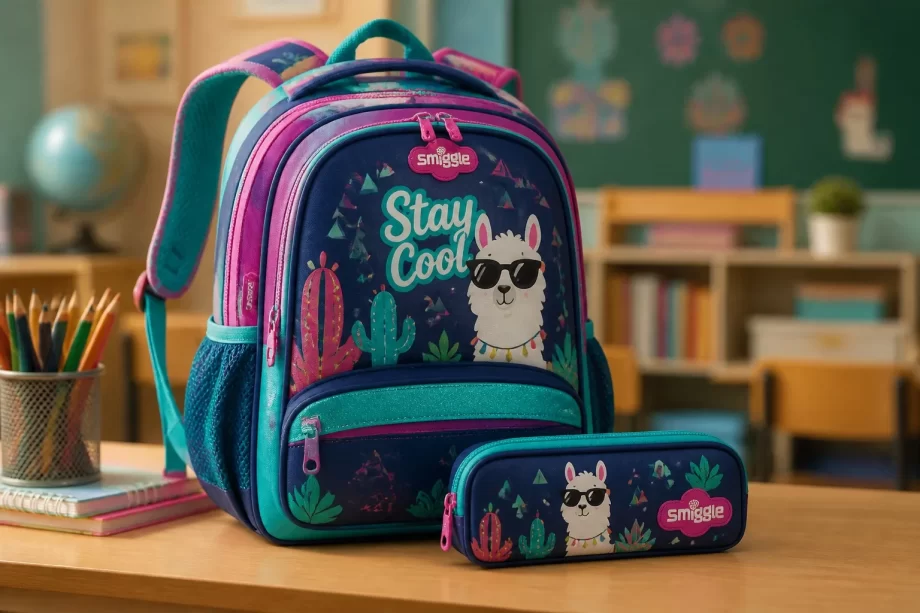
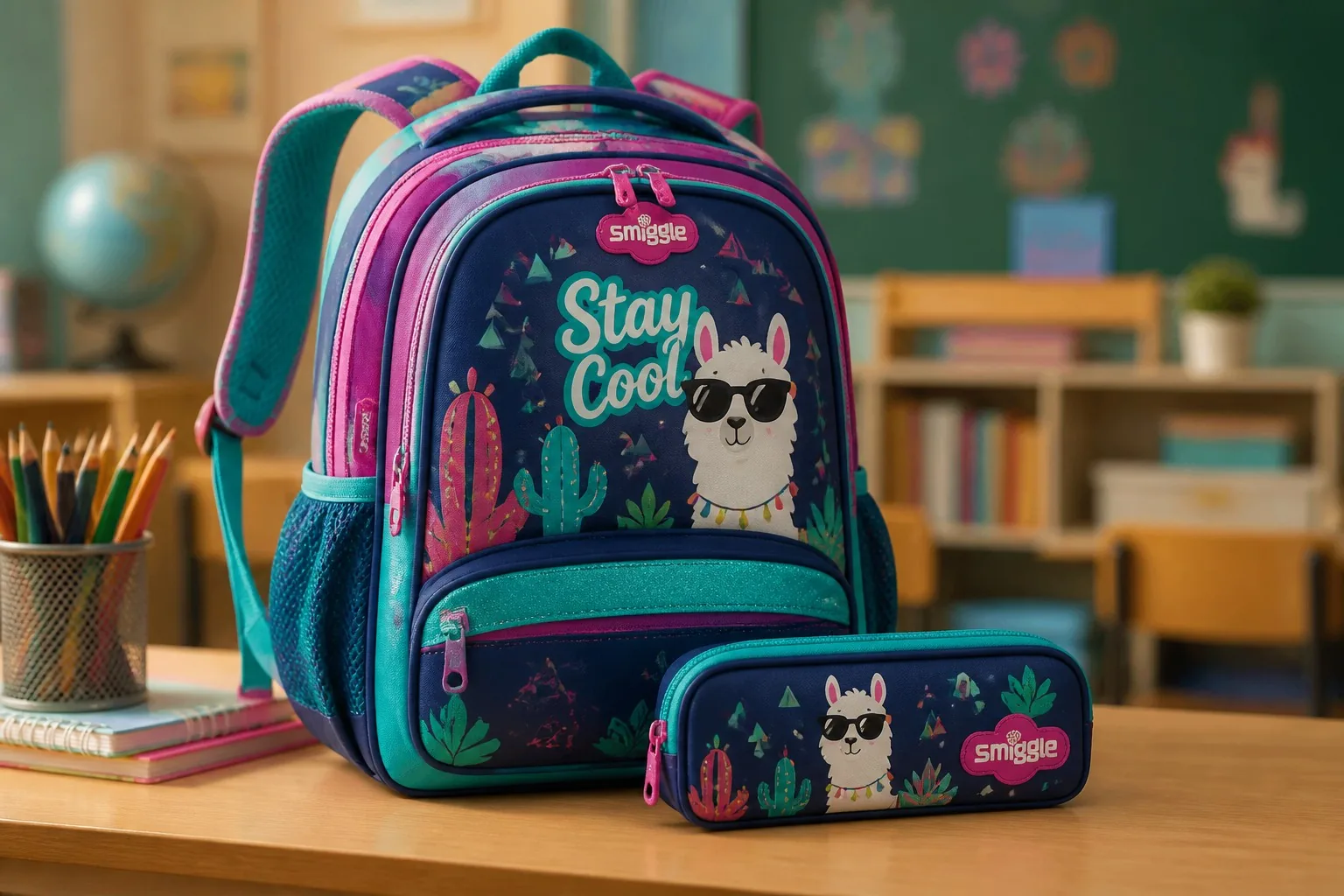
School backpacks are the volume champions of the industry. They are sold in enormous quantities every back-to-school season, at aggressive price points, and they take more physical abuse than any other bag category — thrown on floors, dragged through corridors, stuffed until the zippers strain, and used daily for a full school year.
The Design Brief
- Extreme durability at minimal cost — parents will not pay premium prices, but they will return a pack that fails mid-year.
- Bright colors and prints — the child’s choice matters more than the parent’s; color and character prints drive sales.
- Simple organization — a few compartments, a front pocket, and side mesh pockets for bottles.
- Comfort for small bodies — light padded straps, a simple back panel, and reasonable weight.
Materials and Construction
| Component | Typical spec | Why |
|---|---|---|
| Shell fabric | 600D polyester, PU coated | Best cost-to-durability ratio |
| Lining | 210D polyester | Low cost, adequate |
| Zippers | #5 coil | Standard, replaceable |
| Straps | 25 mm polyester webbing | Adequate for light loads |
| Back panel | Thin EVA foam | Comfort without cost |
| Hardware | Standard nylon buckles | Adequate for the load |
How School Packs Are Manufactured
School packs are optimized for production speed and low labor cost:
- Simple patterns — fewer panels and fewer seams than technical packs; many designs use one-piece front and back panels.
- Standard sewing — most seams are straight or gently curved, allowing fast operation on standard single-needle machines.
- Decorative elements — prints, embroidery, and patches are applied early (to flat panels) for efficiency.
- High-volume lines — a single line can produce 300–500 school packs per day with 15–25 operators.
The Quality Balance
The challenge in school packs is meeting durability expectations at a price point that leaves almost no margin for warranty claims. The critical quality controls are:
- Bar-tacking at stress points — strap attachments and handle bases must be reinforced.
- Zipper function testing — the most common failure on cheap packs.
- Load testing — a typical school pack spec is a 10–20 kg load test with no strap or seam failure.
Manufacturer’s note: The school pack market is where a factory earns or loses its reputation for value. A pack that survives one school year at a $15 retail price is a triumph of cost engineering. The winners control fabric cost, stitch density, and bar-tacking discipline simultaneously — miss any one and the returns eat the margin.
Laptop and Commuter Backpacks: Protection and Organization
The laptop backpack is the fastest-growing category in the industry, driven by remote work, urban commuting, and the universal need to carry a computer safely. This category is defined by two words: protection and organization.
The Design Brief
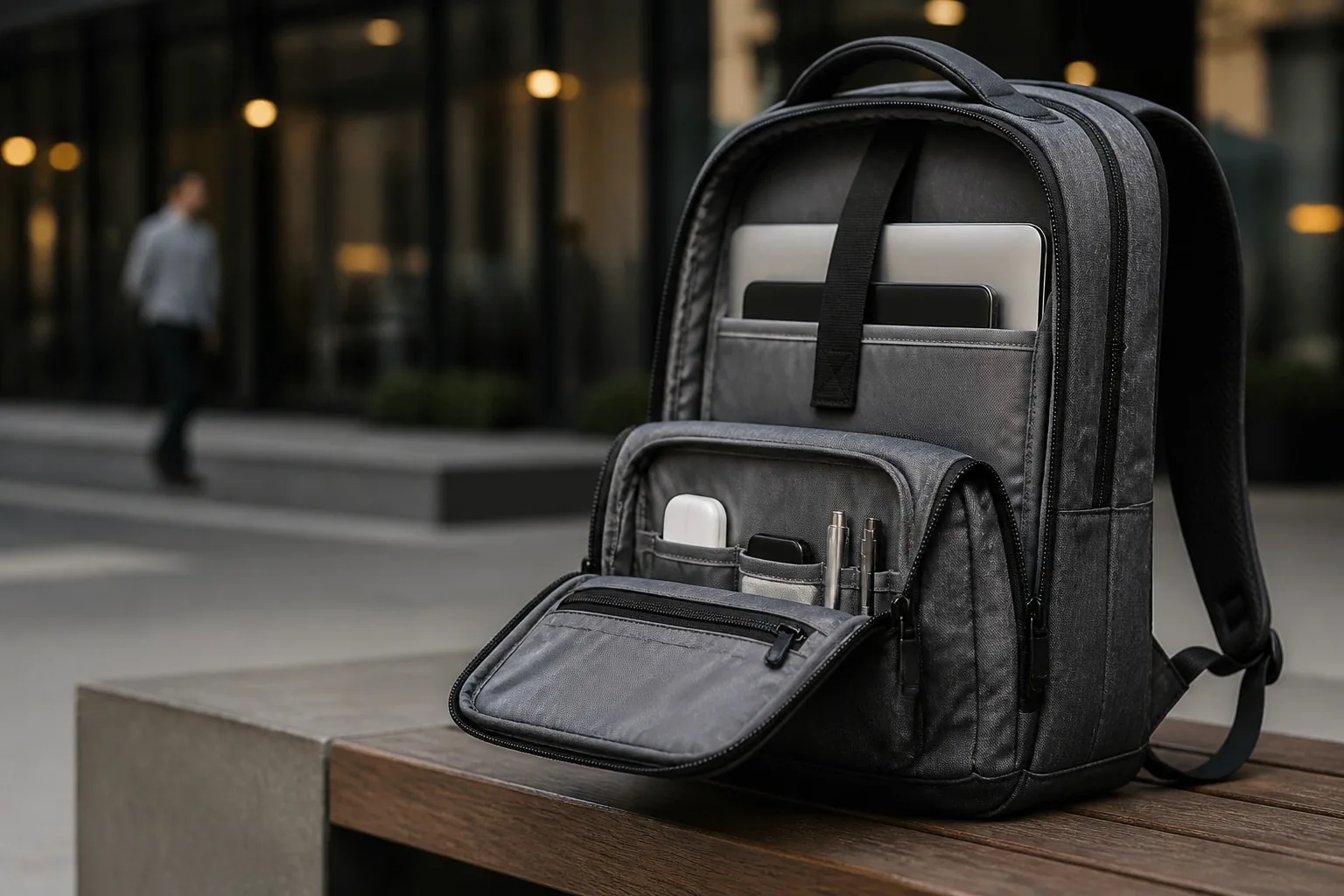
- Laptop protection — a dedicated, padded compartment that protects the device from impacts and weather.
- Organization — multiple compartments for chargers, cables, documents, and everyday carry items.
- Professional appearance — the pack is part of the work wardrobe; it must look clean and modern.
- Comfort for daily commuting — reasonable weight, padded straps, and a breathable back panel for urban walking and transit.
The Laptop Compartment: The Defining Feature
The laptop compartment is what separates this category from every other backpack. Getting it right involves several manufacturing details:
| Element | Specification | Why it matters |
|---|---|---|
| Padding | 10–20 mm EVA or foam on all sides | Impact protection |
| Suspension | The laptop sits off the bottom of the pack (raised floor) | Drop protection |
| Closure | Padded flap or zippered access | Security and dust protection |
| Sizing | Fits 13–17 inch laptops with sleeves | Compatibility |
| Back access | Some designs open from the back panel | Theft resistance while carrying |
Materials and Construction
| Component | Typical spec | Why |
|---|---|---|
| Shell fabric | 420D–900D nylon or polyester | Balance of weight, durability, appearance |
| Lining | 210D nylon or polyester | Durable, smooth |
| Padding | EVA foam 10–20 mm | Protection |
| Zippers | #8 with quality sliders | Daily use reliability |
| Back panel | Air-mesh over padded foam | Breathability for commuting |
| Hardware | Quality nylon buckles | Daily use reliability |
The Manufacturing Difference
Laptop packs are more complex to build than school packs:
- More sub-assemblies — the padded laptop sleeve, organizer panels, and back panel are each built separately, then installed.
- Layered construction — padding, mesh, and fabric are combined in specific sequences; foam must be positioned precisely to avoid lumps.
- Quality zipper installation — the main compartment zipper must run smoothly around corners; sloppy installation shows immediately.
- Finish standards — visible stitching quality, clean edges, and hardware alignment matter more because the pack is a professional accessory.
The Semi-Structured Design
Many laptop packs are semi-structured: they hold their shape rather than collapsing like a school pack. This requires:
- Fusible interlinings — stiffener materials fused to panels during heat pressing.
- Molded back panels — pre-shaped EVA or molded foam.
- Structured base — a stiffened bottom that lets the pack stand upright.
Commuter-Specific Features
The best laptop packs add commuter features that change the manufacturing spec:
- Luggage pass-through — a sleeve on the back that slides over a suitcase handle; requires careful placement so it does not interfere with the back padding.
- Water bottle pockets — stretch mesh or gusseted side pockets.
- Quick-access pockets — a top or front pocket for keys, phone, and transit cards.
- Hidden security pockets — a back-panel pocket against the wearer’s body.
Hiking Backpacks: The Engineering Challenge
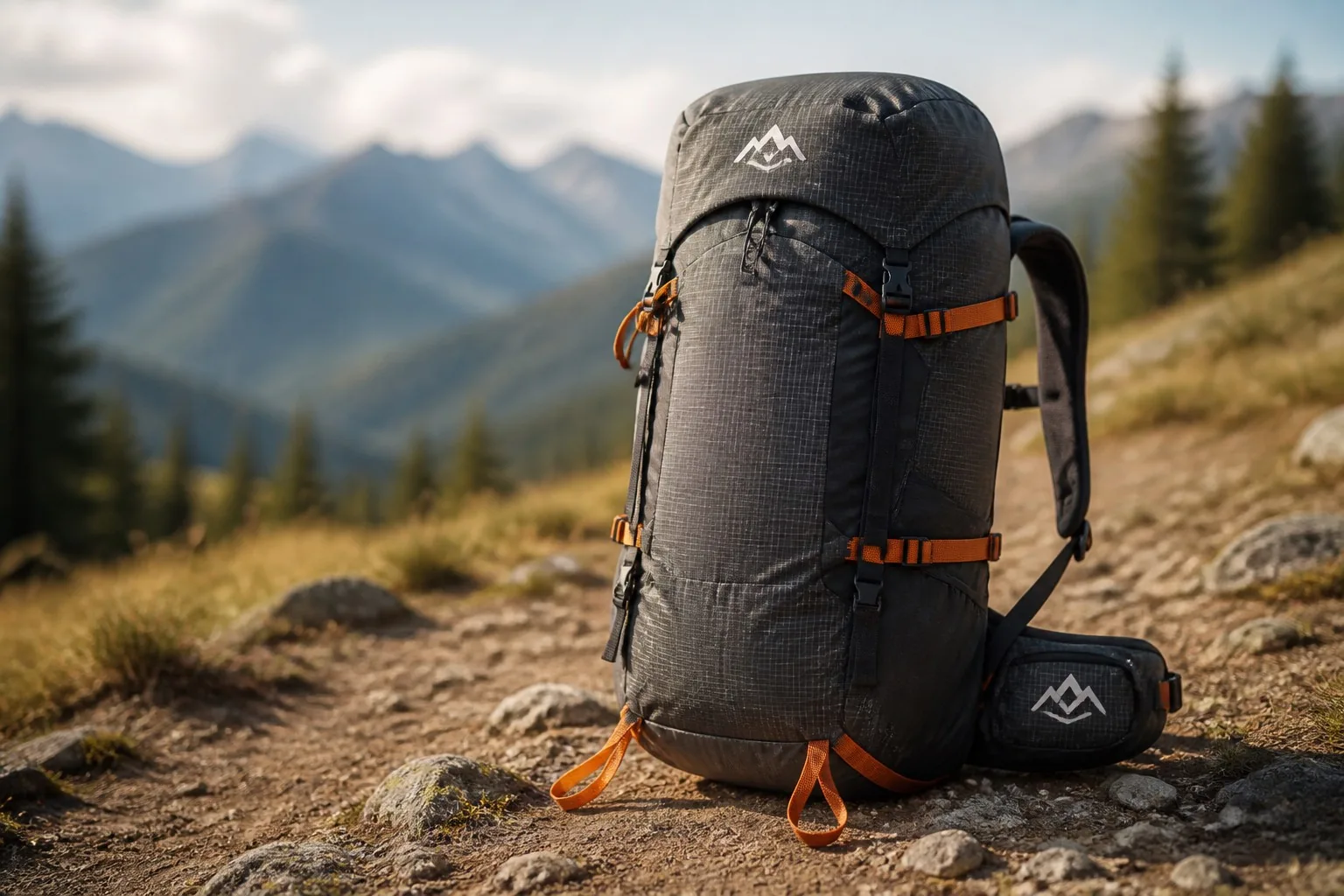
Hiking packs are the most engineering-intensive backpack category. They are built to carry heavy loads over rough terrain for hours or days, and the entire pack — not just the bag — is a load-carrying system.
The Design Brief
- Load transfer — the pack must transfer the load from the shoulders to the hips, where the body can carry it efficiently.
- Weight minimization — every gram matters when you carry the pack all day; lightweight construction is a selling point.
- Weather resistance — outdoor use demands genuine weather protection.
- Fit and adjustability — the pack must fit different torso lengths and adjust while moving.
- Access — top-loading, panel-loading, or hybrid designs each serve different hiking styles.
The Load-Carrying System
The defining feature of a hiking pack is its frame and suspension system:
| Component | Function | Manufacturing consideration |
|---|---|---|
| Internal frame | Stiffens the pack and transfers load to the hip belt | Aluminum stays or molded frame sheet |
| Hip belt | Transfers most of the load to the hips | Padded, adjustable, load-lifter straps |
| Shoulder straps | Secondary load path | S-curved, padded, adjustable |
| Load-lifter straps | Pull the top of the pack toward the body | Anchored to the frame |
| Torso adjustment | Fits different back lengths | Sliding or adjustable systems |
| Ventilated back panel | Reduces sweat buildup | Tensioned mesh over a frame |
Materials and Construction
| Component | Typical spec | Why |
|---|---|---|
| Shell fabric | 210D–500D ripstop nylon | Lightweight, strong, weather-resistant |
| Frame | Aluminum stays or HDPE frame sheet | Stiffness without excess weight |
| Padding | EVA foam, often with air channels | Weight + comfort balance |
| Webbing | 25–38 mm nylon | Strength for load-bearing straps |
| Hardware | Nylon/acetal mix, cold-tested | Reliability in all weather |
| Zippers | #8–#10 molded | Heavy-duty reliability |
The Manufacturing Difference
Hiking packs are the hardest to manufacture:
- Complex sub-assemblies — the hip belt, shoulder straps, and back panel are precision assemblies with multiple layers, channels for frame stays, and attachment points.
- Precise stitching — load-bearing seams need consistent stitch density and perfect tension; a failure here is a safety issue, not just a quality issue.
- Frame integration — the frame must align exactly with the load-lifter strap anchors and hip belt attachment points; misalignment destroys the load transfer.
- Tensioned back panels — ventilated back systems require the mesh to be mounted with correct tension.
- More hardware — compression straps, daisy chains, ice axe loops, and attachment points multiply the parts count.
The Testing Difference
Hiking packs are tested to higher standards because failure is dangerous:
- Load testing — packs are tested with 15–25 kg loads, and the hip belt and strap systems must hold.
- Abrasion testing — fabric must survive repeated contact with rock and trail surfaces.
- Weather testing — rain and immersion testing for weatherproof constructions.
- Field testing — the most credible hiking brands field-test packs in real conditions before release.
Manufacturer’s note: The hiking pack market is where a factory demonstrates its true engineering capability. The sewing skills, pattern complexity, and testing rigor required are an order of magnitude beyond school packs. When a brand claims “technical manufacturing,” the hiking pack is the proof.
The Production Line Reality
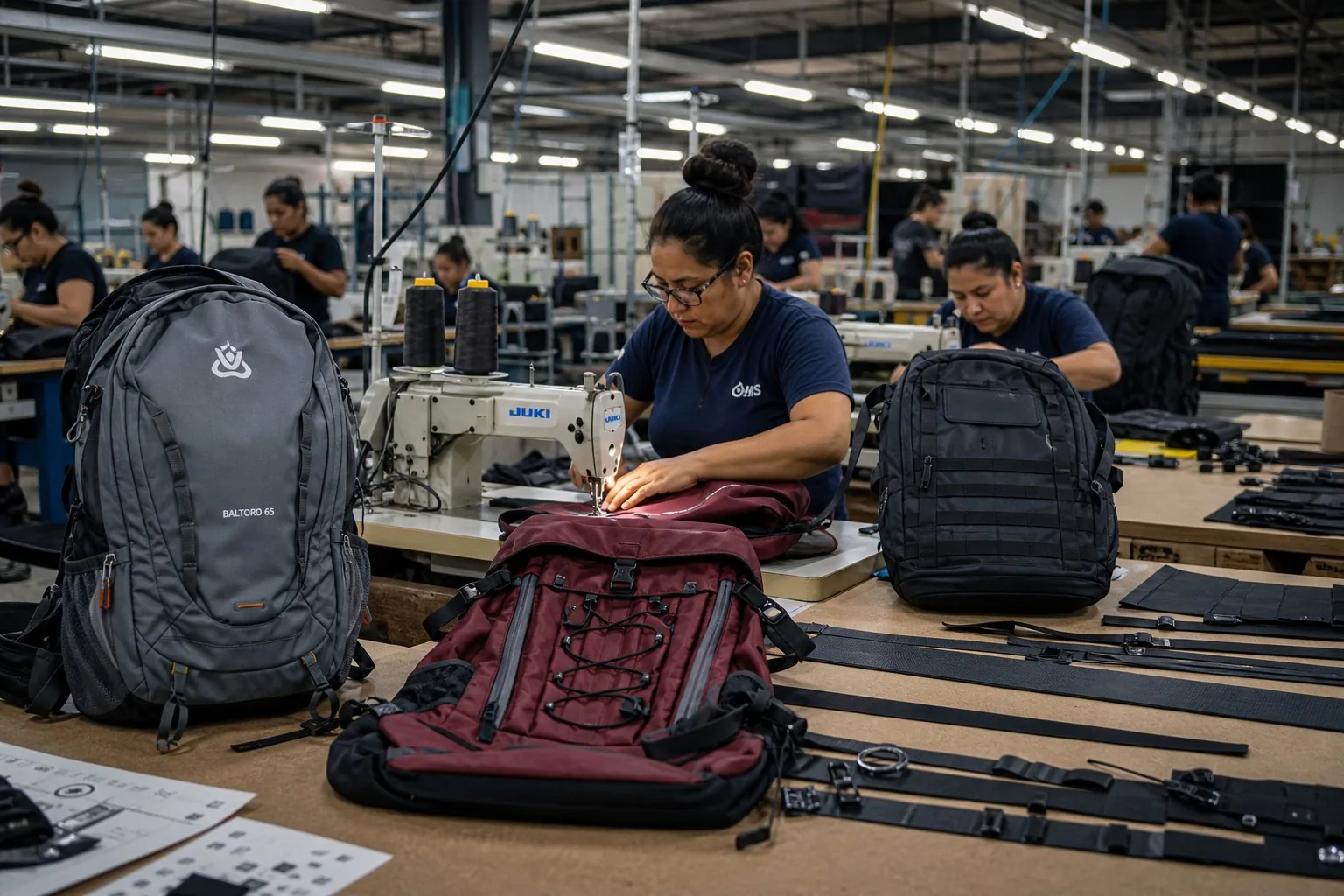
A factory producing all three categories runs them very differently. Here is what actually happens on the floor:
| Factor | School pack | Laptop pack | Hiking pack |
|---|---|---|---|
| Line speed | Fast (high volume) | Medium | Slow |
| Operators per line | 15–25 | 25–40 | 30–50 |
| Output per day | 300–500 units | 150–300 units | 80–150 units |
| Pattern complexity | Low | Medium | High |
| Sub-assemblies | 3–5 | 6–10 | 12–20+ |
| QC intensity | Medium | Medium-high | High |
| Rework tolerance | Low margin | Moderate | Critical |
Sharing the Factory
Most factories do not dedicate separate lines to each category permanently. Instead, they:
- Batch by category — run school pack orders in high-volume bursts, then reconfigure for hiking pack orders.
- Share core skills — the same sewing operators, cutting room, and QC systems serve all lines; the difference is in pattern prep, machine setup, and QC intensity.
- Cross-train operators — experienced operators move between lines; the best are assigned to technical products.
Why You Should Care About Line Configuration
For a buyer, the factory’s line configuration affects your order:
- Mixed orders — if you order school packs and hiking packs from the same factory, they will be produced in separate runs, which affects lead time.
- Capacity planning — the busiest season (back-to-school) competes with everything else; technical packs take more line capacity per unit.
- Skill availability — technical pack production needs skilled operators who are in short supply; this is a real lead-time constraint.
Choosing the Right Factory for Your Category
Different factories specialize differently. A factory that excels at school packs may not have the pattern skills for hiking packs, and a technical specialist may be uncompetitive on school pack pricing.
Factory Selection by Category
| Your category | Factory strengths to look for |
|---|---|
| School packs | High-volume capacity, aggressive cost engineering, print/embroidery capability |
| Laptop packs | Structured construction skills, clean finish quality, zipper installation skill |
| Hiking packs | Pattern engineering, load-bearing construction, testing capability, frame integration |
| Mixed portfolio | Balanced capability, multiple lines, cross-trained operators |
The Evaluation Questions
Before choosing a factory for your category:
- For school packs: What is your daily output per line? What is your bar-tacking standard? What load test do you run?
- For laptop packs: Show me a laptop compartment build — how is the padding installed? What zipper do you use on the main compartment?
- For hiking packs: Do you have a pattern engineer on staff? What load testing do you run? Can I see a hip belt assembly being built?
Manufacturer’s note: A common mistake is choosing a factory solely on the sample quality. Samples are hand-made with special attention. Ask instead about the production line, the testing, and the standards — those determine what 5,000 units will look like, not what one sample looks like.
Cost Structure Comparison
The manufacturing differences show up clearly in cost structure. Here is a representative breakdown per category (factory cost basis, 1,000-unit order):
| Cost line | School pack | Laptop pack | Hiking pack |
|---|---|---|---|
| Materials | $4.00–6.00 | $7.00–12.00 | $12.00–20.00 |
| Labor | $2.50–4.00 | $5.00–8.00 | $9.00–15.00 |
| Hardware | $1.50–2.50 | $2.50–4.00 | $4.00–7.00 |
| QC + packing | $0.80–1.50 | $1.20–2.00 | $2.00–3.50 |
| Typical factory cost | $9–14 | $16–26 | $27–45 |
The labor share tells the story: hiking packs cost 3–4× the labor of school packs because the construction complexity is that much higher.
Seasonal Production and Sourcing Planning
Each backpack category has its own demand cycle, and a smart buyer plans production around it. The calendar drives factory capacity, pricing, and lead times more than any other factor.
The Demand Calendar
| Category | Peak season | Why | Planning implication |
|---|---|---|---|
| School packs | May–August | Back-to-school buying | Order by March–April to secure capacity and avoid peak pricing |
| Laptop packs | August–October, November | Back-to-school + holiday gifting | Two peaks; split production across the year |
| Hiking packs | February–May | Spring/summer outdoor season | Order by January for spring launches |
Why Seasonality Matters to a Factory
- Capacity contention — back-to-school season (roughly May–August) is the busiest period for most bag factories. Orders placed late compete for the same line capacity and skilled operators.
- Pricing pressure — peak-season quotes are higher because factories prioritize volume orders; off-season orders often get better pricing and faster confirmation.
- Material lead times — fabric, webbing, and hardware suppliers also face seasonal demand; zipper lead times stretch in the pre-season months.
- Quality risk — rushing orders into crowded production schedules increases the risk of shortcuts and inspection gaps.
The Buyer’s Planning Checklist
- Reverse-schedule from your on-shelf date — count back: production time, inspection, shipping (30–40 days sea freight from Asia to Europe/US), customs clearance, and warehousing.
- Place fabric and hardware orders first — materials are the longest-lead items; locking them early protects the production window.
- Book production capacity — a confirmed production slot is worth more than a verbal agreement; get the production schedule in writing.
- Build in buffer — add 2–3 weeks of buffer for the first order with a new factory; sampling and process tuning always take longer than planned.
- Stagger deliveries — for a large seasonal order, consider splitting into two shipments rather than one container; this reduces risk and warehouse pressure.
Manufacturer’s note: The buyers who get the best prices and the most reliable deliveries are the ones who plan nine months ahead, not three. A factory can quote far more aggressively for a confirmed off-season slot than for a rush peak-season order. Seasonality is where patient planning turns directly into margin.
FAQ
Can one factory produce all three backpack types well?
Yes, but usually not with equal strength. Most factories have a core competency. The best approach is to match the factory’s specialty to your lead category, then test their capability on the others with small orders.
What is the biggest manufacturing difference between the three types?
Construction complexity and load engineering. School packs are simple volume products; laptop packs add structured padding and organization; hiking packs add a frame, suspension system, and load-bearing construction that must be engineered and tested to higher standards.
Which category has the highest quality-control requirements?
Hiking packs, because failure can be dangerous in the backcountry. Load-bearing seams, hip belt attachment, and frame integrity are safety-critical. Expect higher testing requirements and lower tolerance for defects.
How do I choose the right fabric for my category?
Match the fabric to the load and environment. School packs: 600D polyester for cost. Laptop packs: 420D–900D nylon or polyester with a padded compartment. Hiking packs: 210D–500D ripstop nylon for weight and strength. The fabric spec should always be written with the water column rating and test requirements.
Are laptop packs more expensive to manufacture than school packs?
Yes — typically 60–100% more at factory cost. The laptop compartment, organization panels, structured construction, and higher-quality hardware and zippers all add materials and labor.
What should I check when evaluating a factory for technical packs?
Ask about pattern engineering capability, load testing protocols, frame integration experience, and operator skill levels. Ask to see a hip belt or back panel assembly being built, and request load test reports from previous technical orders.
Conclusion
School backpacks, laptop backpacks, and hiking backpacks are three different products that happen to share a name. They serve different users, carry different loads, use different materials, and are built on very different production lines with very different cost structures.
For a manufacturer, the practical implication is that “backpack production” is really three separate capabilities: high-volume cost engineering, structured construction with clean finish quality, and technical load-bearing engineering. The best factories build all three, but even they run them as distinct operations.
For a buyer, the lesson is to define your category precisely before choosing a factory, materials, or price target. Know which of the three you are really making, match the factory to the category, and specify the details that matter for that product’s job — and your packs will be built right, priced right, and ready for their real-world test.
When you are ready to plan your next line, tell us which category you are entering and at what price point. Our team will walk you through the material spec, construction details, and factory setup that fit your product — and produce samples you can put through real abuse before you commit.