
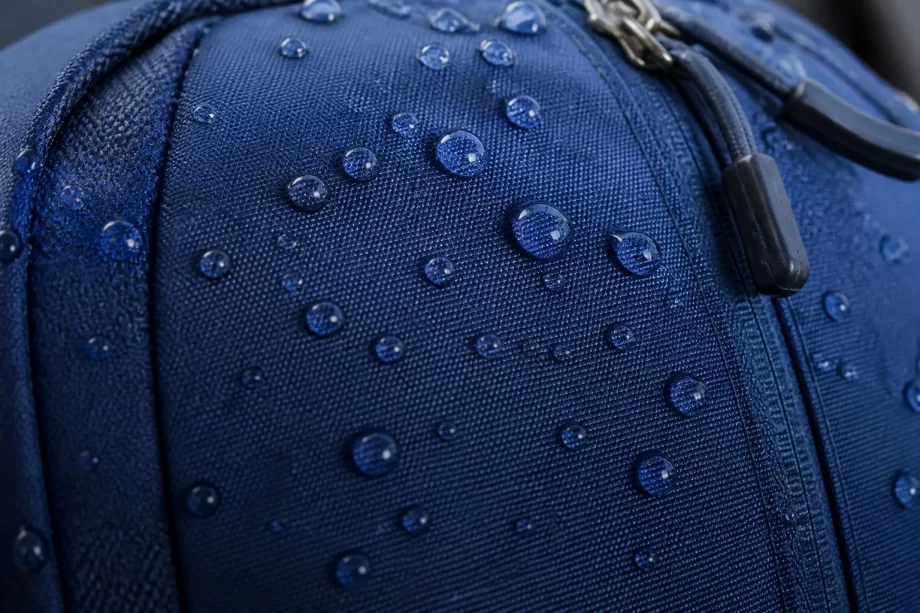
Waterproofing Backpacks: PU Coating, TPU Lamination and DWR Explained
Water is the quiet enemy of every backpack. It does not attack dramatically — it seeps through fabric seams, wicks up zipper tracks, and soaks into padding. By the time a commuter notices the damp laptop sleeve or the hiker finds a wet sleeping bag, the damage is done. That is why waterproofing is one of the most important — and most misunderstood — parts of backpack manufacturing.
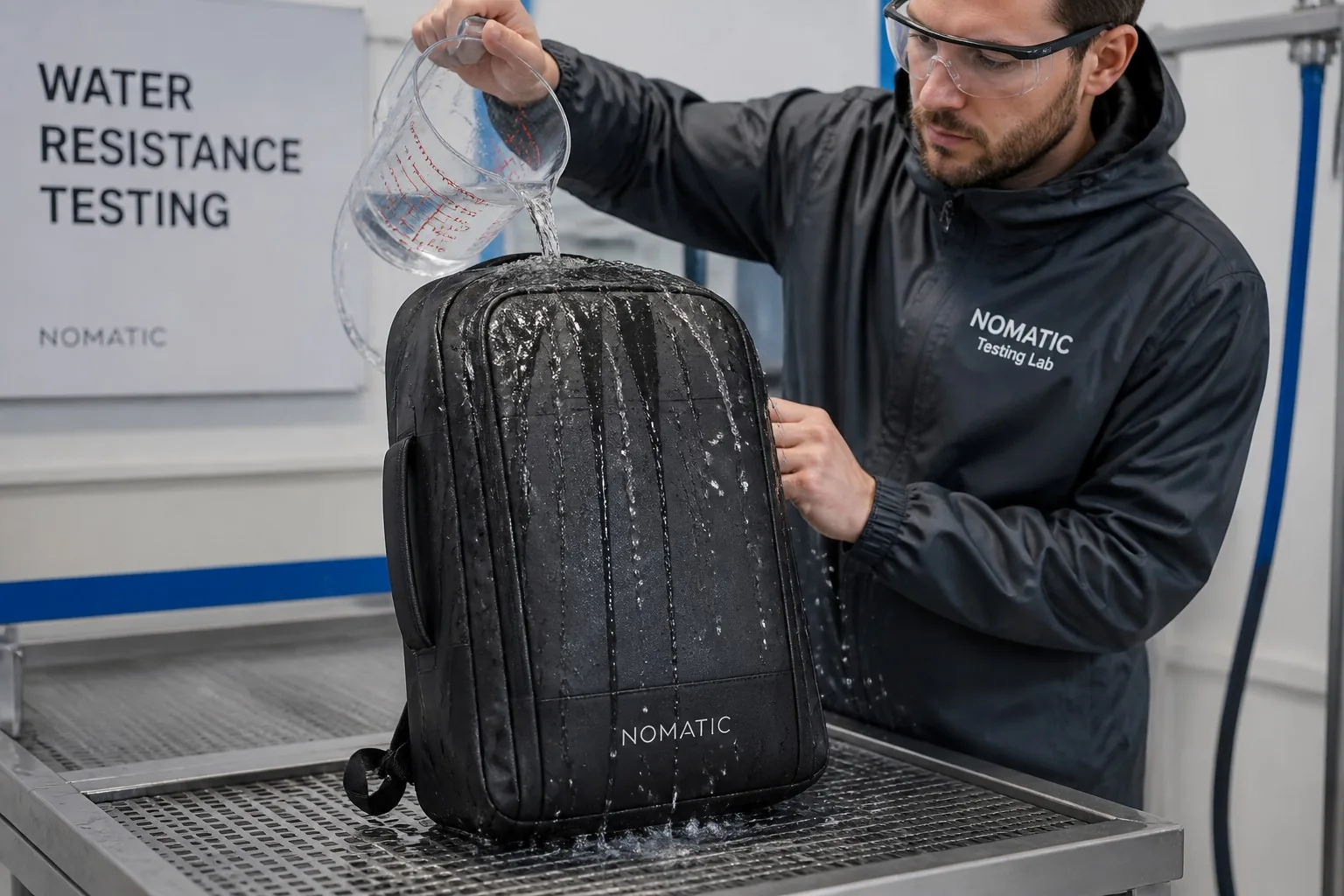
Ask ten buyers what “waterproof” means and you will get ten different answers. For some, it means surviving a light drizzle on the way to the office. For others, it means submerging a pack in a river crossing. These are completely different engineering problems, and they require completely different manufacturing solutions.
This guide explains, from a manufacturer’s perspective, the three main waterproofing technologies used in backpack production — PU coating, TPU lamination, and DWR treatments — how each one is applied on the factory floor, what performance levels they deliver, and how to specify waterproofing correctly for your product and market.
- The Waterproofing Vocabulary: Water-Resistant vs Waterproof
- PU Coating: The Workhorse Waterproofer
- TPU Lamination: The Serious Waterproofer
- DWR: The Surface Treatment
- Waterproofing the Whole System: Zippers, Seams, and Closures
- How to Test Waterproofing in the Factory
- Cost Structure: What Waterproofing Adds
- Choosing the Right Waterproofing for Your Product
- Common Waterproofing Mistakes (and How to Avoid Them)
- FAQ
- Conclusion
The Waterproofing Vocabulary: Water-Resistant vs Waterproof
Before comparing technologies, we need to agree on terms. The industry uses these words carefully, because they carry legal and marketing consequences:
| Term | Meaning | Typical test |
|---|---|---|
| Water-repellent | Water beads and rolls off the surface, but the fabric is not sealed | DWR spray test |
| Water-resistant | The fabric resists water penetration for a limited time and pressure | Hydrostatic head test at low ratings |
| Waterproof | No water passes through the fabric under specified conditions | Hydrostatic head test at high ratings + seam sealing |
| Submersible | The pack survives full immersion for a defined time and depth | IPX7 / IPX8 style testing |
Manufacturer’s note: The word “waterproof” is the most dangerous word in backpack marketing. A pack that is simply coated is not waterproof — water will find its way through seams, zippers, and stitch holes. When we quote a truly waterproof pack, the spec includes welded seams, waterproof zippers, and roll-top closures, not just coated fabric.
The three technologies we cover here operate at different levels of this spectrum. Understanding where each one sits prevents both under-specifying (returns and angry customers) and over-specifying (unnecessary cost and weight).
PU Coating: The Workhorse Waterproofer
PU (polyurethane) coating is the most common waterproofing method in the backpack industry. It is applied to the back of the fabric (the inside surface), forming a continuous film that blocks water from passing through the weave.
How PU Coating Is Applied
- Fabric preparation — the fabric is cleaned and dried to ensure the coating adheres evenly.
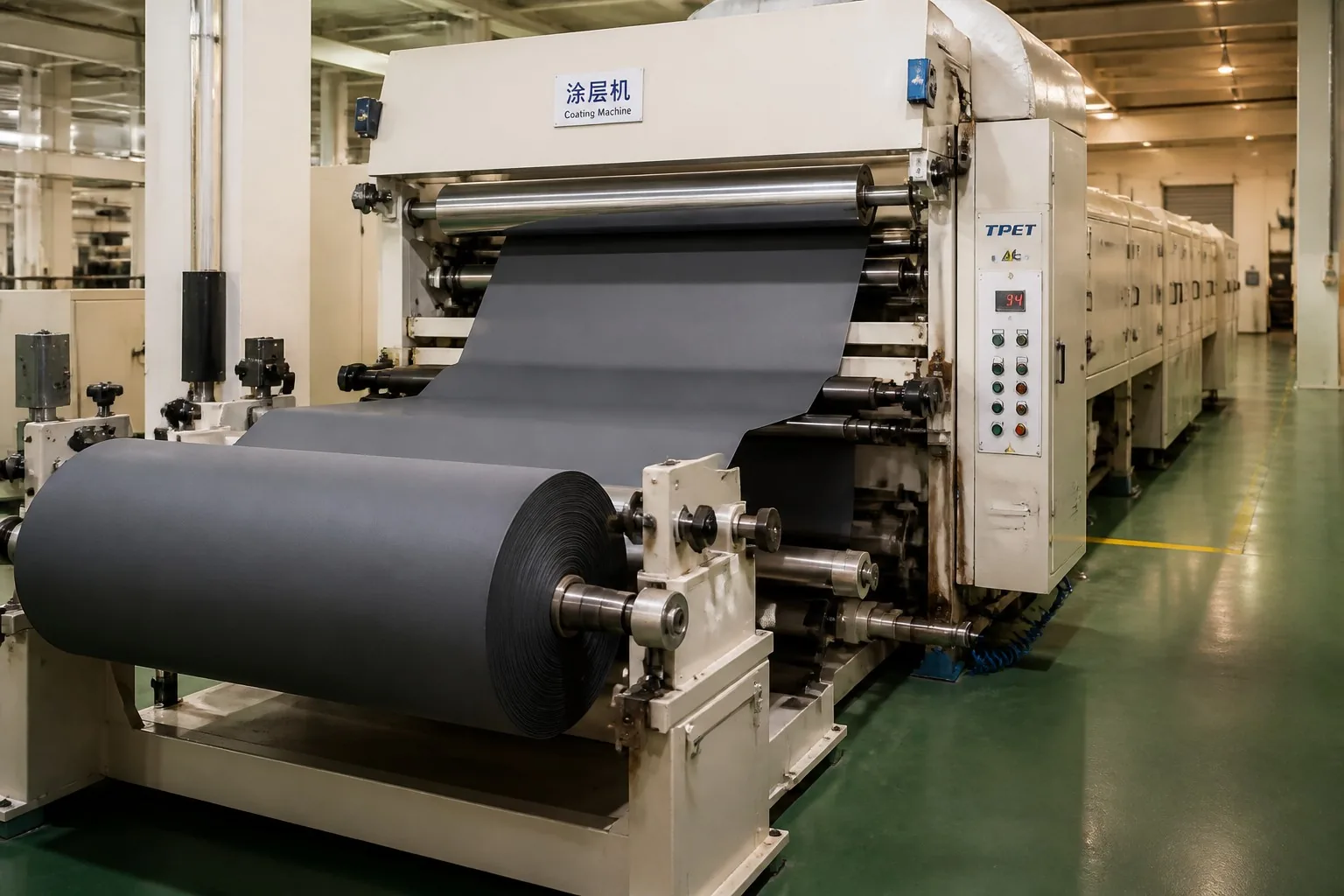
- Coating application — liquid polyurethane is applied to the back of the fabric using a knife-over-roll coater or transfer coating line. The coating is spread in a controlled thickness.
- Drying and curing — the coated fabric passes through heated drying chambers, where solvents evaporate and the PU film cures.
- Multi-pass application — higher performance coatings use multiple passes, building up thickness and closing pinholes.
- Final inspection — the coated fabric is checked for pinholes, uneven coverage, and adhesion failures.
Performance Levels
PU coating performance is measured by the hydrostatic head test (also called water column test): a column of water is pressed against the fabric, and the height at which water penetrates is recorded in millimeters.
| Coating grade | Water column rating | Typical use |
|---|---|---|
| Light PU | 300–1000 mm | Light rain, school packs, casual use |
| Standard PU | 1000–3000 mm | Commuter packs, moderate weather |
| Heavy PU | 3000–5000 mm | Outdoor packs, serious weather |
| Double-coated PU | 5000+ mm | Premium outdoor, technical packs |
Manufacturer’s note: A common specification mistake is ordering “PU coated fabric” without specifying the water column rating. That is like ordering “strong steel” without specifying the grade. Always write the rating into the spec — “600D polyester, PU coated, 3000 mm water column” — so the mill and the factory are measuring the same thing.
Advantages and Limitations of PU Coating
- Advantages: Low cost, flexible (does not stiffen the fabric much), fast to produce, widely available, can be combined with prints and colors on the face side.
- Limitations: The coating can degrade over time (hydrolysis in humid climates), it can crack with repeated flexing in cold weather, and it does not seal seams or stitch holes. PU-coated fabric is water-resistant, not waterproof.
Hydrolysis: The Hidden Degradation Risk
Polyurethane is vulnerable to hydrolysis — chemical breakdown in hot, humid conditions. A PU-coated pack stored in a humid warehouse for two years can develop a sticky, degraded inner coating even without use. Premium PU formulations use hydrolysis-resistant polyether PU rather than standard polyester PU. For long-life products, specify hydrolysis-resistant PU.
TPU Lamination: The Serious Waterproofer
TPU (thermoplastic polyurethane) lamination takes waterproofing to the next level. Instead of a thin liquid coating, a solid TPU film is bonded to the fabric under heat and pressure, creating a much stronger and more durable waterproof barrier.
How TPU Lamination Is Applied
- Film selection — a TPU film of specified thickness (typically 20–100 microns) is selected.
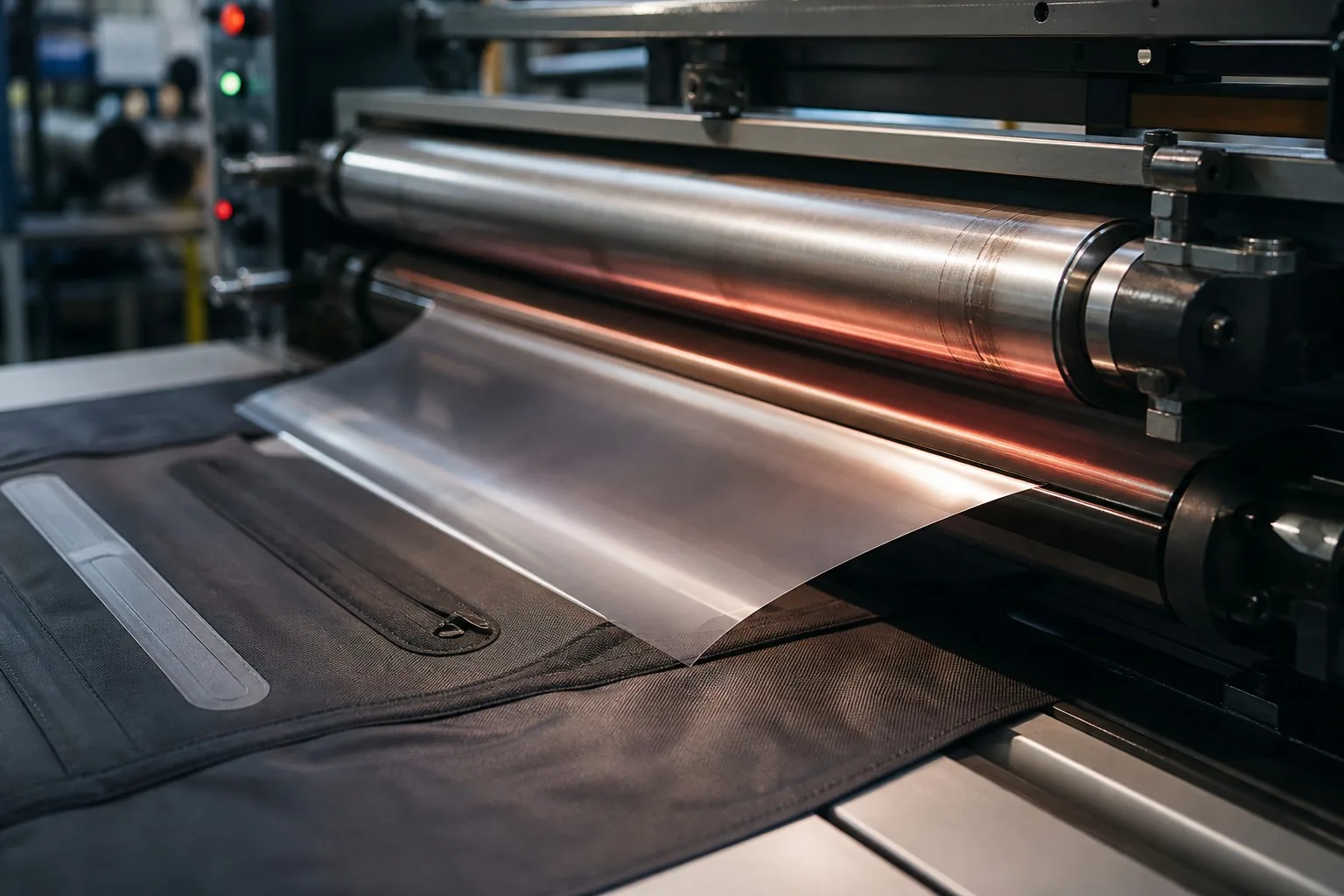
- Lamination — the TPU film is bonded to the fabric using a hot-melt adhesive or direct heat lamination process. The film and fabric pass through heated rollers under controlled pressure.
- Cooling — the laminated fabric is cooled to set the bond.
- Testing — the laminate is tested for bond strength and water resistance.
Why TPU Is Stronger Than PU Coating
- Barrier integrity — a continuous film is far more uniform than a liquid-applied coating; fewer pinholes, no thin spots.
- Bond strength — the film is physically fused to the fabric, resisting delamination under stress.
- Flexibility and cold performance — quality TPU films stay flexible at low temperatures and resist cracking.
- Weldability — TPU-laminated fabrics can be RF-welded or hot-air welded, meaning seams can be made waterproof too. This is the key difference: coated fabric can only be sewn (leaking at stitch holes), while TPU laminate can be welded into a genuinely waterproof structure.
The Critical Combination: TPU + Welded Seams
A truly waterproof pack is not just made of waterproof fabric — it is made waterproof. The combination that delivers real performance:
- TPU-laminated fabric for the shell
- RF-welded or hot-air welded seams (no stitch holes)
- Waterproof zippers (or roll-top closures)
- Taped or welded internal seam covers
- Waterproof construction at hardware attachment points
| Construction level | Fabric | Seams | Zippers | Result |
|---|---|---|---|---|
| Level 1: Drizzle-proof | PU-coated | Sewn | Standard | Water-resistant, fine in light rain |
| Level 2: Weather-proof | TPU-laminated | Sewn + seam tape | Water-resistant zippers | Survives sustained rain |
| Level 3: Waterproof | TPU-laminated | Welded | Waterproof zippers | Survives immersion, river crossings |
| Level 4: Submersible | Multi-layer TPU | Welded + reinforced | Waterproof + roll-top | IPX7+ rated, submersion safe |
Manufacturer’s note: When a client asks for a “waterproof” hiking pack, we first ask how it will actually be used. A pack that sits in a canoe all day needs Level 3. A pack that gets rained on during a summit push needs Level 2. A pack for a school commute needs Level 1. Specifying the right level saves clients 30–50% of the waterproofing cost.
DWR: The Surface Treatment
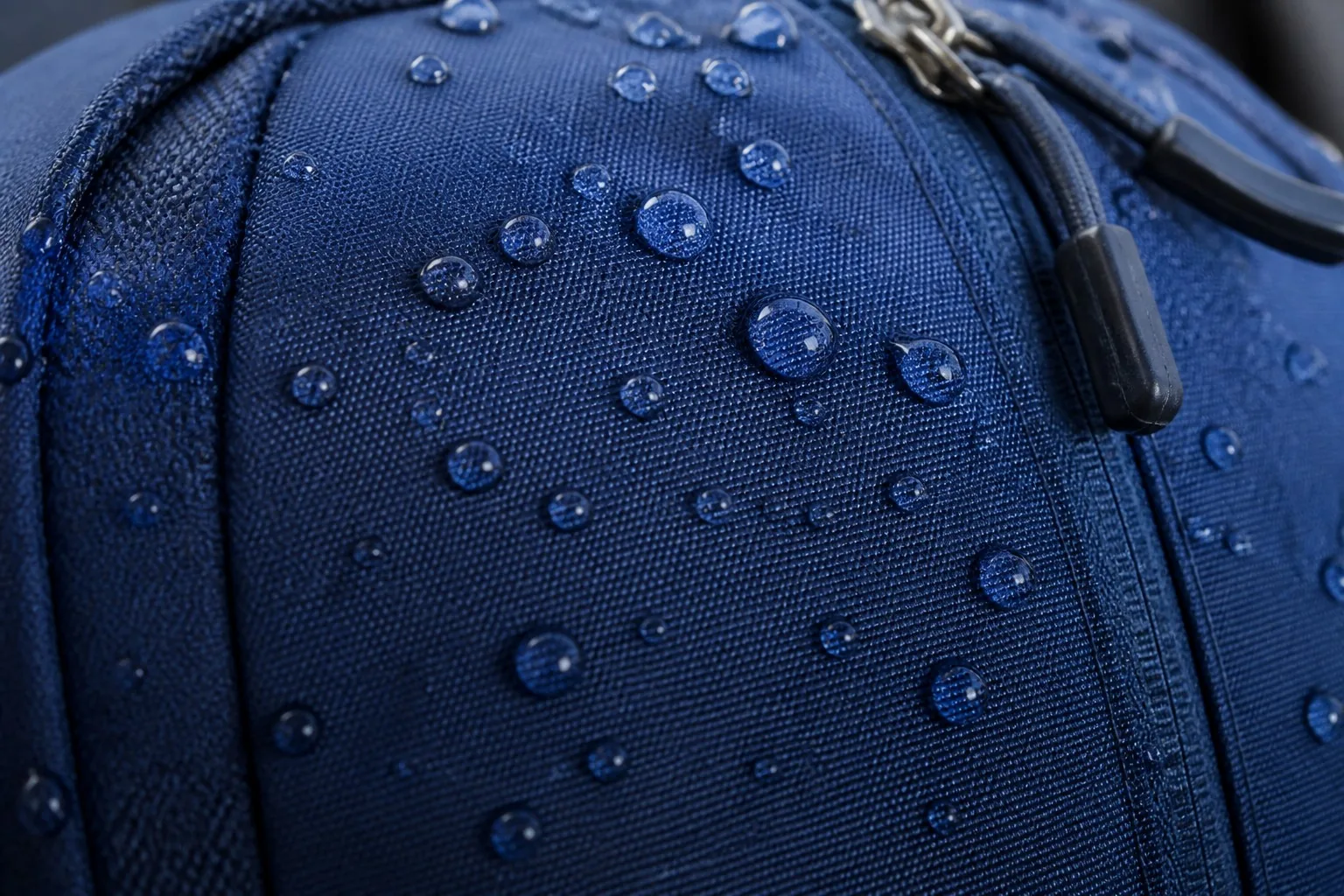
DWR (Durable Water Repellent) is not a waterproofing barrier at all — it is a surface treatment that makes water bead up and roll off the fabric instead of soaking in. DWR is applied to the face of the fabric and is often combined with PU coating or TPU lamination.
How DWR Works
DWR uses fluoropolymers or newer C6/C0 (fluorine-free) chemistries to create a low-surface-energy finish on the fabric face. Water droplets cannot wet the surface, so they bead up and roll off. This provides:
- Immediate water shedding — rain rolls off before it can soak in.
- Stain resistance — liquids bead instead of staining.
- Dirt resistance — less water means less dirt pickup.
- Breathability preservation — unlike coatings, DWR does not seal the fabric, so breathable constructions keep working.
The Durability Problem
DWR is not permanent. It wears off with use, washing, and abrasion:
- A typical DWR finish lasts 5–20 washes before needing re-treatment.
- Re-treatment sprays (Nikwax, Grangers, etc.) restore performance at home.
- C6 fluoropolymer DWR is more durable than C0 (fluorine-free) but is being phased out due to environmental regulations.
| DWR type | Durability | Environmental profile | Cost |
|---|---|---|---|
| C8 fluoropolymer (legacy) | Highest | PFAS concerns, banned in many regions | Low |
| C6 fluoropolymer | High | Restricted in some markets | Medium |
| C0 (fluorine-free) | Medium | PFAS-free, eco-preferred | Medium–high |
Manufacturer’s note: If your brand sells into the EU, check the current PFAS regulations before specifying DWR chemistry. The regulatory picture is changing quickly, and a C8 DWR could make your product non-compliant in key markets. C0 treatments are now good enough for most backpack applications.
Waterproofing the Whole System: Zippers, Seams, and Closures
Fabric is only half the waterproofing story. A pack with waterproof fabric and leaking zippers is not waterproof — it is just a slower leak. Here is what it takes to waterproof the complete system.
Waterproof Zippers
Standard coil zippers leak along the tape and through the teeth. Options for waterproofing:
- Water-repellent zippers — treated tape and coated teeth; resist water for a while but are not sealed.
- Waterproof zippers — PVC or TPU-covered zippers with sealed tape; genuinely waterproof when closed.
- Roll-top closures — the pack top rolls and clips shut, eliminating the zipper entirely; the classic drybag approach.
Seam Sealing
Every sewn seam punches holes through the fabric. Waterproofing the seams:
- Seam tape — waterproof tape bonded over the seam on the inside, covering stitch holes.
- Welded seams — for TPU laminates, seams are RF-welded or hot-air welded with no stitches at all.
- Sealed hardware attachment — straps and daisy chains attached with welded patches instead of stitched webbing.
Drainage and Venting Design
A well-designed waterproof pack also thinks about what happens when water does get in:
- Drain grommets — small drainage holes at the bottom of drybag-style packs let water escape if the pack is submerged.
- Dry compartments — a dedicated waterproof roll-top compartment inside a standard pack protects electronics without making the whole pack submersible.
- Ventilation — a waterproof pack traps moisture from sweat; back ventilation panels reduce interior condensation.
How to Test Waterproofing in the Factory
Testing is what separates a real waterproofing spec from a marketing claim. The standard tests:
Hydrostatic Head Test (Water Column Test)
The fabric is clamped under a water column, and pressure is increased until water penetrates. The result is recorded in millimeters (or PSI). This tests the fabric alone — not the finished pack.
Rain Test (Spray Test)
A finished pack is placed under a standardized rain spray (e.g., 100 mm/hour) for a set duration, then opened to check for water ingress. This is the most realistic test for rain exposure.
Immersion Test
The finished pack is submerged (often weighted) for a defined period (e.g., 30–60 minutes), then checked for internal water. This tests the full waterproofing system — fabric, seams, zippers, closures.
Flex and Aging Tests
Waterproofing fails faster under flexing and aging. Realistic testing includes repeated flexing of coated fabric, cold-temperature flexing, and accelerated aging (heat and humidity) before re-testing water resistance.
| Test | What it verifies | Typical standard |
|---|---|---|
| Hydrostatic head | Fabric barrier strength | ISO 811, JIS L1092 |
| Spray test | Surface repellency | ISO 4920 |
| Rain test | Finished pack performance | Internal protocols |
| Immersion test | Full system waterproofing | IPX7 / internal |
| Flex test | Coating durability | ISO 7854 |
Manufacturer’s note: Ask your factory for the actual test reports — not a verbal claim. A real waterproofing program has hydrostatic head certificates for the fabric and rain-test records for the finished pack. If a factory cannot produce these, the waterproofing has not been verified.
Cost Structure: What Waterproofing Adds
Waterproofing is a significant cost line. Here is what each level typically adds to a commuter pack:
| Waterproofing level | Added material cost | Added labor cost | Added weight |
|---|---|---|---|
| None (standard fabric) | — | — | — |
| PU coating (3000 mm) | $0.80–$1.50 | — | +40–80 g |
| DWR treatment | $0.30–$0.80 | — | +0–10 g |
| TPU lamination | $1.50–$3.50 | — | +60–150 g |
| Waterproof zippers | +$1.00–$3.00 | — | +20–60 g |
| Seam sealing / welding | +$0.50–$2.00 | +$1.00–$3.00 | +10–30 g |
| Full Level 3 system | +$4.00–$9.00 | +$1.50–$4.00 | +150–300 g |
The cost stack is real, which is why matching the waterproofing level to the actual use case matters so much commercially.
Choosing the Right Waterproofing for Your Product
A practical decision framework, based on product type:
| Product | Recommended waterproofing | Why |
|---|---|---|
| School backpack | PU coating 1000–3000 mm | Drizzle protection at low cost |
| Commuter / laptop pack | PU 3000 mm + DWR | Laptop protection in daily weather |
| Urban fashion pack | PU 1000 mm + DWR | Occasional rain, aesthetic priority |
| Hiking daypack | PU 5000 mm or TPU + DWR | Sustained rain, moderate weight |
| Technical / expedition pack | TPU lamination + welded seams + waterproof zippers | Real weather protection |
| Drybag-style | TPU laminate, roll-top, welded | Immersion protection |
The Specification Checklist
When you write the waterproofing spec for your next order, include:
- Water column rating for the fabric (e.g., 3000 mm)
- Coating type (PU, hydrolysis-resistant PU, TPU)
- DWR chemistry (C6 or C0) and durability expectation
- Zipper waterproofing level
- Seam treatment (sewn + tape, welded, or none)
- Test requirements (hydrostatic head, rain test, immersion)
- Environmental compliance (PFAS status for the target market)
Common Waterproofing Mistakes (and How to Avoid Them)
After years of manufacturing packs for brands across the world, we see the same waterproofing mistakes repeated. Each one costs money, time, or customer trust. Here is what to watch for.
Mistake 1: Claiming “Waterproof” for a Coated Pack
The most expensive mistake in the industry is marketing language outrunning engineering. A PU-coated pack with sewn seams and standard zippers is water-resistant, not waterproof — but if the label says waterproof, the customer will test it in the worst rain they can find, and the pack will fail. Returns, refunds, and negative reviews follow. Match the claim to the tested performance level, or build to the claim.
Mistake 2: Specifying Coating Without a Rating
“PU coated” tells a mill almost nothing. Different mills apply different coating weights, and two fabrics both labeled “PU coated” can perform completely differently in a hydrostatic head test. Always specify the water column rating (e.g., 3000 mm) and require test certificates. This single habit prevents most coating-related disputes.
Mistake 3: Forgetting That Zippers and Seams Leak
Even a perfect waterproof fabric is useless if water enters through the zipper and seams. A manufacturer that waterproofs only the fabric has done half the job. The full system — zippers, seams, hardware attachments, and closures — must be designed for water resistance at the same level as the fabric.
Mistake 4: Ignoring the Destination Climate
A coating that performs well in a temperate climate can fail in the tropics or a humid coastal market. Hydrolysis-resistant PU matters for hot, humid regions. Cold climates demand flexible coatings that do not crack at low temperatures. And if the pack will be stored in a warehouse for months before sale, coating durability under storage conditions matters too. Specify for the destination, not just the design sketch.
Mistake 5: Skipping Independent Verification
A factory’s own test reports are useful, but they are not independent. For waterproofing claims that matter to your market, use third-party testing (SGS, Intertek, Bureau Veritas, or an accredited lab) for the key performance claims. The cost is small compared to a container of returns.
Compliance: The Growing Regulatory Layer
Waterproofing chemistry is increasingly regulated, and the rules are tightening:
- PFAS / fluoropolymers — C8 DWR is banned or restricted in the EU and several US states; C6 is under pressure. For EU-bound products, C0 (fluorine-free) chemistry is the safe default.
- Chemical declarations — buyers increasingly request REACH, Proposition 65, and similar compliance documentation covering the coating and DWR chemistry.
- Labeling rules — some markets restrict the use of the word “waterproof” without defined test standards. Check the labeling requirements for each destination market.
Manufacturer’s note: The regulatory picture changes faster than most sourcing teams track it. Before locking a waterproofing spec for a new market, ask your factory or a compliance partner to confirm the current chemical and labeling requirements. A spec that was compliant last year may not be this year.
FAQ
What is the difference between water-resistant and waterproof?
Water-resistant means the fabric resists water penetration for a limited time and pressure (a PU coating, for example). Waterproof means no water passes through under specified conditions — which for a complete pack requires waterproof fabric, sealed seams, and waterproof zippers, not just coated fabric.
Is PU-coated fabric waterproof?
No. PU-coated fabric is water-resistant — it stops water soaking through the fabric itself, but water still enters through seams, stitch holes, and zippers. For real waterproofing you need TPU lamination or coating combined with welded seams and waterproof zippers.
What does “3000 mm water column” mean?
It is the hydrostatic head rating: the height of a water column (in millimeters) the fabric can withstand before water penetrates. 3000 mm is a solid standard rating for commuter and light outdoor use; 5000 mm+ is serious weather protection.
Why does my DWR-treated pack get wet after a few washes?
DWR is a surface treatment that wears off with washing and use. It can be restored with a DWR re-treatment spray. If you need permanent water resistance, rely on the coating (PU/TPU), not the DWR.
Can a sewn backpack ever be truly waterproof?
Not with ordinary sewn seams — every stitch hole is a leak path. A truly waterproof pack needs welded seams (RF or hot-air welding of TPU laminate), waterproof zippers or roll-top closures, and sealed hardware attachment. That is why waterproof packs are built differently, not just coated.
Do I need to worry about PFAS regulations for DWR?
Yes, especially for the EU market. C8 fluoropolymer DWR is being phased out, and C6 is restricted in some regions. Specify C0 (fluorine-free) DWR or verify compliance for your target markets before production.
Conclusion
Waterproofing is a system, not a single treatment. PU coating delivers affordable water resistance for everyday packs. TPU lamination, combined with welded seams and waterproof zippers, delivers genuine waterproofing for serious conditions. DWR handles surface repellency and sheds the first wave of rain before the barrier system takes over.
The right choice depends on the product’s real use: a school pack needs drizzle protection at minimal cost, while an expedition pack needs a fully welded waterproof system. The manufacturers who win are the ones who specify precisely, test honestly, and match the waterproofing investment to the product’s actual job.
When you are planning your next line, bring us the use case, target markets, and price point. We will help you select the right waterproofing level — with test reports to back it up, and samples you can pour water on yourself before committing to production.