Solvent Recovery on Coating Lines: When Does It Pay for Itself?
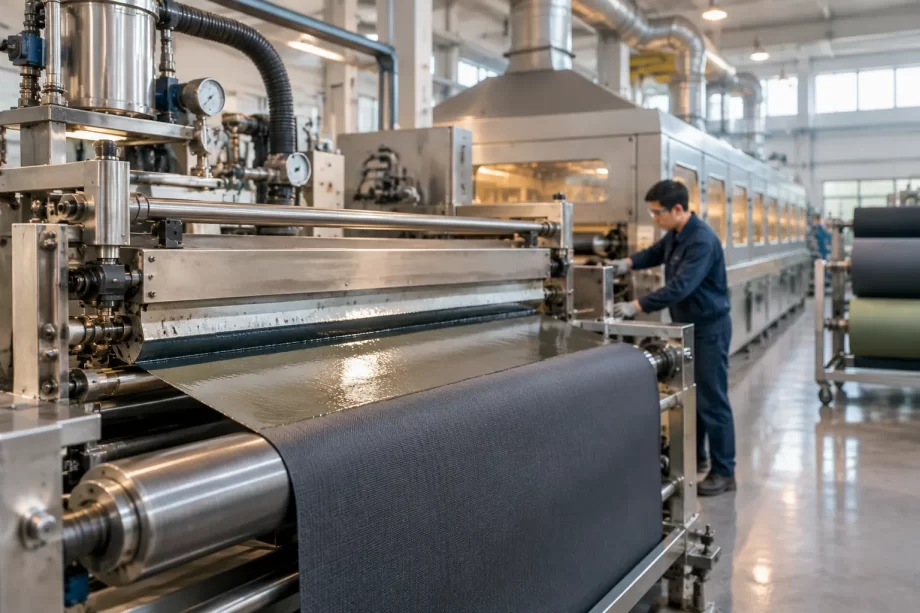
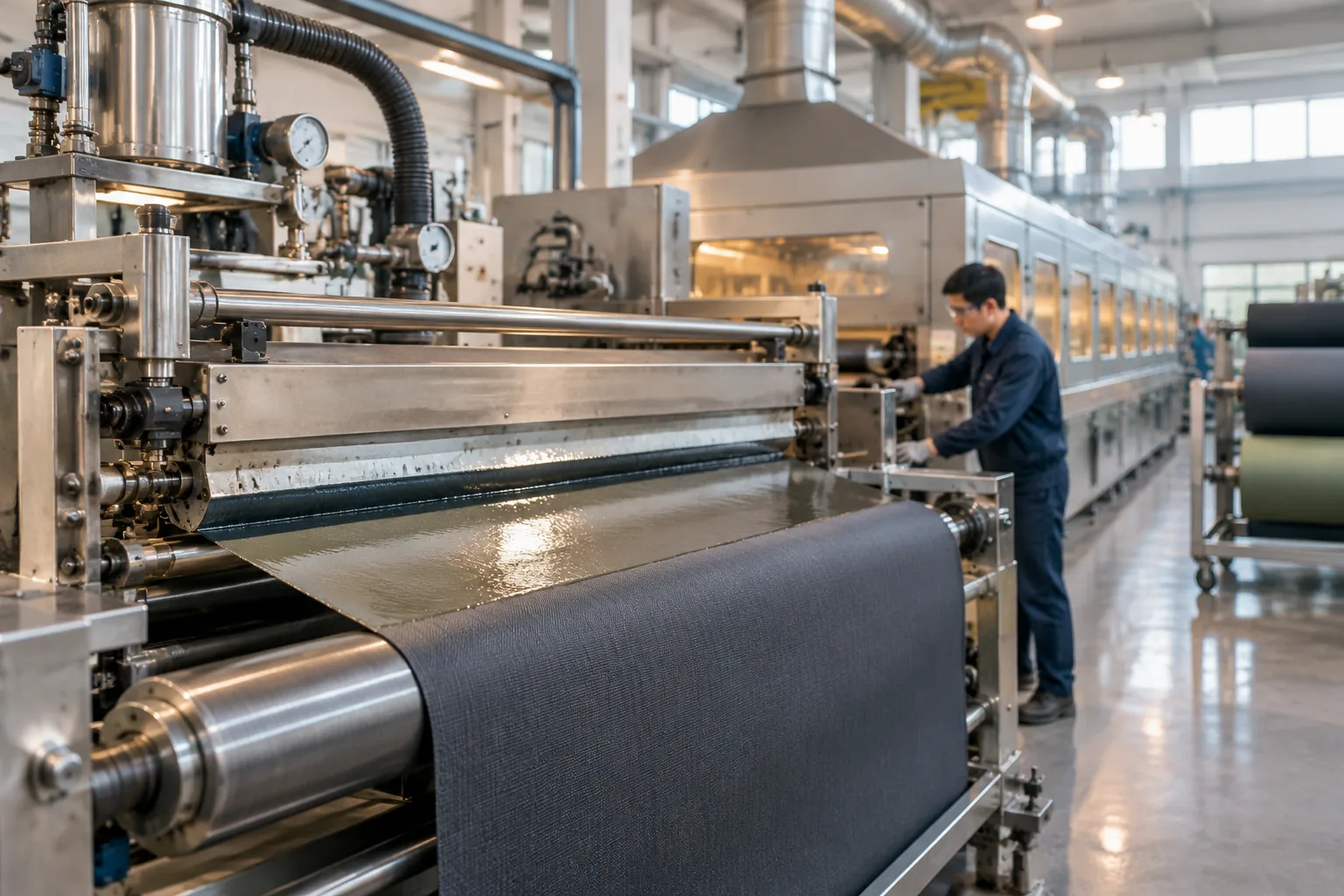
A coated backpack shell looks like a textile product. In cost terms it is often a solvent product with a fabric core. When a solvent-borne polyurethane is applied to a 420D or 600D nylon as a thin wet film and then dried, the resin solids stay on the cloth and everything else leaves through the oven stack as vapour. On a typical direct-coating recipe the solids content sits between thirty and forty-five percent, which means that for every hundred kilograms of wet coating the plant buys, more than half is a material whose only function is to evaporate.
That vapour is not free. It was purchased at the drum, it is purchased again next month, and in most plants it is never measured — so the largest controllable material loss on the line is invisible in the cost sheet that the costing department actually reviews. Meanwhile the permit that allows the plant to emit it has become one of the harder documents to renew, and brand questionnaires have started asking for a solvent mass balance with the same seriousness they once reserved for restricted substances.
This article treats solvent recovery as a capital allocation problem rather than an environmental statement. It follows the solvent from the coating head to the stack, sets out what each recovery route can and cannot do with the exhaust a backpack plant actually produces, builds a payback model that survives a finance review, examines what recovered solvent does to adhesion and coating weight on the finished bag, and lists the operating hazards that turn a good feasibility study into a bad insurance claim.
The manufacturer’s view: a recovery plant is a distillation business bolted onto a coating business. It earns money on the difference between what solvent costs and what it costs to clean, and it loses money the moment the recovered liquid is not good enough to put back in the drum.
Where the Solvent Actually Goes
Every credible recovery project starts with a measured mass balance, and the balance rarely matches the intuition of the people who run the line. Solvent leaves a coating line through at least five distinguishable paths, and they differ in concentration by more than an order of magnitude. Concentration, not total volume, decides which technology is economic.
The coating head itself loses a small but pungent share: solvent evaporating from the pan, from the return trough, and from the wet film between the applicator and the oven entrance. The first oven zones carry the highest concentration because the film is wettest there and the evaporation rate peaks. Later zones hold progressively less, and the final zones are mostly hot air with a low solvent load. Cooling, edge trimming, roll changes and colour-change cleaning add intermittent slugs of heavily contaminated solvent that behave nothing like the steady oven stream.
| Exhaust stream | Share of solvent load | Typical concentration | Recovery difficulty | Practical route |
|---|---|---|---|---|
| Coating head and pan | 3 to 8 percent | 0.2 to 1 g per cubic metre locally | Low value, high hazard | Local extraction into the main duct, never into a recovery bed |
| Oven zones one and two | 45 to 60 percent | 5 to 15 g per cubic metre | Low, because concentration is high | Dedicated duct to condenser or to a dedicated adsorber |
| Oven zones three and four | 30 to 40 percent | 1 to 3 g per cubic metre | Moderate | Carbon adsorption, ideally after the first-stage duct is split off |
| Cooling, trim and roll changes | 2 to 5 percent | 0.3 to 1 g per cubic metre | Moderate | Shared carbon bed with the low-concentration stream |
| Cleaning and colour change | 3 to 8 percent, in bursts | 2 to 8 g per cubic metre, intermittent | High, because solids and mixed chemistry | Small separate condenser, never mixed into the main recovery batch |
Two conclusions follow from that table and both of them surprise first-time buyers. The first is that splitting the oven exhaust into a high-concentration stream and a low-concentration stream is usually worth more than any choice of recovery technology. A plant that treats twenty thousand cubic metres an hour of diluted air pays for equipment sized on air volume; a plant that treats four thousand cubic metres an hour of concentrated air pays for equipment sized on solvent, which is a fraction of the price for the same recovered tonnage. Ducting and fan work is cheap compared with adsorbers, and it is the single most common reason one factory’s payback is three years and its neighbour’s is eight.
The second is that cleaning solvent should not be poured into the recovery loop. Colour-change washes carry pigment, resin skins and incompatible solvents, and a distillation column fed with that mixture produces an off-specification cut that contaminates the whole batch. Keep it separate, treat it as hazardous waste or run it through a dedicated small still.
Three Solvent Families and Why They Behave Differently
The chemistry of the solvent decides the hardware, and backpack coating lines use three families with three different sets of problems.
- Aromatic hydrocarbons such as toluene and xylene are the easiest to recover. They are water-immiscible, they desorb readily from carbon with steam, they separate from the condensate by gravity, and they distil cleanly. They are also the family under the heaviest regulatory pressure, which is why many lines have been reformulated away from them.
- Ketones and esters such as methyl ethyl ketone, acetone, ethyl acetate and butyl acetate dominate modern low-aromatic recipes. They recover well but they are not chemically inert on a carbon bed: ketones can oxidise on activated carbon and generate heat, and a bed that is allowed to sit loaded and warm is a fire waiting for a maintenance window. Esters hydrolyse slowly in the presence of water and heat, which shows up as rising acidity in the recovered drum.
- Water-miscible amides such as dimethylformamide and N-methylpyrrolidone are used in the highest-performance PU systems, and they are the hardest to handle. They cannot be stripped economically from a humid air stream onto carbon, because water competes for the same sites. They are recovered by condensation or by water absorption followed by distillation, and they hydrolyse to an amine and an acid when water and heat are present together, which attacks the plant and produces an odour that neighbours notice before the lab does.
A solvent that mixes with water changes the whole project. With toluene the plant separates two liquids in a decanter; with dimethylformamide the plant separates one liquid from water by distillation, and pays for the energy difference every hour it runs.
Why the Oven Is Both the Problem and the Opportunity
A drying oven is designed to remove solvent, and it does that job by moving a large volume of heated air across the film. That design logic is what makes recovery expensive: the oven dilutes a valuable liquid into a very large gas stream, and every subsequent device has to handle the gas stream rather than the liquid.
There are three legitimate ways to reduce that dilution before spending money on recovery hardware. Reduce the air volume per zone to the minimum that still keeps the film below the lower explosive limit and still dries at line speed. Recirculate part of the exhaust back into the middle zones where the dew point permits it. And split the ducting so that the concentrated first-stage stream is treated on its own. All three require a drying trial and a solvent-in-air survey rather than a purchase order, and all three change the size of the equipment that is eventually bought.
Four Routes, and What Each One Actually Costs
There is no universal best technology; there is only a best fit for a given concentration, flow, solvent mix and operating calendar. The four routes below cover almost every coating line in the bag industry.
Thermal Oxidation
Thermal oxidation destroys solvent instead of recovering it. The exhaust is preheated and held at roughly 750 to 850 degrees Celsius for long enough that the hydrocarbons become carbon dioxide and water. A regenerative thermal oxidiser recovers most of that heat through ceramic media, which is why it dominates compliance-driven installations.
The economics are simple and brutal. Oxidation converts a material worth around a thousand dollars a tonne into heat and a permit number. It becomes self-sustaining at concentrations that vary with the calorific value of the mixture, commonly somewhere between one and three grams per cubic metre, and below that the plant burns supplemental fuel continuously. Its advantage is total reliability: destruction efficiency above ninety-nine percent, no recovered product to test, no distillation operator, no quality disputes. For a line whose solvent load is too small or too dilute to recover, oxidation is the correct answer, and pretending otherwise wastes capital.
Activated Carbon Adsorption
Adsorption is the workhorse of solvent recovery in the coating industry, and it works because activated carbon preferentially holds organic vapour and releases it when steam is passed through the bed. In practice the exhaust passes through one or more beds until the carbon approaches breakthrough, the bed is switched to desorption, steam drives the solvent off, and the steam-solvent mixture is condensed and decanted.
Recovery rates of eighty-five to ninety-five percent are achievable on a well-designed bed with a stable solvent mix and dry air. Working capacity is typically in the range of eight to twelve grams of solvent per hundred grams of carbon per cycle, which sets the bed mass, the steam demand and the cycle time. Three constraints decide whether it works in a given plant: humidity, because water occupies sites that solvent would otherwise use; solvent chemistry, because ketones need temperature monitoring and inerting discipline; and batch consistency, because a bed tuned for ethyl acetate does not deliver the same performance when the recipe flips to a toluene blend mid-week.
The distillation step behind the bed is where most of the operating cost and nearly all of the quality problems live. A simple batch still produces a wet, slightly acidic, slightly coloured cut. A properly specified plant has a fractionation column, a decanter for water-immiscible solvents, a vacuum capability for heat-sensitive amides, and a residue handling route for the high-boiling fraction that accumulates at the bottom.
Condensation
Condensation recovers solvent by cooling the exhaust below its dew point, either with a refrigerated chiller or with liquid nitrogen for cryogenic duty. It is chemically gentle, produces no contaminated carbon, needs no steam, and suits high-concentration streams extremely well.
Its limitation is physics. The amount of solvent that can be condensed from a gas stream falls steeply as the concentration falls, so condensation is economic on streams above roughly twenty to fifty grams per cubic metre and increasingly hopeless below five. That makes it a natural fit for nitrogen-blanketed dryers, for high-solids coating where the exhaust is rich, and for the first-stage duct of a split oven. It is also the standard route for dimethylformamide lines, usually in combination with a water scrubber, because carbon is not a realistic option for a water-miscible solvent.
Absorption and Hybrid Systems
Water absorption, sometimes called a scrubber, dissolves water-miscible solvent out of the exhaust into a circulating water loop. Capture can be high, but the output is a dilute aqueous solution that must be concentrated by distillation, and the energy bill for that distillation is the real cost of the project. For amide-based coating the combination of a scrubber and a vacuum distillation train is often the only compliant and economic route.
Hybrid designs take the best stage of each technology. A condenser removes the bulk of a rich stream, a carbon bed polishes what remains, and a single distillation train serves both. Capital is higher and the control system is more demanding, but the recovered yield per tonne of solvent purchased is the highest available, and large plants with variable recipes usually end up there.
| Route | Works best at | Recovery rate | Relative capex | Dominant operating cost | Fate of the solvent | Fit for a backpack coating line |
|---|---|---|---|---|---|---|
| Thermal oxidation | Above 1 to 3 g per cubic metre | None, destruction | Medium to high | Supplemental fuel, electricity | Destroyed | Compliance fallback when recovery is not economic |
| Carbon adsorption | 0.8 to 8 g per cubic metre, dry air | 85 to 95 percent | Medium | Steam, carbon replacement | Recovered liquid | Default for aromatic and ester blends |
| Condensation | Above 20 to 50 g per cubic metre | 60 to 90 percent | Medium | Refrigeration power | Recovered liquid | Rich first-stage ducts, nitrogen-blanketed ovens |
| Water absorption | Water-miscible, high load | High capture, dilute output | Low to medium | Distillation steam | Dilute solution | Amide lines only, always with distillation |
| Hybrid condenser plus carbon | 2 to 20 g per cubic metre | 90 to 97 percent | High | Mixed | Recovered liquid | Large multi-recipe plants |
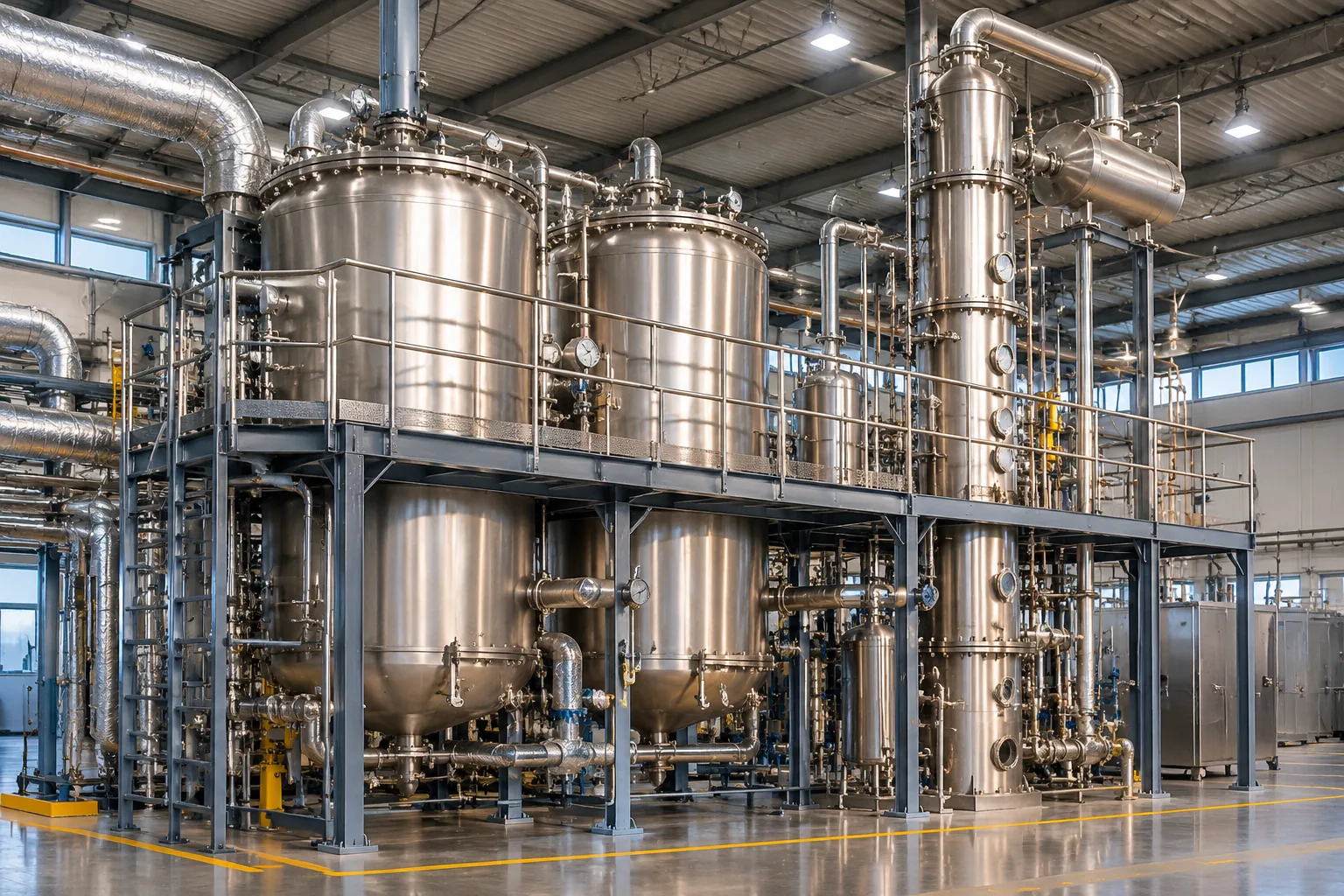
Buying an adsorber without buying the still behind it is the most expensive mistake in this field. The bed captures solvent; only the still turns it into something the coating kitchen can use.
The Numbers That Decide It
Feasibility arguments fail for a predictable reason: they are made with the solvent price and the vendor’s recovery guarantee, and nothing else. A payback model that a finance committee will accept needs six inputs, and all six have to come from the plant’s own records rather than from a brochure.
The Six Variables
- Recoverable solvent load per year. Wet coating weight multiplied by solvent fraction, multiplied by annual production, adjusted for capture efficiency. Measure it from coating consumption records rather than design figures.
- Concentration in the stream to be treated. The single most powerful variable. It decides whether the equipment is sized on air or on solvent, and therefore whether the project is viable at all.
- Solvent purchase price. The plant’s own invoice price, per solvent, averaged over twelve months including freight and duties. Prices move; a model built on a peak month is a model that will be wrong in a year.
- Value of the recovered material. Not the purchase price: the purchase price minus the cost of purification, minus the discount for the grade the recovered solvent actually achieves, minus the share that cannot be reused and must be sold or disposed of.
- Operating cost. Steam or fuel for desorption and distillation, electricity for fans and refrigeration, carbon replacement, maintenance, laboratory testing, and the incremental operator hours the plant will genuinely need.
- Avoided cost. Disposal or incineration fees for the solvent that used to be wasted, the fuel no longer burned in an oxidiser, and where the jurisdiction allows it, the value of avoided emissions.
A Payback Formula You Can Defend
The core arithmetic is short enough to put on one slide, which is exactly what a capital committee wants.
- Annual solvent purchased, in tonnes = wet coating tonnes × solvent fraction
- Annual solvent recovered, in tonnes = annual purchased × capture efficiency × recovery efficiency
- Gross annual benefit = recovered tonnes × net value per tonne + avoided disposal and fuel cost
- Net annual benefit = gross benefit − steam, power, carbon, labour and maintenance
- Simple payback, in years = total installed capital ÷ net annual benefit
Two refinements separate a credible model from an optimistic one. First, run the calculation with the recovered solvent valued at the grade it will actually reach in the first year of operation, not the grade promised after optimisation. Second, include a ramp: recovery plants rarely hit their design yield in month one, and a model that assumes full performance from commissioning will miss its own forecast by a full season.
A Worked Example
Consider a line coating 7,500 square metres of fabric a day at a wet add-on of 100 grams per square metre, on a recipe with 35 percent solids, running 300 days a year.
- Wet coating per day: 750 kilograms. Solvent per day: 488 kilograms. Annual solvent: about 146 tonnes.
- At a purchase price of 1,100 US dollars per tonne, the plant buys roughly 161,000 dollars of solvent a year and, without recovery, loses nearly all of it up the stack.
- Overall recovery of 85 percent, combining capture and bed performance, returns about 124 tonnes.
- Valued at the purchase price less a 12 percent quality and purification discount, that recovered material is worth about 120,000 dollars a year.
- Steam at five kilograms per kilogram of solvent, priced at 25 dollars per tonne of steam, costs about 15,500 dollars. Electricity at a quarter of a kilowatt hour per kilogram costs about 3,100 dollars. Carbon, consumables and laboratory work add around 8,000 dollars, maintenance and spares around 10,000, and half an operator 6,000.
- Net annual benefit: roughly 77,000 dollars, before any credit for avoided oxidiser fuel.
- Against an installed capital cost in the order of 300,000 dollars for ducting, two beds, a chiller, a batch still and the civil work, simple payback lands near four years.
That is a real number, and it is also a marginal one. Change two assumptions and the project dies: drop the solvent price to 800 dollars a tonne and the payback stretches past five years; halve the concentration in the treated stream, so that the equipment is sized on air rather than on solvent, and the capital rises faster than the benefit. This is why the first deliverable of any recovery project should be a solvent-in-air survey and a split-duct design, not a request for quotation.
Where the Model Breaks
| Variable | Base case | Stress case | Effect on payback |
|---|---|---|---|
| Solvent price | 1,100 USD per tonne | 800 USD per tonne | Slower by 1.4 years |
| Overall recovery | 85 percent | 70 percent | Slower by 1.1 years |
| Annual operating days | 300 | 220 | Slower by 0.9 years |
| Steam cost | 25 USD per tonne | 40 USD per tonne | Slower by 0.5 years |
| Concentration in treated stream | 2.0 g per cubic metre | 1.0 g per cubic metre | Slower by 2.2 years |
| Installed capital | 300,000 USD | 420,000 USD | Slower by 1.2 years |
Concentration and capex dominate everything else. A plant that spends its first budget on reducing dilution and on accurate measurement will make a better decision with the second budget than a plant that buys equipment first and discovers the concentration problem afterwards.
In our experience the projects that fail are not the ones with weak technology. They are the ones where nobody measured the exhaust before signing, and the equipment arrived sized for a line that did not exist.
Recovered Solvent Quality
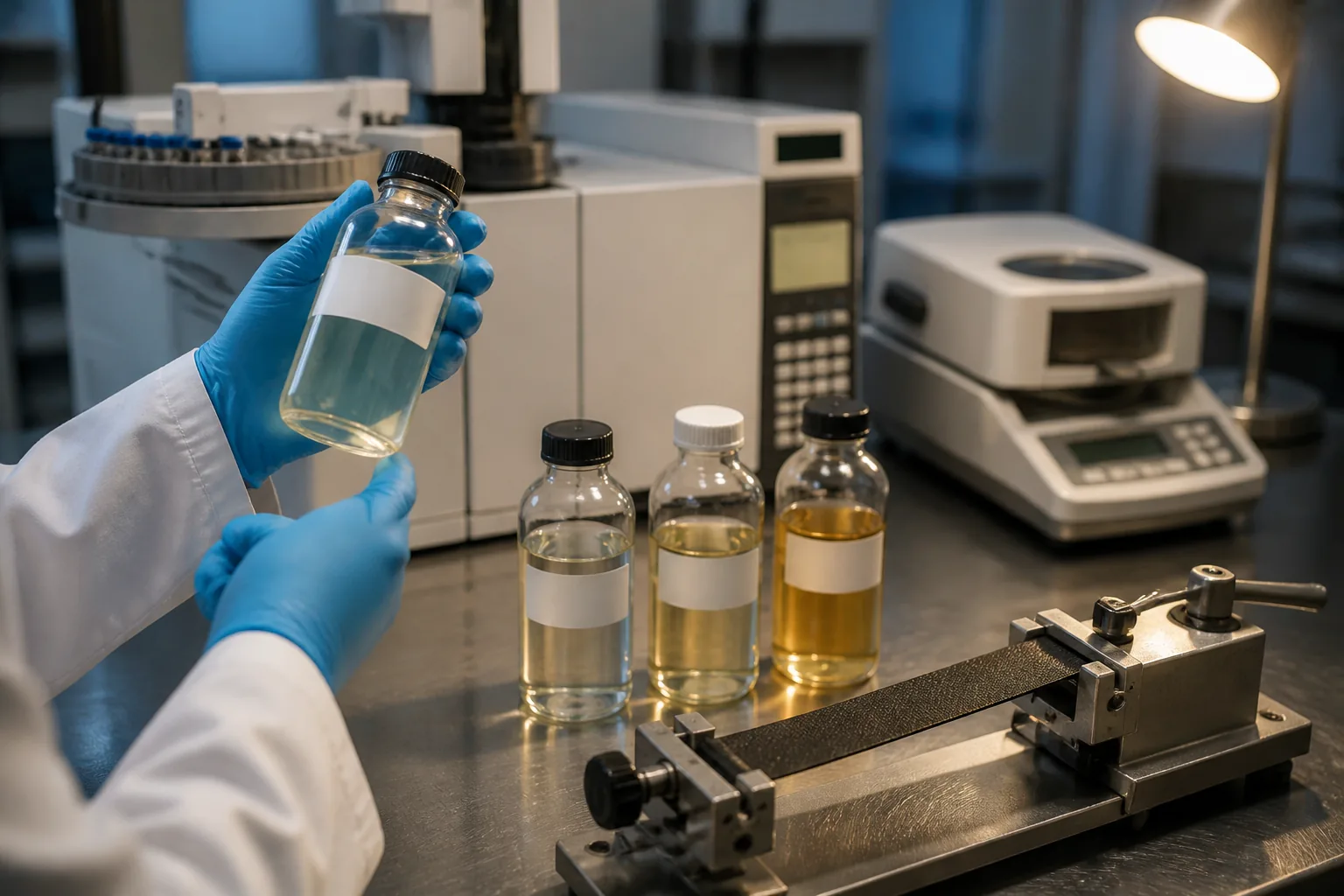
A recovery plant produces a liquid, and the liquid has to be good enough to go back into the coating kitchen. This is the part of the project that manufacturing teams underestimate most often, because the chemistry of a recovered solvent is not the chemistry of a purchased one even when the assay looks close.
Four impurities matter, and they matter in a consistent order.
- Water. Aromatic solvents separate from water easily, but the residual dissolved water still sits in the low thousands of parts per million unless the cut is dried. Water in a PU coating causes hazy films, poor adhesion on nylon, and in moisture-curing systems it reacts before the film is formed.
- Acidity. Ester solvents hydrolyse; ketones oxidise to acids. A rising acid number in the recovered drum tracks the corrosion of the still, the smell on the line, and the pot life of the coating. It is the earliest warning signal available and the cheapest to test.
- Colour and high boilers. Pigment residues, resin skins, plasticiser carry-over and polymerised fractions concentrate in the bottom of the still and distill over as a coloured tail. A single contaminated batch can push colour from water-white to a visible amber, and that colour ends up in a pale coated fabric.
- Dissolved salts and amine residues. Amide systems hydrolyse to amine and formate, both of which attack copper and brass fittings downstream and leave a fishy odour in the finished goods.
| Parameter | Virgin solvent | Typical first-pass recovered | Ceiling for topcoat reuse | Test method |
|---|---|---|---|---|
| Water content | Below 0.1 percent | 0.3 to 1.5 percent | 0.2 percent | Karl Fischer titration |
| Acidity as acetic acid | Below 0.01 percent | 0.02 to 0.08 percent | 0.02 percent | Titration |
| Colour | Clear, below 10 Pt-Co | 30 to 150 Pt-Co | 50 Pt-Co | Spectrophotometric |
| High boilers and residue | Below 0.005 percent | 0.05 to 0.5 percent | 0.1 percent | Gravimetric evaporation |
| Silicone or oil contamination | None detected | Traces possible | Not detectable | Infrared spectroscopy |
| Amine and formate, amide systems | Not applicable | Present without control | Below detection | Ion chromatography |
Blending Limits and an Approval Ladder
Nobody should approve a hundred percent recovered solvent on the strength of a certificate of analysis. The workable protocol climbs a ladder, testing the property that matters most at each rung.
- Ten percent substitution, laboratory draw-down. Coat a panel, check film appearance, adhesion by cross-hatch, and viscosity stability over four hours. This catches gross incompatibility cheaply.
- Thirty percent, pilot coating on production equipment. Check wet add-on uniformity, oven profile, and the spray rating of the finished shell after the DWR step.
- Fifty percent, one production lot. Run the full property set: peel strength dry and after hydrolysis ageing, cold flex at minus twenty degrees, abrasion of the coated face, and resistance to the solvents the bag will actually meet.
- Seventy-five to one hundred percent, with an approved specification. Only after the recovered drum has its own written specification, its own acceptance tests, and a supplier of record inside the quality system.
Each rung needs a documented comparison against a control lot coated with virgin solvent on the same day. Without that control the data proves nothing, because oven conditions drift and a quality difference will be attributed to the wrong cause.
Running the Plant Without Breaking It
A solvent recovery installation is a small chemical plant, and it fails in the ways small chemical plants fail. The operating discipline that keeps it running is not complicated, but it has to be scheduled rather than remembered.
The Hazards That Matter
The exhaust a recovery plant treats sits somewhere between five and twenty-five percent of the lower explosive limit by design, and the control system exists to keep it there. Continuous lower-explosive-limit monitoring with automatic dilution, an alarm at twenty-five percent and a trip before the bed, is not optional equipment. Two habits cause most incidents: disabling the dilution damper because it “wastes steam”, and returning concentrated purge air into the main duct during colour change.
Carbon beds hold heat. Ketones and some esters can oxidise on the carbon surface, and a bed that is left loaded, warm and unattended over a shutdown is a genuine fire risk. Bed temperature probes in more than one location, a nitrogen blanketing facility on ketone duty, a defined maximum storage time for a loaded bed, and a shutdown procedure that either desorbs or cools the bed are the standard controls.
Static, hot work and solvent vapours are the rest of the list. Bonding and earthing on ducting, flame arresters where the risk assessment calls for them, and a hot-work permit that actually gets enforced matter more than any additional instrument.
The Instruments That Matter
- Lower-explosive-limit analysers on the main duct, calibrated on a schedule and challenged with span gas.
- Temperature probes at the inlet, mid-bed and outlet of each adsorber.
- Flow measurement on the exhaust, because the mass balance depends on it and because a drifting damper silently changes the concentration.
- Steam metering on desorption, which is the fastest way to see a bed losing capacity.
- A still bottom temperature and reflux record, which predicts quality problems before the lab does.
- Laboratory access to water content, acidity, colour and residue, run on every batch rather than on request.
The Failure Modes That Cost the Most
- Water in the bed. Humid summer air, a leaking steam valve, or a condenser that is not draining properly all put water onto the carbon and cut capacity without any alarm.
- Carbon ageing. Capacity falls gradually through repeated cycling and contamination, so the symptom is a bed that no longer reaches its usual loading time rather than a clean failure.
- Fouling in the still. Polymerised resin at the reboiler reduces heat transfer, raises the bottom temperature, and pushes colour into the product.
- Silicon contamination. Release agents, defoamers and silicone-based additives travel with the vapour and will find their way into the recovered drum, where they cause craters and adhesion failures that are extremely hard to trace.
- Scheduling conflicts. Desorption needs steam and operator attention at a predictable time; the coating line needs both at unpredictable times. A plant that schedules desorption opportunistically ends up venting loaded beds.
What Recovery Does to the Bag
The commercial argument for recovery is cost, but the technical argument runs through the finished product. A recovered solvent that is chemically close to virgin material still differs in the ways that matter to a thin film: water content changes the evaporation profile, acids change pot life, high boilers stay in the film as a plasticising residue, and traces of silicone change surface energy.
Four properties deserve a place in the approval protocol because they are the ones that fail in the field.
- Peel strength and adhesion. Measured dry, and after ageing. Adhesion loss on nylon is the classic symptom of water in the coating; it appears as a slow-release failure in the field rather than an immediate test failure.
- Coating weight uniformity. Recovered solvent with a different evaporation profile can change the wet film’s leveling and the dry add-on across the width, which shows up as a variable hand feel and variable water resistance.
- Spray rating and hydrostatic resistance. These are the numbers the brand’s specification quotes, and they are the first to move when the coating film develops pinholes or incomplete coalescence.
- Flex and cold crack. Plasticiser and high-boiler carry-over can improve flex at room temperature and worsen it at minus twenty, which is exactly the condition a school bag in a northern winter or a hiking pack at altitude will meet.
A recovered solvent is not approved when the certificate of analysis matches. It is approved when a production lot coated with it passes the same property set as the control lot, on the same day, with the same operator.
Approval Testing Before a Production Run
Run the ladder described earlier on the actual substrate the order uses, not on a generic panel. A 210D polyester lining and a 900D coated oxford do not respond the same way to a change in solvent quality, and a result from one is not evidence for the other. Keep the control lot’s data attached to the approval file so that a later field complaint can be compared against a known baseline.
Compliance, Carbon and the Buyer Conversation
Solvent emissions are regulated through permits that specify limits on concentration, mass emission and sometimes odour, and the reporting obligation is usually a mass balance rather than a stack test alone. That means the same measurements that make a recovery project economic also make the compliance file defensible: solvent purchased, solvent recovered, solvent destroyed, solvent leaving in product, and solvent emitted.
Three developments have changed the conversation with buyers. The first is that several brands now ask for solvent recovery rates as a line-item in supplier questionnaires, alongside wastewater data and chemical inventory. The second is that carbon reporting has made the distinction between destruction and recovery visible: destroying a solvent releases the embodied carbon of the material as well as the combustion products, while recovering it keeps that carbon in the loop for another cycle. The third is that traceability expectations have reached process chemicals, so a factory that can state which lots were coated with recovered solvent, at what blend ratio, has an advantage over one that cannot.
Documentation that answers most of the questions without a follow-up round: annual solvent purchase and recovery mass balance with the boundary stated, recovery rate by solvent type, recovered solvent specification and the laboratory results behind it, the blend ratio used on each order, the permit and its current limits, and a description of the abatement equipment with its design parameters.
A Phased Decision Framework
The table below is the shortest honest summary of the decision. It is built on recoverable tonnage and concentration because those two variables predict payback better than any other pair, and it deliberately includes the option of not recovering.
| Annual recoverable solvent | Concentration in the stream | Recommended primary route | Expected payback | The thing that will go wrong |
|---|---|---|---|---|
| Under 40 tonnes | Any | No recovery; oxidation or biofilter for compliance | Never | Buying equipment for the appearance of a programme |
| 40 to 150 tonnes | Below 1.5 g per cubic metre | Concentrate first by splitting the exhaust, then re-evaluate | Not yet calculable | Ducting redesign is the real project and it needs a drying trial |
| 40 to 150 tonnes | 1.5 to 3 g per cubic metre | Carbon adsorption with steam desorption and batch distillation | 4 to 7 years | Steam cost and short bed cycles |
| 150 to 400 tonnes | 1.5 to 5 g per cubic metre | Multi-bed carbon adsorption with fractionation | 2.5 to 4 years | Recovered quality and recipe variability |
| Above 400 tonnes | Above 3 g per cubic metre | Condensation, or hybrid condenser plus carbon, with on-site distillation | 2 to 3.5 years | Refrigeration energy and still fouling |
| Amide-dominant, any tonnage | Any | Condensation with water absorption and vacuum distillation | 3 to 5 years | Hydrolysis, corrosion and amine odour |
Four practical rules sit around that table. Measure before you size. Split the duct before you buy the bed. Specify the still at the same time as the adsorber, never later. And write the recovered solvent specification into the quality system before the first production lot, because a specification written afterwards is a description of whatever the plant happened to make.
FAQ
Does solvent recovery ever make sense on a line that already has a thermal oxidiser?
Yes, and the calculation is different rather than absent. The oxidiser capital is sunk, so recovery only has to beat the incremental operating cost of the recovery plant plus the fuel the oxidiser no longer needs. In practice a carbon bed installed ahead of an oxidiser often pays back faster than a standalone plant, because the oxidiser becomes a standby and its fuel bill falls sharply. The oxidiser must still be able to run when the recovery plant is down.
What recovery rate should a factory expect in the first year?
Plan on seventy to eighty percent overall, not the ninety-five percent a vendor quotes for a single component. The vendor number usually describes bed efficiency on a stable, dry, single-solvent stream. Capture efficiency at the oven, recipe changes, humidity, downtime and off-spec batches all reduce the annual figure, and a model built on the vendor number will overstate the benefit by a third.
Can recovered solvent be used for the topcoat, or only for the base coat?
Both are possible, but the topcoat is less forgiving because it is the visible, thin, performance-carrying film. Most plants start by using recovered solvent in primer and base coats, and only move it into topcoat after the quality ladder has been completed and the recovered drum has its own written specification. Colour and high-boiler limits are the constraints that usually decide the question.
Is activated carbon suitable for ketone solvents such as methyl ethyl ketone?
It can be, with additional controls. Ketones can oxidise on carbon and generate heat, so the design needs multi-point temperature monitoring, a maximum bed storage time, nitrogen blanketing where the risk assessment requires it, and a shutdown procedure that does not leave a loaded warm bed sitting over a holiday. Some plants prefer hydrophobic zeolite for ketone-heavy recipes to avoid the problem entirely.
Why is dimethylformamide treated so differently from toluene?
Because it mixes with water. Carbon cannot strip a water-miscible solvent economically from humid air, since water competes for the same adsorption sites, and simple decantation does not separate the recovered liquid from the condensate. Amide recovery therefore relies on condensation or water absorption followed by vacuum distillation, and the plant has to be built in corrosion-resistant material because the solvent hydrolyses to an amine and an acid when water and heat are present together.
How much steam does a carbon adsorption plant consume?
Budget three to six kilograms of steam per kilogram of solvent recovered for desorption, and add the reboiler demand of the distillation step if it is steam-heated. Five kilograms per kilogram is a reasonable planning figure for a toluene or ester blend. The number matters because steam is often the largest single operating cost, and in plants with expensive steam the payback calculation can flip.
What is the smallest annual solvent tonnage that justifies recovery?
Below roughly forty tonnes of recoverable solvent a year, a recovery plant rarely clears a reasonable hurdle rate unless a permit forces the investment. Between forty and one hundred and fifty tonnes the answer depends almost entirely on concentration in the stream being treated, because capital scales with air volume rather than with solvent. Above a hundred and fifty tonnes, with concentration above one and a half grams per cubic metre, most projects in this industry clear a three to four year payback.
How does recovery interact with the water resistance the finished backpack has to deliver?
Directly, through film formation. Water in the recovered solvent, acid build-up from hydrolysis, and high-boiling residues all change how the wet film coalesces and how well it bonds to nylon. The properties that move first are peel strength after ageing, spray rating and cold flex. That is why the approval ladder tests the finished shell rather than the solvent alone.
Conclusion
Solvent recovery on a backpack coating line is not a moral position and it is not a badge for a sustainability page. It is a distillation business attached to a coating business, and it earns its capital on the gap between what solvent costs to buy and what it costs to clean to a reusable grade — a gap that is wide on a concentrated stream and narrow on a dilute one.
The plants that get this right do the same four things in the same order. They measure the exhaust before they size anything. They spend the first budget on splitting the duct so that the equipment is sized on solvent rather than on air. They buy the still with the adsorber instead of three years later, and they write a recovered solvent specification into the quality system before the first production lot, not after. Then they run the approval ladder on the actual substrate, against a same-day control, and keep the data.
Everything else — the choice between carbon and condensation, the fractionation column, the nitrogen blanketing, the reporting pack — follows from those four decisions. Get them right and recovery behaves like a process improvement with a payback period. Get them wrong and it behaves like a compliance cost that never quite pays for itself, which is the version most of the industry has seen.